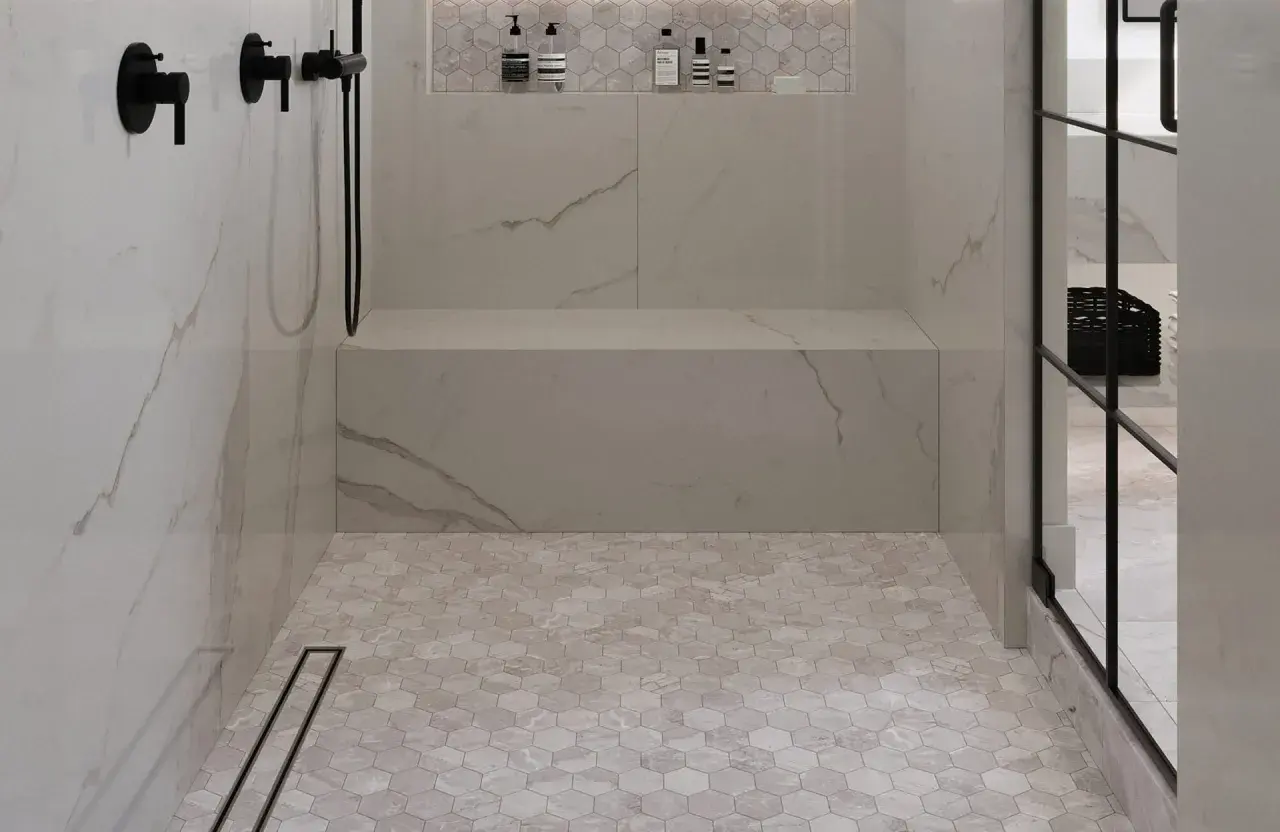
The short answer is that traction, drainage, and maintenance matter more than the label
- Small-format porcelain mosaics are the most reliable all-around choice for many showers.
- Pebble and natural stone look strong visually, but they demand more cleaning and sealing.
- Large-format tile can work, but only when the slope and drain layout are designed around it.
- Look for a wet slip rating and a matte or textured finish instead of chasing shine.
- Budget for the full shower-floor system, not just the tile box price.
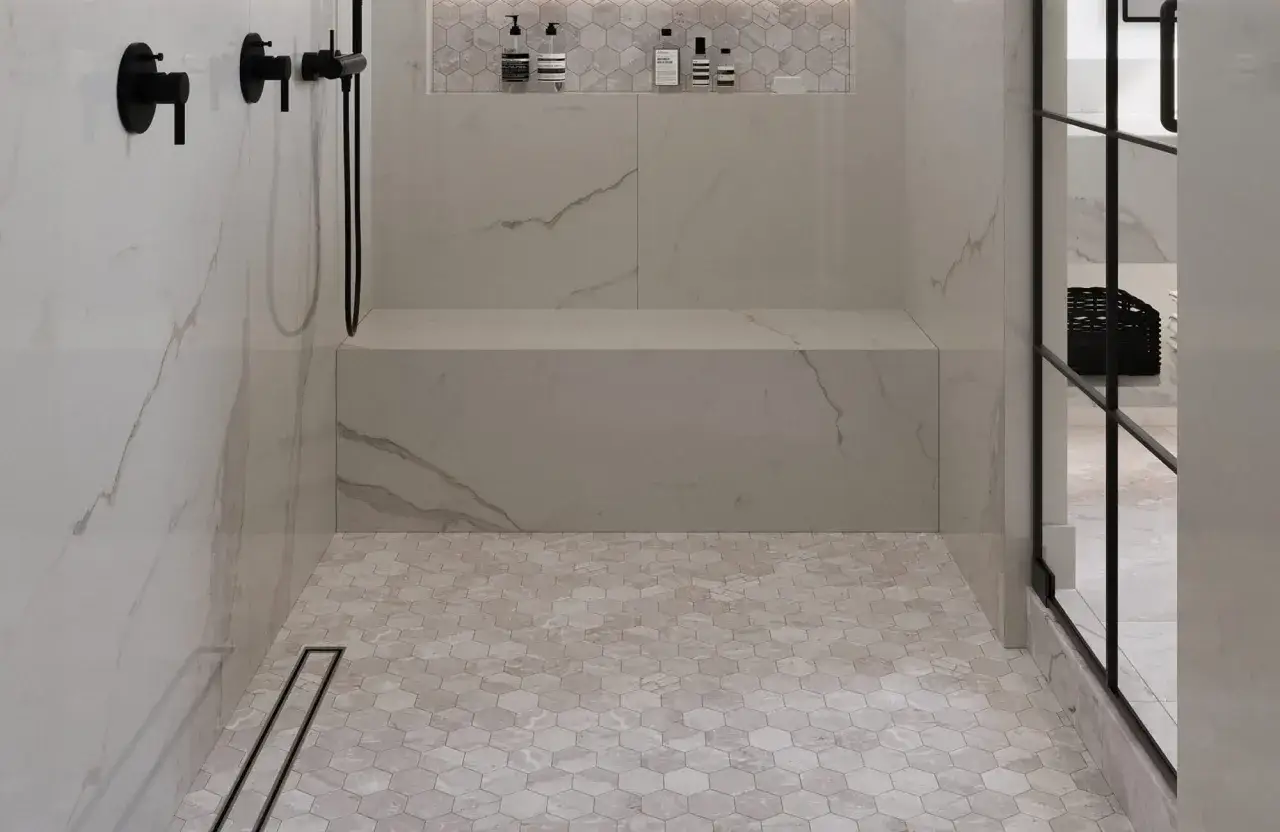
The tile types that earn a place on a shower floor
When I narrow down shower-floor options, I start with five material families. Each one can work, but they do not work equally well in the same bathroom. The real question is not which tile looks best on a board sample; it is which one keeps performing once soap, water, and daily foot traffic enter the picture.
| Tile type | Why it works | Tradeoffs | Typical US material cost | Best fit |
|---|---|---|---|---|
| Porcelain mosaic, usually 1x1 to 2x2 | Strong grip, high durability, easy to clean, and flexible on a sloped pan | More grout than large tile, so the visual can feel busier | $4-$12 per sq. ft. | My default recommendation for most showers |
| Ceramic mosaic | Lower cost and broad design range | Usually not as tough as porcelain in wet, high-use spaces | $3-$8 per sq. ft. | Budget-conscious projects with clearly wet-floor-rated product |
| Pebble or river rock | Natural traction and a spa-like feel underfoot | More grout and an uneven surface to clean | $8-$20 per sq. ft. | Bathrooms where texture and atmosphere matter more than easy upkeep |
| Honed natural stone mosaic, such as marble, travertine, or slate | Rich look, tactile surface, and a more custom finish | Needs sealing and gentler cleaning products | $7-$25 per sq. ft. | Premium remodels where maintenance is part of the plan |
| Large-format textured porcelain | Fewer grout lines and a calmer visual field | Less forgiving on a conventional sloped pan and more dependent on expert installation | $5-$15 per sq. ft. | Showers with a linear drain or a very well-executed base |
For perspective, on a 30-square-foot shower floor, a $5 difference in tile price only changes the material budget by about $150. The slope work, waterproofing, and labor usually decide the real cost. That is why I treat the material choice as important, but not as the whole financial story. Once the tile family is clear, size and shape start doing a lot of the heavy lifting.
Size and shape matter more than most people expect
A shower floor is not flat, so the tile has to cooperate with the slope. Small-format tile usually wins here because it bends around the visual geometry of the pan more naturally and gives the installer more grout joints to work with. Those grout joints are not just a design detail; they also add traction, which is one reason 1x1, 2x2, and small hex patterns keep showing up in well-built showers.
Why mosaics behave so well
Small pieces sit more comfortably on a sloped surface, especially around a center drain or a shower pan with multiple pitch directions. They help reduce lippage, which is the edge height difference between tiles, and that matters because even a slight edge can feel awkward under bare feet. I usually think of mosaic sizing as the safest place to start unless the shower has a very specific drainage plan.
Read Also: Tile vs Wood Flooring: The Smart Choice for Every Room
When larger tile can still work
Large-format tile is not automatically wrong on a shower floor, but it leaves less room for error. I only like it when the drain style, slope, and setting bed are designed around the format, often with a linear drain and a skilled installer who knows how to manage cuts, pitch, and waterproofing. Without that level of planning, larger tile can look clean in photos and feel annoying in daily use because water does not clear as evenly.
If you want the floor to feel dependable rather than delicate, this is where smaller often beats bigger. The next question is whether the surface itself will stay safe once it gets wet and soapy.
Slip resistance is the detail that really protects the room
I do not read slip resistance as a marketing slogan. I treat the wet DCOF number as a starting point, not a guarantee. In the US, a wet DCOF of 0.42 is the common minimum benchmark for level interior tile expected to get wet, but the real-world feel still depends on texture, slope, soap residue, and how the tile is actually finished.That is why a polished surface can be a bad idea even if it looks luxurious, while a matte or lightly textured surface can feel secure without looking rough. In practice, I always prefer a sample I can wet, touch, and stand on over a glossy brochure description. If I can feel my foot sliding on the sample with a little soap and water, I stop trusting the label and move on.
There is also a useful tradeoff to remember: the more traction you build into the surface, the more texture you may have to clean later. A good shower floor does not have to feel abrasive, but it should never feel slick. Once that balance is set, maintenance becomes the deciding factor for many homeowners.
Maintenance is where many beautiful floors lose their advantage
This is the part of the decision people underestimate. A shower floor gets hit with heat, humidity, soap film, hard water, and constant rinsing. Some tile handles that with almost no drama; some tile asks for a steady upkeep routine. The best choice is often the one you will realistically maintain, not the one you swear you will maintain once the remodel is done.
- Porcelain is the easiest to live with. A mild cleaner and regular rinsing are usually enough, and it does not ask for sealing in the way natural stone does.
- Ceramic is similar in care, but I am stricter about wet-floor suitability because not every ceramic product is a strong shower-floor candidate.
- Pebble has the nicest natural traction, but the many joints collect buildup faster, so cleaning takes more patience.
- Honed stone looks rich and grounded, but it should be sealed and cleaned with stone-safe products. I avoid acidic cleaners such as vinegar on marble, travertine, and limestone.
- Grout color matters too. Mid-tone grout often hides daily wear better than bright white, especially on busy family showers.
In other words, porcelain gives you the easiest maintenance story, while pebble and stone give you more character but ask for more discipline. That tradeoff is usually what pushes the final choice one way or another. From there, the bathroom itself should tell you which direction to take.
The right tile changes with the kind of shower you're building
I do not choose shower-floor tile in a vacuum. A guest bath, a primary suite, and a walk-in accessible shower each put different demands on the surface. Once you match the tile to the use case, the answer gets much clearer.
- Family bath with heavy daily use - I would start with a textured porcelain mosaic in 1x1 or 2x2. It is the safest mix of grip, cleanup, and durability.
- Spa-style primary shower - Pebble or honed stone makes sense if the owner is comfortable sealing and keeping up with the surface. The look is worth it only when the maintenance is accepted upfront.
- Budget refresh - Wet-rated ceramic mosaic can work if the tile is clearly intended for a shower floor and the finish is not too slick.
- Accessible or low-threshold shower - Textured porcelain with a careful slope is usually the most practical choice. I want security underfoot without forcing the user to fight a rough surface.
- Large modern shower with a linear drain - Larger textured porcelain can look excellent here, because the drainage system is doing more of the work that small tiles normally handle.
What matters most is honesty about use. A showpiece shower that barely gets used can justify more delicate stone. A high-traffic shower cannot. That is why narrowing the field before ordering samples saves time and prevents expensive second guesses. The last step is turning all of this into a short list you can actually shop from.
A shortlist I would actually trust on a remodel
If I had to make the choice fast, I would start with textured porcelain mosaic, because it gives the best balance of traction, durability, and easy maintenance. After that, I would move to pebble if the goal is a softer spa feel, or to honed stone if the bathroom is being designed around material character and regular upkeep. Large-format tile would stay on my list only when the drain and slope are engineered for it, not when it is being forced onto a pan that really wants something smaller.
- Best all-around pick - Porcelain mosaic with a matte or textured finish.
- Best for a spa look - Pebble or river rock, provided the owner accepts more cleaning.
- Best premium natural look - Honed marble, travertine, or slate with sealing.
- Best modern minimalist look - Textured large-format porcelain, but only with a properly planned shower base.
- Best budget compromise - Wet-rated ceramic mosaic, if the product is clearly suitable for shower floors.