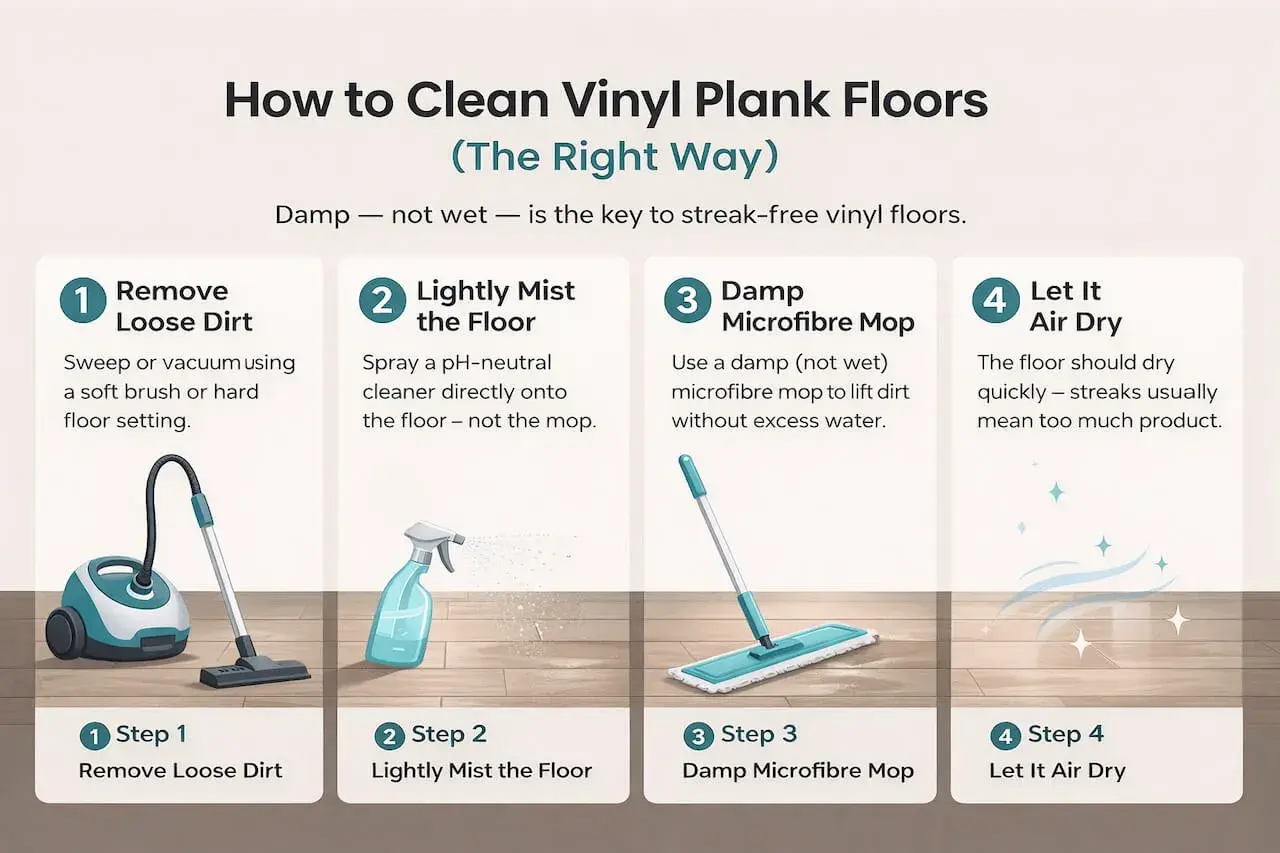
Vinyl flooring stays attractive when cleaning matches the way the room is actually used. The real answer to the question of how often should you mop vinyl floors depends on traffic, pets, spills, and whether you are dealing with a kitchen, bathroom, hallway, or guest room. In most homes, a light weekly mop in busy areas is enough, while lower-use rooms can wait longer if you keep grit and spills under control.
Vinyl floors need light, regular care more than heavy scrubbing
- Busy rooms such as kitchens, bathrooms, and entryways usually need mopping once a week or every other week.
- Low-traffic rooms can often go two to four weeks between moppings.
- Dry debris matters more than people think, so sweep or vacuum before every wet clean.
- Use a damp microfiber mop and a cleaner approved for vinyl, not a soaked mop.
- More mopping is not always better; too much water and residue can dull the finish.
- Spot-clean spills right away so you do not need to deep-clean as often.
The simplest schedule I recommend for most homes
My rule of thumb is straightforward: if the floor sees shoes every day, I treat it as a weekly cleaning surface. In kitchens, bathrooms, mudrooms, and front entries, I usually mop once a week, or every other week at most if the household is small and tidy. In quieter spaces, such as a formal dining room or a guest bedroom, every two to four weeks is usually enough.
| Area | How often I mop | Why |
|---|---|---|
| Kitchen, bathroom, entryway | Weekly to every other week | Food, moisture, and tracked-in grit build up fast. |
| Family rooms and hallways | Every 1 to 2 weeks | Foot traffic varies, especially with kids and pets. |
| Guest rooms, dining rooms, low-use spaces | Every 2 to 4 weeks | They collect less dirt, so dry cleaning can do most of the work. |
| Homes with dogs, toddlers, or frequent outdoor traffic | Weekly or as needed | More debris means more frequent touch-ups. |
If you want one practical takeaway, it is this: vinyl does not need constant wet cleaning, but it does need consistency. A calm room can stay clean with less effort than you might expect, and a busy bathroom or kitchen will punish neglect quickly. That is why I think room use matters more than a rigid calendar.
What changes the frequency more than the floor itself
Traffic is the first factor, but it is not the only one. Pets drag in hair and fine grit, children leave spills behind, and a no-shoes household will always need less mopping than a home where people walk in from the street. In bathrooms, lotion residue, hairspray mist, and water droplets can create a film faster than many people notice.
I also look at the type of dirt the room collects. Dry dust is easy to manage with a quick sweep, but sticky messes from food, soap, or bath products call for a damp mop sooner. If the room feels slightly tacky underfoot, that is usually a sign the schedule needs to tighten a bit.
The best cleaning routine is the one that fits reality, not a perfect ideal. Once you see how your household actually uses the space, the right cadence usually becomes obvious.
How to mop vinyl without leaving streaks or damage
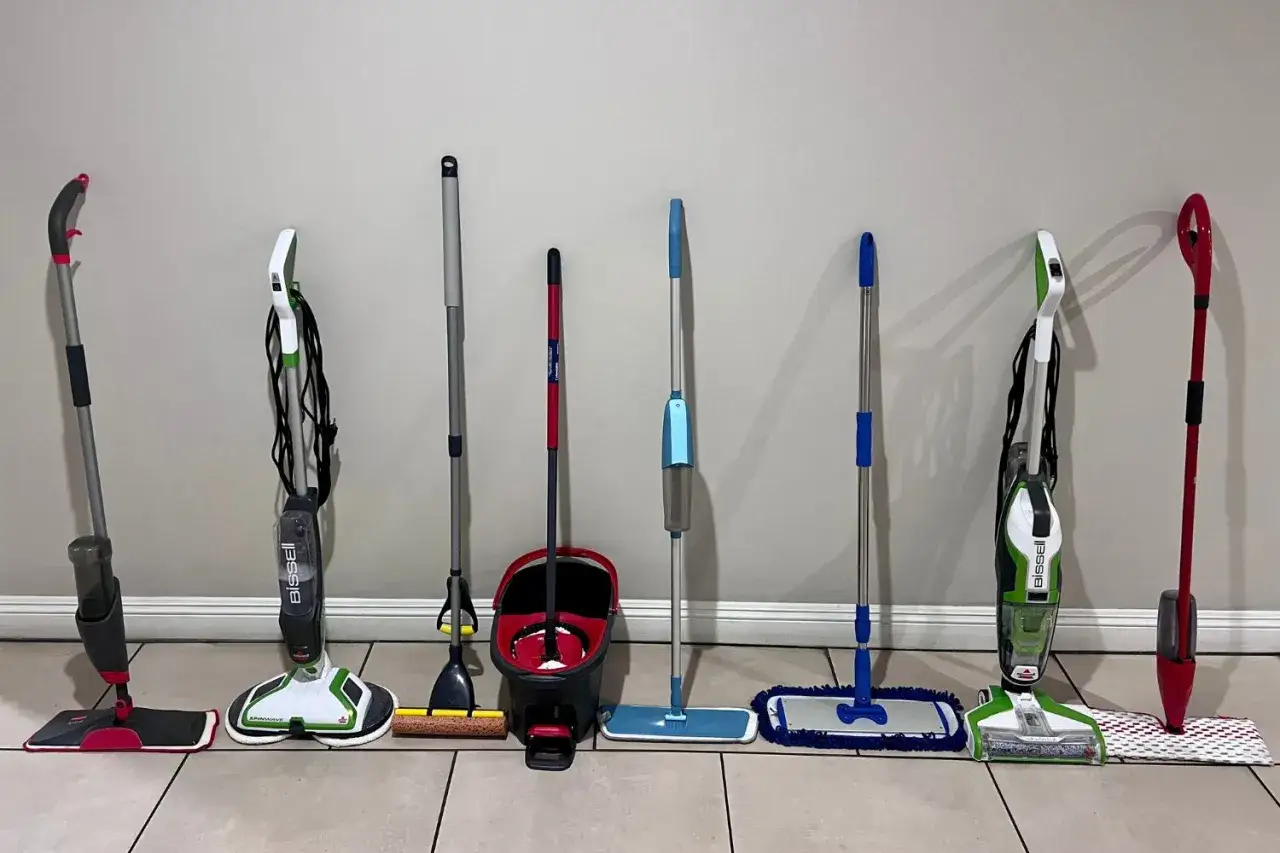
Vinyl is forgiving, but it is not indestructible. I always start with a dry pass first, because dust, sand, and hair act like fine grit under a mop head. A microfiber flat mop works best for me because it lifts debris without flooding the floor.
From there, I use a pH-neutral cleaner whenever possible. That term simply means the product sits near the middle of the acid-base scale, so it is less likely to attack the finish or leave a harsh residue. A well-wrung mop matters just as much as the cleaner itself; vinyl should feel damp, not wet.
- Sweep or vacuum with a bare-floor setting first.
- Mix the cleaner according to the label, or use plain warm water if the floor only needs a light refresh.
- Mop in small sections so dirty water does not sit on the floor.
- Rinse if the product calls for it, then dry any damp spots if needed.
- Let the surface dry fully before heavy foot traffic returns.
I would avoid string mops and overly aggressive scrubbing. They hold too much water and can push grime around instead of lifting it. I also skip steam mops unless the flooring manufacturer explicitly allows them, because heat and seams are a bad combination on many vinyl products.
What to do between moppings so the floor stays cleaner longer
The biggest mistake I see is treating mopping as the main line of defense. On vinyl, dry maintenance does most of the work. A quick dust mop or vacuum a few times a week in busy rooms can stretch the time between wet cleanings and reduce scratching from grit.
- Wipe spills as soon as they happen so they do not dry into a film.
- Use mats at exterior doors and a bath mat near showers and tubs.
- Keep felt pads under chairs and stools so they do not grind debris into the finish.
- Remove sand and soil from entry areas quickly, especially after rain or snow.
- Use a bare-floor vacuum setting so the beater bar does not scuff the surface.
I think this is where vinyl really earns its reputation as a low-maintenance surface. If you manage dry debris well, you can mop less often without the floor ever looking neglected.
Signs you are mopping too often or not enough
Vinyl usually gives clear feedback. If the floor looks dull, hazy, or sticky even after cleaning, the problem is often residue rather than dirt. That can happen when too much cleaner is used, the mop is too wet, or the floor is not rinsed well enough.
On the other hand, if you notice visible footprints, a gritty feel, or a gray line around baseboards and edges, the floor needs more frequent attention. In bathrooms and kitchens, I also watch for seam buildup and corners where moisture and dust collect first. Those spots tell you more about your routine than the center of the room does.
When in doubt, I adjust one variable at a time. I either mop a little more often, dry sweep more often, or simplify the cleaner. Changing everything at once makes it harder to see what actually fixed the problem.
What I would not do on vinyl
Vinyl is durable, but a few common habits shorten its life quickly. I would not soak the floor with a bucket of water, because standing water can work its way into seams and edges. I would also avoid waxes, shine products, abrasive scrubbers, and strong solvents unless the manufacturer specifically says they are safe.
Another habit I skip is using soap-heavy cleaners just because they smell fresh. A lot of those products leave a film behind, and that film is exactly what makes a floor look cloudy after a few cleanings. If a floor starts looking worse after each mop, the cleaner is often part of the problem.
The wear layer is the clear protective top surface on vinyl plank or tile, and once it gets dulled or coated with residue, the floor becomes harder to revive. Protecting that layer is the real goal, not just making the surface look clean for one afternoon.
The routine that works best in real homes
If I had to give one practical answer, I would say this: mop high-traffic vinyl floors weekly and lower-traffic rooms every two to four weeks, then adjust based on pets, kids, and how quickly grime actually appears. That schedule is enough for most American homes, especially when you pair it with quick dry cleaning and immediate spill cleanup.
For bathrooms and kitchens, I lean toward the shorter end of the range because moisture and residue build up faster there. For a guest room or a less-used dining space, I am comfortable stretching the interval as long as the floor is being dusted and spot-cleaned.
In the end, vinyl rewards a light, regular routine far more than an occasional deep scrub. Keep the mop damp, not wet, respect the finish, and the floor will stay sharp with far less effort than most people expect.