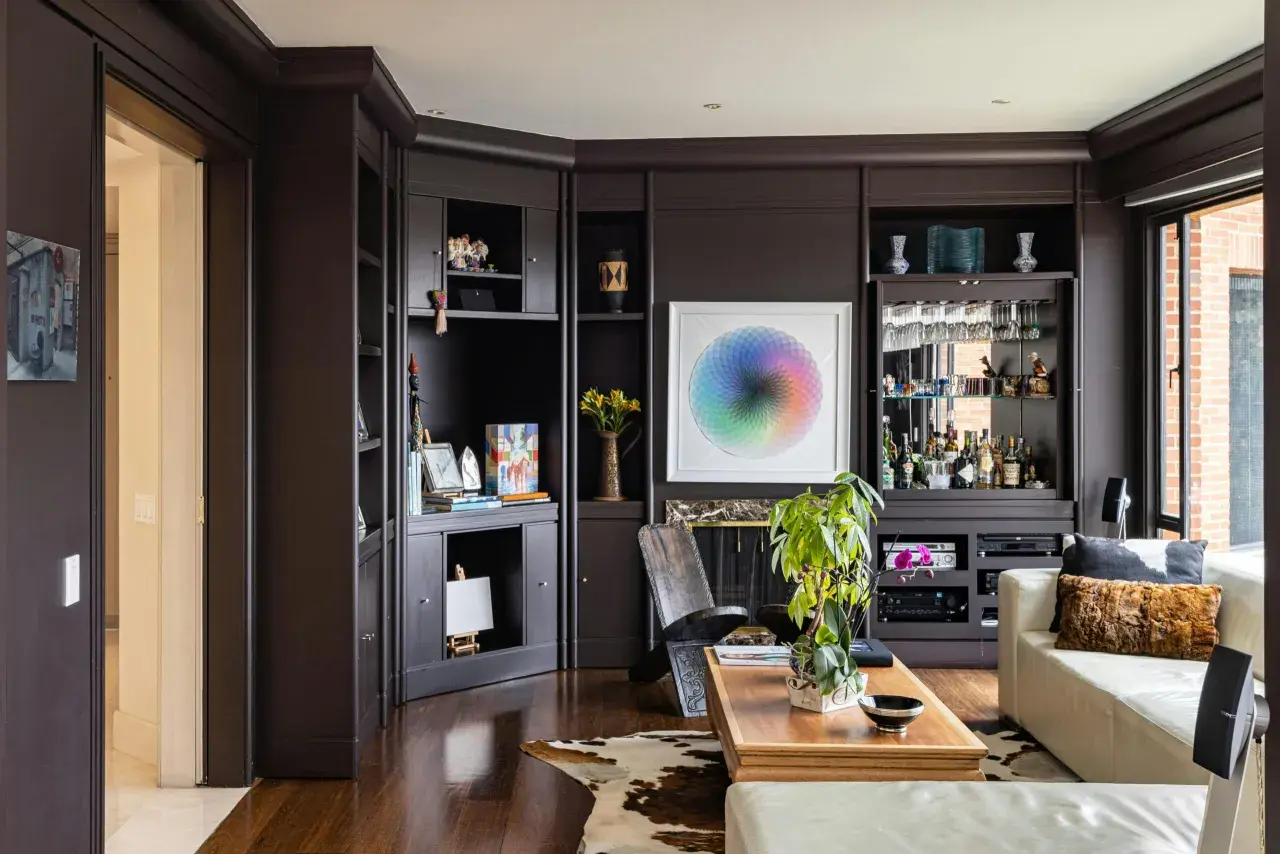
Dark flooring can change the whole reading of a room, but it does not automatically shrink it. So, do dark floors make a room look smaller? In many small or low-light spaces, yes, especially when the floor absorbs a lot of light and the rest of the room lacks contrast. The good news is that the effect is controllable, which means the right lighting, wall color, finish, and layout can keep a dark floor looking intentional instead of heavy.
What matters most before choosing dark flooring
- Dark floors can make a room feel smaller when the space is already compact or dim.
- Light, contrast, and finish matter as much as the floor color itself.
- Matte and satin surfaces usually read softer than glossy ones in smaller rooms.
- Fewer visual breaks, such as wide planks or large-format tile, help a room feel calmer.
- Bathrooms and powder rooms need extra attention because dark surfaces can stack up visually fast.
Why dark floors change the way a room reads
Flooring takes up one of the largest uninterrupted surfaces in any interior, so it has an outsized effect on how the eye moves through the room. Dark floors absorb more light than pale ones, which means they can make the lower part of the room feel visually heavier and more defined. That extra weight is not a flaw on its own, but in a tight bathroom, a narrow hallway, or a small bedroom, it can make the edges of the room feel closer than they really are.
The important distinction is this: dark flooring does not reduce square footage, it changes perception. A room can still be perfectly functional while reading as more intimate, dramatic, or grounded. I usually think of dark floors as a design tool that creates depth, not as a size mistake. That is why the surrounding surfaces matter so much, because the floor almost never works alone.
Once you understand that visual weight is the real issue, the next question becomes when that weight helps the room and when it works against it.
When dark floors really do make a space feel smaller
There are a few predictable situations where dark flooring pushes a room toward a tighter, more compressed look. The pattern is usually the same: limited daylight, a lot of contrast, and too many dark elements competing with each other.
| Situation | What you tend to see | Why it happens | What helps |
|---|---|---|---|
| Small room with little natural light | The floor feels dominant and the room feels denser | Dark surfaces absorb light instead of bouncing it around | Use lighter walls, strong task lighting, and reflective accents |
| Room with a low ceiling | The space can feel shorter and heavier overall | The eye is pulled downward, which weakens the sense of height | Keep the ceiling light and reduce heavy contrast above eye level |
| Space with dark furniture and accessories | The room reads as crowded instead of layered | Too many dark masses merge visually | Break up the palette with lighter textiles, walls, or cabinetry |
| Glossy dark floor in a compact room | Reflections can create glare and visual noise | Shine highlights every shift in light and every object on the floor | Choose satin or matte instead of high gloss |
The most common mistake is assuming the floor color is the only variable. It is not. A dark floor in a bright, balanced room can look rich and quiet, while the same floor in a dim bathroom with black vanity hardware and little contrast can feel boxed in. That is why the fix is usually design coordination, not a complete rejection of dark flooring.
Once you know what creates the cramped effect, you can control it with a few practical changes rather than gambling on color alone.
How to keep dark flooring from closing in a room
When I want dark flooring to work in a smaller room, I build visual breathing room around it. I start with light sources, then deal with surfaces, then look at scale. That order matters because a dark floor will always feel harsher when the room is underlit.
- Use layered lighting. One overhead fixture is rarely enough. Ambient light gives the room a base level of brightness, task lighting handles function, and accent light softens shadows.
- Keep walls lighter than the floor. You do not need stark white, but you do need enough contrast to separate the surfaces clearly.
- Favor simple, large shapes. A big mirror, a wide vanity, or larger tile reads calmer than many small pieces and fragments.
- Reduce visual clutter. In bathrooms, floating vanities and wall-mounted storage help because more visible floor makes the room feel less anchored.
- Match transitions carefully. If the dark flooring stops abruptly at every doorway, the room can feel chopped up. A continuous run or a quiet transition reads more open.
For bathrooms specifically, I also pay attention to grout color and trim. A grout line that is close to the tile color usually feels cleaner and less busy, while overly contrasting grout can turn the floor into a grid. That may be a design choice in a large room, but in a compact space it often makes the floor look more crowded than elegant.
The finish matters too, because the same dark color can feel very different depending on how much light it throws back.
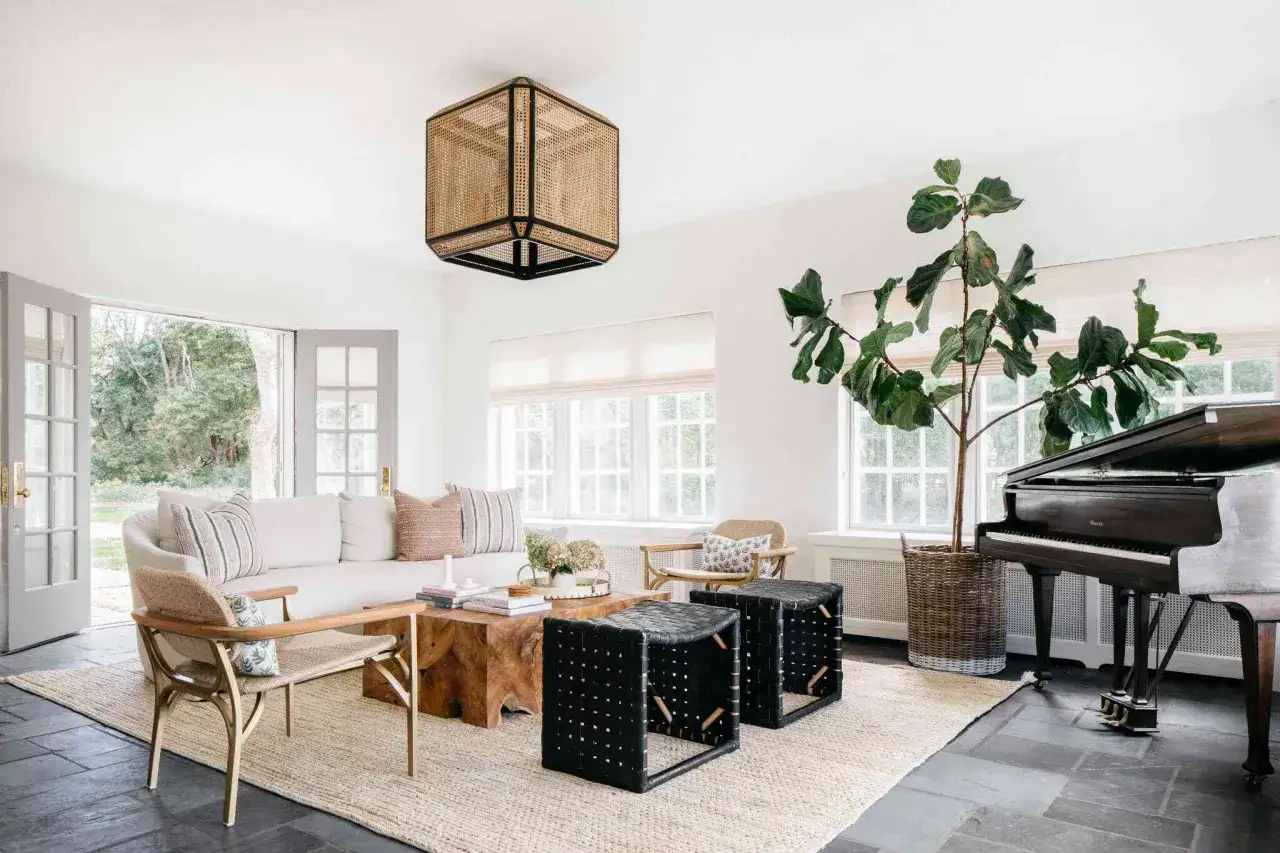
Which dark floor finishes work better in bathrooms and small rooms
Not every dark floor behaves the same way. Texture, sheen, plank width, tile size, and pattern all affect how large or small a room feels. In bathrooms, I usually lean toward surfaces that are calm, water-resistant, and not overly reflective.
| Finish or format | How it reads visually | Best use | My take |
|---|---|---|---|
| Matte dark tile | Softer, quieter, less glare | Small bathrooms, powder rooms, practical family spaces | Often the safest choice when you want depth without shine |
| Satin or low-sheen wood-look floor | Warmer and a little more reflective | Bedrooms, living areas, medium-sized rooms with good light | Works well if the rest of the room stays light and simple |
| High-gloss dark tile | Dramatic, reflective, very visible | Larger rooms or statement spaces | Beautiful when used deliberately, but it is the easiest to overdo in a small room |
| Wide-plank dark flooring | Fewer seams, calmer surface | Open-plan rooms and spaces that need visual simplicity | Better than narrow strips because fewer breaks usually means less visual noise |
After finish and format, the next decision is where dark flooring actually earns its place and where I would be cautious.
Where dark floors work best and where I would be careful
Dark flooring is not a universal yes or no. I like it most when the room has a clear reason to support it: enough light, enough scale, or enough contrast to keep it from feeling flat. That is why the same floor can look expensive in one room and slightly oppressive in another.
- Large primary bathrooms can handle dark flooring well, especially if there is natural light and lighter wall tile or paint.
- Powder rooms are often ideal for darker floors because the room is small by design and can benefit from a dramatic, finished look.
- Rooms with large windows usually tolerate dark flooring better because the light keeps the floor from swallowing the space.
- Windowless bathrooms or basements need extra caution, because dark surfaces can quickly flatten the room and make it feel cave-like.
- Narrow halls and compact laundry rooms can use dark floors, but only if the walls and ceiling stay quiet and the lighting is strong enough to keep the space readable.
One detail I look at often is whether the room needs to feel expansive or cocooning. If the goal is calm, intimate, and moody, dark flooring can be a strength. If the goal is airy, open, and bright, you need to work harder to offset the darkness with light walls, visible floor area, and simpler finishes. That is especially true in bathrooms, where a dark floor can either anchor the design or make the room feel overly enclosed.
That is why I use a simple rule before I approve a dark floor for a small space.
The rule I use before approving a dark floor
If a room can answer yes to most of these points, dark flooring usually works: the space gets enough daylight or layered artificial light, the walls are lighter or visually quieter than the floor, the finish is low sheen, and the room does not already feel crowded with heavy furniture or dark cabinetry. If those conditions are missing, the floor color is usually doing too much of the visual work.
- There is enough light to keep shadows from pooling on the floor.
- The walls, ceiling, and trim do not compete with the floor for attention.
- The flooring format reduces seams, grout lines, or other visual interruptions.
- The room has one clear design story instead of several dark elements fighting each other.
My practical advice is simple: choose dark flooring for depth, not because it will somehow make a small room feel bigger. It can look elegant, grounded, and very polished, but only when the rest of the room supports it. If the space is already tight and dim, I would either lighten the floor or use dark tones in a smaller dose, such as a vanity, grout, or accent surface, so the room keeps its sense of air and proportion.