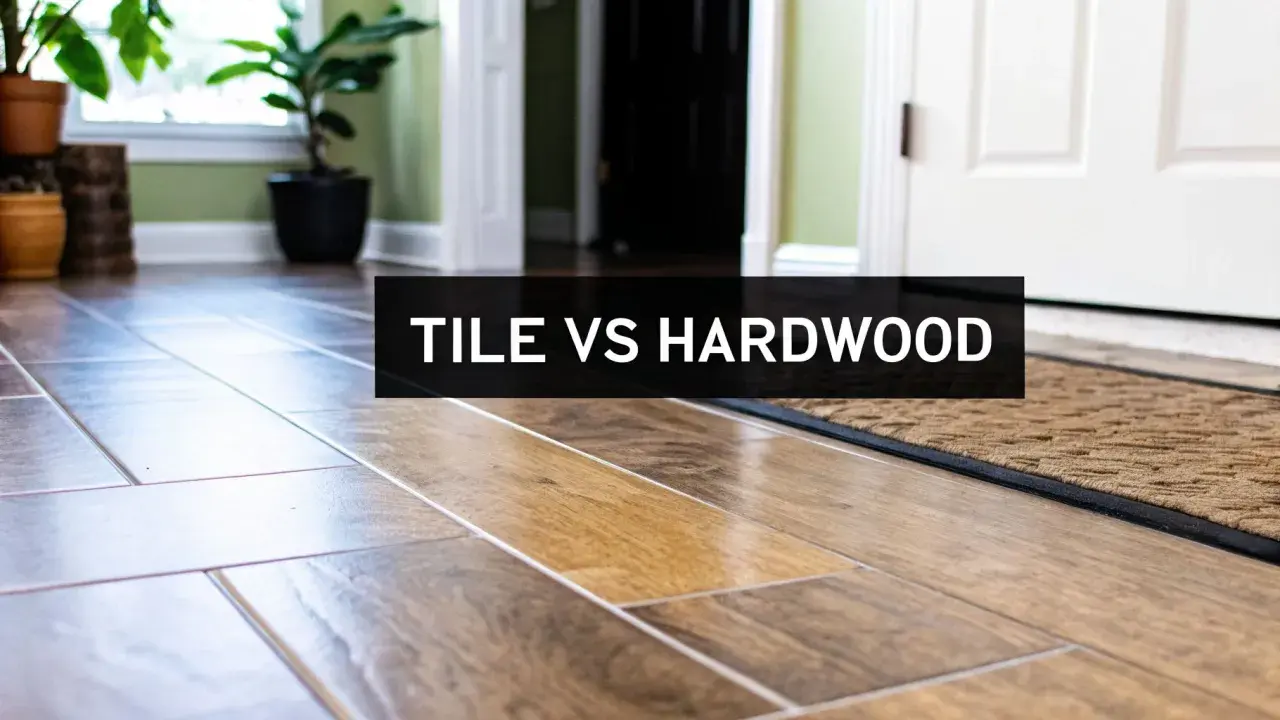
Choosing between tile and wood is less about taste alone than about how a room lives every day. When I compare tile vs wood flooring, I start with three questions: how much moisture the space sees, how the floor should feel underfoot, and how much upkeep the owner is willing to accept. This guide breaks that decision down into practical terms, with a focus on bathrooms, finishes, cost, and the trade-offs that actually matter.
The right choice usually comes down to moisture, comfort, and budget
- Tile is the safer default for bathrooms because it handles splashes, steam, and wet shoes better than wood.
- Wood feels warmer and quieter, which makes it better for bedrooms, living rooms, and other dry spaces.
- Porcelain tile is the most moisture-resistant tile option; ceramic is solid, but it absorbs more water.
- Solid hardwood can last for decades and be refinished multiple times, but it dislikes standing water.
- Engineered wood is more stable than solid wood in humid conditions, but it is still not my first pick for full baths.
- Wood-look porcelain tile is the best compromise when you want the warmth of wood without the bathroom risk.
The quick comparison that matters most
When clients ask me for the fastest way to separate these two, I put them side by side on the things that change the experience after the install is done. Tile is usually the more practical surface in wet rooms. Wood is usually the more comfortable surface in dry ones. The rest is mostly about how much you value warmth, maintenance, and long-term flexibility.
| Factor | Tile | Wood |
|---|---|---|
| Moisture tolerance | Excellent, especially porcelain; best for bathrooms and laundry rooms | Limited; solid wood is vulnerable, engineered wood handles humidity better but still dislikes standing water |
| Underfoot feel | Cool, hard, and sometimes unforgiving without heat | Warmer, softer, and quieter |
| Daily cleaning | Simple wipe-down, though grout needs attention | Easy to sweep and vacuum, but moisture control matters more |
| Repair strategy | Individual tiles can be replaced, but cracked tile often points to a subfloor issue | Solid wood can be refinished; engineered wood has limited refinishing depending on wear layer |
| Typical installed cost | About $11-$39 per square foot for ceramic, with porcelain often $13-$48 | About $6-$18 per square foot for hardwood, with engineered wood often $6-$23 |
| Best rooms | Bathrooms, kitchens, entryways, mudrooms | Bedrooms, hallways, living areas, dry open-plan spaces |
| Radiant heat | Usually a very good pairing | Possible, but it needs more careful control and a suitable wood product |
That table gets clearer once you put the floor into a bathroom, because moisture changes the rules very quickly. From there, the real question is not which material is “better” in the abstract, but which one survives the room you actually have.
Why bathrooms usually favor tile
Bathroom floors should be treated as water-exposed surfaces, not just decorative finishes. Splashing, steam, wet bath mats, and occasional spills are normal, not exceptional. That is why I almost always start bathroom projects with porcelain tile unless there is a very specific reason not to.Porcelain is the strongest tile option for this job because it absorbs less than 0.5% of its weight in water. Ceramic tile is still useful, but it typically absorbs more moisture, which makes porcelain the safer choice where water is part of the daily routine. Tile is also easy to clean, stain-resistant, and durable enough to handle traffic without looking tired too quickly.
There are two caveats that people miss. First, tile is not magically waterproof if the rest of the assembly is poorly built. The subfloor, underlayment, and waterproofing details matter. Second, tile can feel cold and hard, and smooth polished tile can get slick when wet. For bathrooms, I prefer matte or textured finishes and a layout that is designed for grip, not just looks.
If the floor may see routine puddles or repeated wet towels, tile is the safer decision. That leads directly into the cases where wood still makes sense, because not every room needs the same level of moisture protection.
When wood is the better call
Wood earns its place because it changes the feel of a home in ways tile usually cannot. It is warmer underfoot, softer on joints, and quieter in a way that matters more than many homeowners expect. In dry spaces, that difference is not cosmetic. It shapes how the room feels every day.
Solid hardwood has one of the biggest long-term advantages of any flooring: it can be refinished multiple times and, in the right conditions, last for the life of the house. That is a real value point, especially in homes where people want a floor that can age instead of being replaced. Engineered wood is the more humidity-friendly version, and it is often the one I consider when the room is not fully dry but still not wet enough for tile to be the obvious answer.That said, wood has a clear weakness: standing water. A spill that is wiped up quickly is one thing. A leaking toilet base, a damp bath mat left in place, or repeated splash exposure is another. In a full bathroom, I treat wood as a compromise choice rather than a default. In a powder room, a dressing area, or a bedroom connected to a bath, it can work well if ventilation is good and the owner is disciplined about cleanup.
Wood can also be sensitive to board width and construction. Narrower boards tend to move less than wide ones, and engineered construction is generally more stable than solid planks in humid environments. That stability matters more than most shoppers realize, and it is one reason the next decision is often not tile versus wood in the purest sense, but whether a wood-look tile can deliver the style without the risk.
How style choices can narrow the gap
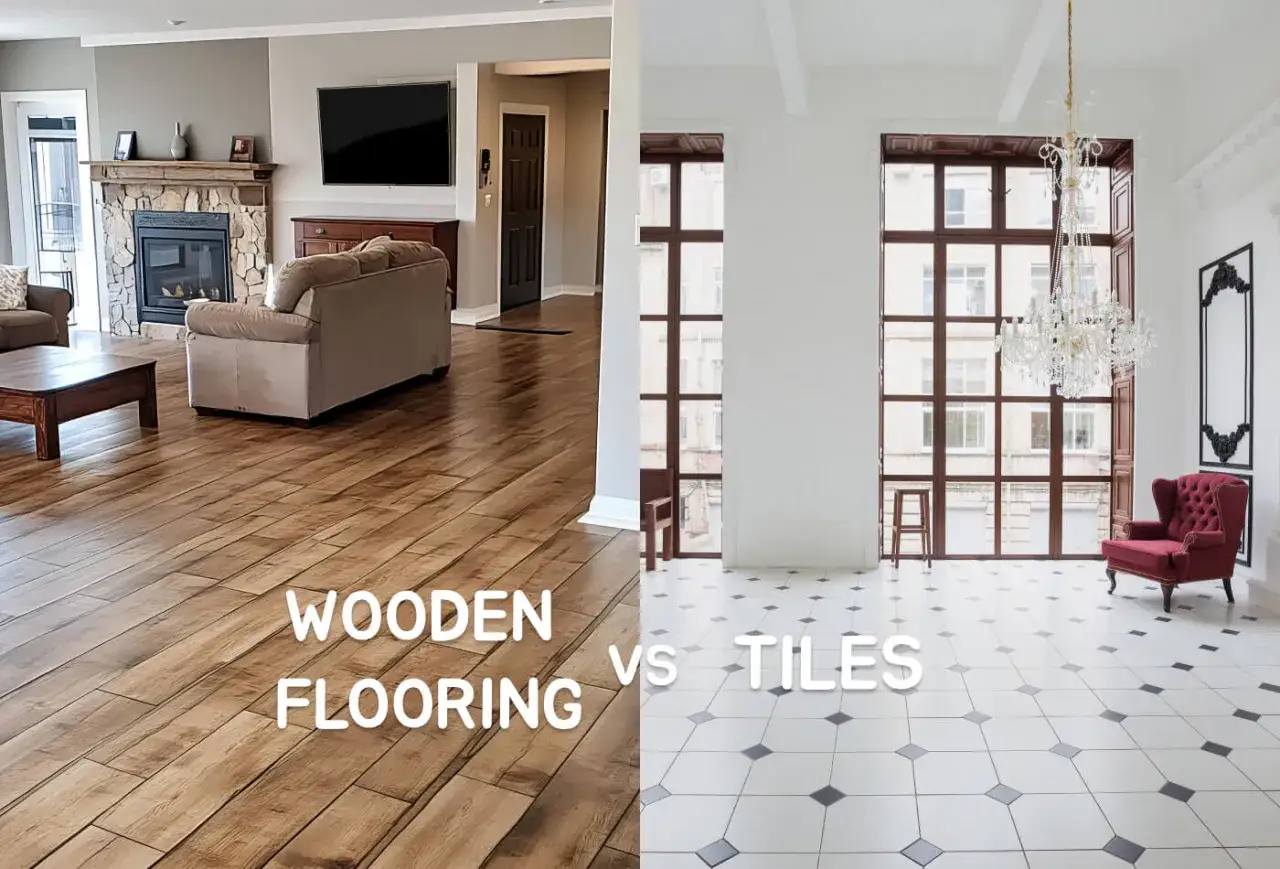
In a lot of remodels, the best answer is not a blunt yes-or-no. It is a design choice that borrows the strengths of both materials. Wood-look porcelain tile is the most useful example. It gives you the visual warmth of oak or walnut, but keeps tile’s moisture resistance, which is exactly why it shows up so often in bathrooms and laundry rooms.
The details matter here. Plank-shaped tile reads more like wood than square tile does. Rectified edges, which are machine-cut for tighter joints, can make the surface feel cleaner and less busy. A narrow grout line also helps. If the grout is too contrasting or too wide, the illusion breaks immediately. Matte finishes usually look more natural and feel less slippery than glossy ones.
Real wood still wins when you want true grain variation, the ability to refinish later, and a softer visual transition into adjacent living areas. But if the goal is a bathroom that feels coordinated with wood floors elsewhere in the house, wood-look tile is often the smarter bridge. I use it when design continuity matters but moisture risk is still non-negotiable.
Once the look is settled, the next question is whether the budget and install complexity support the choice you are leaning toward.
Costs, installation, and upkeep over the long run
Upfront cost is where people often get tripped up, because the material price is only part of the story. Current U.S. estimates put hardwood installation around $6-$18 per square foot, depending on species, grade, and labor. Ceramic tile often lands around $11-$39 per square foot, while porcelain can run about $13-$48. Bathroom tile work can cost more than the material alone suggests, because drains, toilets, tight cuts, waterproofing, and substrate prep all add labor.Here is the part I think matters most: tile can look more expensive at the start, but it usually asks for less active maintenance over time. Wood can be cheaper to install in some cases, especially with engineered boards, but it carries long-term costs that are easy to ignore at the estimate stage. Humidity control, refinishing, and the possibility of water damage are part of the real budget.
| Ownership factor | Tile | Wood |
|---|---|---|
| Upfront cost | Usually higher for quality bathroom-ready installations | Often lower to moderate, especially for engineered products |
| Routine care | Easy sweeping and mopping; grout needs occasional cleaning | Easy dry cleaning, but moisture must be controlled carefully |
| Long-term repair | Good if damage is isolated; cracked tile can signal an install problem | Solid wood can be refinished; engineered wood depends on wear layer thickness |
| Lifespan | Often 20-50+ years with a sound install | Solid hardwood can last for decades; engineered wood varies more |
If you are buying engineered wood and hope to refinish it later, I would pay close attention to the wear layer. A thicker wear layer gives you more future flexibility. That kind of detail is easy to skip during a showroom visit, but it makes a real difference once the floor starts aging and the project moves from theory to ownership.
How I would choose it room by room
I do not think one flooring material has to win the entire house. In practice, the best remodels usually use both where they make sense.
- Full bathroom - I would choose porcelain tile almost every time. It is the cleanest answer to moisture and cleaning.
- Powder room - Either can work. If the room stays dry and the style calls for warmth, wood is reasonable. If you want less maintenance, tile still wins.
- Primary bath connected to a bedroom - I would usually keep the bath tiled and let the bedroom carry the wood. That gives you comfort where you spend time barefoot and protection where water is unavoidable.
- Kitchen or mudroom - Tile has the edge if you have heavy traffic, wet shoes, or pets.
- Living room and bedrooms - Wood is usually the better surface because it feels calmer and more comfortable over long stretches.
That room-by-room approach is usually more honest than trying to crown a single winner. The final filter is simpler than people expect: decide whether the room needs waterproofing first, then decide whether warmth and continuity are more important than durability at the surface level.
The rule I use when the choice is still close
If a room can realistically get wet, I lean tile. If it is dry, occupied for long stretches, and comfort matters, I lean wood. That is the rule I use because it survives real life better than style trends do.
In bathrooms, porcelain tile remains the most dependable choice because it handles moisture, cleaning, and layout constraints without forcing you to baby the floor. In the rest of the house, wood still has a strong case because it adds warmth, can be refinished, and makes a home feel less hard-edged. When the two are mixed well, the house usually feels more intentional than if one material is pushed everywhere.
So if the decision is still open, I would not chase a universal winner. I would match the floor to the room, use tile where water is part of the routine, and reserve wood for the places where comfort and character do the most work.