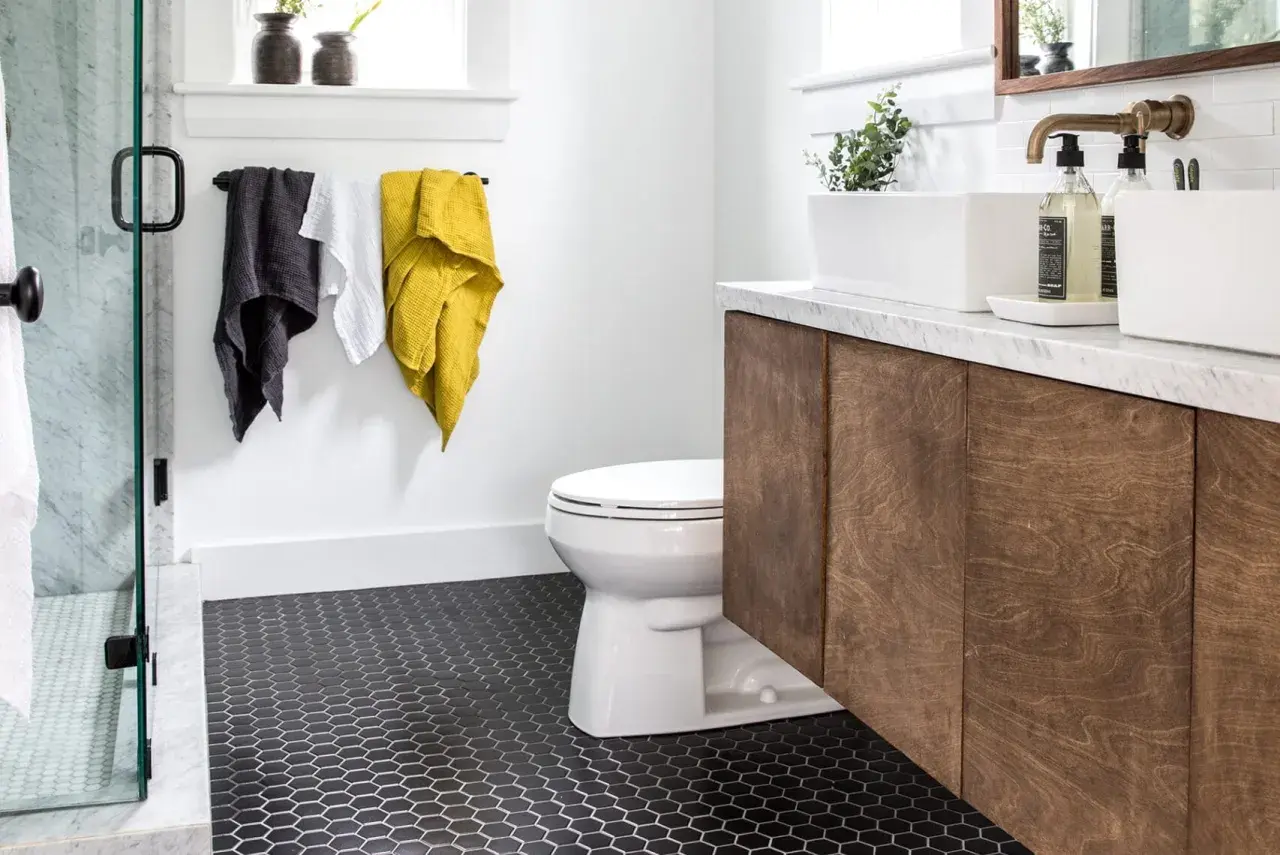
The different types of bathroom floor materials are not interchangeable. A floor that feels right in a powder room can be a poor choice in a full bath with daily showers, and the real difference usually comes down to moisture, grip, cleaning, and how much upkeep you are willing to live with. Here I break down the most practical options, where each one works best, and the tradeoffs I would actually care about in a U.S. remodel.
What matters most when choosing bathroom flooring
- Porcelain tile is the safest all-around choice for wet, high-use bathrooms.
- Luxury vinyl gives the best balance of price, comfort, and water resistance for many homes.
- Natural stone looks premium, but it asks for sealing and more maintenance.
- Engineered wood and cork belong mostly in low-moisture spaces, not busy full baths.
- Slip resistance matters as much as water resistance, especially near tubs and showers.
- Installation quality can matter as much as the material itself.
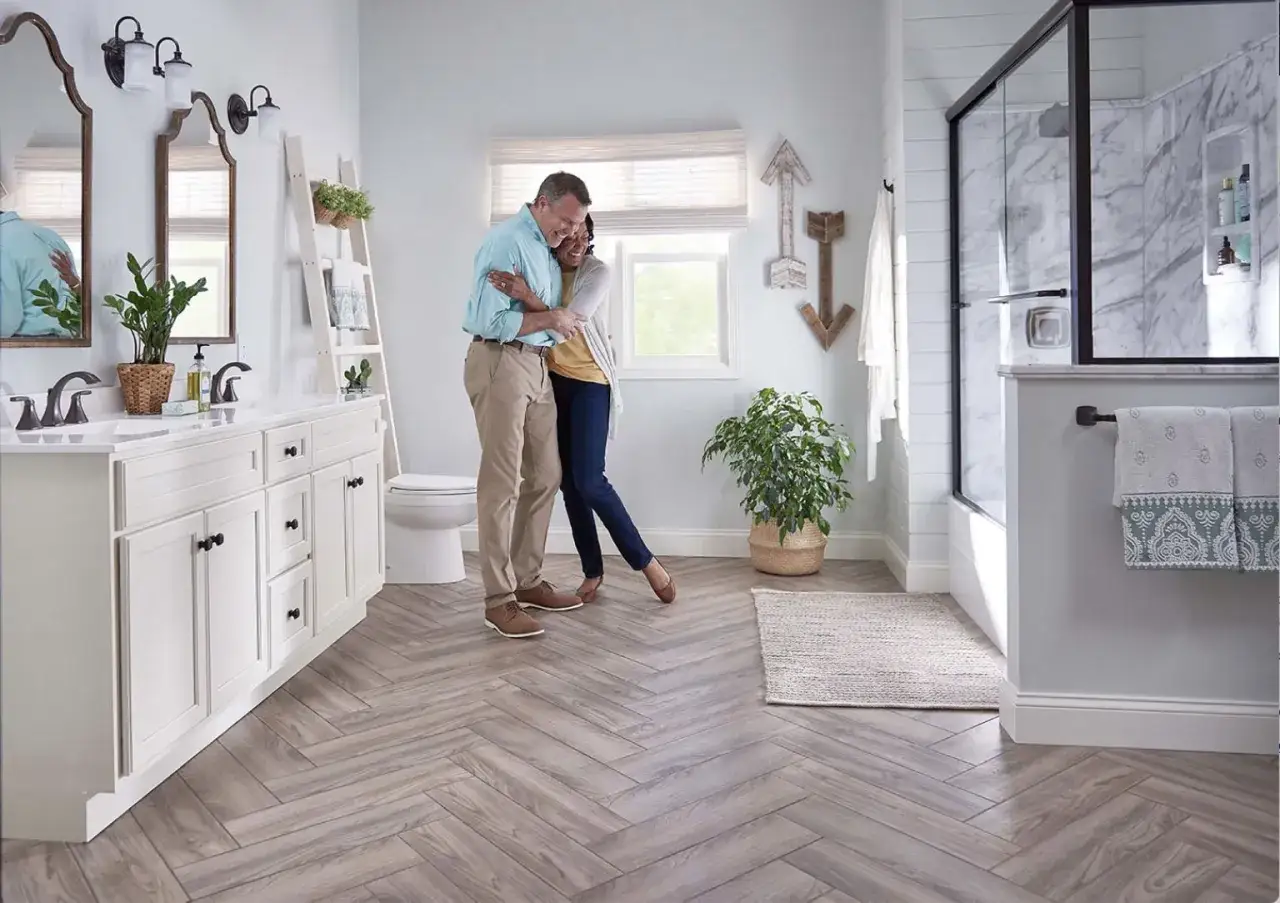
The main bathroom flooring options and where each one fits
When I narrow the field for a bathroom, I start with the material, then the finish, then the installation details. That order matters, because a beautiful surface can still be the wrong choice if it absorbs water, feels slick, or fails at the seams.
| Material | Why it works | Main drawback | Typical installed cost per sq. ft. | Best use case |
|---|---|---|---|---|
| Porcelain tile | Dense, highly water-resistant, and available in nearly every look from stone to wood. | Hard underfoot, cold without radiant heat, and grout needs care. | $12 to $25+ | Full baths, family bathrooms, and wet areas. |
| Ceramic tile | Affordable, versatile, and still very practical for bathrooms with normal moisture. | Slightly less dense than porcelain, so it is not my first pick for the wettest rooms. | $10 to $20 | Guest baths, hall baths, and moderate-use spaces. |
| Luxury vinyl plank or tile | Comfortable, easy to clean, and forgiving on the feet. | Can dent, and the cheapest products can look flat or wear faster. | $5 to $13 | Busy family bathrooms, budget remodels, and quick updates. |
| Sheet vinyl | Few seams, good moisture control, and one of the easiest options to maintain. | Less premium looking than tile or stone, and subfloor prep still matters. | $4 to $6 | Smaller bathrooms, rentals, and projects where easy cleanup is the priority. |
| Natural stone | Distinctive, high-end, and never looks generic. | Needs sealing, can stain, and usually asks for more maintenance than people expect. | $15 to $40+ | Primary baths where design and texture matter enough to justify upkeep. |
| Engineered wood | Warm, rich, and visually softer than tile. | Still vulnerable if water sits on the surface or humidity stays high. | $8 to $20+ | Powder rooms or very dry bathrooms with excellent ventilation. |
I treat waterproof laminate as a niche choice rather than a default bathroom material. It can work in some powder rooms or low-risk spaces, but I would not put it in a full bath unless the product is explicitly approved for that use and the room stays dry. I put cork in the same category: comfortable and quiet, but too moisture-sensitive for most busy bathrooms.
For most homeowners, the real contest is usually porcelain tile versus luxury vinyl. One is the durability play, the other is the comfort-and-budget play. The rest of the decision depends on how wet the room gets, which brings me to the specs that matter more than style.
The specs that matter more than the finish
A bathroom floor is not just about looks. It has to deal with steam, drips, wet feet, shampoo spills, and the occasional overflow around a toilet or tub. I always look at three things first: moisture resistance, slip resistance, and maintenance.Moisture resistance is not the same as waterproof
Porcelain is my favorite hard-surface option because it is dense and absorbs very little water. The Tile Council of North America defines porcelain tile as having water absorption of 0.5% or less, which is one reason it performs so well in bathrooms. Ceramic tile can also work well, but it is a little less dense and a little more dependent on good installation and grout care.
Vinyl is different. Good luxury vinyl and sheet vinyl handle bathroom moisture well because the material itself does not swell the way wood-based products do. That said, seams, edges, and transitions still need to be done correctly. A product can be “waterproof” on paper and still fail at the perimeter if the floor below it is not flat or the installation is sloppy.
Slip resistance matters more than glossy marketing
In the U.S., I pay close attention to wet slip performance rather than just the word “safe.” For tile, a wet DCOF of 0.42 or higher is a useful baseline for level interior areas, but it is still only a starting point, not a safety guarantee. Texture, finish, grout spacing, and cleaning habits all affect how the floor feels in real life.
That is why a polished tile can be a bad idea in a bathroom even if it looks stunning in a showroom. Matte porcelain, small-format tile, and slightly textured vinyl usually behave better under wet feet. If you are planning a curbless shower, I would be even more conservative and favor grip over shine every time.
Read Also: Cut LVT Flooring Perfectly - Avoid These 6 Mistakes
Maintenance is the hidden cost people underestimate
Tile floors are durable, but grout lines need attention. Stone is beautiful, but sealing is part of the deal, and not just once. Vinyl is easier to live with day to day, though lower-end products can show wear sooner if the room gets heavy traffic or if you drag furniture and storage bins across it.
What people usually regret is not the material itself, but the upkeep they did not budget for. If you want a floor that stays low-drama, the safest path is a surface that cleans fast, dries fast, and does not ask for annual rituals you will skip.
Once those performance basics are clear, the next step is matching the flooring to the actual bathroom you have, because a powder room and a family bath do not need the same answer.
Which floor fits the bathroom you actually have
I rarely recommend the same material for every bathroom in a house. The right choice depends on how often the room gets wet, how many people use it, and whether style or practicality is doing more of the work.
- Primary bath with a shower or tub: porcelain tile or a premium luxury vinyl floor. I would lean tile if long-term durability matters most, and vinyl if comfort and faster installation matter more.
- Hall bath used by kids or guests: ceramic tile, porcelain tile, or sheet vinyl. These rooms usually need easy cleanup and solid moisture control more than luxury.
- Powder room: this is where you have more freedom. Engineered wood, stone, ceramic, and even bolder design choices can work because standing water is less likely.
- Accessible bathroom: matte porcelain or textured vinyl with minimal thresholds and low visual clutter. I want grip, clear transitions, and a floor that does not fight mobility aids.
- Rental or fast refresh: sheet vinyl or budget-friendly LVP. In that setting, I care more about low maintenance and reasonable replacement cost than lifetime prestige.
There is one more practical split worth making: bathrooms that are mostly dry versus bathrooms that are truly wet. If a room has frequent shower use, I treat it as a wet room and become much stricter about texture, seam quality, and subfloor prep. If the room is mostly a vanity-and-toilet space, the material can be a little more flexible.
That distinction also changes the budget, because the cost of the material is only part of the bill. Labor, prep, and waterproofing can move the final number more than people expect.
What the real budget looks like
For rough U.S. budgeting in 2026, I usually think in these bands. The exact price depends on room size, demolition, subfloor repair, and whether you are paying for specialty details like heated floors or custom patterns.
| Material | Typical installed range | What usually pushes it higher |
|---|---|---|
| Sheet vinyl | $4 to $6 | Subfloor leveling, premium visuals, and tighter seam work. |
| Luxury vinyl plank or tile | $5 to $13 | Better wear layers, waterproof underlayment, and complex layouts. |
| Ceramic tile | $10 to $20 | Tile size, grout detail, prep work, and labor complexity. |
| Porcelain tile | $12 to $25+ | Large-format pieces, custom patterns, heated floors, and demolition. |
| Natural stone | $15 to $40+ | Stone type, sealing, cut complexity, and installation labor. |
| Engineered wood | $8 to $20+ | Humidity protection, product quality, and moisture-safe detailing. |
If you are comparing tile against vinyl, do not stop at the sticker price. Ask what the installer is doing about leveling, waterproofing at the toilet flange, and the transition to the hallway. Those details are where a bathroom floor feels professionally done rather than merely installed.
Details that make the floor feel intentional
Bathrooms are small enough that flooring choices read very clearly. A good material can still feel wrong if the finish, grout, pattern, or transitions fight the rest of the room. This is where design decisions and practical decisions finally meet.
- Matte finishes usually feel calmer and are less slippery-looking than glossy ones.
- Smaller tiles add grip because the extra grout lines interrupt the surface, though they also mean more cleaning.
- Large-format tiles reduce grout lines and can make a small bath feel less busy, but they need a flatter subfloor.
- Warm tones soften porcelain and vinyl, especially if the bathroom gets little natural light.
- Radiant heat is worth considering under tile if you hate cold mornings and want the room to feel more finished.
- Simple transitions from bathroom to hallway make the room look deliberate, not patched together.
I also like to think about the floor in relation to the vanity and wall color. If the vanity is visually strong, I keep the floor calmer. If the floor is the feature, I let the vanity disappear a little more. That balance matters because bathroom floors are visible every day, and a visually overloaded room feels smaller and more dated than it should.
One more thing: ventilation changes how a floor ages. A great surface in a poorly ventilated bathroom will always have more trouble than the same surface in a room with a good fan and fast-drying habits. The floor is part of a system, not an isolated choice.
The choices that age well in real homes
If I had to narrow the field for a typical U.S. home, I would start with porcelain tile for the longest-term durability and quality luxury vinyl for the best comfort-to-cost balance. Ceramic tile sits comfortably in the middle. Natural stone is for people who genuinely want the material and are ready for the upkeep, not for anyone chasing a low-maintenance bathroom.
The mistake I see most often is choosing by appearance alone. In a bathroom, the better question is not “What looks good?” It is “What still looks good after steam, water, cleaning, and daily foot traffic have done their work?” If you answer that honestly, the right flooring choice usually becomes clear very quickly.
For a full bath, I would personally keep my shortlist tight, pick a finish with real grip, and spend a little more on installation rather than chasing the cheapest material. That is the combination most likely to age well and stay easy to live with.