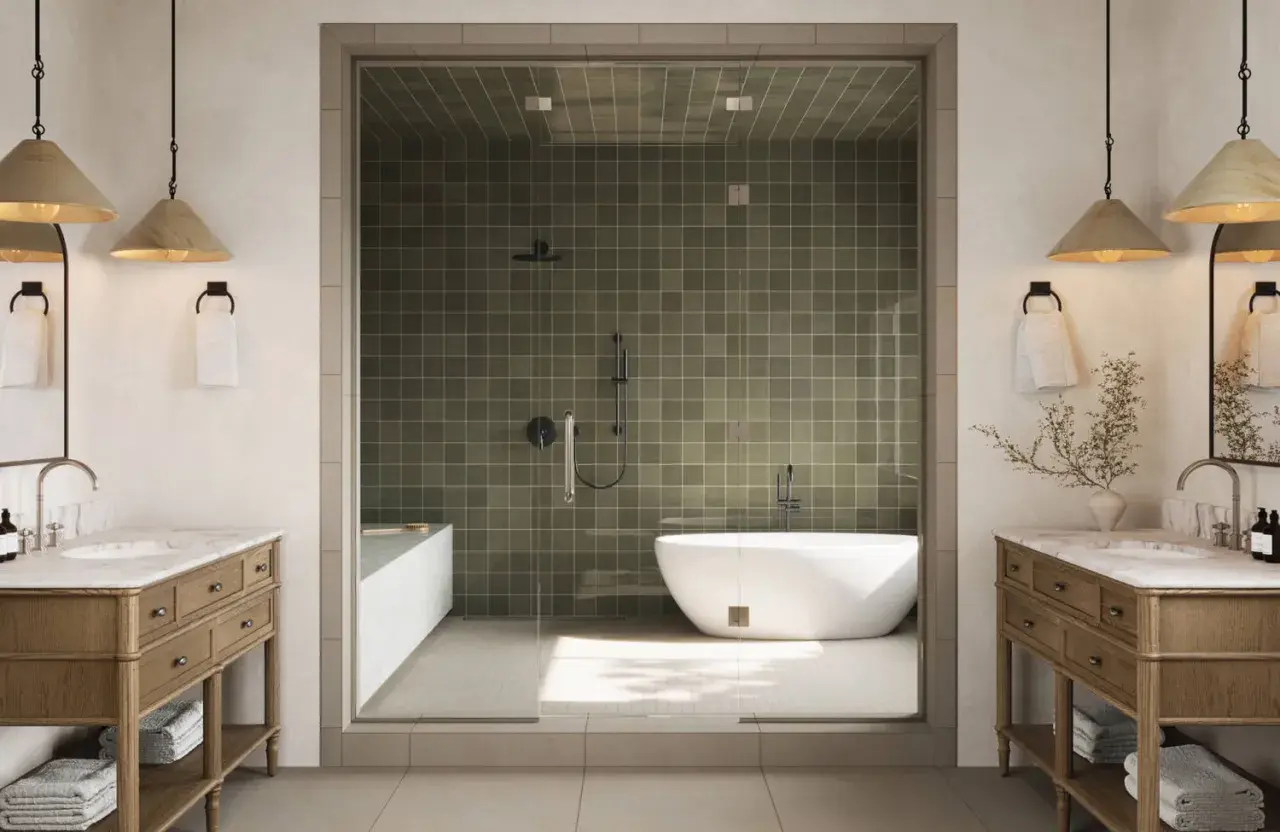
The most durable tile for a bathroom is not always the one with the hardest surface alone; it is the one that can handle water, wear, cleaning, and installation stress without showing damage early. In practice, that usually means porcelain first, with a few strong alternatives depending on traffic, style, and how much maintenance you are willing to live with.
In this article, I break down which tile types actually hold up, what durability means beyond marketing language, and how to choose the right material for showers, floors, and busy family bathrooms. I also cover the installation details that decide whether a great tile stays great for years.
The right tile choice depends on how the space is used
- Porcelain is usually the best all-around choice for high durability, especially in U.S. bathrooms.
- Quarry tile is a rugged option for heavy foot traffic and wet, utilitarian spaces.
- Granite and quartzite can be extremely durable, but they usually need more care than porcelain.
- Slip resistance matters as much as hardness in showers and bathroom floors.
- Installation quality can make or break the lifespan of even the toughest tile.
Porcelain is the safest answer for most bathrooms
If I had to pick one material for most remodels, I would start with porcelain. TCNA defines true porcelain as tile with water absorption of 0.5% or less, and that low absorption is a big reason it performs so well in bathrooms. It resists moisture, cleans easily, and holds up well under daily foot traffic. That does not mean every porcelain tile is equal. A glazed porcelain floor tile can be extremely durable on the surface, while a through-body version, meaning the color runs through the tile body, hides wear better if the surface gets nicked. For bathrooms, that difference matters most on floors and in showers, where constant cleaning and grit can eventually reveal weaker products.Porcelain also has a practical advantage that gets overlooked: it gives you a wide design range without asking for much upkeep. If your priority is a clean, resilient surface that does not become a maintenance project, porcelain is still the benchmark. From there, it is worth seeing how the other main tile families compare.
How the main tile types compare in real life
When people ask about durability, they often mean different things. Some want the hardest surface. Others want the tile that hides wear, resists slips, or survives a wet shower floor. This comparison is the fastest way to separate those goals.
| Tile type | Durability profile | Best use | Main tradeoff |
|---|---|---|---|
| Porcelain | Very high. Dense, low-absorption, and usually excellent against wear and moisture. | Bathroom floors, shower walls, shower floors with the right finish, and busy family spaces. | Harder to cut and install cleanly than softer tiles. |
| Quarry tile | Very high. Unglazed, tough, and often naturally slip resistant. | Utility bathrooms, mudrooms, laundries, commercial wash areas, and heavy-use floors. | More utilitarian look and more visible grout upkeep. |
| Granite | High. Strong and long-lasting, especially in dense varieties. | Accent floors, vanity surrounds, and premium spaces with less standing water. | Usually needs sealing and more careful maintenance than porcelain. |
| Quartzite | Very high. Often exceptionally hard and abrasion resistant. | Statement floors and walls where you want natural stone with serious toughness. | Quality varies, and sealing may still be needed depending on the product. |
| Slate | High, but variable. Some slates are dense and durable; others can cleave or flake. | Rustic bathrooms, floors with texture, and spaces where grip matters. | Selection matters a lot more than with porcelain. |
| Glazed ceramic | Moderate to good. The glaze can be durable, but the body is usually less robust than porcelain. | Walls, light-use floors, and lower-budget projects. | Chipping and glaze wear are more likely over time. |
There is one more category worth a look if you are chasing maximum surface performance: ultracompact or sintered stone tile. It is extremely dense and resistant to staining and scratching, but it sits at the premium end of the market and is not always the simplest choice for a standard bathroom install. For most homeowners, porcelain still delivers the best balance of performance and practicality.
That comparison helps, but raw material strength is only part of the story. Next, I want to separate the durability traits that actually matter from the ones that sound impressive in a showroom.
Durability means more than a hard surface
Tile durability is a stack of traits, not a single number. I look at five things first: water absorption, abrasion resistance, chip resistance, slip resistance, and the quality of the finish.
Water absorption
This is one of the clearest predictors of performance in wet rooms. Porcelain’s 0.5% absorption threshold is a technical line for a reason: lower absorption generally means better moisture resistance and less chance of long-term issues in bathrooms and showers.
Abrasion resistance
This tells you how well the surface handles grit, shoe traffic, and repeated cleaning. A tile can look beautiful on day one and still be the wrong choice if the surface wears too quickly in a busy family bath.
Slip resistance
This is where many buyers get the spec wrong. The Tile Council of North America points to a wet DCOF of at least 0.42 for level interior floors expected to be walked on when wet. DCOF, or dynamic coefficient of friction, is a slip-resistance measure, so in plain English a tile can be durable and still be a poor bathroom floor if it becomes slick when wet.
Body composition
Through-body tile keeps the color and pattern running deeper into the piece, so a chip is less obvious. Glazed tile can still be very durable, but if the glaze is damaged, the contrast underneath may show more quickly.
Read Also: Tile Grout Repair - When to Patch, Regrout, or Caulk?
Finish and texture
Polished surfaces are easier to wipe down, but they can be less forgiving under wet feet. Matte, textured, or honed finishes usually make more sense on shower floors and main bathroom floors, even if they need a little more routine cleaning.Once you know how durability works, the next question is simpler: which tile belongs in each part of the bathroom, and where should you avoid forcing the wrong product to do the wrong job?
Choose the tile for the room, not just the label
The best bathroom tile is the one that matches the exact conditions in that space. I rarely recommend the same product for a shower floor, a vanity wall, and a high-traffic main bath floor, because those surfaces fail in different ways.
- Shower floors: Smaller-format porcelain or mosaics are usually the smartest choice because the extra grout lines help with slope and traction.
- Shower walls: Large porcelain tiles work well here because wall surfaces do not take direct foot traffic and are easier to keep visually clean.
- Main bathroom floors: Porcelain again tends to be the best balance of durability, slip resistance, and easy care.
- Powder rooms: You can be a little more design-driven here, because moisture exposure is lower and wear is lighter.
- Utility baths and laundry areas: Quarry tile is often a smart workhorse if you want maximum toughness and a more industrial look.
This is also where many people make a hidden mistake: they choose a large-format tile because it looks modern, then use it on a shower floor where slope and traction matter more than visual continuity. Bigger is not automatically better in a wet area. After that, the installation details become the real durability test.
Installation details decide whether durable tile stays durable
I treat installation as part of the material, because a premium tile on a weak substrate, meaning the structural layer beneath the tile, is still a weak assembly. If the floor flexes, the waterproofing is incomplete, or the grout and movement joints are ignored, the tile will tell you about it sooner than you want.
Here is the checklist I would not skip:
- Use a flat, rigid substrate. Large-format tile needs a flatter base than small tile, and bathroom floors must meet the requirements of the tile system, not just the design plan.
- Waterproof shower areas correctly. Tile itself is not the waterproofing layer. The membrane behind or beneath it is what protects the structure.
- Choose grout for the use case. High-performance cement grout or epoxy grout can be worth it in showers and other wet zones because they resist staining better.
- Respect movement joints. Perimeter gaps and change-of-plane joints allow the assembly to move without cracking.
- Seal natural stone when required. Granite, quartzite, and slate may need sealing depending on the specific stone and finish.
That last point is why natural stone can be both excellent and inconvenient. The stone itself may be very durable, but the maintenance package is usually heavier than with porcelain. Once you account for installation and care, the best answer becomes clearer.
What I would choose for a bathroom that has to last
If the goal is the most durable tile for a typical U.S. bathroom, I would usually choose porcelain first. It gives you the best mix of low water absorption, broad design options, easy cleaning, and dependable performance in wet spaces.
If the bathroom is especially heavy-use, like a family bath or a laundry-adjacent room, I would look closely at textured porcelain or quarry tile for better traction. If the space is more design-led and you are comfortable with maintenance, dense granite or quartzite can be excellent long-term options. And if you want the most surface resistance at the premium end, ultracompact or sintered stone deserves a serious look.
The real decision is not just which tile is strong on paper. It is which tile will still look right and function well after years of water, cleaning, and daily use. If you keep that standard in mind, you will end up with a surface that feels solid long after the renovation dust is gone.