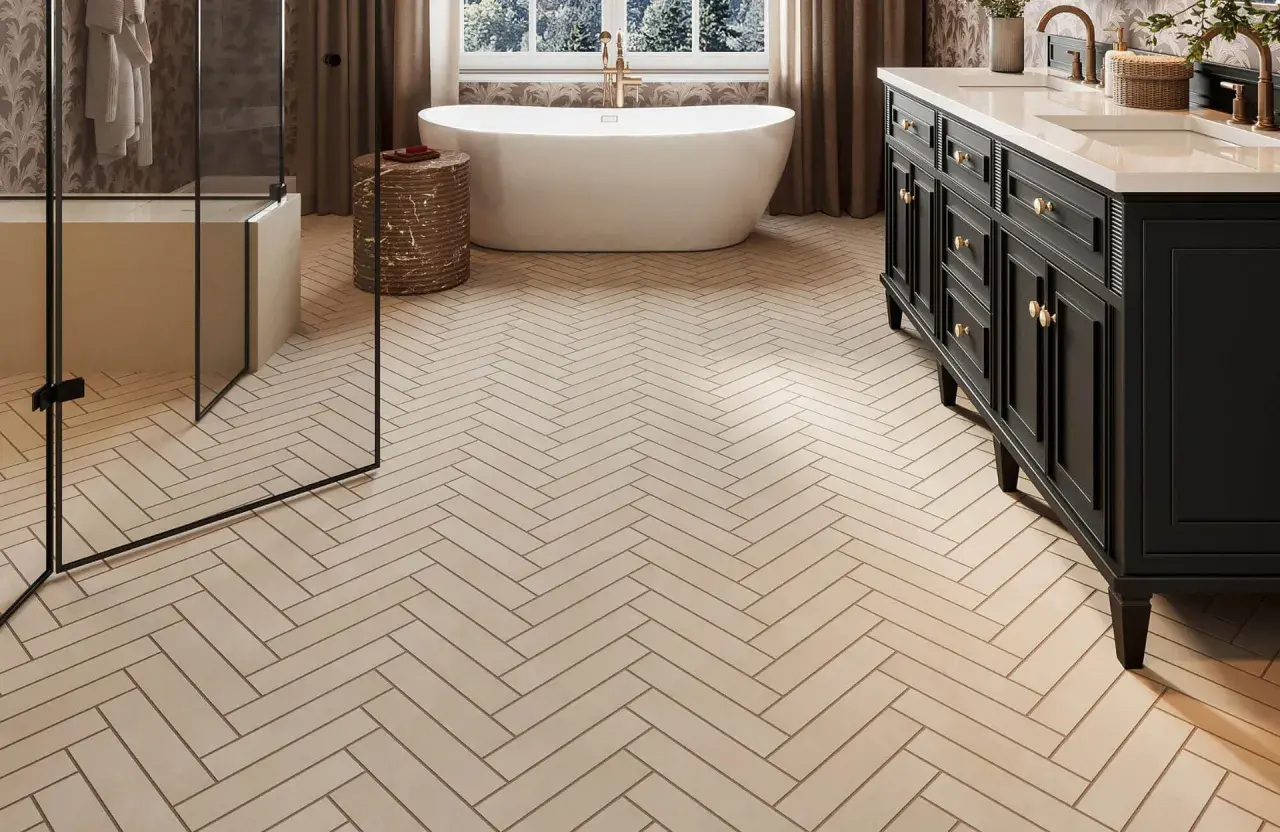
Bathroom tile looks simple from a distance, but the material behind it changes everything: how well it handles moisture, how much maintenance it needs, and how the room feels day to day. I am breaking down the common tile bodies used in bathrooms, how they are made, where each one works best, and the hidden installation details that separate a surface that lasts from one that becomes a headache.
The tile body matters, but the finish and installation matter just as much
- Most bathroom tile in the U.S. is ceramic, porcelain, glass, or natural stone.
- Porcelain is a denser ceramic made from finer materials and fired hotter, so it usually performs better in wet areas.
- Natural stone is quarried, not manufactured, and usually needs sealing and more upkeep.
- The glaze, polish, and edge treatment change how tile looks and behaves, but they do not replace good moisture protection.
- The tile itself is only one layer in the system; grout, mortar, and waterproofing are what keep a bathroom healthy long term.
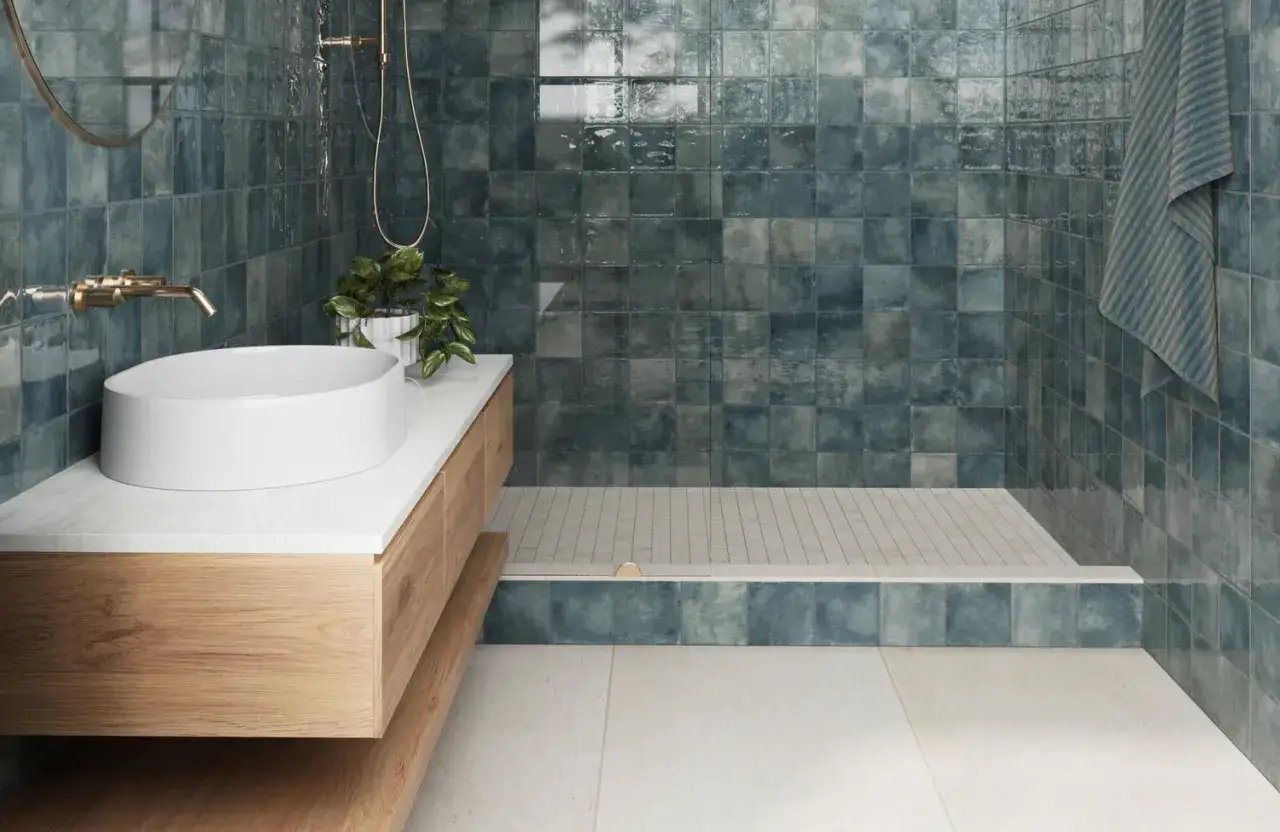
The materials behind bathroom tile
I usually start with the tile body, which is the main mass of the tile before any finish or coating is added. The Tile Council of North America notes that ceramic tile is made from clay and other naturally occurring minerals, which is a good shorthand for the category as a whole: the material is mineral-based, shaped, fired, and then finished for the room it will live in.
Ceramic tile
Ceramic tile is the classic bathroom workhorse. It is typically made from clay, sand, and water, then shaped, glazed, and fired. That makes it versatile and easy to design with, especially for shower walls, tub surrounds, and backsplash areas where you want style without overcomplicating the installation. In my experience, ceramic is often the friendliest option when the budget matters more than brute durability.
Porcelain tile
Porcelain is a subtype of ceramic, but it is made from a finer mix of minerals and fired at a higher temperature. Manufacturers often use refined clays such as kaolin along with minerals like feldspar and silica, which helps create a denser, harder body. The result is a tile that is less porous and better suited to wet zones, floors, and heavy use. If I want one material to carry most of a bathroom, porcelain is usually the first place I look.
Glass tile
Glass tile is made from melted silica-based material, often with colorants and sometimes recycled glass blended in. It is popular in mosaics, accent bands, niches, and feature walls because it reflects light and gives a bathroom a brighter, more polished look. It can be beautiful, but it is not the material I reach for when the surface needs to take a lot of abuse. Glass is more of a design statement than a hard-wearing utility surface.
Natural stone
Natural stone is not manufactured in the same way as ceramic or porcelain. It is quarried, cut, and finished from materials such as marble, travertine, slate, granite, limestone, and quartzite. The appeal is obvious: every piece is slightly different, so the room gets depth and variation that man-made tile cannot fully copy. The trade-off is that stone is usually more porous and more maintenance-sensitive, which means sealing and better cleaning habits matter.
Read Also: Diagonal vs. Straight Tile - Which is Best for Your Bathroom?
Specialty tile bodies
There are also specialty options such as cement tile, terrazzo-style tile, and large-format slab systems that behave a little differently from standard ceramic or porcelain. These can be striking in a bathroom, but they are less forgiving if you want a low-maintenance routine. I treat them as a design choice first and a performance choice second.
Once you know the raw material, the next question is how manufacturing changes the finished tile, because two tiles can look similar on a showroom wall and still perform very differently once water gets involved.
How firing, glazing, and finishing change performance
The same base material can behave in different ways depending on how it is pressed, fired, glazed, and finished. That is why I do not judge a tile by appearance alone. A glossy surface may look more upscale, but the body under it and the way it was fired are what determine whether it belongs in a shower, on a floor, or only on a dry wall.
Firing is the big one. Higher heat usually means a denser tile body with fewer pores, which is part of why porcelain performs so well in bathrooms. Glazing matters too. A glaze is essentially a glass-like coating that adds color, pattern, and stain resistance to the surface. It can be glossy, matte, satin, or textured, and each finish changes how the tile feels underfoot and how much light it throws around the room.
A finish can improve appearance without making a tile automatically better for wet use. A polished tile may look luxurious, but it can also show water spots more easily and feel slicker under bare feet. A textured or matte finish usually gives better grip, which is one reason I pay close attention to surface finish on shower floors and main bathroom floors.Some tiles are also rectified, which means the edges are mechanically cut after firing so the pieces are more uniform in size. That allows tighter grout joints and a cleaner look, but it also demands a flatter substrate and more careful installation. Large-format tile and rectified edges are beautiful when they are done right, but they punish sloppy prep.
The useful takeaway is simple: the material tells you what the tile is, while the manufacturing tells you how it will behave. With that in mind, the next step is matching the right material to the right bathroom surface.
Where each material works best in a bathroom
Different surfaces in a bathroom face different levels of water, traffic, and cleaning. A shower wall does not need the same performance profile as a shower floor, and a vanity backsplash does not need the same durability as the main floor. This is where most people overbuy in one area and underbuild in another.| Material | What it is made from | Best use in a bathroom | Main trade-off |
|---|---|---|---|
| Ceramic | Clay, sand, water, and glaze | Shower walls, tub surrounds, vanity backsplashes, accent walls | Usually more porous than porcelain and not my first choice for wet floors |
| Porcelain | Finer clay and mineral blend, fired hotter | Shower floors, main bathroom floors, wet rooms, walls | Harder to cut and often a little pricier, but worth it for moisture resistance |
| Glass | Melted silica-based material, often with colorants and recycled content | Accents, niches, decorative bands, feature walls, mosaics | Can be fussy in high-wear or high-impact spots and is not my default for floors |
| Natural stone | Quarried stone such as marble, travertine, slate, granite, limestone, or quartzite | Luxury shower walls, statement floors, feature walls, spa-like bathrooms | Needs sealing and more maintenance, and each piece varies naturally |
| Specialty bodies | Cement, terrazzo-style materials, or large slab systems | Design-forward feature areas or custom bathrooms | More sensitive to installation quality and care routines |
For most homes, porcelain is the safest all-around choice for wet areas, ceramic is the easygoing wall option, glass works best as an accent, and stone is a style decision that comes with maintenance attached. That trade-off becomes much easier to manage once you know what the product label is actually telling you.
How to read the spec sheet without getting fooled by the finish
A pretty sample is not enough. I always want to know what the tile is rated for, because the label tells you more about performance than the showroom lighting does. In bathroom projects, I focus on a few details first.
- Water absorption matters most in wet areas. Daltile notes that porcelain tile has a water absorption rate below 0.5 percent, which is why it is so often used in showers and on bathroom floors.
- Slip resistance matters on any floor that gets wet. A glossy finish can be fine on a wall and a bad idea on a shower floor.
- Shade variation can be intentional or subtle. I always check the boxes and dye lot so the installed room does not surprise anyone.
- Edge style affects grout width and installation precision. Rectified edges can look crisp, but they demand a flatter substrate.
- Tile thickness and format affect handling. Large-format pieces look clean, but they need better prep and careful layout.
- Sealing requirements are essential for stone and sometimes helpful for grout. If the product needs sealing, I assume it is part of the maintenance plan, not an optional upgrade.
The finish and the body are not the same thing. A glazed tile may wipe clean easily, but that does not make every version of it equally good for a shower floor. The more you read the technical sheet instead of the marketing copy, the fewer disappointments you have later.
That leads directly to the part most homeowners underestimate: the tile is not the waterproofing system. The next layer matters just as much.
The hidden layers that make tile survive moisture
Bathroom tile works as part of an assembly, not as a standalone shield. The tile face may repel water, but the system underneath still has to manage moisture, movement, and daily cleaning. In showers especially, the real failure points are usually the layers behind the tile, the corners, and the transitions.
I think of a wet-area installation in four parts: the substrate, the bonding mortar, the grout, and the waterproofing layer. If any one of those is weak, the surface may look fine for a while and then start showing problems at the seams, niche edges, curb, or floor transitions. That is why a bathroom can have expensive tile and still fail if the build underneath is careless.
Tile is the face of the system, not the waterproof layer. For showers, that means you need proper backer board or a suitable substrate, a membrane or other waterproofing strategy, and a slope that moves water toward the drain instead of trapping it in corners. Even the best tile selection cannot make up for a flat shower pan, bad movement joints, or a skipped membrane.
Grout deserves the same respect. Standard cement grout can work well when it is chosen and maintained properly, but epoxy grout offers better stain and moisture resistance in demanding showers. I do not recommend it everywhere, because it can be harder to work with, but in the right spot it can be worth the effort. If you want a bathroom that ages gracefully, the detailing has to be as thoughtful as the tile body itself.
Once those layers are in place, the final step is choosing a mix of materials that fits the way the bathroom will actually be used.
The simplest bathroom tile mix I would specify for most homes
If I were putting together a practical bathroom package for a typical home, I would keep the material strategy simple and put the most durable option where the water exposure is highest.
- Shower walls: glazed ceramic or porcelain, depending on the budget and the look.
- Shower floor: textured porcelain, often in a smaller format or mosaic so the floor has more traction.
- Main bathroom floor: porcelain first, especially in family bathrooms and high-traffic spaces.
- Vanity backsplash: ceramic for an easy, budget-friendly finish or glass if you want more reflection and brightness.
- Feature wall or niche: glass or stone only if you are willing to accept the maintenance that comes with them.
- Budget-conscious remodel: ceramic on walls, porcelain on floors, and a careful grout choice to keep the room easy to clean.
If you love natural stone, I would not talk you out of it. I would just treat it honestly: it is a style choice with a maintenance plan attached. If you want the easiest life, porcelain gives you the broadest safety margin, especially in a bathroom that needs to work hard every day.
My rule is simple: choose the most moisture-resistant material for the wettest surface first, then build the rest of the room around it. That approach keeps the bathroom beautiful, easier to clean, and far less likely to become a project you regret later.