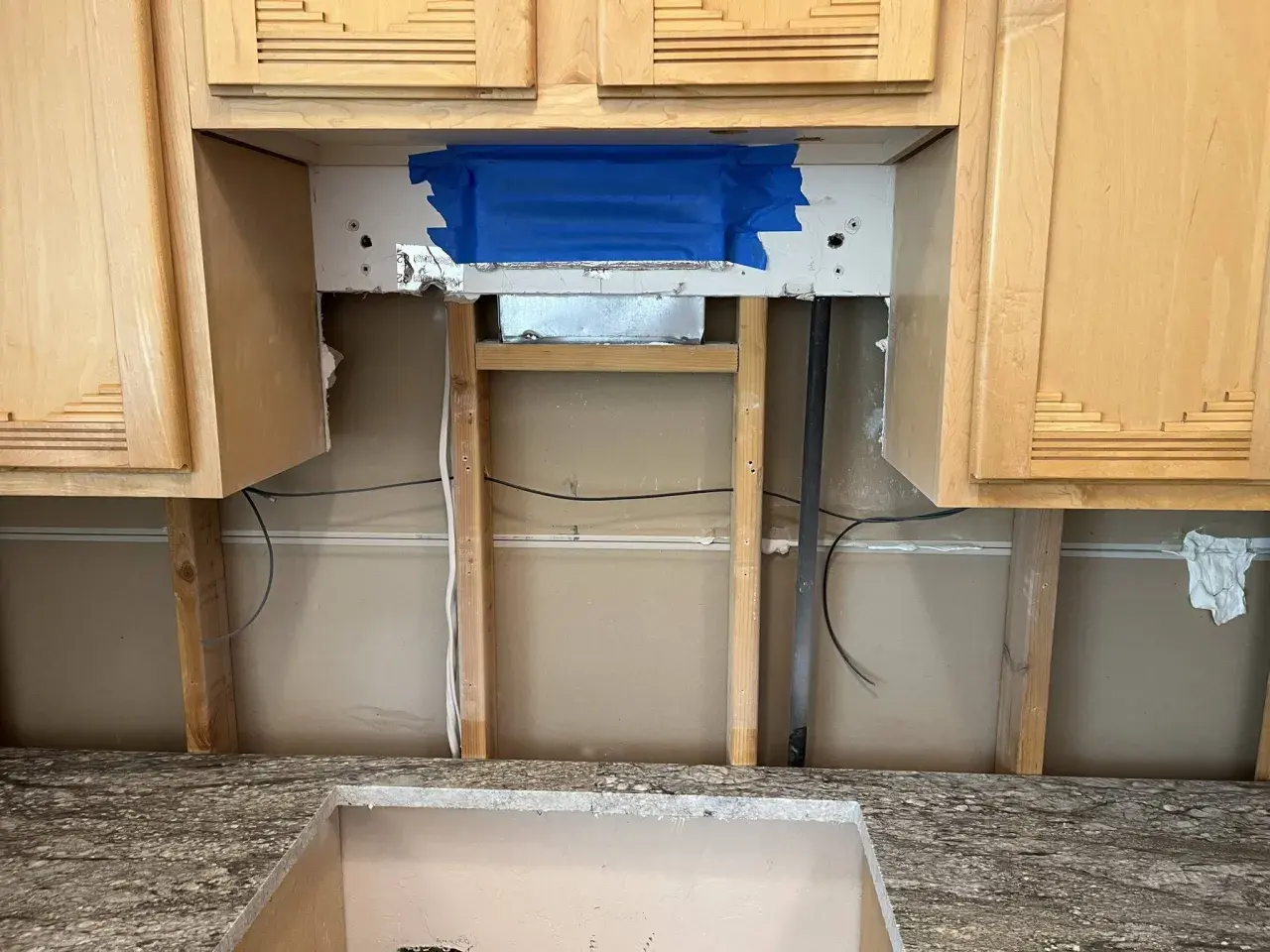
Most backsplash walls only need a sound, flat surface
- For a standard kitchen backsplash, sound drywall is often enough. The wall has to be flat, firmly attached, and free of peeling paint or moisture damage.
- Backer board becomes useful when the wall is damaged, uneven, or splash-prone. It is a substrate upgrade, not a universal requirement.
- Cement board is water-durable, not waterproof. If you want moisture protection, the whole wall assembly has to be planned for it.
- Waterproof foam board or a membrane-backed system makes more sense near heavy splash zones. It costs more, but it solves a different problem than drywall alone.
- Flatness, fastening, and movement joints matter as much as the substrate. A better board will not rescue a wavy or loose wall.
The short answer for most kitchens
For a typical backsplash over undamaged drywall, I usually do not see a reason to tear the wall out and install backer board. A backsplash is normally treated as a dry interior tile application, not a shower or tub surround. If the drywall is solid, flat, clean, and not hiding moisture damage, tile can go right over it with the right setting material.
That is the part many homeowners overcomplicate. They assume tile automatically needs a cementitious panel underneath, but in a standard kitchen that is often unnecessary. What matters first is whether the wall is sound, because tile fails faster on loose, bowed, or dirty surfaces than it does on drywall. That is why I always check the wall before I think about the board.
When drywall is enough
I treat drywall as acceptable when it passes a few simple checks. If the wall is stable and the finish is decent, I would rather spend my time on prep and layout than on demolition.
- The drywall does not flex when pressed.
- The surface is flat enough that obvious waves will not show through the tile.
- There are no soft spots, stains, mold, or signs of an active leak.
- Old paint is not flaking, and glossy areas have been scuffed or primed.
- The backsplash will see splashes, but not constant water exposure.
That last point matters. A backsplash behind a sink or cooktop may get wet, but it is still not a shower wall. In that kind of setting, sound drywall is usually fine, especially with ceramic or porcelain tile. Where I start to hesitate is when the wall is already compromised, or when the tile format is unforgiving and every ripple in the wall will telegraph through the finished surface. Once the wall stops passing those checks, backer board starts to make sense.
When backer board earns its keep
Backer board is worth the extra labor when it solves a real problem, not just because it sounds more durable. I reach for it when I want a more tile-friendly substrate or when the wall already needs major work.
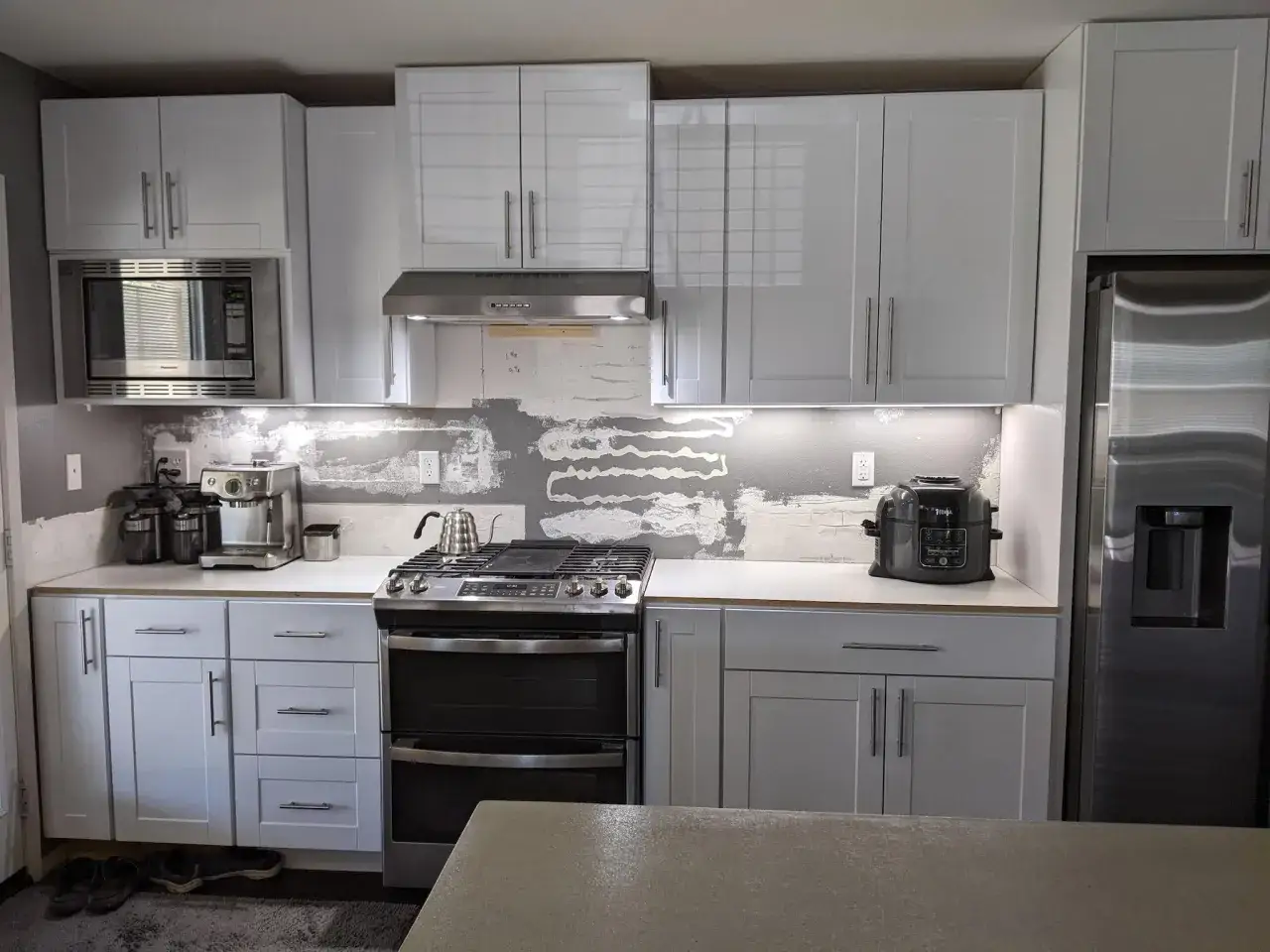
- The drywall is damaged after old tile removal and the face paper is torn up.
- The wall has water stains, softened areas, or old patchwork that would take more effort to make reliable than to replace.
- The backsplash runs through a sink zone with frequent splashing and aggressive cleaning.
- The wall is being opened to the studs anyway, so I can rebuild it cleanly.
- I am installing a heavier stone tile or a large-format tile that needs a very solid, very flat base.
- I want to build in a waterproofing system rather than just rely on the existing wall finish.
One thing I would not do is use backer board to fix framing movement. If the studs move, bow, or twist, the tile problem is structural, not cosmetic. Board type does not solve that. It only gives tile a better surface once the wall itself is already sound. That distinction matters, because it keeps you from spending money in the wrong place.
Backer board is not the same as waterproofing
This is where a lot of backsplash advice gets sloppy. Cement board is not a waterproof wall on its own. It is water-durable and tile-friendly, but water can still pass through grout joints and reach the assembly behind the tile. That is normal, which is why the whole wall system matters more than the face of the board.
When I want actual moisture protection, I think in terms of a waterproof board or a membrane system, not just “backer board.” That is especially useful in bathroom backsplashes, around wet sinks, or anywhere cleaning water tends to linger. Grout joints are not waterproof, so the substrate and detailing have to do the real work.If you separate those jobs in your head, the choice gets easier. Drywall can be a perfectly good backing in a dry area. Cement board can be a better tile base when the wall needs rebuilding. Waterproof boards and membranes are for situations where moisture control is part of the design, not an afterthought.
How the common options compare
If I were choosing a substrate for a backsplash, I would compare the options by exposure, wall condition, and how much demolition I am willing to do. This is the simplest way to keep the decision practical.
| Option | Best for | Strengths | Trade-offs |
|---|---|---|---|
| Sound drywall | Most standard kitchen backsplashes in dry, interior areas | Fast, inexpensive, easy to tile over, minimal wall thickness change | Not a moisture upgrade and not a fix for damaged drywall |
| Cement board | Rebuilds, splash-prone areas, and walls that are already being opened | Durable, tile-friendly, water-durable, familiar to tile installers | More labor, more dust, and still not waterproof by itself |
| Waterproof foam board or membrane-backed system | Areas where you want a real moisture-management layer | Lightweight, flat, and designed to handle water better than plain drywall | Higher material cost and more system-specific installation steps |
| New drywall on studs | Projects where the old wall is damaged or you are starting over | Clean reset, good flatness, easy to detail correctly | More demolition and more time if the existing wall was still usable |
The simplest wall that still matches the exposure is usually the best wall. I would not add complexity just to feel safer if the existing drywall is already doing the job. From there, the next step is making sure the prep is clean enough for the tile to last.
The prep work that decides whether the tile lasts
In real projects, I see failures because of bad prep more often than because someone picked the wrong board. A backsplash is a small area, which makes it tempting to rush. That is usually a mistake.
- Remove grease, dust, and loose paint.
- Patch dents, torn paper, and holes before tiling.
- Scuff glossy paint and prime if the adhesive or mortar calls for it.
- Flatten high spots and fill low spots, especially for large-format tile or glass tile.
- Plan movement joints where tile meets the countertop, cabinets, and inside corners.
- If you install backer board, tape and skim the seams so they do not show through the tile.
- Use the setting material that matches the tile and the substrate, rather than assuming one product fits every wall.
Flatness is the detail people underestimate. A small subway tile can hide modest wall flaws better than a glossy glass mosaic or a large tile sheet, but none of them likes a wavy substrate. If the wall is lumpy, the tiles will advertise it. That is why I often focus more on the wall’s shape than on whether it is drywall or cement board. Once that is under control, the substrate decision becomes much more obvious.
The choice I would make on a real project
If I were standing in a typical U.S. kitchen with healthy drywall, I would leave the drywall in place, clean and prime it properly, and put my energy into flatness, layout, and clean movement joints. That is the most efficient path for most backsplash jobs, and it avoids unnecessary thickness changes around outlets, trim, and cabinet edges.
If the wall is damaged, already opened up, or exposed to repeated splashing, I would move to cement board or a waterproof panel system, depending on how much moisture control I want. I would also plan for the extra details that come with a thicker assembly, like outlet extenders and cleaner edge transitions. In other words, I would choose the least invasive wall that still gives me a flat, solid, appropriate base for the tile.
That is the rule I trust most: start with the wall you actually have, not the wall you wish you had, and upgrade the substrate only when it solves a real problem. For most backsplashes, that means drywall is enough. For the rest, backer board is useful, but only when it is part of a smarter assembly, not a reflex.