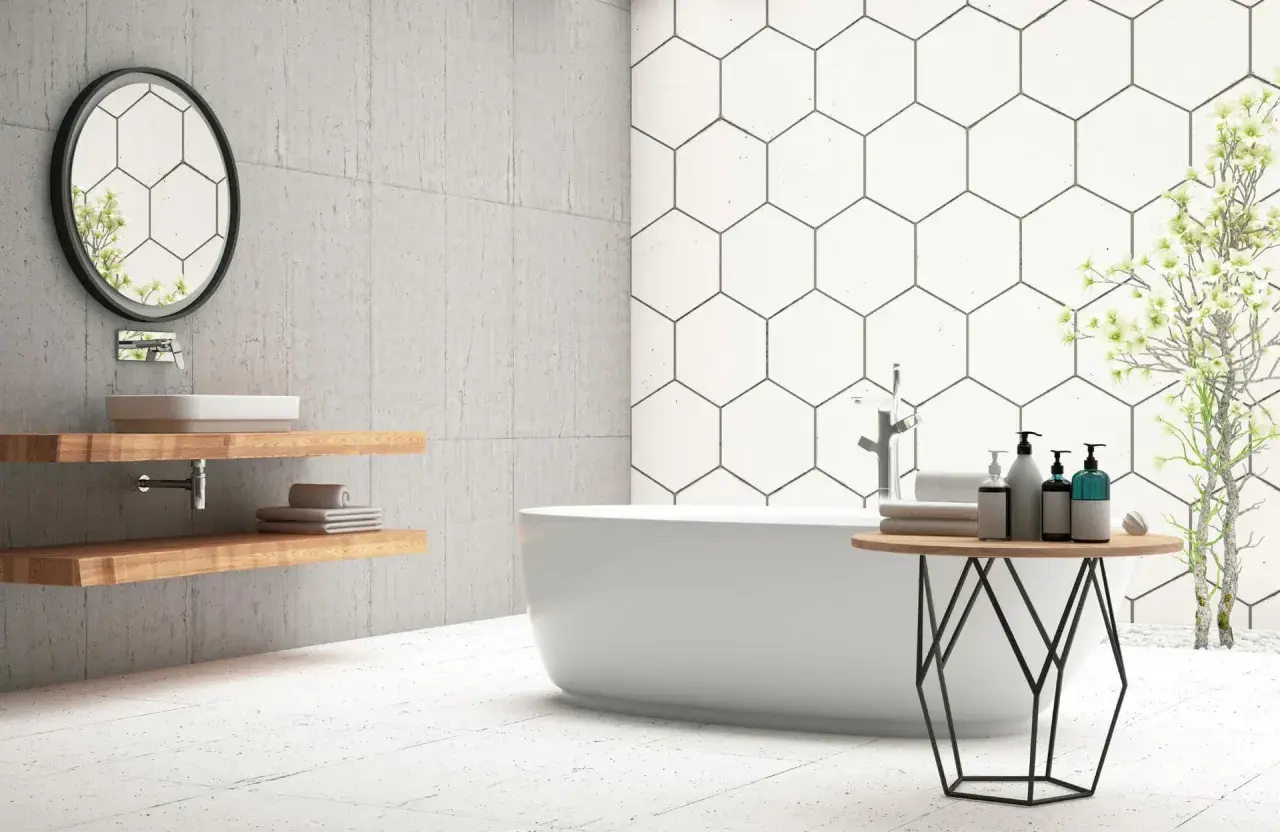
Ceramic tile is one of the most practical bathroom-floor materials because it handles moisture well, cleans quickly, and can fit nearly any design. Is ceramic tile good for bathroom floors? In most U.S. homes, yes, but only if you choose the right surface texture and install it over a properly prepared base. The difference between a floor that feels dependable and one that feels slick usually comes down to the details beneath your feet.
Ceramic tile is a strong bathroom-floor choice when traction, grout, and installation are handled correctly
- It is durable, moisture-tolerant, and easy to clean, which suits daily bathroom use.
- Matte or lightly textured finishes are usually safer than glossy ones on wet feet.
- Smaller tiles or mosaics can improve grip in the wettest zones, especially near showers.
- The subfloor, waterproofing, and grout matter as much as the tile itself.
- Installed ceramic tile in the U.S. often lands around $12 to $40 per square foot, depending on the project.
Why ceramic tile still makes sense in a bathroom
I like ceramic tile for bathrooms because it solves several problems at once. It handles splashes, dries fast, and gives you a surface that is easy to sweep, mop, and disinfect without babying it. It also plays well with heated floors, which is a real comfort upgrade in a room where bare feet hit the floor first thing in the morning.
The bigger reason ceramic stays relevant is flexibility. You can go simple and clean, or make the floor part of the design with pattern, color, or a stone look that would be more expensive in natural material. For many homeowners, that balance of performance and style is exactly what makes ceramic worth considering.
Still, ceramic tile is only a good bathroom choice when the floor assembly is built correctly, not just when the tile looks good in a sample board. That is where the tradeoffs start to matter.
Where ceramic tile can disappoint
The first downside is traction. A glossy ceramic surface can feel fine when dry and sketchy the moment water, shampoo, or lotion lands on it. In my experience, that is the fastest way to turn a beautiful bathroom floor into one people avoid stepping on with wet feet.
Then there is comfort. Ceramic is hard and naturally cool, so if you want a softer, warmer feel, you will need radiant heat, a good bath mat, or a different flooring material. The tile itself will not solve that problem.
Maintenance is another reality check. The tile face is easy; the grout is where the work happens. Light grout looks crisp, but it also exposes soap residue and dirt more quickly, and a poorly prepared subfloor can lead to cracked grout or loose tiles later on.
If your bathroom floor gets soaked regularly, or if the structure under it has any flex, ceramic becomes less forgiving. That does not make it a bad material, but it does mean the installation needs to be taken seriously.
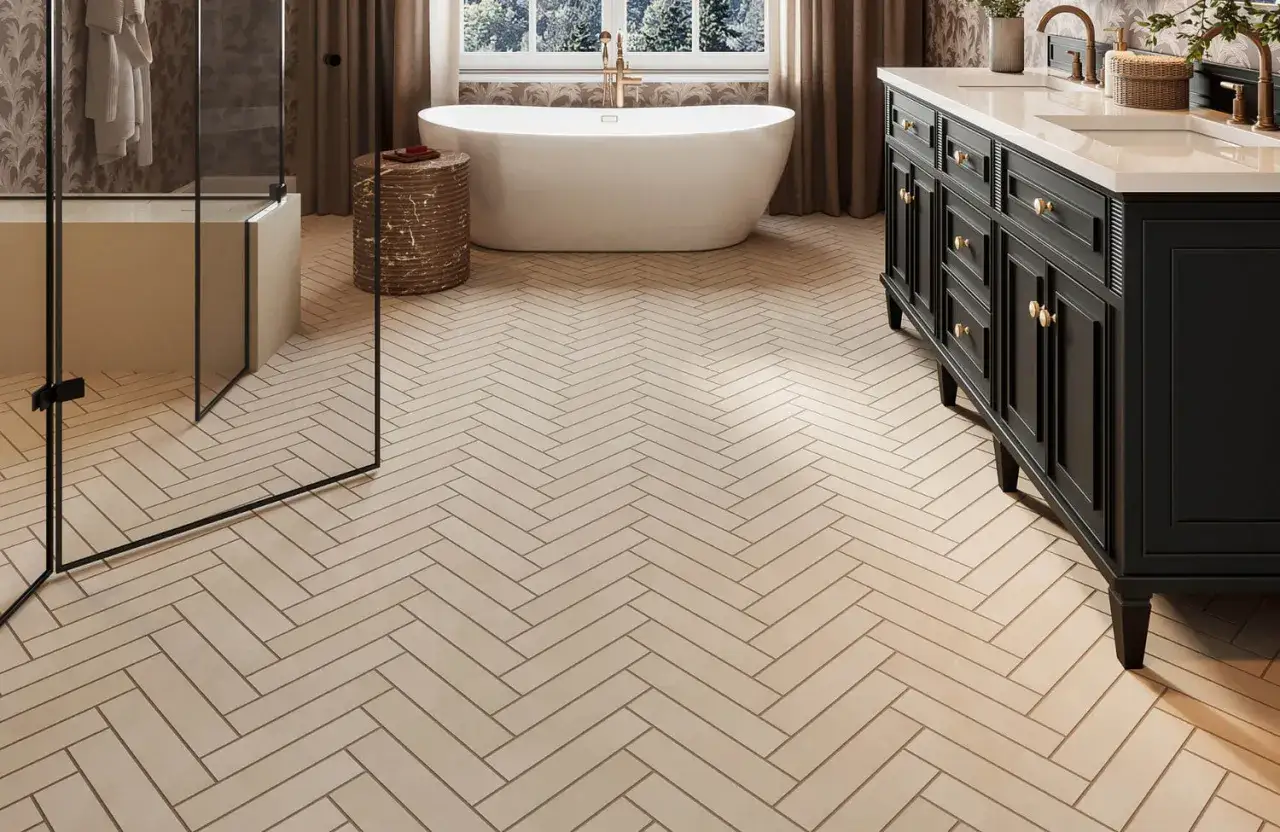
How to choose the right finish and format for safety and comfort
When I help people think through bathroom tile, I start with slip resistance. A useful baseline is a wet DCOF of 0.42 or higher for level interior areas intended to be walked on when wet. DCOF, or dynamic coefficient of friction, is simply a way to describe how much grip a surface offers underfoot; I treat it as a starting point, not a promise that the floor is slip-proof.Pick the finish before you fall in love with the pattern
Matte and lightly textured finishes are usually the safer everyday choice. They hide water spots better, feel a little less slick, and still look polished in a modern bath. High-gloss tile has a place on walls, but I am cautious about it on floors unless the room stays very dry.
- Glossy works only if you are willing to trade some traction for shine.
- Matte is the most balanced option for most family bathrooms.
- Textured gives the best grip, but it can be slightly harder to scrub clean.
Choose size with the wettest spot in mind
Larger tiles mean fewer grout lines, which makes the floor faster to clean and visually calmer. Smaller tiles, especially mosaics, add more grout joints, and that can help traction in the wettest parts of the room. I would use that logic most strongly near a tub, a shower entry, or any spot where water regularly lands.
Read Also: Subway Tile Floor - How to Choose & Install for Lasting Style
Do not ignore grout color and type
Grout is not a design afterthought. It affects both maintenance and feel. A mid-tone grout often ages better than bright white, and epoxy grout can resist staining better than standard cementitious grout, though it usually costs more and is less forgiving during installation.
Once you know what to look for in a surface, the next question is whether ceramic or porcelain is the better fit for your specific bathroom.
Ceramic tile vs porcelain for bathroom floors
People often use these words interchangeably, but they are not the same. This Old House notes that porcelain is fired hotter and ends up denser and harder than standard ceramic, which is why porcelain usually gets the nod in tougher, wetter, or higher-traffic spaces. Ceramic can still be a smart choice, but the margin for error is a little smaller.
| Factor | Ceramic tile | Porcelain tile |
|---|---|---|
| Density and moisture resistance | Less dense, usually more porous, but still suitable for many bathroom floors when glazed and installed well | Denser and less porous, which gives it an edge in very wet or busy bathrooms |
| Installation | Easier to cut and generally friendlier for straightforward installs | Harder to cut and often more demanding on tools and labor |
| Comfort and look | Similar underfoot; available in many colors, patterns, and finishes | Similar underfoot, with many same visual options plus extra durability |
| Best use | Powder rooms, guest baths, standard family baths | Main baths, splash-prone floors, shower-adjacent spaces |
| Budget | Usually the lower-cost route | Usually costs more, especially when labor is harder |
My rule is simple: if the bathroom is a standard daily-use room, ceramic is often enough. If the floor spends a lot of time wet, or if you want the safest bet for a long-life remodel, porcelain is usually the smarter upgrade.
That comparison only works, though, when the floor beneath the tile is ready for it.
Installation details that decide how well it performs
The best tile in the world can fail on a bad base. The subfloor, which is the structural layer under the finished flooring, needs to be stiff, flat, and properly prepared so the tile does not flex or crack over time. If I were checking a job, this is where I would spend more of my attention than on the color swatch.
- Flatness matters because uneven floors create lippage, the height difference between adjacent tiles that can feel like a trip point.
- Waterproofing is essential in areas that get repeated splashing, especially around tubs, showers, and toilet bases.
- Thinset mortar is the adhesive bed that bonds tile to the substrate; the wrong mortar can lead to poor coverage and weak spots.
- Movement joints give the floor room to expand and contract instead of pushing tiles against each other.
- Uncoupling membranes can help separate tile from small subfloor movement, which reduces the chance of cracks telegraphing upward.
This is also why I am skeptical of rushed DIY installs in bathrooms. The room is small, but the consequences of a weak prep layer show up fast: loose tiles, cracked grout, or corners that start to lift when moisture and movement meet.
When those layers are done correctly, ceramic tile stops being a gamble and starts behaving like the dependable finish people expect.
What the budget usually looks like in the U.S.
HomeGuide’s 2026 pricing guide puts ceramic tile installation at roughly $12 to $40 per square foot, with tile materials often ranging from $2 to $20 per square foot before labor. For a 40-square-foot bathroom floor, that means a basic ceramic project can land somewhere around $480 to $1,600 before subfloor repairs, trim, or pattern upgrades.
| Cost item | Typical range | What it means |
|---|---|---|
| Ceramic tile materials | $2 to $20 per square foot | Depends on glaze, size, and look |
| Installed ceramic tile | $12 to $40 per square foot | Common full-project range for labor plus materials |
| 40-square-foot bathroom floor | $480 to $1,600 | Before leveling, trim, or repair work |
In practice, labor and layout drive the bill more than the tile box does. A simple straight lay is cheaper than a diagonal pattern, and a floor that needs leveling or new underlayment adds cost quickly. That is why small bathrooms can still surprise people: the room is compact, but the prep work is not always simple.
If you are comparing bids, ask what is included. I care less about the lowest headline number and more about whether the quote covers demolition, backer board or membrane, grout, transition strips, and any floor correction the room needs before tile goes down.
Price is only one part of the decision, though. The room’s layout and how wet it gets should steer the choice just as much.
Which bathroom layouts I would choose ceramic for
For a powder room or guest bath, ceramic tile is an easy yes. The floor sees lighter traffic, the room usually dries quickly, and you can spend more of the budget on a finish that makes the space feel intentional.
For a standard hall bath or family bathroom, I still like ceramic, but I would choose a matte or lightly textured surface and be strict about grout quality. That is the combination that keeps the floor practical without making it look industrial.
For a primary bath that gets frequent shower spray, wet socks, or lots of shared traffic, I start leaning harder toward porcelain. Ceramic can still work there, but I want better traction, better waterproofing, and a more carefully chosen format.
For shower floors and other frequently soaked zones, I prefer small-format tiles or mosaics, because the extra grout lines can help traction and the floor usually behaves better around slopes and drains.
If the room has radiant heating, ceramic becomes even more attractive because the cold-floor complaint fades quickly. That is one of those comfort details that homeowners usually appreciate more after the first winter than on install day.
Once you match the material to the room, the final answer becomes less about fashion and more about how you actually live.
The choice I would make for most U.S. bathrooms
So, is ceramic tile good for bathroom floors? For most U.S. bathrooms, absolutely. I would choose it when I want a cleanable, durable surface with strong design flexibility, and I would only skip it when the room stays very wet, the subfloor is questionable, or I want the extra margin that porcelain brings.
The safest ceramic setup is usually a matte or lightly textured glaze, a slip-resistant spec, a well-prepared subfloor, and grout that is chosen for maintenance as much as appearance. If you get those four pieces right, ceramic feels less like a compromise and more like the practical standard it has been for years.
When I am down to the final decision, I bring the sample home, place it on the bathroom floor, and wet it lightly under the room’s actual light. That simple check tells me more about daily use than a showroom ever can, and it is often the moment when the right choice becomes obvious.