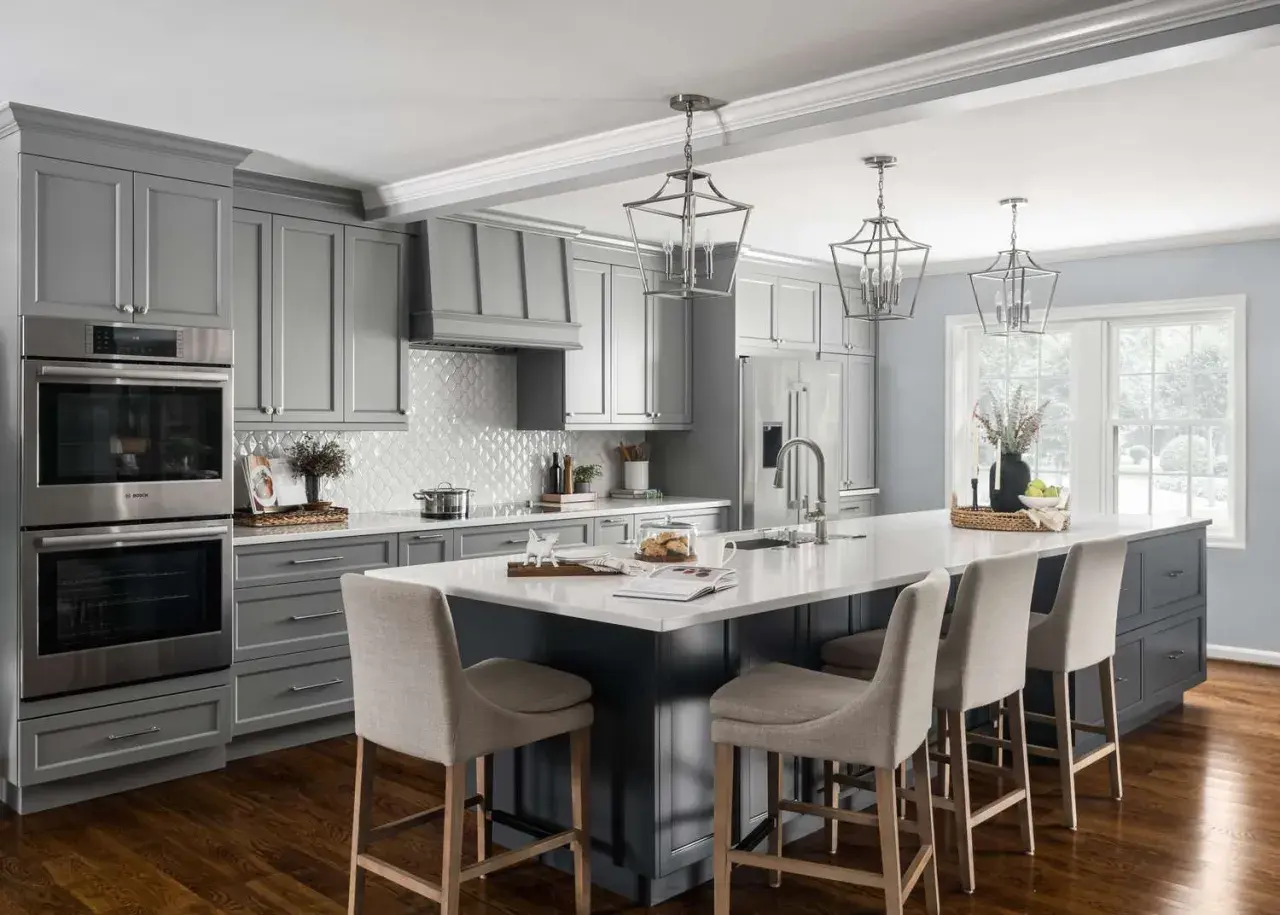
Choosing the best flooring for kitchens and bathrooms is less about chasing a trendy finish and more about matching the room to the way people actually live. These spaces deal with water, heat, foot traffic, spills, steam, and cleaning products, so the right surface has to do more than look good on day one. I’ll walk through the materials that hold up best, where each one makes sense, what they cost, and the small details that separate a smart choice from an expensive regret.
The safest and easiest choices are not always the cheapest
- Porcelain tile is still the most durable all-around option when you want a hard-wearing surface with strong moisture resistance.
- Waterproof luxury vinyl is the best value-driven alternative when you want comfort, faster installation, and simpler cleanup.
- Bathrooms need traction as much as water resistance; for level wet areas, I like to see a wet DCOF around 0.42 or higher.
- Sheet vinyl is a practical budget pick, especially when fewer seams matter more than a premium look.
- Natural stone and engineered wood can work in specific cases, but they come with maintenance or moisture compromises.
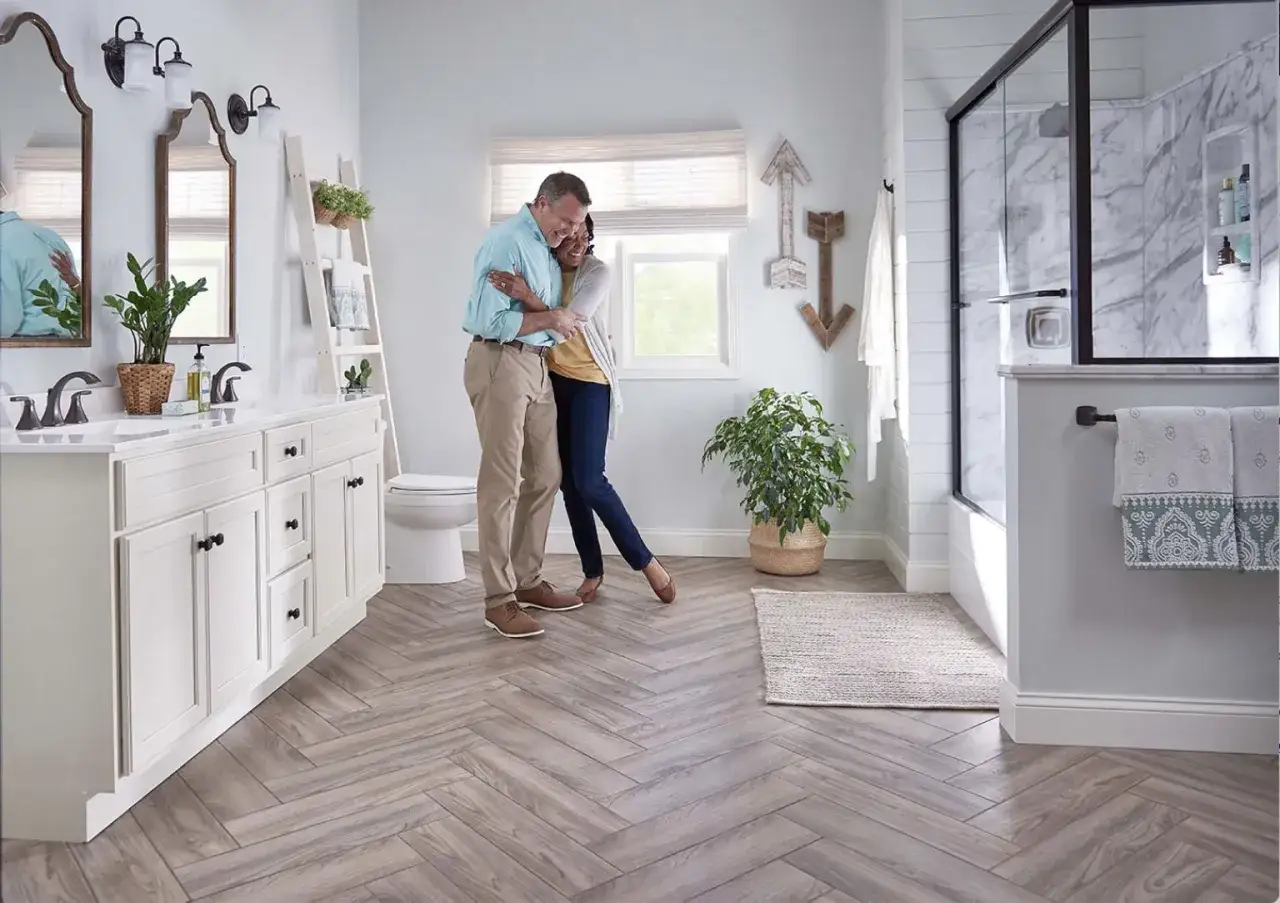
The materials I trust most for these rooms
When I narrow flooring options for kitchens and baths, I usually start with the same short list. The winners are the materials that can survive moisture without constant fuss, clean up quickly, and still make sense after the installation bill arrives. Style matters, but in these rooms performance should lead.| Material | Best use | Why it works | Main drawback | Typical U.S. cost |
|---|---|---|---|---|
| Porcelain tile | Full bathrooms, busy kitchens, wet-room style spaces | Excellent moisture resistance, strong durability, wide design range, good traction when textured or matte | Hard underfoot, cold without radiant heat, grout needs care | Tile often ranges widely by quality; materials can run about $2-$45 per sq. ft., with labor commonly adding $3-$15 per sq. ft. or more |
| Waterproof LVT or LVP | Kitchens, family bathrooms, rentals, quick remodels | Waterproof surface, quieter than tile, warmer feel, easier DIY potential | Cheaper products can dent or look less convincing up close | LVP often runs about $1.39-$5.99 per sq. ft. for click-lock; LVT about $1.86-$5.27, with installation often $1-$5 per sq. ft. |
| Sheet vinyl | Budget remodels, small baths, utility-heavy kitchens | Few seams, easy cleanup, comfortable underfoot, usually the lowest-cost finished option | Less premium appearance, can be damaged by sharp objects | Materials often land around $0.75-$4 per sq. ft.; installation is extra |
| Natural stone | High-end kitchens, luxury baths | Distinctive look, strong resale appeal, long life when maintained well | Needs periodic sealing, can stain or etch, polished finishes can be slippery | Material costs vary widely, often around $3-$35+ per sq. ft., with higher labor and maintenance costs |
| Engineered wood | Kitchens and powder rooms, not full baths | Warmer, more forgiving look than tile, more stable than solid hardwood | Still not a good answer for standing water or repeated splashes | Often sits in the mid-to-premium range, with finished projects commonly higher than vinyl and lower than many stone installs |
If I had to name the two most dependable options, I would choose porcelain tile and waterproof luxury vinyl. Tile wins on toughness and long-term confidence. Luxury vinyl wins when comfort, speed, and budget matter just as much as water resistance. That split is the core of the decision, and it explains why the answer is rarely one-size-fits-all.
One detail I watch closely with tile is traction. DCOF is the wet-friction rating used to compare how slippery a surface feels when it is wet. For a level interior floor, I want something around 0.42 or better, and I get even more careful in bathroom entries, tub zones, and areas that routinely get splashed.
How I separate a kitchen decision from a bathroom decision
I do not treat these rooms the same way, even though they often sit near each other in a floor plan. A kitchen is a work surface disguised as a living space. A bathroom is a wet surface disguised as a private retreat. That difference changes what matters most.
Kitchen floors need impact resistance and easy cleanup
In kitchens, I care about dropped utensils, chair legs, pet traffic, and stains from oils or sauces. A good kitchen floor should shrug off spills, stay flat under appliances, and not punish you every time a glass or pan hits the floor.
- Porcelain tile is the safest long-term choice if you want maximum durability.
- Waterproof LVT or LVP is the better comfort-and-budget compromise, especially in homes where people stand and cook for long stretches.
- Engineered wood can work in kitchens if moisture is controlled and you are willing to accept more caution around sinks and dishwashers.
Read Also: Vinyl Plank Flooring Installation - Pro Tips for Lasting Results
Bathroom floors need traction and moisture control first
Bathrooms are less about dropped objects and more about wet feet, humidity, and water sitting where it should not. That makes surface texture, seam count, and install quality more important than many homeowners expect.- Textured porcelain tile is my first pick for full bathrooms and shower-adjacent floors.
- Waterproof vinyl is a strong second when you want fewer cold surfaces and easier installation.
- Natural stone only makes sense if you are ready to maintain it properly and accept periodic sealing.
For bathrooms, I also pay attention to the difference between a powder room and a full bath. A powder room can tolerate more materials because it usually sees little or no shower water. A full bath is less forgiving, so I keep the bar much higher. That leads directly into the tradeoffs people usually underestimate: cost, installation, and maintenance.
The hidden costs that change the real price
Sticker price is only part of the story. The material itself can be affordable and still turn into a costly project once you add labor, prep, sealing, or demolition. In these rooms, installation often matters almost as much as the product you buy.
- Tile is usually the most expensive to install. A standard tiled room can easily run into the low thousands once labor is included, and detailed layouts push the number up fast.
- Vinyl is usually the easiest on the budget. Recent U.S. estimates put vinyl sheet at roughly $517 for 200 square feet, while ceramic tile can land around $2,258 for the same area.
- Labor swings the total more than many buyers expect. Vinyl installation often lands around $1-$5 per sq. ft., while tile labor commonly adds $3-$15 per sq. ft. or more.
- Subfloor prep can erase a “cheap” bargain. If the floor is not flat, tile especially becomes more expensive because prep is non-negotiable.
- Sealing adds ongoing cost. Natural stone and some grout systems need periodic resealing, which means extra maintenance beyond the initial install.
I usually tell homeowners to budget for the whole system, not just the floor covering. Underlayment, waterproof membranes, transition strips, grout, trim, and old-floor removal can change the final number more than the product brochure suggests. That is also why some materials are better left out of the conversation entirely.
What I would avoid or only use in narrow cases
Not every attractive floor is a smart floor for these spaces. Some materials can work in controlled situations, but I would not make them my first recommendation for a kitchen or a bathroom.
- Solid hardwood is too vulnerable to moisture for full bathrooms, and I would not gamble on it where standing water is realistic.
- Standard laminate has improved, but seams and water exposure still make it a cautious choice rather than a best-in-class one.
- Carpet belongs out of both rooms. It traps moisture, stains quickly, and creates a cleaning headache.
- Highly polished stone or glossy tile can look beautiful but becomes a slip concern when wet.
- Water-resistant does not mean waterproof forever. A product may handle splashes, but standing water and poor installation are still enough to cause failure.
If I want the wood look, I usually steer people toward engineered wood only in a kitchen or powder room, never as a casual default for a full bath. If I want the luxury look of stone, I make sure the client understands the upkeep before they fall in love with the sample board. That practical filter is what keeps the project from turning into a maintenance problem later.
The floors I would pick in real homes
When I reduce the choice to real-world use cases, the answer becomes much clearer. The right floor depends on how much water the room sees, how much comfort you want, and how much maintenance you are willing to accept.
- Best overall: porcelain tile, especially in a full bathroom or a kitchen that gets heavy daily use.
- Best value: waterproof LVT or LVP, because it balances durability, comfort, and cost better than most alternatives.
- Best budget pick: sheet vinyl, particularly for compact bathrooms or utility-focused kitchens.
- Best premium look: natural stone, but only if you are comfortable with sealing and more careful upkeep.
- Best wood-look compromise: engineered wood in a kitchen or powder room, never in a room that regularly floods with splash water.
My own shortlist is simple. I start with porcelain tile when longevity matters most, and I move to waterproof vinyl when I want a softer feel, easier installation, and less spending pressure. The small decisions around finish, traction, grout, and subfloor prep do more for long-term satisfaction than almost any marketing claim, and that is usually where the smartest flooring choice is won.
The small details that make the floor last
- Choose matte or textured finishes in bathrooms so traction does not depend on luck.
- Seal grout and porous stone when required, and reseal on the schedule the product calls for.
- Check the subfloor before you buy; tile demands a flatter base than vinyl does.
- Use bath mats and entry mats to reduce standing water and tracked-in grit.
- Wipe spills quickly, especially around sinks, tubs, dishwashers, and refrigerator lines.
- Protect the floor from furniture and chairs with felt pads or appropriate glides.
If I had to boil the decision down to one line, I would say this: porcelain tile is the most durable long-term answer, while waterproof vinyl is the most forgiving all-around choice for most homes. Pick based on how wet the room gets, how much daily wear it takes, and how much upkeep you are realistically willing to live with.