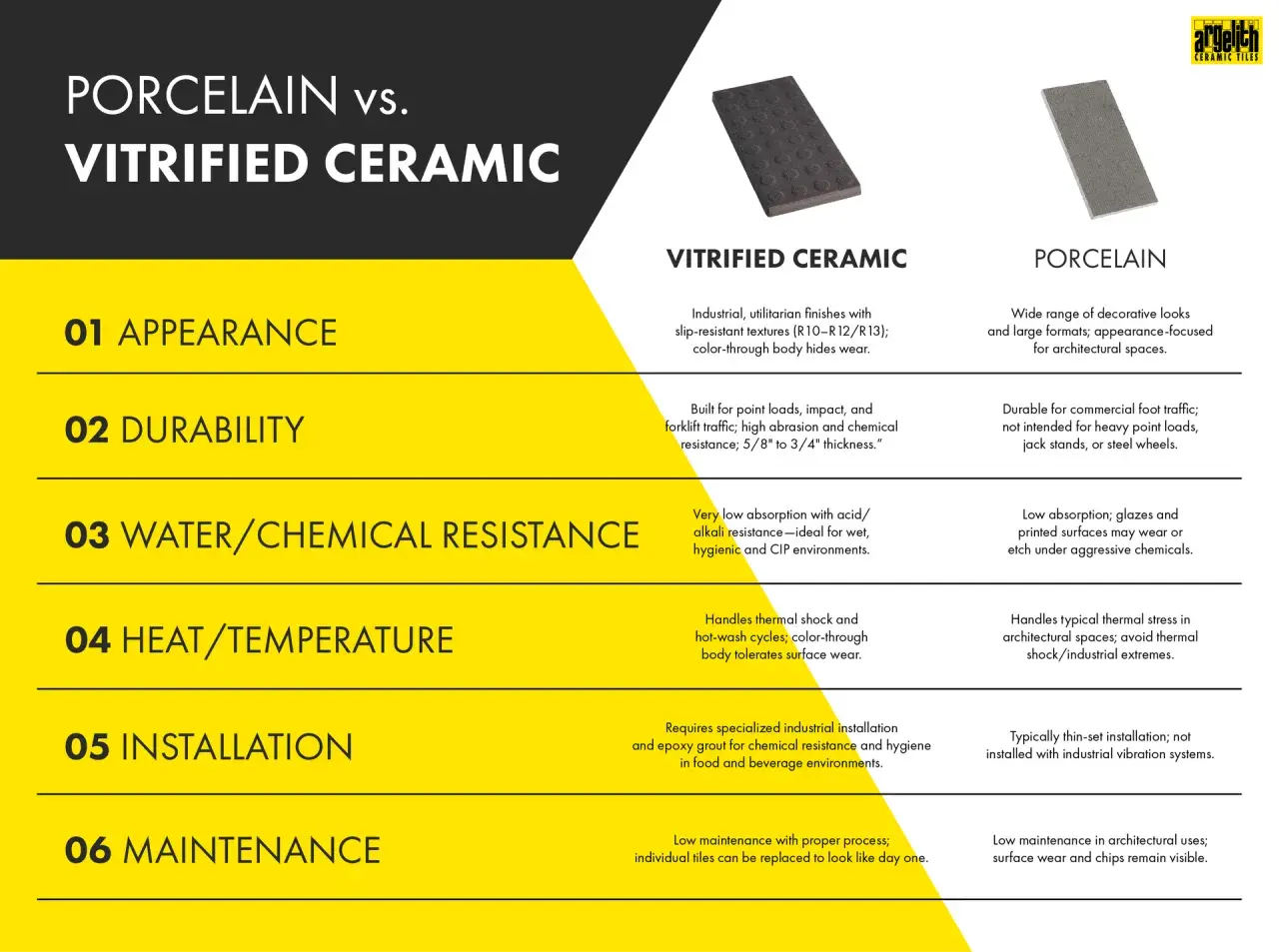
Porcelain tile durability is less about a single miracle material and more about how density, finish, format, and installation work together. When those pieces are matched well, porcelain can handle daily water, grit, and foot traffic with very little drama. When they are not, even a strong tile can fail early for reasons that have nothing to do with the tile itself.
What matters most when porcelain has to last
- Porcelain is defined by very low water absorption, which is why it performs so well in bathrooms and other damp spaces.
- The tile body is only part of the story; the substrate, mortar coverage, grout, and waterproofing determine real-world longevity.
- Slip resistance matters just as much as hardness on bathroom floors.
- Glazed, polished, and unglazed porcelain behave differently, especially when cleaning and sealing are involved.
- Most premature failures come from movement, poor prep, or bad detailing rather than from the tile wearing out.
What makes porcelain so tough in the first place
Porcelain starts with a dense, tightly fired body that absorbs very little water. That low porosity is a big reason it resists staining, humidity, and the slow damage that can build up in bathrooms, kitchens, laundry rooms, and entryways. A good porcelain tile also tends to hold up better against daily cleaning because dirt has fewer places to settle into the surface.
Density does the heavy lifting
The most important advantage is not just “hardness” in the casual sense. It is density. A dense tile body is less likely to take on moisture, swell, or degrade when exposed to wet conditions over and over again. In a shower or bathroom floor, that matters more than most people realize because the tile is constantly dealing with steam, splashes, and cleaning residue.
The finish changes how the tile behaves
Glazed porcelain usually offers excellent stain resistance because the decorative surface acts as an extra barrier. Unglazed and through-body tiles can be more forgiving if the surface gets chipped, because the color and material continue through the tile. Polished porcelain can look elegant, but it may show water spots, soap film, and scratches more easily than a matte finish. In other words, the tile can be durable and still be the wrong choice for a wet floor if the finish is too slick or too reflective.
That is why I treat the tile body and the surface finish as separate decisions. A strong body gives longevity; the finish decides how well the tile lives with real daily use. From there, the real question becomes where porcelain is the right tool for the job.Where porcelain earns its keep in real homes
Porcelain earns its reputation in places where water and wear meet. Bathrooms are the obvious example, but the same strengths make sense in laundry rooms, mudrooms, kitchens, and entryways. If a space sees moisture, frequent cleaning, or tracked-in grit, porcelain usually has a clear advantage over softer, more porous surfaces.
- Bathroom floors benefit from porcelain because it resists water and daily wear while still offering a broad range of finishes.
- Shower walls are a natural fit because porcelain cleans easily and does not need the same ongoing care that many stone surfaces require.
- Vanity backsplashes stay cleaner for longer when the tile surface is dense and easy to wipe down.
- Entryways and mudrooms see grit, salt, and wet shoes, so a hard, low-absorption tile makes practical sense.
- Large-format bathroom walls can create a more seamless look, which reduces grout lines and makes routine cleaning easier.
There is one important catch: porcelain’s strength does not cancel out the need for the right surface texture. A highly polished tile may be a perfectly good wall tile and a poor shower-floor choice. That takes us to the part most homeowners underestimate, which is the installation assembly around the tile.
The hidden factors that decide how long it really lasts
When porcelain fails early, the tile is often blamed unfairly. In practice, the problem is usually the system underneath it. A floor that flexes, a substrate that is not flat enough, weak mortar coverage, or missing movement joints can all shorten the life of an otherwise excellent tile.Substrate movement causes most damage
Tile is rigid. Subfloors are not. If the structure below the tile moves too much, the tile cannot bend with it, so stress shows up as cracked grout, loose pieces, or broken corners. Large-format porcelain makes this more visible because it bridges more surface area and exaggerates any unevenness below it. The better the prep, the better the long-term result.
Waterproofing is part of the system, not an accessory
In showers and wet rooms, the tile is only the visible layer. The assembly behind it has to manage water properly. Cement board is not the same thing as a waterproof system, and grout alone is not a moisture barrier. A shower that looks beautiful on day one can still fail if water reaches the framing behind it. For that reason, I think of waterproofing as part of the tile investment, not a separate line item to shave down.
Grout and movement joints protect the install from small stresses
Grout lines are not just cosmetic. They help absorb tiny shifts and reduce the chance of chips at tile edges. Movement joints matter too, especially at transitions, perimeters, and areas where the substrate changes direction. If those details are skipped, the tile may look perfect for a while and then start showing cracks that seem to appear for no reason. They rarely do.
Once the assembly is sound, the next decision is choosing the right material for the room. That is where porcelain, ceramic, and natural stone diverge in useful ways.
Porcelain, ceramic, and natural stone are not the same decision
People often treat all tile as interchangeable, but the differences matter more than the showroom sample suggests. Porcelain is usually the most forgiving option in wet, busy spaces. Ceramic can still be a smart choice in many rooms. Natural stone brings character, but it asks for more care and tolerance from the owner.
| Material | Strength and wear | Water behavior | Maintenance | Best use |
|---|---|---|---|---|
| Porcelain | Dense, hard-wearing, and well suited to heavy daily use | Very low absorption, which helps in showers and bathrooms | Low; most of the upkeep is about grout and cleaning habits | Bathrooms, showers, kitchens, mudrooms, and busy floors |
| Ceramic | Can be durable, but usually less dense than porcelain | More variable absorption, so performance depends on the exact product | Low to moderate | Walls, backsplashes, and some light-to-moderate floor uses |
| Natural stone | Beautiful and strong, but performance varies by stone type | Often more porous and more sensitive to stains or moisture | Higher; sealing and gentler cleaners are often part of the routine | Feature walls, selective floors, and spaces where character matters most |
The main takeaway is simple: porcelain is usually the safest bet when you want fewer surprises. Ceramic can be perfectly adequate in the right place, and stone can be stunning, but neither gives the same combination of low absorption and low-maintenance practicality. For a bathroom, that combination is hard to beat.
How I choose the right tile for a bathroom or high-traffic floor
When I evaluate a tile for real use, I start with the spec sheet rather than the style board. That is where the useful numbers live. The label may say porcelain, but the details tell you whether the product is a good fit for a wet floor, a shower wall, or a family bathroom that sees constant traffic.
| Spec to check | What I look for | Why it matters |
|---|---|---|
| Water absorption | 0.5% or less for true porcelain | Lower absorption usually means better resistance to moisture and staining |
| Wet floor slip rating | A DCOF of 0.42 or better for level interior floors when the product is rated for that use | Helps reduce slip risk in bathrooms and other wet spaces |
| Wear rating | PEI 3 for typical residential floors, PEI 4 to 5 for heavier traffic | Shows how well a glazed surface resists visible abrasion |
| Surface finish | Matte or textured for floors, smoother finishes for walls | Finish affects traction, maintenance, and how obvious wear will be |
| Tile format | Smaller pieces for shower floors, larger formats for walls and open floors | Format changes both installation difficulty and day-to-day cleaning |
Match the finish to the room
For bathroom floors, I usually lean toward matte or lightly textured porcelain. It gives you a better balance of traction and cleanability. Glossy tiles can look beautiful on walls or low-splash areas, but they are less forgiving under wet feet and tend to show residue faster. If a tile looks good only when it is spotless and perfectly dry, it is probably too delicate for an active bathroom floor.
Read Also: Tile Backsplash Installation Cost - Avoid Hidden Fees!
Match the format to the installation, not just the style
Large-format porcelain has a clean, modern look and fewer grout lines, which is great for visual simplicity. But it demands a flatter substrate and more careful handling. Smaller tile pieces are often better on shower floors because they follow the slope to the drain more easily and offer more grout lines for grip. I like large-format tile in the right place, but I never treat it as a universal upgrade.
One more detail: glazed porcelain, polished porcelain, and unglazed porcelain do not all age the same way. That matters when you start thinking about maintenance.
Care habits that preserve the finish and grout
Porcelain does not ask for much, but it does reward consistency. Most maintenance problems are really residue problems, not material failures. Dirt, soap film, and gritty debris can wear down the surface look over time if they are ignored long enough.
- Sweep or vacuum regularly so grit does not act like sandpaper underfoot.
- Use a mild, pH-neutral cleaner unless the manufacturer recommends something different.
- Rinse cleaning residue away so film does not build up on the tile or grout.
- Watch the grout because stained grout can make an otherwise beautiful floor look tired.
- Seal grout when appropriate, especially if it is cementitious and the product instructions call for it.
Most glazed porcelain tiles do not need sealing, but polished or unglazed products can be a different story depending on the exact surface. I always check the product guidance before assuming anything. That small step saves a lot of confusion later, especially in bathrooms where people often expect tile and grout to behave the same way.
The small choices that add years to the install
If I had to reduce the whole topic to a few practical rules, I would keep it simple. Choose porcelain for the places where moisture and wear are part of normal life. Choose a finish that suits wet feet, not just a showroom sample. And never separate the tile from the assembly that supports it.
- Start with the room’s actual conditions: water, traffic, cleaning habits, and light.
- Confirm the technical details before buying, especially absorption, wear, and slip resistance.
- Use proper waterproofing in showers and wet zones.
- Expect movement joints, flatness, and mortar coverage to matter as much as the tile selection.
- Treat grout and caulk as part of the long-term maintenance plan.
When those basics are done well, porcelain delivers the kind of lifespan people expect from it without becoming fussy. That is the real story behind porcelain tile durability: the tile is only as strong as the system around it.