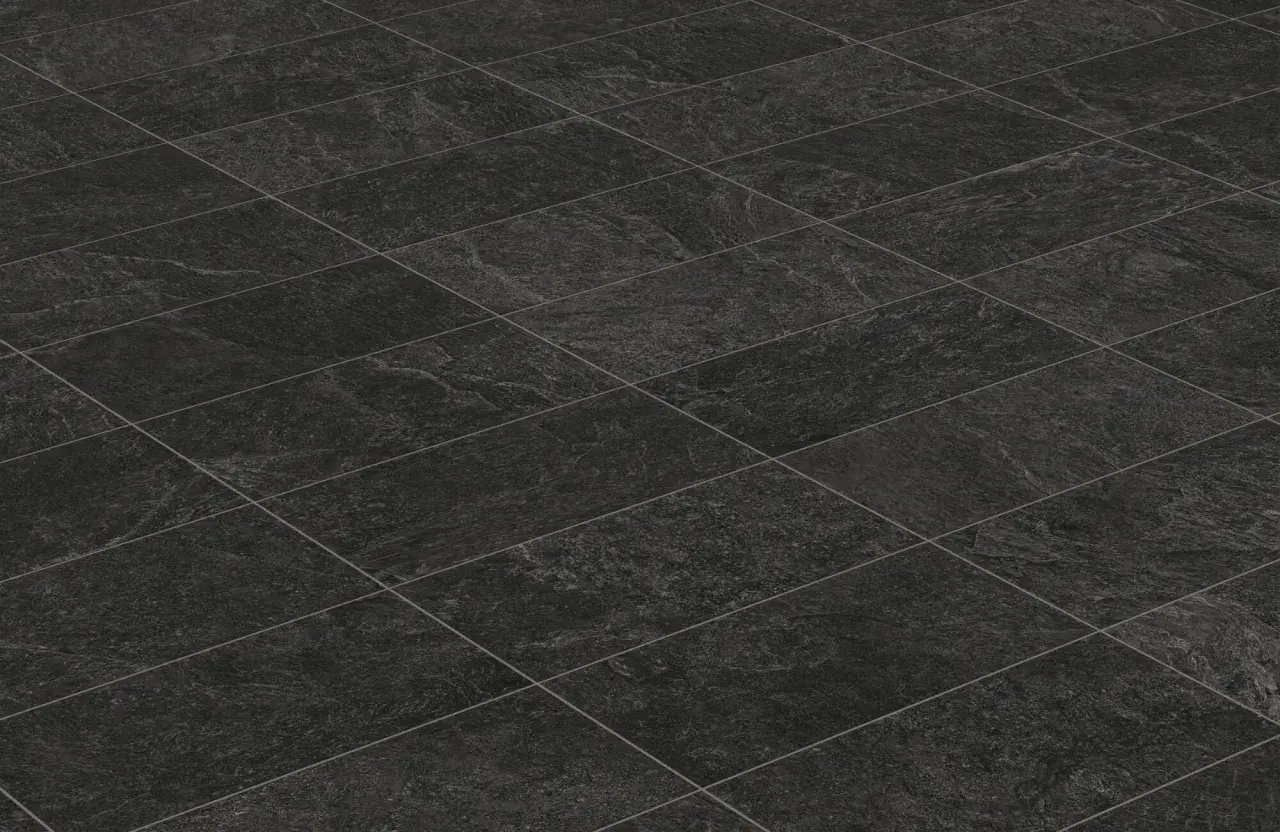
Black bathroom tile can look dramatic and clean, but it also shows residue fast: soap scum, hard-water film, and dried droplets all stand out on a dark surface. When people ask how to clean black tiles in bathroom spaces without leaving streaks, the real answer is usually gentler than they expect: remove grit first, use a low-residue cleaner, rinse well, and dry the surface completely. That is the practical answer to how to clean black tiles in bathroom settings without turning one problem into another.
The safest way to keep black bathroom tile clean is to remove grit first, use a neutral cleaner, and dry every surface.
- Start dry. Sweep, vacuum, or wipe away dust before any liquid cleaner touches the tile.
- Use a pH-neutral cleaner for everyday care on ceramic and porcelain.
- Rinse and dry. Residue is the main reason dark tile looks cloudy after cleaning.
- Avoid harsh products like abrasive powders, steel wool, and routine bleach or vinegar use on stone.
- Match the method to the finish. Glossy, matte, textured, and natural stone tiles all need slightly different care.
Why black bathroom tiles show streaks so easily
Dark tile is unforgiving because it reflects the smallest mistakes. A light film of soap, a droplet of hard water, or a smear from a dirty mop can look like a major problem once it dries on a black surface. Under bathroom lighting, especially at an angle, those marks become even more visible.
Matte black tile tends to trap a little more residue in its surface texture, while glossy tile may look cleaner at first but show water spots and wiping marks more clearly. Grout can create another layer of contrast, especially if the grout is white or light gray. I usually tell readers that black tile does not need more aggressive cleaning; it needs cleaner technique. Once you see the surface this way, the routine becomes much simpler.
My step-by-step routine for a clean, streak-free finish
This is the method I would use on most ceramic or porcelain black bathroom tiles. It is careful enough for routine cleaning, but strong enough to handle everyday bathroom buildup.- Clear dry debris first. Sweep, vacuum, or wipe the tile so sand, dust, and hair do not turn into grit under your cloth or mop.
- Mix a low-residue cleaner. Use warm water and a pH-neutral tile cleaner according to the label. If you are using mild dish soap in a pinch, keep the mix light so it rinses clean.
- Work in small sections. Wipe the tile with a microfiber cloth, sponge, or soft mop. I prefer small sections because black tile makes missed spots easy to see.
- Let the cleaner sit briefly. For normal buildup, a short dwell time of about 3 to 5 minutes is usually enough. Do not let the solution dry on the surface.
- Rinse with clean water. This matters more than many people think. Leftover cleaner is one of the biggest reasons dark tile ends up looking hazy.
- Dry the surface completely. Use a clean microfiber towel or a squeegee on shower walls. On floors, dry-buff the tile so water spots do not form as the surface air-dries.
On larger floor areas, I refresh the cleaning water once it starts looking cloudy. Dirty rinse water just puts film back on the tile, and black surfaces make that mistake obvious. If the tile still looks dull after this routine, the problem is usually residue, not dirt, which leads directly to the cleaner choice.
Which cleaners work on black tile and which ones I skip
The safest approach is to keep your cleaner matched to the tile type and the problem you are trying to solve. Here is the simple comparison I use when deciding what belongs in the bathroom and what should stay out of it.
| Cleaner type | Best for | What I would avoid |
|---|---|---|
| pH-neutral tile cleaner | Routine cleaning on ceramic and porcelain black tile | Very heavy mineral buildup that needs a targeted treatment |
| Mild dish soap | Light daily grime when you do not have tile cleaner on hand | Using too much, which can leave a film if you do not rinse well |
| Acid-based cleaner | Some hard-water stains on ceramic or porcelain, if the label allows it | Natural stone, sealed stone, and routine weekly use |
| Bleach or ammonia | Occasional mildew treatment on suitable grout or tile systems | Regular use, because it can damage grout, finishes, and sealers |
| Abrasive powder or steel wool | Nothing on black bathroom tile | Scratches, dull spots, and permanent finish damage |
If your tile is slate, marble, limestone, travertine, or another natural stone, I would treat it differently from ceramic or porcelain right away. Stone needs a stone-safe cleaner, and acids like vinegar can etch the surface or weaken the sealer over time. That distinction matters more than the color of the tile itself, which is why the next problem to solve is usually the stain, not the surface.
How to handle soap scum, hard water, and grout haze
Most black bathroom tiles do not look dirty because of dust alone. They look dirty because the bathroom keeps depositing the same three things: soap scum, mineral spots, and grout residue. Each one needs a slightly different response.
Soap scum
Soap scum is usually the easiest to remove, but it is also the easiest to overwork. I would start with a pH-neutral bathroom cleaner and a microfiber cloth. If the buildup is heavier, use a soft nylon pad and repeat the pass rather than pressing harder. The goal is to lift the film, not abrade it.
Hard-water spots
Hard-water marks show up as chalky white dots or a cloudy veil after the water dries. On ceramic or porcelain, a mineral-removing bathroom cleaner can help, but I would keep it off natural stone unless the label specifically says it is safe. In hard-water homes, the best prevention is fast drying: squeegee the walls, wipe the corners, and do not let water sit on the tile after each shower.Grout haze and grout lines
Grout is porous, so it behaves differently from the tile face. If the haze is on the tile, use a grout-safe cleaner and a soft brush, then rinse thoroughly. If the grout itself is stained, a deeper grout cleaner may be needed, but test a small hidden spot first. Dark tile paired with pale grout is a high-contrast look, which is great for design and less forgiving when maintenance slips.
Once the surface stains are under control, the finish of the tile becomes the next thing that decides how gentle you need to be.
Match the method to the tile finish
Black tile is not one category. Glossy porcelain, matte porcelain, textured tile, and natural stone all respond differently to cleaning, and using the wrong technique on the wrong finish is how people dull a surface they were trying to improve.Glossy tile
Glossy black tile looks polished when it is clean, but it also shows wipe marks and water spots quickly. I use a soft microfiber cloth, a light cleaner mix, and a dry buff at the end. Wax-based products usually make glossy tile worse, not better, because they add another layer that catches dust.
Matte tile
Matte surfaces hide water spots better, but they can hold onto body oils and bathroom film a little more stubbornly. The trick is not more product. It is better rinsing, more frequent cloth changes, and less soap in the bucket. A matte black tile that is rinsed properly often looks cleaner than a glossy one that has been over-cleaned.
Textured or slip-resistant tile
Textured tile is practical in a wet bathroom, but the grooves collect residue. I use a soft nylon brush for these surfaces and make sure to rinse along the texture, not across it. A squeegee helps, but a final wipe is still important because water can sit in the low spots.
Read Also: How to Clean Limestone - Keep Your Bathroom Stone Pristine
Natural stone
If the tile is stone, I stay conservative: pH-neutral stone cleaner, soft cloth, no routine vinegar, no bleach, and no harsh scrubbing. Stone may also need resealing over time. A simple clue is whether water still beads on the surface; if it stops beading and starts darkening the stone, the sealer may be wearing out.
Once you know the finish, the last step is not another cleaner. It is a habit that keeps the tile from getting dirty so quickly in the first place.
The small habits that keep dark tile looking clean longer
Black tile stays sharp when the bathroom routine works with the surface instead of against it. I focus on a few habits that prevent buildup before it becomes a weekend project.
- Run a squeegee over shower walls after use so droplets do not dry into spots.
- Wipe the tile around the sink and tub where toothpaste, shampoo, and soap spray land first.
- Change mop water as soon as it looks cloudy, especially on larger floors.
- Ventilate the bathroom well so moisture does not linger on the tile and grout.
- Clean weekly instead of waiting for visible buildup, because dark surfaces punish delay.
If hard water is a constant issue, a shower filter or water softener can reduce how fast mineral film returns, although it will not replace regular cleaning. And if the tile still looks blotchy after the right routine, I would suspect a residue problem, a worn sealer, or the wrong cleaner before I blamed the tile itself. That is usually where a good bathroom maintenance plan begins to pay off.