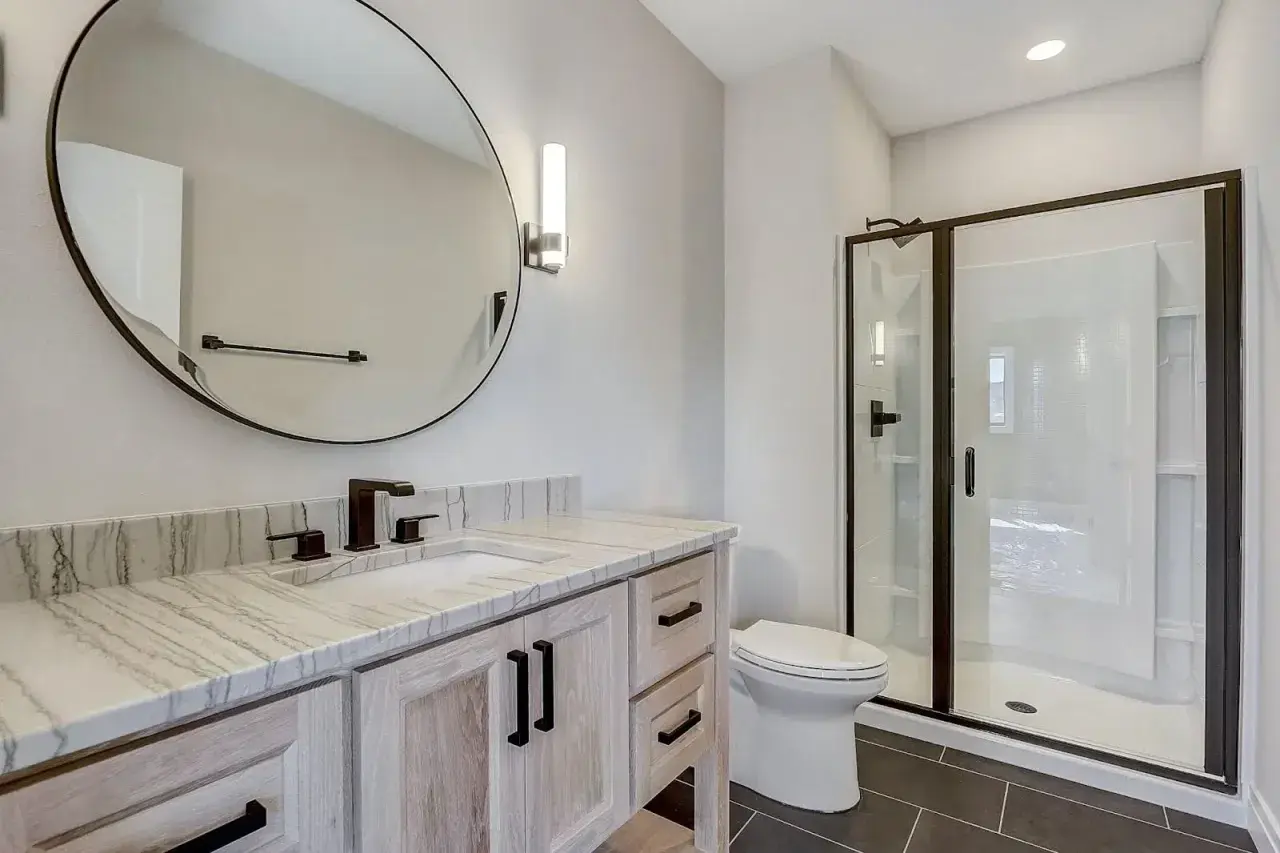
Knowing how to clean quartzite keeps the stone looking sharp without turning maintenance into a chore. The real trick is simple: use a gentle cleaner, dry the surface well, and treat sealing as part of the routine instead of an afterthought. I’ll walk through the daily method I trust, the products I avoid, and the bathroom-specific habits that keep the finish looking clean longer.
The safest quartzite routine is simple, consistent, and easy to repeat
- Use warm water, a soft cloth, and either mild dish soap or a pH-neutral stone cleaner for everyday cleaning.
- Rinse and dry the surface after washing so soap film and mineral spots do not build up.
- Avoid vinegar, lemon, bleach, ammonia, abrasive powders, steel wool, and scratchy pads.
- Blot spills quickly instead of wiping them around, especially oils, makeup, and bathroom products.
- Plan to reseal most quartzite every 6 to 12 months, with busy sink and shower zones often needing attention sooner.
- Think of sealer as stain resistance, not stain proofing.
Quartzite needs gentle chemistry, not heavy scrubbing
Quartzite is a natural stone, so I never clean it the way I would clean laminate or nonporous quartz. It is hard and durable, but it still has microscopic pores that can hold residue, moisture, and oils if the surface is not protected. That is why the best care routine is usually the plainest one: mild chemistry, soft tools, and a dry finish.
It helps to separate quartzite from two materials people confuse it with all the time. Quartzite is not engineered quartz, and it is not marble. It behaves more like a dense natural stone with some porosity, which means it can handle everyday use well but still benefits from sealing and careful product choices.
| Surface | How it behaves | Cleaning implication |
|---|---|---|
| Quartzite | Hard natural stone with some porosity | Use gentle cleaners, rinse well, and reseal on schedule |
| Engineered quartz | Nonporous and resin-bound | Usually simpler to maintain, but different product rules apply |
| Marble | Much softer and more acid-sensitive | Needs even stricter chemistry control |
I like to think of quartzite as a stone that rewards restraint. Once you understand that balance, the daily routine becomes straightforward.

The daily cleaning routine I actually use
For day-to-day care, I keep it boring on purpose. First I clear crumbs, dust, or loose debris so I am not dragging grit across the surface. Then I wipe the stone with a soft microfiber cloth dampened with warm water and either a few drops of mild dish soap or a pH-neutral stone cleaner.
After that, I go back over the surface with a clean damp cloth to remove any soap residue, because leftover cleaner is one of the fastest ways to leave a hazy film. The last step matters more than most people think: I dry the stone with a clean towel so water spots do not dry in place.
On a bathroom vanity, I pay extra attention to faucet bases, sink edges, and the area where a toothbrush cup or soap dispenser sits. Those spots collect drips first, and if I leave them alone, they tend to show rings before the rest of the countertop does.
If the surface is greasy, I do not increase the scrubbing pressure. I simply use a little more diluted soap and let the cloth do the work. The next step is choosing products that help rather than slowly wearing the surface down.
What to use and what to skip
The cleaner aisle is where a lot of quartzite damage starts. If a product is too aggressive, the surface may not look ruined right away, but the finish can dull and the sealer can break down faster than it should. I keep the list short and predictable.
| Product or tool | Use it? | Why I choose it or avoid it |
|---|---|---|
| Warm water + microfiber cloth | Yes | Best for dust, fingerprints, and light residue without adding risk |
| Mild dish soap diluted in water | Yes | Good for everyday grime when rinsed and dried properly |
| pH-neutral stone cleaner | Yes | My default choice for sealed natural stone |
| Soft sponge or non-scratch pad | Yes | Okay when it is truly nonabrasive |
| Vinegar, lemon, or citrus cleaners | No | Too acidic for regular quartzite care |
| Bleach or ammonia | No | Harsh on stone care routines and can leave residue or weaken protection |
| Abrasive powders, steel wool, scouring pads | No | Can scratch or dull the finish |
| Melamine cleaning pads | Usually no | Often too aggressive for polished quartzite |
| Stone-safe impregnating sealer | Yes, periodically | Helps slow absorption, but it is not a permanent shield |
If I am trying a new cleaner, I test it in a hidden spot first, usually under a sink lip or behind a faucet. That small check is worth more than a guess.
How I handle spills, stains, soap scum, and hard water
Most quartzite problems are not true damage at first. They are usually spills that sat too long, soap residue, or mineral buildup from water. The first move is always the same: blot, do not rub. Rubbing spreads the spill and pushes it deeper into the surface.
That is also the basic sequence I see repeated in natural-stone care guidance from the Natural Stone Institute: blot the spill, wash with mild soap and water, then dry thoroughly. I follow that same logic because it works.
- Fresh spills: blot with a paper towel or dry cloth immediately, then clean the area gently.
- Oil or grease: use a baking soda and water poultice, cover it, and leave it overnight before wiping away the residue.
- Soap scum: use a non-acidic soap-scum remover that is labeled safe for natural stone, then rinse and dry well.
- Hard-water marks: choose a stone-safe mineral remover made for natural stone, not vinegar.
- Makeup, hair dye, and toiletries: clean them quickly, because colored or oily products are the ones most likely to leave shadows.
If a mark remains after cleaning and drying, I stop scrubbing. At that point, the issue may be absorption rather than surface residue, and pushing harder usually makes the finish look worse. That is where sealing becomes part of maintenance, not a separate project.
Sealing is what keeps cleaning easy
Sealing quartzite is not about making the stone invincible. A sealer slows down absorption so spills have more time to be wiped away. I think of it as stain resistance, not stain proofing, and that distinction matters more than most labels admit.
For many homes, a resealing rhythm of every 6 to 12 months is a realistic starting point. Busy sink zones, shower edges, and vanity areas that see constant water may need attention closer to every 6 months, while drier areas can often go longer. The finish, the slab density, and the way the room is used all affect the interval.
- Place a few drops of water on a clean, dry area.
- Watch how long they stay beaded.
- If the stone darkens instead of repelling the water after about 10 minutes, I treat that as a sign to reseal.
- If water still beads well, the current protection is probably doing its job.
When I talk about sealer, I mean an impregnating sealer, which is a penetrating treatment that soaks into the pores instead of sitting on top like a film. That kind of product is better suited to quartzite because it protects without changing the stone’s natural look too much. Once that protection is in place, the bathroom habits around the stone matter just as much.
Bathroom habits that protect vanities, showers, and tub decks
Bathrooms are harder on quartzite than many people expect. Water is constant, soap residue builds up quickly, and products like lotion, shampoo, and makeup can sit on the stone long enough to leave rings or stains. The good news is that the best protection is practical, not complicated.
- Use a squeegee on shower walls and ledges after each use.
- Dry around faucets, drain lips, and sink rims so water does not pool.
- Keep soap dishes, bottles, and cosmetic trays on small pads or trays instead of directly on the stone.
- Wipe up nail polish remover, hair dye, sunscreen, and oily lotion right away.
- Keep wet sponges and soap bars from sitting on the same spot day after day.
Honed quartzite in a primary bath tends to show water haze and fingerprints a little faster than a polished finish. That is not a defect; it is just a finish that asks for a bit more visual maintenance. If the room is humid and the shower gets used often, I would expect the stone to need more frequent wipe-downs and closer inspection around edges and seams.
The maintenance rhythm I would use on a busy quartzite bathroom
Here is the routine I would actually follow if I were trying to keep a quartzite vanity or shower looking clean without overworking it.
- Daily: wipe the surface with warm water and a soft cloth, then dry it.
- Weekly: use a pH-neutral stone cleaner, rinse once, and dry thoroughly.
- Monthly: check sink edges, faucet bases, and shower ledges for residue, dull spots, or water rings.
- Every 6 to 12 months: test the sealer and refresh it if the stone stops repelling water well.
- As needed: treat spills immediately instead of waiting for them to become stains.
If I had to reduce the whole thing to one sentence, it would be this: clean quartzite gently, dry it thoroughly, and stay ahead of moisture. That approach keeps the stone looking like a design feature, not a maintenance project, which is exactly what you want in a bathroom.