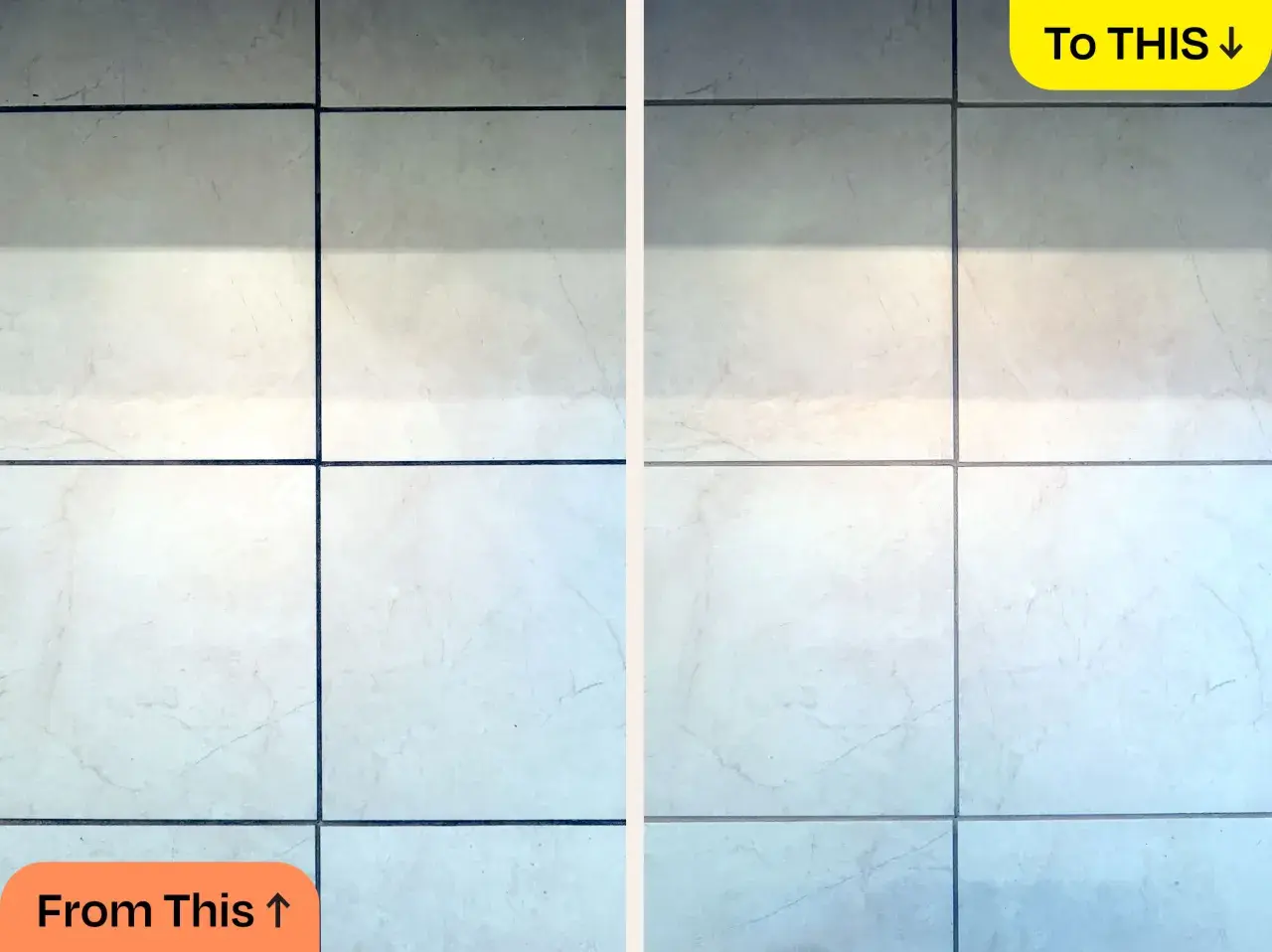
Ceramic tile is durable, but it only stays bright when you clean the tile face and grout with the right level of force. Knowing how to clean ceramic tile starts with one rule: use the mildest product that removes the soil, then rinse and dry so residue does not turn into a dull film. In this guide, I cover the everyday routine, the best approach for grout, soap scum, and hard water, and the mistakes that quietly shorten the life of the surface.
The essentials for keeping ceramic tile clean without dulling the finish
- Use a pH-neutral cleaner or a small amount of mild dish soap for routine cleaning.
- Sweep or vacuum first so grit does not get dragged across the tile.
- Rinse with clean water and dry the surface to prevent haze and streaks.
- Treat grout, soap scum, and hard-water buildup as separate problems, not one job.
- Avoid abrasive pads, repeated acid use, and dirty mop water if you want the finish to stay sharp.
Check the tile finish before you choose a cleaner
I start here because the tile face and the grout rarely need the same treatment. Glazed ceramic is the easiest to maintain, while unglazed or textured tile needs a little more care so you do not trap residue in the surface or wear down the finish. If I am unsure what I am dealing with, I test a hidden spot first and keep the cleaner as mild as possible.
| Tile finish | What I use | Why it matters |
|---|---|---|
| Glazed ceramic | Water, a pH-neutral tile cleaner, or a little mild dish soap | The glazed surface resists staining, so routine dirt usually lifts without harsh products. |
| Unglazed ceramic | A neutral cleaner made for tile, then a thorough rinse and dry | Unglazed tile can hold more soil, so I avoid anything that leaves a film or too much moisture behind. |
| Textured or anti-slip tile | A soft nylon brush or microfiber pad with a neutral cleaner | Texture catches grime, so gentle agitation matters more than stronger chemicals. |
If the grout is colored, I stay conservative and stick with a neutral cleaner. That keeps the surface predictable and reduces the chance of fading or patchy results. Once you know the finish, the daily routine becomes much simpler.
Use a simple routine for everyday dirt
The fastest way to make ceramic tile look bad is to mop over loose grit. I always remove dry soil first, then clean in small sections so the solution does not dry on the surface before I can rinse it away.
- Sweep, dust mop, or vacuum the tile first.
- Mix warm water with a pH-neutral cleaner, or use a few drops of mild dish soap if that is what the manufacturer allows.
- Work in 3-by-3-foot sections so you keep control of the moisture level.
- Use a flat microfiber mop or soft cloth instead of a rough pad.
- Let the cleaner sit for 2 to 5 minutes only if you are loosening sticky grime.
- Rinse with clean water, especially if the floor feels slick after cleaning.
- Dry the surface with a microfiber towel or a dry mop head to prevent streaks.
The part many people skip is the rinse. If the floor looks clean but feels cloudy, that is usually cleaner residue, not more dirt. I would rather repeat a light rinse than build up a film that makes the tile look older than it is.
Treat grout, soap scum, and hard water separately
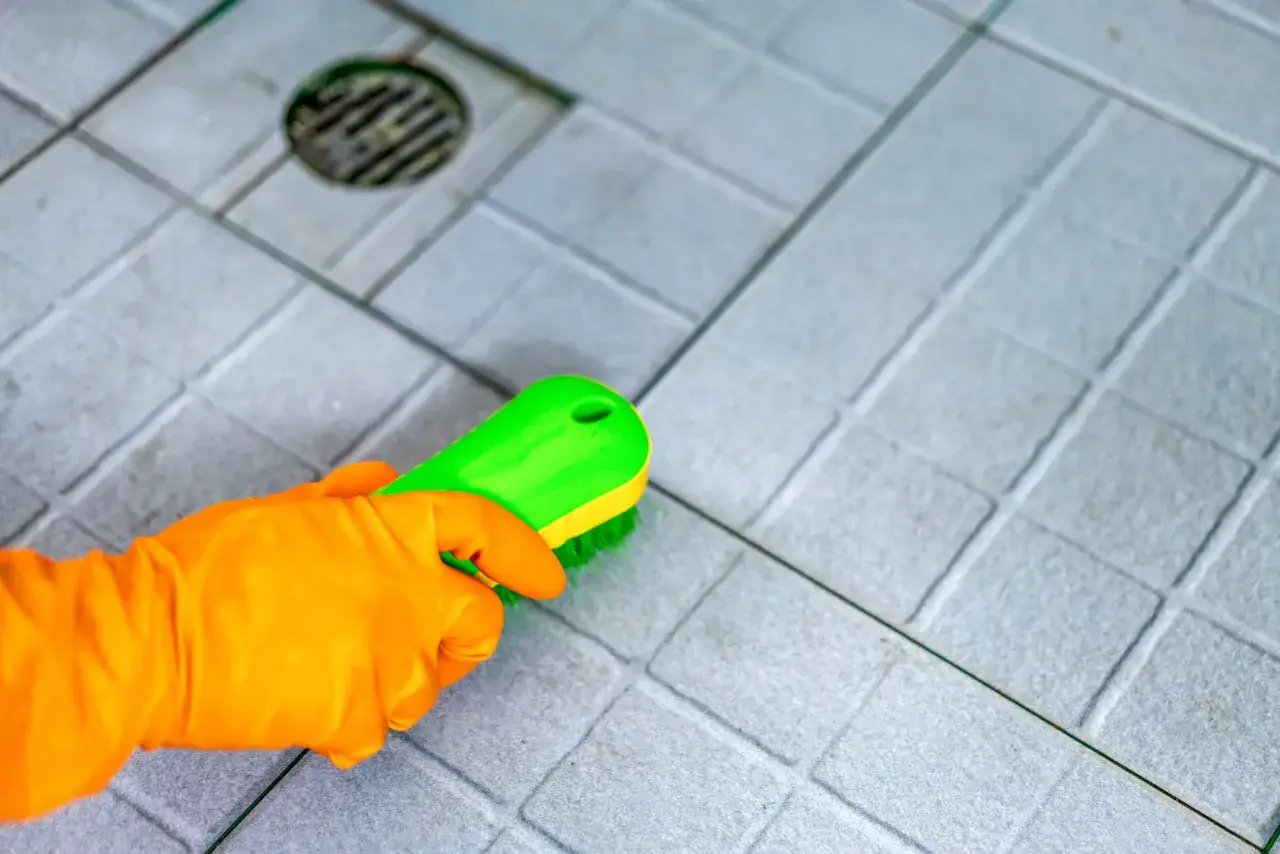
This is where people often overclean the tile and underclean the real problem. The shiny tile face may be fine, but the grout line, mineral film, or soap buildup changes the look of the whole room. I treat each one differently because the fix for one can be too much for another.
| Problem | Best approach | Watch out for |
|---|---|---|
| Grout looks dingy | A grout cleaner or a baking soda paste with a soft nylon brush | Do not flood the joint or scrub so hard that you loosen the grout. |
| Soap scum on shower tile | A bathroom-safe tile cleaner with a short dwell time, then rinse and dry | Abrasive pads can dull glossy tile faster than the soap scum does. |
| Hard-water film | A cleaner labeled for mineral deposits that is safe for ceramic and grout | Test first, and keep the product off nearby stone surfaces if you have them. |
| Kitchen grease | A mildly alkaline tile cleaner or diluted degreasing cleaner approved for tile | Always rinse well so the finish does not collect a sticky residue. |
For grout lines, I prefer a soft brush and patience over force. The goal is to clean the joint, not grind it thinner. If the grout stays dark even after cleaning, the issue may be staining, worn sealer, or damage below the surface, and that calls for a different fix.
Avoid the habits that scratch tile or weaken grout
Most ceramic tile problems I see are not caused by the tile itself. They come from cleaning habits that are too aggressive, too acidic, or too rushed. A few small changes keep the surface looking newer for much longer.
- Do not use steel wool or abrasive scrub pads on glossy tile.
- Skip vinegar as an everyday cleaner; it may be fine in a narrow occasional use case, but routine use is hard on grout.
- Never mix bleach with ammonia or acidic products.
- Do not keep mopping with dirty water once it turns gray.
- Avoid soaking cracked grout or loose tile edges.
- Do not let cleaner dry on the surface and leave a haze behind.
Steam can help in some homes, but I never treat it as the default answer. If the grout is cracked, poorly sealed, or already loose, extra heat and moisture usually create more work, not less. Mild, repeatable cleaning wins here.
Set a cleaning schedule that fits the room
Ceramic tile in a bathroom deals with soap scum and humidity. Kitchen tile collects grease and food soil. Entryways pick up grit from shoes. The right schedule depends on where the tile lives, not just on how dirty it looks today.
| Room | Frequency | What to focus on |
|---|---|---|
| Bathroom floor | Weekly, plus quick spot cleaning as needed | Soap residue, hair, and moisture near the tub or shower |
| Shower walls | Weekly to every 2 weeks | Soap scum, hard-water spots, and grout lines |
| Kitchen floor | Weekly, or more often in high-use homes | Grease, crumbs, and sticky spills |
| Entryway or mudroom | 2 to 3 times a week for sweeping, weekly for mopping | Grit from shoes and sand that can scratch the finish |
In a busy home, I usually shorten the schedule before dirt becomes visible. Once soil has time to settle into grout or texture, the cleaning job gets slower and rougher. A little prevention keeps the surface easier to maintain than any deep-clean rescue ever will.
Keep ceramic tile easier to live with next month
My strongest advice is to clean to the level of the mess, not the level of your frustration. I would rather spend five minutes on the right routine than twenty minutes scrubbing at residue that should never have been left to build up. That means rinsing well, drying the surface, and treating grout like its own material instead of part of the tile.
- Keep a microfiber cloth or squeegee in the bathroom so moisture does not linger.
- Use mats at sinks and entry points to catch grit before it reaches the tile.
- Refresh cement-based grout sealer when it stops repelling water well, following the product label and the room's traffic level.
- If the tile still looks cloudy after cleaning, rinse again before reaching for a stronger chemical.
When I follow that approach, ceramic tile stays easy to care for and far less dramatic than people expect. The surface does not need a heavy-handed routine; it needs consistency, a neutral cleaner, and a little respect for the grout line.