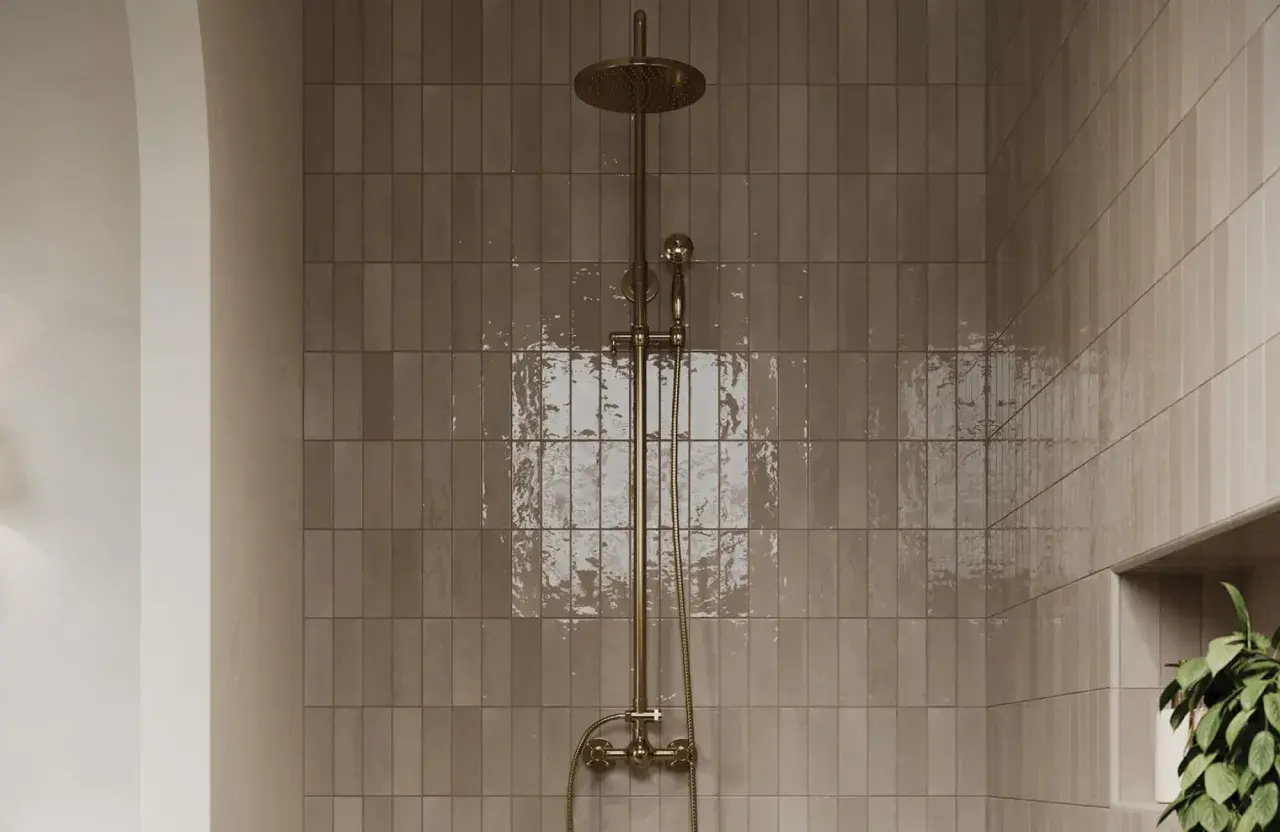
Cleaning matte porcelain tiles in the shower is mostly about removing soap film before it turns into a cloudy layer. The tile itself is durable, but the finish can hold onto residue, especially in corners, grout lines, and around fixtures where water sits longer. I’ll walk through a safe routine, the products I would actually use, the mistakes that dull the surface, and what to do when the problem is hard-water scale or grout haze rather than everyday dirt.
What matters most before you start cleaning
- Use a pH-neutral cleaner first; it is the safest default for routine shower maintenance.
- Rinse and dry the surface after every shower if you want to cut soap scum and water spots dramatically.
- For stubborn buildup, move to a tile-safe soap-scum or mineral-removing product instead of scrubbing harder.
- A soft nylon brush, microfiber cloth, and squeegee do more for matte porcelain than abrasive pads ever will.
- If the tile looked dull from day one, the issue may be grout haze, thinset residue, or failing grout, not daily dirt.
Why matte porcelain in a shower needs a different routine
Matte porcelain is dense and low-porosity, so it does not behave like natural stone or unglazed tile. The challenge is the finish: its subtle texture can hold onto soap residue, and in a shower that residue builds up fast because shampoo, body wash, hard water, and humidity all leave a film. I treat it as a maintenance problem, not a deep-clean problem, because the goal is to stop the film before it becomes a layer you can feel with your hand.
That is why harsh cleaners are often the wrong first move. They can strip grout sealers, leave their own residue, or make the tile look patchy and uneven. A cleaner that leaves nothing behind matters more on matte surfaces than on glossy ones, where streaks are easier to see and wipe away. Here is the routine I use when I want the surface clean without changing how it looks.
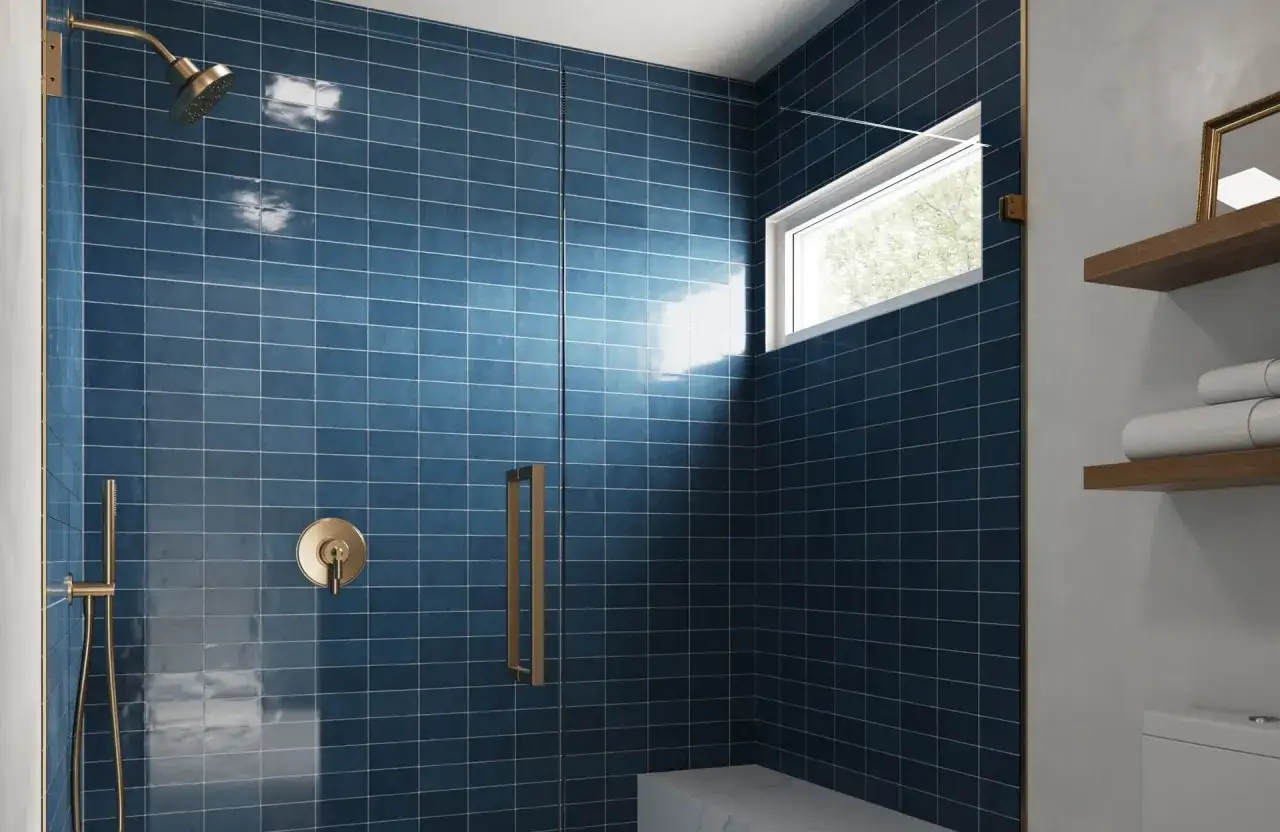
The weekly routine that keeps residue from settling in
I keep the routine simple: remove loose moisture first, clean second, then dry the surface so nothing dries back into the finish. If I had to choose only one habit, it would be a quick squeegee or microfiber wipe after each shower.
- Rinse the walls and floor with clean water if you see visible soap on the surface.
- Spray a pH-neutral cleaner or a tile-safe bathroom cleaner onto the matte porcelain.
- Let it sit for a few minutes so it can loosen body oils and soap film.
- Agitate corners, grout joints, and the lower wall with a soft nylon brush or microfiber pad.
- Rinse thoroughly with clean water so no cleaner is left behind.
- Dry with a microfiber cloth or towel, especially if your water leaves mineral spots.
The order matters. If you scrub first and rinse later, you usually just move the film around. A gentle cleaner plus a thorough rinse is usually enough for weekly maintenance, even in a busy family shower. That baseline makes the next step, removing stubborn buildup, much easier.
How to handle soap scum, hard water, and mildew without damaging the finish
When buildup has already hardened, I match the cleaner to the problem instead of reaching for the strongest bottle under the sink. Soap scum is greasy, hard water is mineral-based, and mildew is a moisture and ventilation problem as much as a cleaning problem.
| Problem | What works best | What I avoid |
|---|---|---|
| Soap scum | A tile-safe soap-scum remover or a pH-neutral cleaner with more dwell time | Abrasive powders and scouring pads |
| Hard water spots | A mineral remover approved for porcelain and grout, spot-tested first | Random household acids and over-scrubbing |
| Mildew on grout or caulk | A targeted mildew cleaner if the label allows, followed by better airflow | Bleach as a routine cleaner or mixing bleach with ammonia or vinegar |
| Grout haze or installation film | A haze remover made for porcelain and grout | Guesswork with aggressive pads or untested products |
For light soap film, I sometimes use a baking-soda paste made from equal parts baking soda and water, but only on isolated spots and only with a soft cloth. I do not use it as an all-over polish. The idea is to lift residue, not to abrade the finish.
If you are dealing with mineral scale, a dedicated descaler made for tile is safer than improvising with whatever household acid is available. Porcelain itself can usually tolerate more than grout, sealant, or metal trim, so I keep the cleaner on the surface for the minimum time the label recommends and rinse immediately. The cleaner matters, but the tool matters almost as much.
The tools and cleaners I would reach for first
For matte porcelain, the winning combination is boring in the best way: a neutral cleaner, soft agitation, and a clean rinse. I would build the kit around a few basics rather than a shelf of specialty products.
| Tool or cleaner | Best use | Why I like it |
|---|---|---|
| pH-neutral tile cleaner | Weekly maintenance | Removes everyday soil without leaving a harsh residue or stressing grout |
| Soft nylon brush | Grout lines, corners, textured areas | Agitates buildup without scratching the matte surface |
| Microfiber cloth | Final wipe and drying | Pulls away film and water spots instead of spreading them |
| Squeegee | After every shower | Reduces the amount of water that can turn into spots or soap residue |
| Tile-safe soap-scum remover | Occasional heavy buildup | Useful when weekly cleaning is no longer enough |
I would avoid abrasive powders, steel wool, waxes, oily sprays, and “shine” products. They can leave matte porcelain looking smeared rather than clean, which is exactly the opposite of what you want. If you are unsure about a product, test it on a hidden spot first and wait for it to dry before judging the result. That small test is cheaper than trying to correct a finish that now looks uneven.
The mistakes that make matte porcelain look dull
- Using a scrub pad or powder cleaner every time, which can create a worn-looking patch in high-use areas.
- Letting cleaner dry on the wall, which leaves its own film and attracts new buildup.
- Skipping the rinse step, especially near the lower wall and in grout joints.
- Relying on wax or polish to “bring back” the finish, which usually just adds haze.
- Cleaning with dirty water, which redistributes soap and mineral residue instead of removing it.
- Assuming the tile is stained when the real issue is moisture, ventilation, or a damaged grout line.
- Judging the finish while it is still wet, when a matte surface can look cloudy even if it is clean.
One nuance matters here: matte porcelain can look cloudy even when it is technically clean. If the surface feels rough or chalky after drying, I suspect residue first, not damage. That is a useful distinction because residue can be removed, while true surface wear needs a very different approach. From there, I look at the grout and installation quality next.
When the problem is grout, haze, or installation residue
If the shower looked dull from the start, or if the haze sits on the tile in a way that never seems to come off evenly, I stop treating it like routine dirt. Grout haze, thinset residue, and leftover sealer can cling to matte porcelain and make the whole wall look dirty even after cleaning.
In that situation, the right product is usually a haze remover or a grout-safe restoration cleaner, not a general bathroom spray. I also pay attention to the grout itself: cracked grout, failing caulk, or porous joints can keep pulling moisture and discoloration back to the surface. Most porcelain tile does not need sealing, but grout often does, and when grout fails the cleaning job gets harder fast.When I see recurring mildew at the same seam or a dark line that returns quickly after cleaning, I assume there is a maintenance or installation issue behind it. At that point, recaulk, regrout, or a professional inspection can save a lot of time spent chasing the same stain. That leaves one last piece, which is keeping the routine easy enough that you actually stick with it.
A simple maintenance rhythm that keeps the shower from fighting back
There is no special trick here, just timing. The less water and soap film stay on matte porcelain, the less scrubbing the surface needs later.
- After each shower, squeegee or wipe the walls in under a minute.
- Run the exhaust fan long enough to clear steam and dry the room.
- Use a neutral cleaner weekly instead of waiting for buildup.
- Spot-clean mineral marks as soon as you notice them.
- Inspect grout and caulk during cleaning so small failures do not become recurring stains.
When I keep to that rhythm, matte porcelain stays quiet in the background, which is exactly what a good bathroom surface should do. The finish looks intentional, the shower stays easier to maintain, and you avoid the cycle of scrubbing harder every few weeks just to get back to neutral.