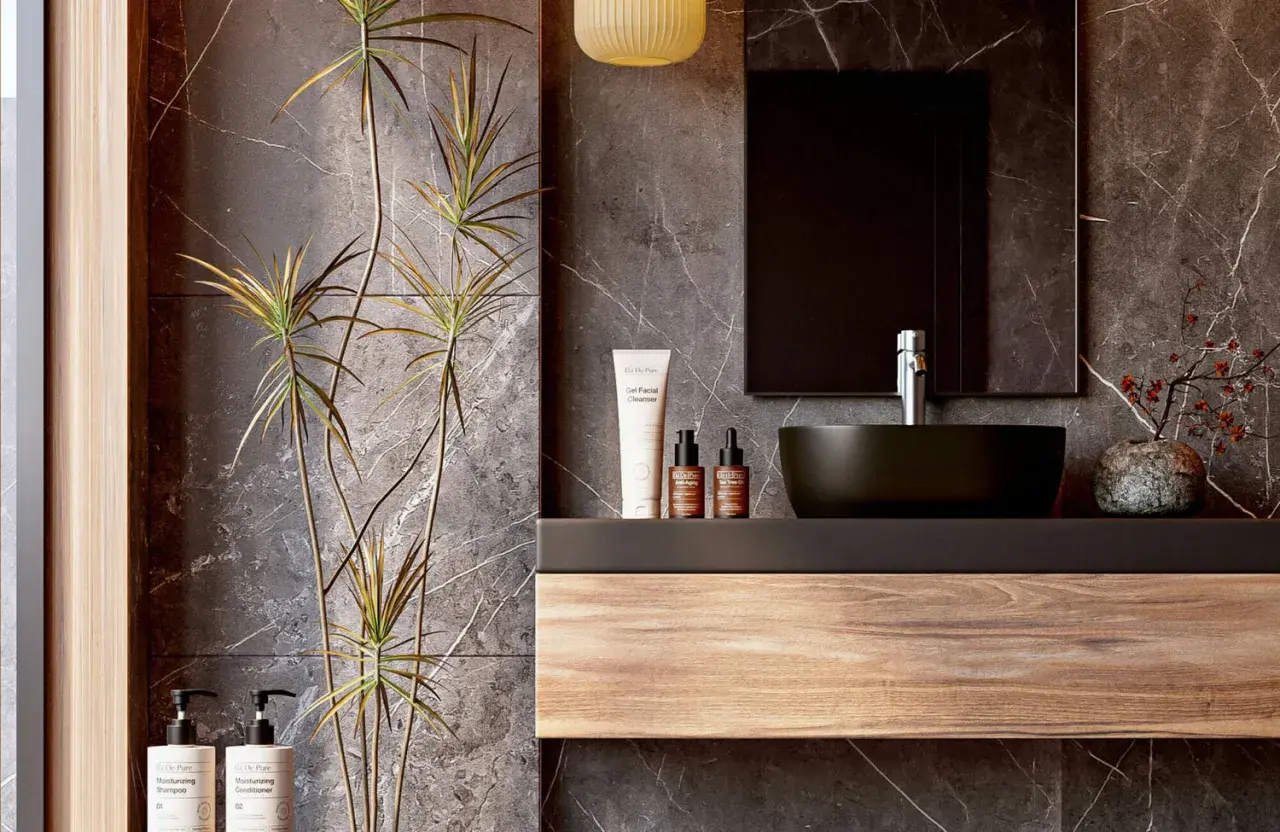
Modern bathroom vanities do more than hold a sink. They set the tone for the room, control how much storage you get, and decide whether a bath feels airy, crowded, warm, or clinical. The best modern bathroom vanity ideas balance clean lines, useful storage, and materials that still look good after years of daily use.
This guide focuses on the styles, sizes, finishes, and practical tradeoffs that matter most in real U.S. homes. I am looking at the choices that work in powder rooms, family baths, and primary suites, not just the versions that photograph well.
What matters most before you choose a vanity
- Floating and wall-mounted vanities make small bathrooms feel lighter, but they need proper wall support and careful plumbing planning.
- Standard vanity widths usually run from 18 to 72 inches, with 24, 30, 36, 48, 60, and 72 inches the most common sweet spots.
- Warm wood tones, fluted fronts, integrated sinks, and slab-style doors are the cleanest modern signals right now.
- Quartz and solid-surface tops are the easiest low-maintenance options for busy bathrooms.
- Budget for the cabinet, top, faucet, and installation together, because the vanity unit is only part of the total cost.
What makes a vanity feel modern right now
When I look at what is actually holding up in current bathroom design, the pattern is pretty clear: simple geometry, reduced ornament, and a stronger relationship between the cabinet and the sink. That usually means flat-panel doors, slim hardware, floating bases, or a vanity that reads more like furniture than built-in millwork.
Modern does not have to mean cold. In fact, the most successful contemporary vanities often bring in walnut, oak, fluted texture, or a stone top with a little movement in it. The room still feels calm, but it no longer feels sterile.
Another thing I keep seeing is restraint in the details. A clean apron, an integrated basin, or a softly squared faucet usually does more for the look than extra trim ever will. Once you know the visual language, the next question is fit, because proportions can make or break the whole room.
How to size the vanity for the room you actually have
I usually start with scale before style. A vanity that looks beautiful in a rendering can become a problem the second a drawer hits a door swing or a sink crowd the toilet. The good news is that most bathrooms can be improved if you match the vanity width and depth to how the room is used.
| Bathroom type | Good vanity width | What usually works best | Why it works |
|---|---|---|---|
| Powder room | 18 to 30 inches | Floating single vanity or compact wall-mounted sink cabinet | Keeps the room visually open and leaves more breathing room around the fixture. |
| Guest or hall bath | 30 to 48 inches | Single sink with drawers or a centered basin and extra counter space | Balances daily utility with enough surface area for toiletries and hand towels. |
| Primary bath | 60 to 72 inches | Double vanity or one wide single with generous storage | Reduces crowding at peak-use times and gives each person a defined zone. |
| Narrow bath | 24 to 36 inches | Shallow wall-hung design | Shallower depth keeps circulation easier in tight layouts. |
If you are considering a double sink, do not size it by sink count alone. A 60-inch unit is often the practical starting point, while 72 inches tends to feel more comfortable for two users and gives you better counter distribution. That proportional thinking leads directly into the style choices that actually change the look of the room.
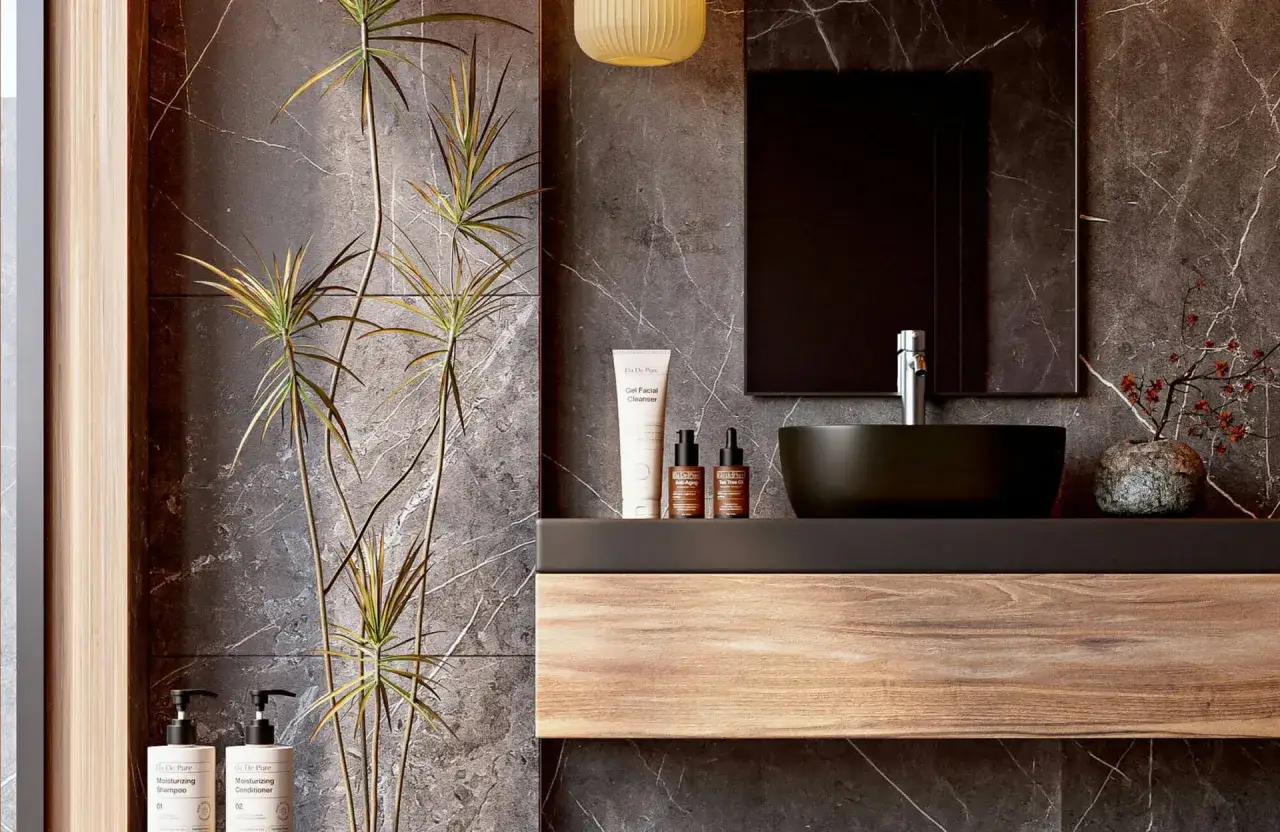
Modern vanity styles worth considering
Here is the part that matters most for inspiration: not every contemporary vanity solves the same problem. Some are about lightness, some about storage, and some about making the sink itself feel like the centerpiece. I find it useful to compare them side by side before deciding.
| Style | Best for | Strength | Main tradeoff |
|---|---|---|---|
| Floating vanity | Small baths and modern minimal interiors | Makes the floor visible, so the room feels larger and less crowded | Usually gives up some storage and needs solid wall support |
| Fluted-front vanity | Powder rooms and stylish primary baths | Adds texture without needing bold color or heavy ornament | Detail can collect dust if the profile is overly deep |
| Furniture-style vanity | Bathrooms that need warmth and character | Feels custom and less boxy than a standard cabinet | Can look too traditional if the legs, pulls, or top are mismatched |
| Integrated-sink vanity | Busy family baths | Easy to clean and visually seamless | Less flexibility if you want a dramatic vessel or a special stone top |
| Double vanity | Shared primary baths | Defines separate daily zones and usually improves storage | Needs more width and a better plumbing plan |
My rule of thumb is simple. If the room is tight, choose floating or wall-hung. If the room is generous but plain, add fluting, richer wood, or a furniture-like profile. If the room has to work hard every morning, let storage and sink layout lead the decision. The style is only half the story, because the material choice determines how long the design keeps looking sharp.
Materials and finishes that age well
Color trends come and go, but materials tend to tell the truth. The safest contemporary choices are still the ones that look good after a year of toothpaste, water spots, and everyday clutter. For most homeowners, that means choosing a finish that looks intentional without demanding constant maintenance.
- Oak and walnut bring warmth and hold up well visually, especially when the grain is left natural rather than overly glossy.
- Quartz is one of the easiest tops to live with because it gives you a clean look with low upkeep.
- Solid-surface countertops are useful when you want a seamless sink-to-top transition and a softer modern feel.
- Porcelain or sintered surfaces work well for slimmer, more architectural vanities because they read crisp and refined.
- Matte black, brushed nickel, and soft brass hardware usually age better than highly trendy finishes with a loud sheen.
In terms of color, I still see wood as the most reliable modern move. White remains safe, but warmer wood tones and quieter neutrals give the room more depth. If you want a bolder cabinet color, dark green or navy can work, but I would keep the rest of the room calm so the vanity does not fight the tile, mirror, and lighting. That balance matters even more once you start planning storage and fixtures around the cabinet.
Storage and lighting are what make the design work day to day
A vanity can look polished and still fail in daily use if the inside layout is sloppy. I care less about whether a design is flashy than whether it makes morning routines easier. The best versions usually solve three things at once: storage, faucet placement, and light.
- Drawers beat doors for most people because they keep smaller items visible and easier to reach.
- Deep lower drawers are especially useful for hair tools, extra towels, and taller bottles that do not fit neatly in a shallow cabinet.
- Wall-mounted faucets free up counter space and look cleaner, but they require the rough-in to be planned early.
- Medicine cabinets or mirrored storage help when the vanity itself is shallow and cannot carry all the load.
- Sconces on both sides of the mirror usually give better face lighting than a single fixture above the vanity.
- Vessel sinks can create a strong visual moment, but they need careful height coordination so the counter does not feel too tall.
This is where I see a lot of remodels go wrong. The cabinet looks excellent, but the faucet collides with the mirror, or the lighting throws shadows across the face, or the drawer stack cannot open fully because of the plumbing. If you solve the function first, the room immediately feels more expensive, even when the materials are fairly simple. With the design choices set, the remaining question is budget and installation.
What to budget for and where mistakes usually happen
Price varies a lot, but there are still useful benchmarks. Angi’s 2026 data puts bathroom vanity installation at about $400 to $2,200, with removal of the old unit often adding another $150 to $500. Prefabricated vanities commonly run from about $100 to $2,600 before labor, while custom projects can climb to $4,000 or more once you factor in the top, plumbing adjustments, and finish carpentry.I also like keeping an eye on retail reality. Lowe’s current listings show how wide the market is, with vanities and tops ranging from budget-friendly options into the several-thousand-dollar tier. That spread is exactly why it helps to define your priorities before shopping, because two vanities that look similar online can differ a lot in construction, hardware quality, and installation complexity.
- Choosing the wrong depth makes small bathrooms feel cramped fast.
- Ignoring wall support can turn a floating vanity into a structural problem instead of a style choice.
- Mixing sink type and cabinet height badly creates an awkward posture at the counter.
- Forgetting plumbing rough-ins can force last-minute compromises in drawer layout.
- Buying the vanity before the lighting and mirror are planned often leads to bad proportions.
The cleanest projects are the ones where the vanity, mirror, faucet, and lighting are treated as one system. Once that is in place, the room stops feeling assembled and starts feeling designed.
The choices that make the whole room feel intentional
If I had to reduce the whole topic to a short checklist, I would keep it simple: pick the right size first, choose one dominant material, and then make the sink, faucet, and mirror support that choice instead of competing with it. That is usually where the strongest contemporary bathrooms come from.
For a small bath, I would lean toward a floating unit, a shallow profile, and a calm finish. For a larger room, I would consider a wider cabinet with real drawer storage, a quartz or solid-surface top, and either fluted detail or a warm wood grain to keep the space from feeling flat. If the bathroom has to work hard every day, I would favor practicality over novelty every time.
The strongest modern vanity designs are not the loudest ones. They are the ones that look clean, store what you need, and still feel appropriate after the trend cycle moves on.