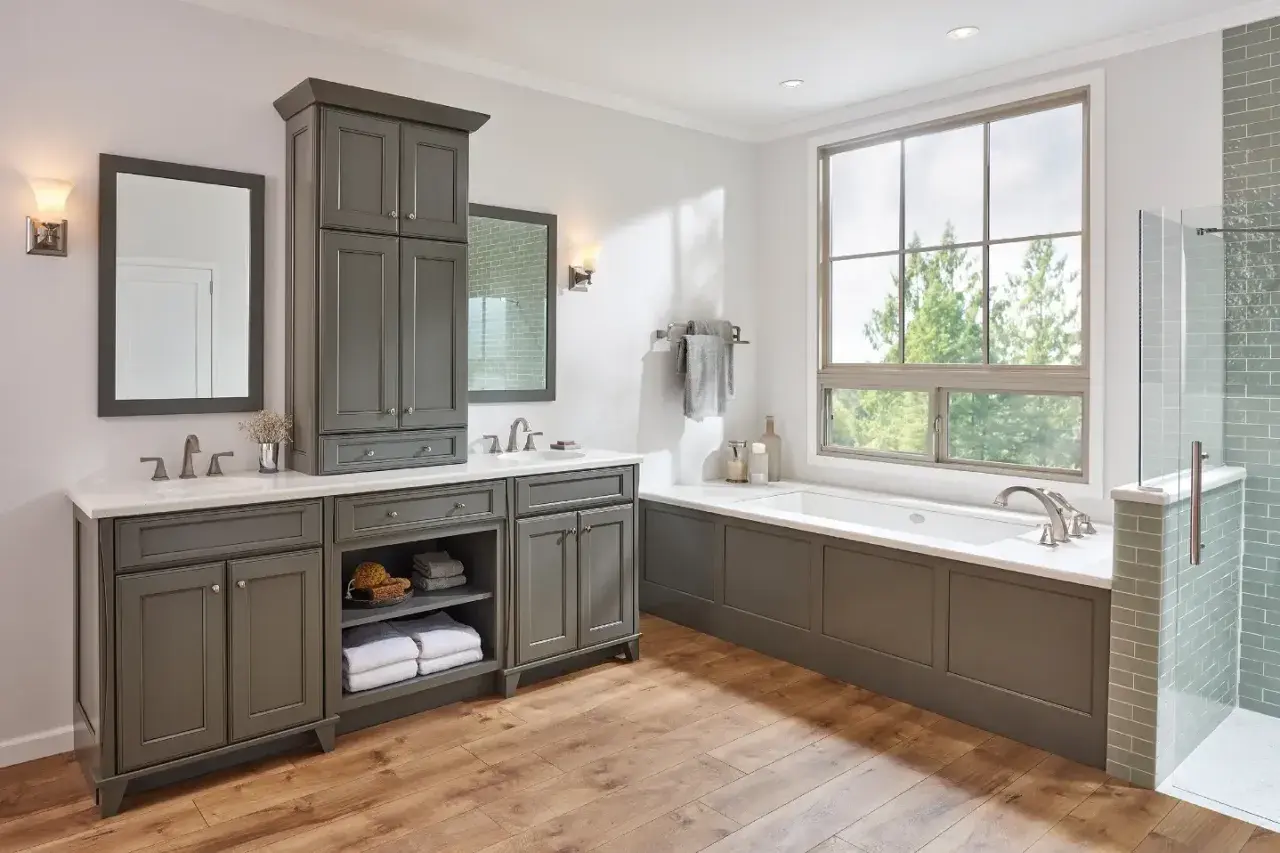
The practical question of what size mirror fits a 48-inch vanity comes down to proportion, lighting, and sink layout rather than one fixed rule. A good mirror can make the room feel brighter and more finished; the wrong one throws off the whole wall. I usually start with a 36-inch-wide mirror and then adjust for sconces, backsplash height, and the shape of the frame.
The safest mirror size is slightly narrower than the vanity
- 36 to 40 inches wide is the best starting range for most single-sink 48-inch vanities.
- If you need room for sconces, 30 to 36 inches wide is usually easier to balance.
- Most mirrors look right at 30 to 36 inches tall, with taller options working better in rooms with high ceilings.
- Keep the bottom edge about 5 to 10 inches above the countertop or the highest faucet point.
- Count the outer frame size, because that is the measurement the wall actually sees.
The quickest answer for a 48-inch vanity
I usually start with one rule: the mirror should feel a little smaller than the vanity, not equal to it and definitely not wider. Most design guidance lands around 70 to 80 percent of vanity width, which puts a 48-inch vanity in the 34 to 38 inch zone. In practice, that means a 36-inch mirror is the safest default, while a 40-inch mirror gives a fuller look without crowding the wall.
There is another school of thought that leaves a few inches of wall on each side of the mirror for a framed look. That pushes the size closer to 40 to 44 inches. I do not treat that as a contradiction; it is just a different visual goal. If the bathroom is compact or the vanity wall already has lighting, I lean smaller. If the wall is open and the mirror is frameless or very thin-framed, I can push a bit larger.
| Mirror width | What it usually means on a 48-inch vanity | Best use case |
|---|---|---|
| 30-32 inches | Light, compact, and intentionally smaller | Side sconces, narrow sink, or a more decorative look |
| 36 inches | The most balanced all-purpose choice | Single sink, standard bathroom, easy off-the-shelf fit |
| 40 inches | A fuller, more modern presence | Open wall, frameless mirror, no side lighting |
| 42-44 inches | Almost full-width, visually strong | Only when the layout can absorb it and the frame is slim |
| 48 inches | Full vanity width | Special case only, usually frameless or architectural in feel |
If I had to give one answer without seeing the room, I would choose a 36-inch-wide mirror first and a 40-inch-wide mirror second. That covers most 48-inch vanities without making the wall feel crowded. From here, the sink layout decides whether one mirror is enough or whether a split arrangement makes more sense.
One mirror or two depends on the sink layout
A single-sink 48-inch vanity is the easiest case. One mirror centered over the sink almost always looks cleaner than trying to force multiple pieces into a narrow wall. For that setup, I like one rectangular mirror around 36 to 40 inches wide or one round mirror around 30 to 36 inches in diameter.
A double-sink 48-inch vanity is tighter than many people expect. Once you divide 48 inches between two bowls, faucet clearance, and the gap between sinks, there is not much room left for generous mirrors. On a layout like that, I often prefer one long mirror or two smaller mirrors only if the sinks are compact and the lights are handled separately.
- Single sink: one 36- to 40-inch mirror is usually the cleanest choice.
- Double sink: two mirrors can work, but each one usually needs to stay slim.
- With sconces: smaller mirrors make side lighting much easier to fit.
- With a light bar above: one wider mirror is usually easier to balance.
My rule is simple: if the layout starts feeling forced, the mirror is probably too ambitious for the wall. That is why height and shape matter just as much as width.
Height can make the mirror feel right or wrong
Width gets most of the attention, but height changes the whole mood of the vanity wall. Most U.S. bathroom vanities sit between 32 and 36 inches tall, which is why a 30- to 36-inch mirror usually lands in the right visual zone. If the ceiling is tall, a 36-by-40 mirror or even a taller arched piece can look intentional instead of oversized.
As a placement guide, I like to keep the bottom of the mirror about 5 to 10 inches above the countertop or the highest point of the faucet assembly. That spacing gives the vanity a little breathing room and avoids a cramped, water-splash-prone look. In most homes, the center of the mirror ends up around average eye level, which is why the setup feels natural when it is done well.
There is one exception: if you have a tall backsplash, vessel sink, or unusually high faucet, measure from the highest obstacle instead of guessing from the countertop alone. That one detail prevents a surprising number of bad installs, and it leads directly into the shape and frame choices that alter the final visual size.
Shape, frame, and lighting change the final fit
The same nominal size can feel completely different depending on the shape and frame. A frameless mirror reads larger and lighter than a mirror with a thick black or wood frame. That means a 36-inch frameless mirror may feel roomier than a 40-inch framed mirror, even though the tape measure says the opposite.
Rectangular mirrors are the easiest to size because their edges match the vanity well. Round mirrors soften the straight lines of the cabinet, but they usually need to be smaller than a rectangular mirror to avoid looking oversized. On a 48-inch vanity, I usually think 30 to 36 inches for a round mirror. Arched and oval mirrors are a middle ground: they add vertical softness without taking over the wall.
- Thick frame: choose one step smaller than you think you need.
- Thin metal frame: a 36- to 40-inch width usually works well.
- Frameless glass: can go wider without looking bulky.
- Round or arched mirror: often needs less width and more height.
Lighting is the last piece of the composition. Side sconces need wall space, so they usually push the mirror narrower. A light bar above the mirror gives you more freedom on width, but only if the mirror height still feels comfortable underneath it. Once you start planning the lighting, the common sizing mistakes become much easier to avoid.
The mistakes that make a 48-inch vanity look off balance
I see the same errors over and over, and they are easy to avoid once you know what to look for. The most common one is choosing a mirror that is basically the full width of the vanity because it seems safer. In reality, that can flatten the wall and make the vanity feel heavier than it is.
- Picking a 48-inch mirror just because the vanity is 48 inches wide. This usually looks too wide unless the mirror is frameless and the room is very deliberate in style.
- Going too small. A tiny mirror can make the vanity look unfinished and reduce the usefulness of the reflection.
- Ignoring frame thickness. The outside dimension is what the eye reads, so a chunky frame changes the final proportion fast.
- Forgetting the faucet or backsplash height. The mirror can end up floating too low or fighting with the plumbing.
- Choosing the mirror before the lights. If sconces or a bar light are planned, they should influence the mirror width from the beginning.
The fix is usually simple: step back one size if the wall feels crowded, or step up one size if the mirror looks lost. I also recommend taping the mirror outline on the wall before buying anything. That quick mock-up tells you more than a product photo ever will. With that outline in place, the last step is choosing the setup I would actually buy for the most common 48-inch layouts.
The one setup I keep coming back to on 48-inch vanities
If I were specifying a mirror for a standard single-sink 48-inch vanity, I would start with a 36-by-36 or 36-by-40 rectangular mirror with a thin frame. That gives the wall enough presence, keeps the sink visually anchored, and still leaves room for everyday grooming without making the vanity area feel overbuilt.
If the room has sconces, I would usually move down to a 30- to 36-inch-wide mirror and let the lighting do more of the visual work. If the bathroom is modern and open, I would be comfortable going a little wider, especially with a frameless mirror. What I would not do is buy first and measure later; on a 48-inch vanity, a few inches change the whole tone of the wall.
The best mirror is the one that fits the vanity, the lights, and the way the room is actually used. If I had to narrow it down to one number, I would start at 36 inches wide and only move to 40 inches when the wall has enough room to breathe. That single decision solves most 48-inch vanity layouts without overcomplicating the bathroom.
