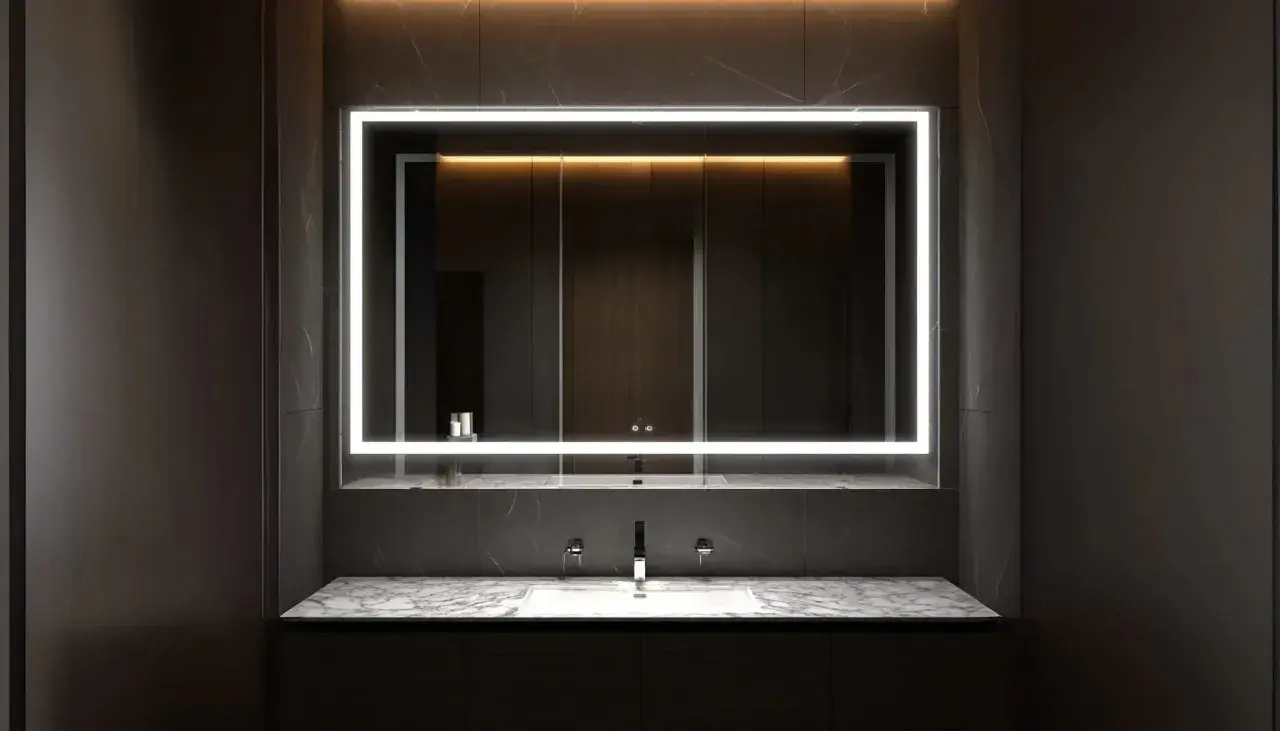
Bathroom mirrors now do much more than finish a vanity wall. The latest bathroom mirror trends lean toward softer shapes, warmer frames, built-in lighting, and smarter storage, which matters because the mirror is usually the first detail people notice after the tile and fixtures. In this guide, I’m focusing on what is actually working in real bathrooms, how to choose a style that fits your space, and where the design choices are worth the spend.
What matters most before you buy
- Arched, round, oval, and elongated mirrors are leading because they soften the hard lines of tile, cabinetry, and plumbing.
- Framed mirrors and modern medicine cabinets are replacing the old wall-to-wall sheet of glass in more finished-looking bathrooms.
- Integrated lighting helps, but it needs to be warm, dimmable, and flattering, not icy or harsh.
- For a double vanity, one long mirror or two separate mirrors can both work, but the room’s width, storage needs, and lighting plan should decide it.
- Scale matters more than matching every finish perfectly, so I usually start with proportion, then choose the frame and metal tone.
- In most U.S. homes, the best upgrade is a mirror that solves a practical problem while still feeling deliberate.
The shapes leading the market right now
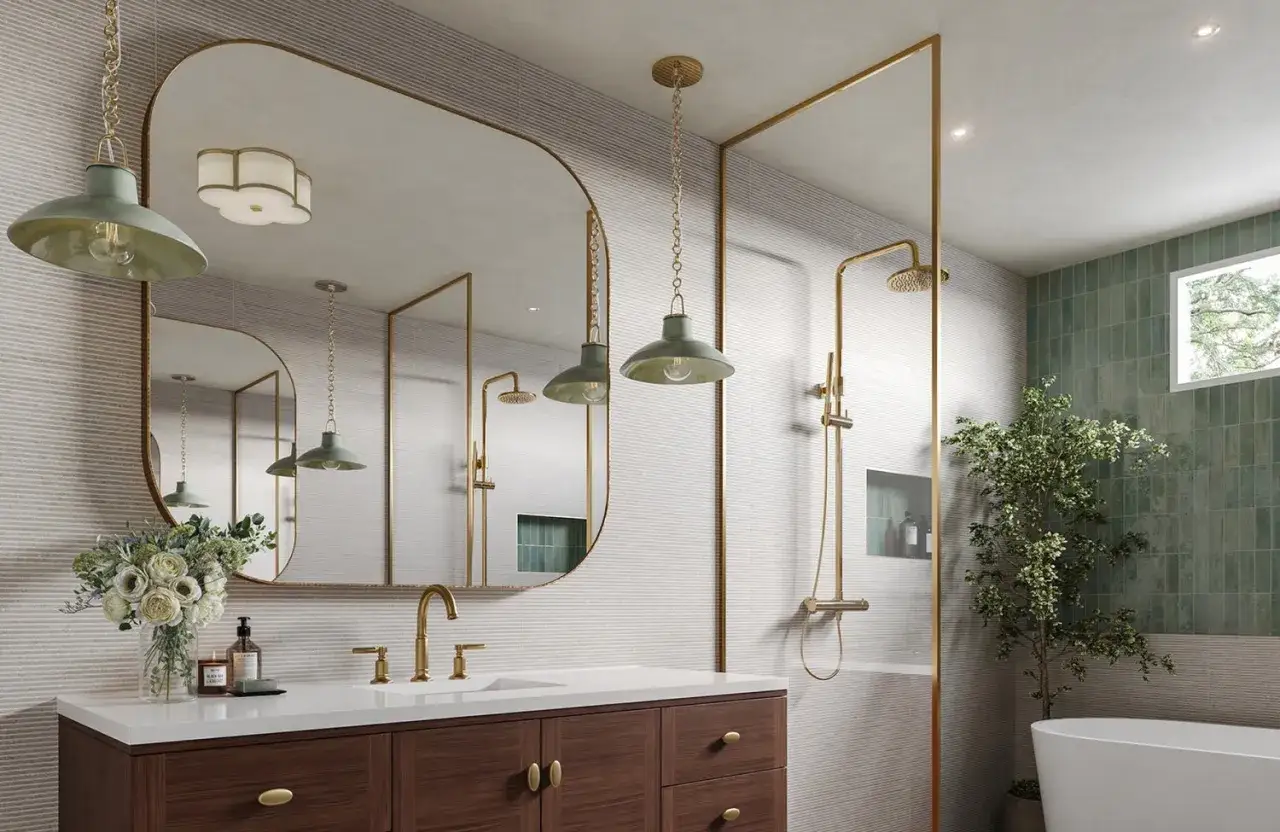
The biggest shift I keep seeing is a move away from plain rectangles that run wall to wall. Softer silhouettes, especially arched, oval, pill-shaped, and round mirrors, are doing a better job of breaking up the hard geometry that dominates most bathrooms. That matters in a room full of tile lines, boxy vanities, and straight plumbing runs, because a curve gives the eye a place to rest.
I also like that these shapes are flexible. A round mirror can calm down a vanity with sharp cabinetry. An arched mirror can make an ordinary primary bath feel taller and more tailored. Elongated geometric mirrors work well when you want vertical emphasis without going full statement piece. Convex mirrors are showing up as decorative accents, but I would treat them as art, not as the main grooming mirror, because the reflection is intentionally distorted.
| Shape | Why it works | Best use | Watch out for |
|---|---|---|---|
| Arched or oval | Softens hard surfaces and adds height | Primary baths and transitional spaces | Can feel awkward if the ceiling is very low |
| Round | Creates contrast and feels relaxed | Powder rooms and single vanities | May look undersized over a wide vanity |
| Framed rectangular | Feels polished and flexible | Most family bathrooms | Needs the right frame thickness to avoid looking heavy |
| Convex or sculptural | Adds personality and a more artistic feel | Accent walls and powder rooms | Not ideal for daily shaving or makeup |
Once you know which shape fits the room, the next question is whether the mirror should disappear into the wall or become part of the design language.
Frames and finishes are warming up
The clean, frameless look still has a place, but it reads more builder-basic now unless the rest of the bathroom is extremely minimal. More often, I’m seeing framed mirrors with real presence, even when the frame is thin. That frame can be metal, painted wood, wrapped wood, or a finish that subtly echoes the vanity hardware. The point is not exact matching. The point is that the mirror feels intentional.
Warm tones are doing the heavy lifting here. Brushed brass, bronze, blackened metal, and natural wood all add texture without making the room busy. A wood frame is especially effective when the bathroom already has stone, tile, and metal in play, because it adds visual warmth without asking for another color. If the room is already rich in pattern, I usually keep the frame simpler and let the shape do the work.
There is also a practical side to this. Bathroom mirrors live in a damp environment, so the finish matters. Look for materials that are sealed well, resist corrosion, and do not warp. A beautiful frame that fails in humidity is a bad trade, no matter how current it looks. That is why the mirror category has become less about decoration alone and more about how the piece behaves in daily use.
That balance between style and utility leads directly to the biggest functional change in the category: lighting and storage are becoming part of the mirror itself.
Lighting and storage are now part of the mirror
Integrated lighting is one of the more useful mirror upgrades because it solves a real problem. Side glare, dark eye sockets, and shadowy vanities make a bathroom feel older fast. A lighted mirror, especially one with a soft LED glow, can clean up the wall visually and improve task lighting at the same time. I usually look for dimmable LEDs in the 2700K to 3000K range with a CRI of 90 or higher, because that gives a more natural, flattering result for skin tone and makeup.
That said, built-in lighting is not automatically better than separate sconces. If the mirror already has a strong shape or ornate frame, adding another light source can make the wall feel crowded. In those cases, I prefer the mirror to stay visually quiet and let the sconces carry the lighting load. The best setup depends on how much wall space you have and whether the bathroom feels more decorative or more task-driven.
Storage is getting a similar redesign. Modern medicine cabinets are no longer the clunky boxes people try to hide. The better versions are recessed, flush, and trim enough to read like part of the architecture. Some now have wood fronts, thin metal edging, or sculptural profiles, which means you get storage without giving up style. In smaller bathrooms, that is often the smartest spend in the whole room.
- Choose an integrated lighted mirror when you need cleaner wall space and better front-facing light.
- Choose a recessed medicine cabinet when storage is the real pain point and clutter keeps landing on the counter.
- Choose separate sconces when you want the most design flexibility and a more layered look.
With the function sorted out, the next decision is scale, because even a beautiful mirror can look wrong if it is the wrong size for the vanity.
How I size a mirror for the vanity and the room
In practice, proportion does more for a bathroom than almost any style choice. For a single vanity, I usually like the mirror to feel slightly narrower than the vanity itself, not dramatically smaller and never so wide that it spills into awkward wall edges. As a rough guide, a mirror that covers most of the vanity width without touching the side walls often looks balanced and intentional. A taller mirror can also help a modest ceiling feel less compressed.
For a double vanity, the choice is usually between one long mirror and two separate mirrors. One mirror creates visual continuity and can make a shared bath feel more open. Two mirrors feel more tailored and usually work better when you want space for sconces, pendants, or a bit of wall breathing room between the sinks. If the room is narrow, I usually lean toward one mirror. If the room is wider and the vanity has a strong rhythm, two mirrors often look better.
Small bathrooms have their own rules. A big mirror can absolutely help a compact bath feel larger, but a full wall of frameless glass can also flatten the room and make it feel utilitarian. I would rather use a framed mirror that reflects light well than a giant sheet that disappears into the wall. If the bathroom already has beautiful tile, let the mirror support it instead of competing with it.
| Bathroom situation | Mirror approach | Why it works |
|---|---|---|
| Single vanity | One framed or softly curved mirror | Keeps the wall calm and gives the vanity a clear focal point |
| Double vanity | Two mirrors or one long mirror | Supports the room’s scale and the spacing of the sinks |
| Powder room | Statement shape or sculptural frame | The mirror can carry more personality because the room is smaller |
| Small full bath | Taller mirror or recessed cabinet | Adds function without crowding the room |
Once the size and layout are right, the remaining question is money, because mirror prices vary more than most people expect.
What the main options usually cost in the U.S.
For a bathroom mirror, the retail range can be surprisingly wide. A basic frameless mirror may be inexpensive, while a custom framed piece, a lighted model, or a recessed cabinet can jump quickly once materials and electrical work are included. These are rough U.S. ranges, but they are useful for planning before you commit to a style.
| Mirror type | Typical retail range | Best for | Notes |
|---|---|---|---|
| Basic frameless mirror | $50 to $200 | Budget refreshes and simple rentals | Affordable, but easiest to make the room feel generic |
| Framed mirror | $120 to $600 | Most primary baths and powder rooms | Strong middle ground for style and cost |
| Large statement or custom mirror | $400 to $1,500+ | Designed bathrooms and unusual layouts | Worth it when the mirror is a focal point |
| Lighted LED mirror | $180 to $900 | Makeup, grooming, and dark bathrooms | Check color temperature, dimming, and wiring needs |
| Recessed medicine cabinet mirror | $150 to $900+ | Small baths and storage-heavy family spaces | Installation can be more involved if the wall must be modified |
| Smart mirror | $300 to $1,200+ | Tech-forward bathrooms | Useful for some households, but not the first feature I would pay for |
If you are hiring out the work, factor in mounting and electrical labor as well. A simple swap may stay modest, while hardwiring a lighted mirror or opening a wall for a cabinet can add several hundred dollars more. That is why I think mirror shopping should always start with the layout, not with the prettiest picture.
The mistakes that make a mirror feel dated too fast
The fastest way to date a bathroom is to choose the mirror without thinking about the rest of the wall. A few patterns keep showing up as avoidable mistakes. The first is defaulting to a wall-to-wall frameless mirror just because it feels easy. That used to be a standard solution, but now it often reads impersonal unless the bathroom is extremely minimal and the lighting is excellent.
The second mistake is over-matching. When the frame, faucet, lights, towel bars, and cabinet pulls are all identical, the room can feel stiff instead of cohesive. I prefer mirrors that belong to the room without copying every other finish. A slightly warmer frame, or a mirror that introduces a soft curve, usually adds more life than another perfectly coordinated metal box.
The third mistake is getting the lighting wrong. A mirror can be beautiful and still fail if the light above it is too yellow, too dim, or too harsh. If the room is already bright and layered, a decorative mirror can work. If the bathroom is dark, the mirror needs to pull more weight. I also would not choose a reflective surface that bounces clutter back at you, because the room will always feel less finished than it should.
The common thread across today's bathroom mirror trends is that the mirror has to do at least two jobs: shape the room and solve a practical need. If it only does one, it tends to feel decorative but not quite right.
A mirror update that changes the whole bathroom
If I were helping someone refresh a bathroom without starting a full remodel, I would begin with the mirror wall. It is one of the fastest ways to change the room’s tone, and it affects how the lighting, vanity, and tile read all at once. For most homes, the safest current choice is a framed arched, oval, or softly rectangular mirror sized to the vanity, paired with warm task lighting or a recessed cabinet if storage is tight.
That is the combination I trust most: it looks current, it works hard, and it is less likely to age badly than an oversized slab of frameless glass. If you choose the shape first, then the function, then the finish, the rest of the bathroom usually falls into place with far less effort.