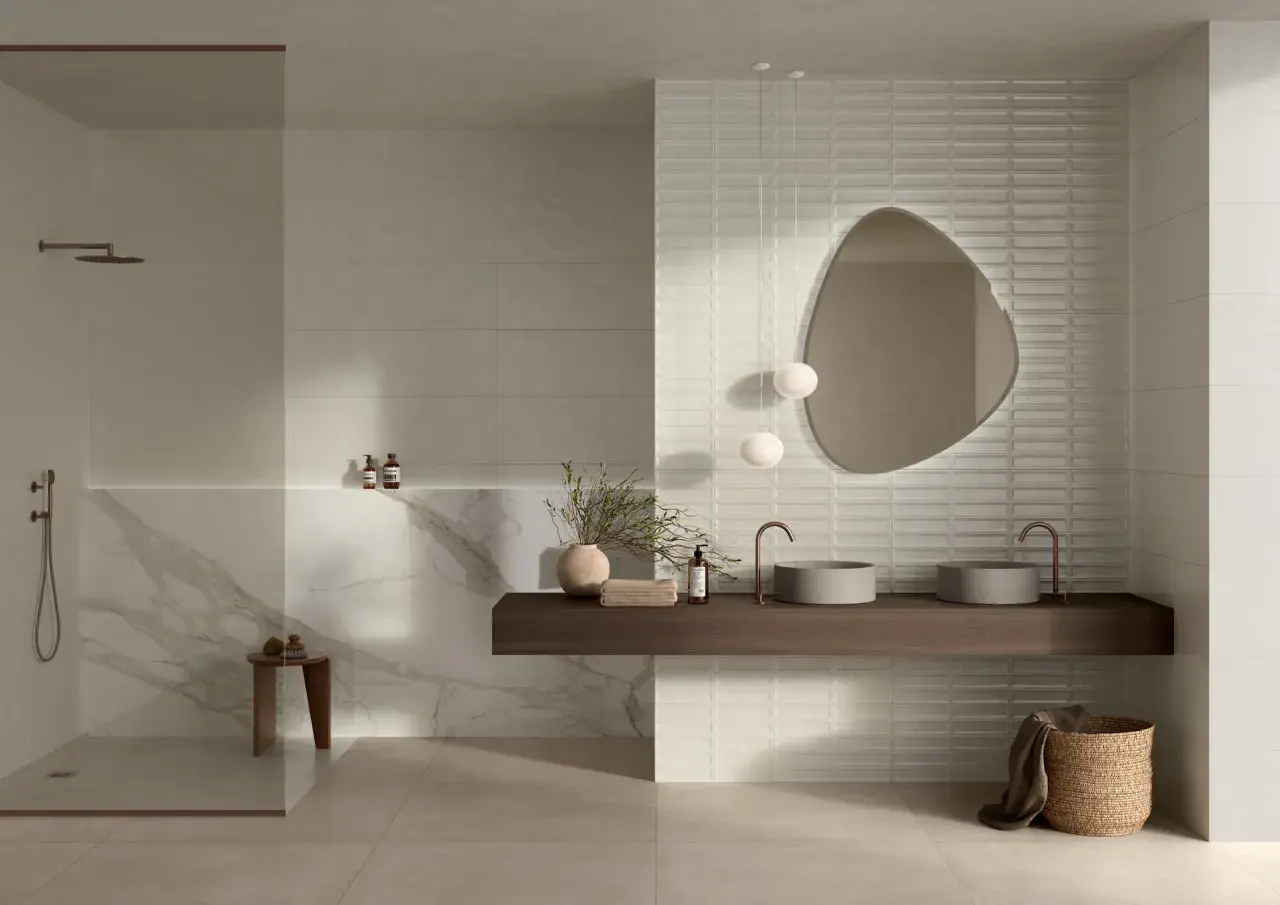
Bathroom tile is one of those decisions that looks simple until you have to live with it every day. There are several types of tile for bathroom spaces, but the right choice depends on where the tile sits, how much water it sees, and how much maintenance you can accept without getting annoyed later. I’m going to break down the main materials, where they work best, and the tradeoffs that matter in a real U.S. home.
The best tile choice comes down to water, grip, upkeep, and placement
- Porcelain is my default for floors and showers because it is dense, low-absorption, and forgiving.
- Ceramic is the best budget-friendly option for walls and lighter-use spaces.
- Glass, natural stone, cement, and terrazzo each solve a different design problem, but none are as low-maintenance as porcelain.
- Matte finishes and smaller mosaics improve traction; large-format tiles reduce grout and cleaning.
- The real decision is not just style. It is water exposure, slip resistance, and upkeep.
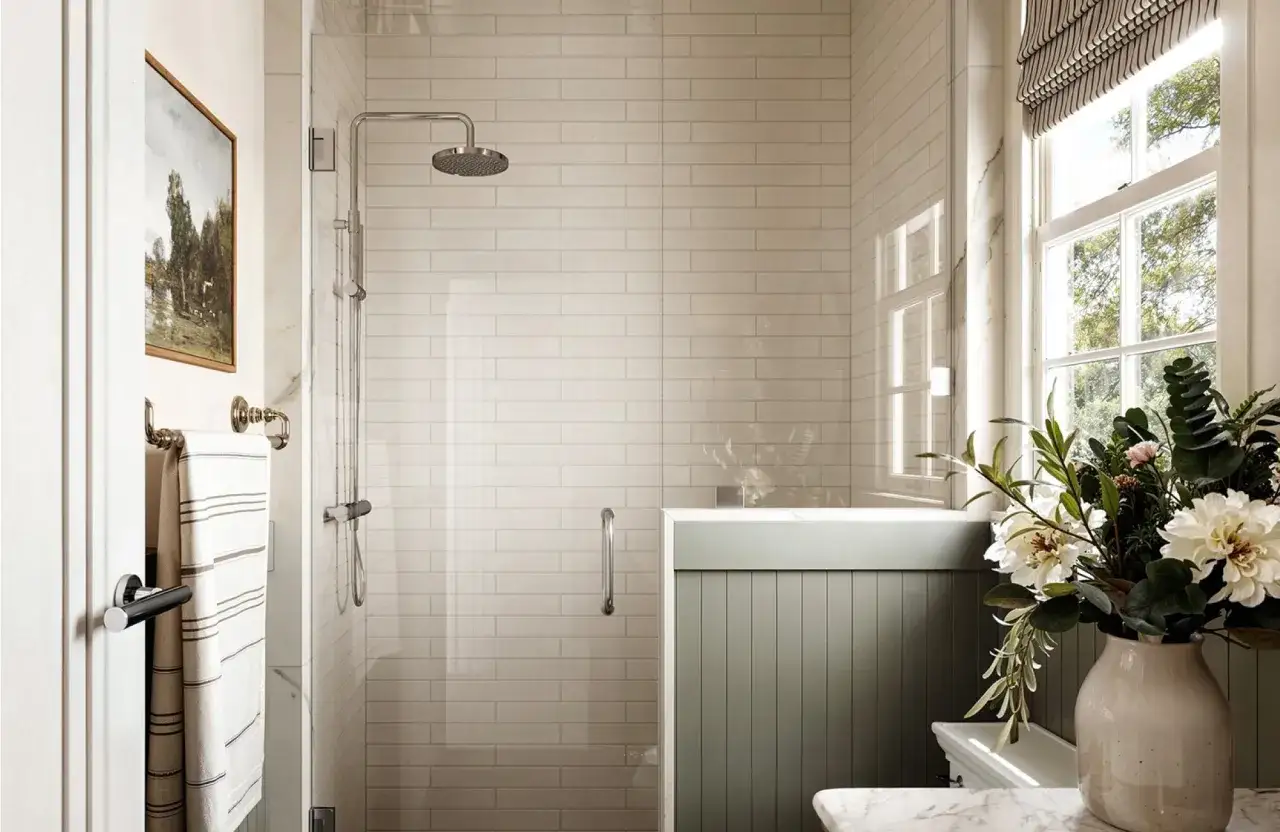
The main tile materials and where they fit best
When I narrow a bathroom project down to the essentials, I start with the material. That is where most of the long-term performance comes from, and it is also where budget decisions usually begin to make sense.
Here is the practical version of the comparison I use most often:
| Material | Best use | Strengths | Tradeoffs | Typical U.S. material price |
|---|---|---|---|---|
| Porcelain | Floors, showers, full-height walls | Dense, low-absorption, durable, broad style range | Harder to cut, can cost more to install | $3-$15/sq ft |
| Ceramic | Walls, powder rooms, light-use floors | Affordable, easy to cut, lots of colors and shapes | More porous than porcelain, not my first pick for shower floors | $1-$7/sq ft |
| Glass | Accents, niches, wall features | Bright, stain-resistant, crisp visual detail | Can chip more easily, usually not ideal for floors | $7-$30+/sq ft |
| Natural stone | Luxury walls, floors, vanities, accents | Unique, warm, premium look | Needs sealing and more careful cleaning | $5-$30+/sq ft |
| Cement or encaustic | Statement floors and walls | Pattern-rich, matte, character-driven | Porous, higher maintenance | $8-$20+/sq ft |
| Terrazzo | Statement floors and feature walls | Durable, contemporary, visually calm | Heavier and pricier to install | $10-$25+/sq ft |
If you want one plain-English takeaway, it is this: porcelain is the safest all-around default. Ceramic is the value play, glass is best used as an accent, and natural stone earns its place when you are willing to care for it properly. Once those material differences are clear, placement becomes the next filter.
How floors, walls, and showers change the decision
Bathroom surfaces do not ask the same thing from tile. Floors need traction. Shower walls need easy cleaning and dependable moisture resistance. Shower floors need both grip and a shape that works with the drain. That is why the same tile can be smart in one spot and a headache in another.Bathroom floors
For a level interior floor, I like a wet DCOF around 0.42 or higher as a useful baseline. That number is not the whole story, but it pushes you toward tile with real traction instead of a glossy surface that looks elegant in the showroom and slick once steam and water enter the picture.
Porcelain is still my default here. Textured ceramic can work in a powder room or a low-traffic bath, and small mosaics are a smart choice when you want more grout lines for grip. If the floor sits directly in the splash zone, I would avoid polished stone and anything that relies on sealing alone for safety.
Shower walls and surrounds
Shower walls are more forgiving because they deal with moisture, not constant foot traffic. Glazed ceramic, porcelain, glass accents, and some natural stone all make sense here, provided the installation is properly waterproofed behind the tile. I care more about easy cleaning and clean edges on shower walls than I do about maximum traction.
Shower floors
For shower floors, smaller tiles usually win because they follow the slope to the drain and create more grout lines underfoot. Mosaics in porcelain, stone, or even some glass blends can work well, but I would keep the finish matte or lightly textured. If you want a dramatic, large-piece look, that belongs on the walls, not on the pan.
Once placement is settled, finish and scale decide whether the room feels calm or busy.
Finish, size, and grout lines shape how the room feels
In 2026, the strongest bathroom looks I’m seeing are not necessarily the flashiest. They feel controlled. Large-format porcelain, warm stone looks, and tactile finishes are everywhere because they reduce grout and make the room feel more architectural. That trend works because it is both visual and practical.
- Matte and honed finishes hide water spots better and usually feel more comfortable on floors. Honed means the surface is smooth but not shiny.
- Glossy finishes bounce light and can make a small room feel brighter, but they also show droplets and soap residue faster.
- Large-format tile, often 24x24 or 24x48, cuts down on grout lines, which makes cleaning easier and the room visually quieter. It also asks more of the substrate, the flat base under the tile, so installation quality matters.
- Small mosaics are better for shower pans, curved surfaces, and places where grip matters. They add texture, but they also add grout maintenance.
- Classic shapes like subway, hex, and penny tile are still useful because they solve different problems. Subway reads clean and timeless, hex feels a little sharper, and penny tile gives a softer, more grip-friendly surface.
I also like to think about grout as part of the design, not an afterthought. A grout color that closely matches the tile makes a wall feel calmer, while contrast grout can sharpen the pattern if that is the point of the room. Rectified edges, meaning machine-cut sides that allow tighter joints, can make a large wall look especially crisp.
That balance between finish and shape is where the style starts to feel intentional, and cost and upkeep are the next filters I use.
What bathroom tile costs and maintenance really look like
The material price is only part of the story. In real projects, labor, waterproofing, surface prep, and layout complexity can matter just as much as the tile itself, especially in a shower. I budget for the whole assembly, not just the box of tile.
What usually raises the price
- Premium materials such as natural stone, terrazzo, and decorative glass.
- Large-format tiles that need a flatter substrate and more careful setting.
- Showers with niches, benches, curb details, or custom drains.
- Patterned layouts like herringbone, diagonal, or mixed-format designs, which can add roughly 15% to 25% to labor compared with a straight set.
- Higher-grade waterproofing and labor from a setter who knows wet areas well.
Read Also: All-Tile Bathroom Guide - What Matters Most for Success
What usually raises maintenance
- Natural stone and cement tile, which often need sealing at install and then roughly once a year depending on use.
- Too many grout lines, which means more scrubbing over time.
- Glossy floors, which show water spots and soap residue quickly.
- Harsh cleaners that can dull finishes or damage sealers.
- Confusing sealing with waterproofing; a sealer protects the surface, but it does not make the shower waterproof.
For planning, I usually think in broad installed ranges rather than just tile-box price. A straightforward bathroom floor can often land around $12-$20 per square foot installed, while a tiled shower with waterproofing and detail work can move well above that, especially once premium material and custom work enter the picture. Those are broad U.S. ballparks, but they are honest enough to keep a budget from drifting.
Once you know what each material costs to live with, the room type becomes the final tie-breaker.
The combinations I’d choose for common bathroom layouts
When I narrow a bathroom project quickly, I stop thinking in abstractions and start matching the tile to the room’s job. That usually gets me to a better answer faster than chasing a single “best” tile.
- Family bathroom I would use porcelain on the floor, ceramic or porcelain on the walls, and a mosaic shower floor if there is a full shower. That combination handles moisture, traffic, and cleaning without feeling sterile.
- Powder room This is where ceramic, decorative glass, or even a patterned cement tile can make sense because the water load is lower. You can spend more on personality here without taking on shower-level maintenance.
- Small primary bath Large-format porcelain in a light matte finish can make the room feel bigger because it cuts visual noise. I would keep the grout close to the tile color so the space reads as one surface.
- Spa-style shower Stone-look porcelain gives you the warmth of natural stone with much less upkeep. If you want real stone, I would treat it as a design choice that comes with regular sealing and gentler cleaning.
- Budget refresh A clean ceramic wall tile with a durable porcelain floor is the best value move I know. It is the simplest way to get a fresh bathroom without overspending on materials that do not pull their weight.
If there is one thing I would not do, it is buy tile by color first and performance second. A bathroom is too wet, too used, and too hard to rework for that to be a safe shortcut.
That is why I always end by asking what should age gracefully here, not what will photograph best on day one.
The shortcut I use to keep bathroom tile choices from aging badly
If I had to reduce the whole decision to one rule, it would be this: put the toughest, least porous tile where water lands, and let style do the rest on walls and accents. Porcelain does most of the heavy lifting in American bathrooms because it balances durability, maintenance, and visual range. From there, you can layer in ceramic, glass, or natural stone without forcing every surface to solve the same problem.
- Choose porcelain first for floors and showers.
- Use ceramic where the surface is mostly vertical and easier to clean.
- Reserve glass, stone, and cement for spaces where you want more character and can accept more care.
- Let smaller tile help where grip and slope matter.
That is the version I trust in 2026 because it works in family bathrooms, primary suites, and smaller powder rooms without dating the space too quickly. If you want the room to feel current for longer, choose texture, honest materials, and grout colors that support the tile instead of fighting it.