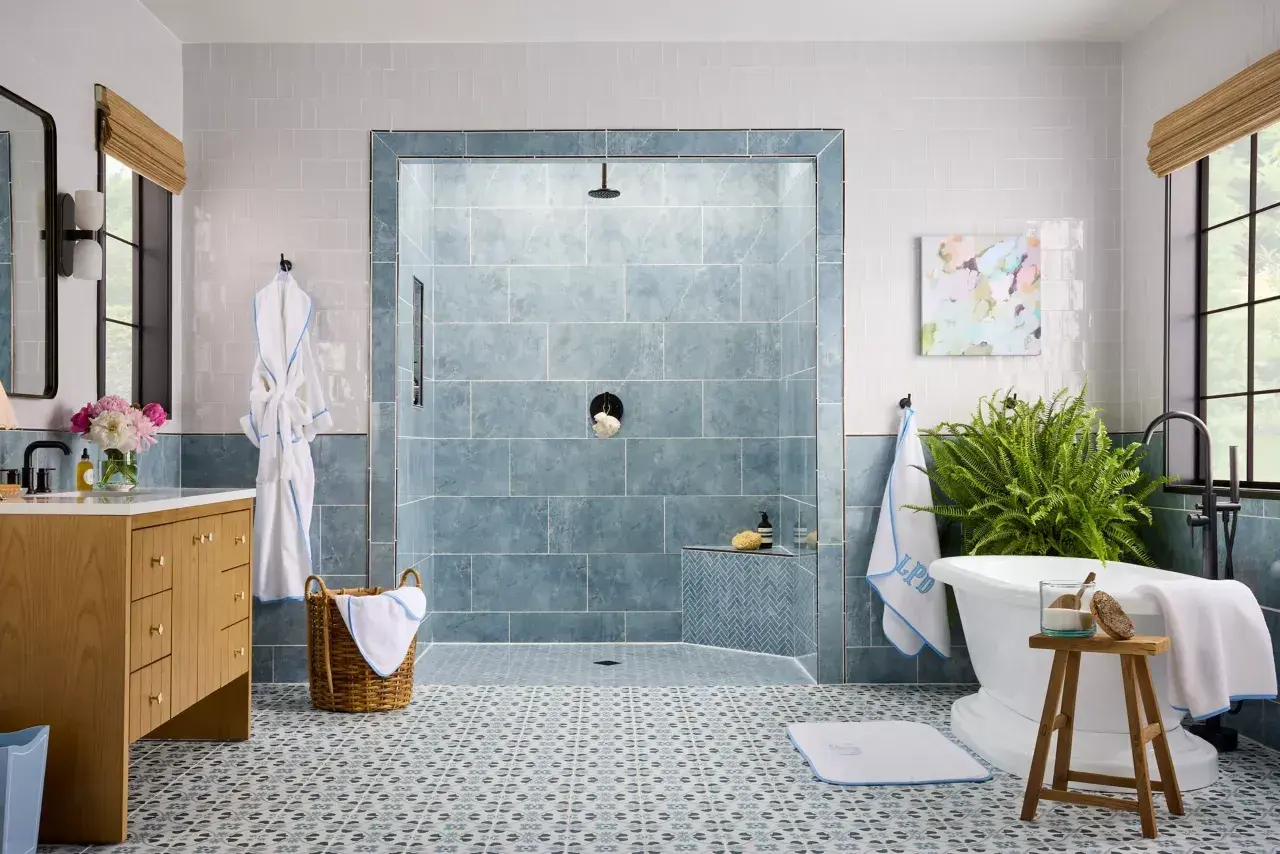
The right floor and shower tile combinations can make a bathroom feel calmer, safer, and more expensive without changing the layout. I usually start by deciding which surface should lead and which one should support, because the best pairings do not fight for attention. In 2026, the strongest choices lean toward warm neutrals, stone looks, and texture you can actually feel underfoot.
The strongest pairings repeat one visual idea and vary the scale
- Use one tile to lead the design and one to support it, rather than asking both surfaces to compete.
- Mosaic or small-format tile is usually the safer choice for shower floors because it adds traction and follows the slope.
- Large-format tile works best when the rest of the room is quiet enough to let it breathe.
- Matte or softly textured finishes usually age better than glossy surfaces in wet zones.
- A shared undertone matters more than matching every color exactly.
Start with a clear visual hierarchy
I think of bathroom tile in layers. The floor sets the base, and the shower either becomes the focal point or the quiet counterweight. If both surfaces are loud, the room starts to feel fragmented; if both are too plain, it can feel unfinished. The sweet spot is usually one strong idea and one restrained companion.
My first check is simple: do the tiles share a family of undertones, and does one of them take the lead on pattern or texture? That approach keeps the room coherent even when the materials are different. It also gives you more freedom with fixtures, mirrors, and lighting because the tile is already doing the structural work.
Once that hierarchy is clear, it becomes much easier to choose actual combinations that look deliberate instead of random.
Tile combinations that work in real bathrooms
| Combination | Why it works | Best for | Watch-out |
|---|---|---|---|
| Warm white floor, soft gray shower walls, small hex shower floor | It feels clean and layered without becoming cold, and the small floor tile gives the shower more grip. | Small to medium bathrooms, transitional spaces, guest baths | Keep the gray soft rather than blue, or the palette can drift cooler than intended. |
| Greige stone-look floor, matching large-format shower walls, matte mosaic shower floor | The room reads calm and spa-like, with enough variation to avoid looking flat. | Primary bathrooms, modern organic interiors | Stone looks need consistency; mixing warm and cool veining can make the room feel confused. |
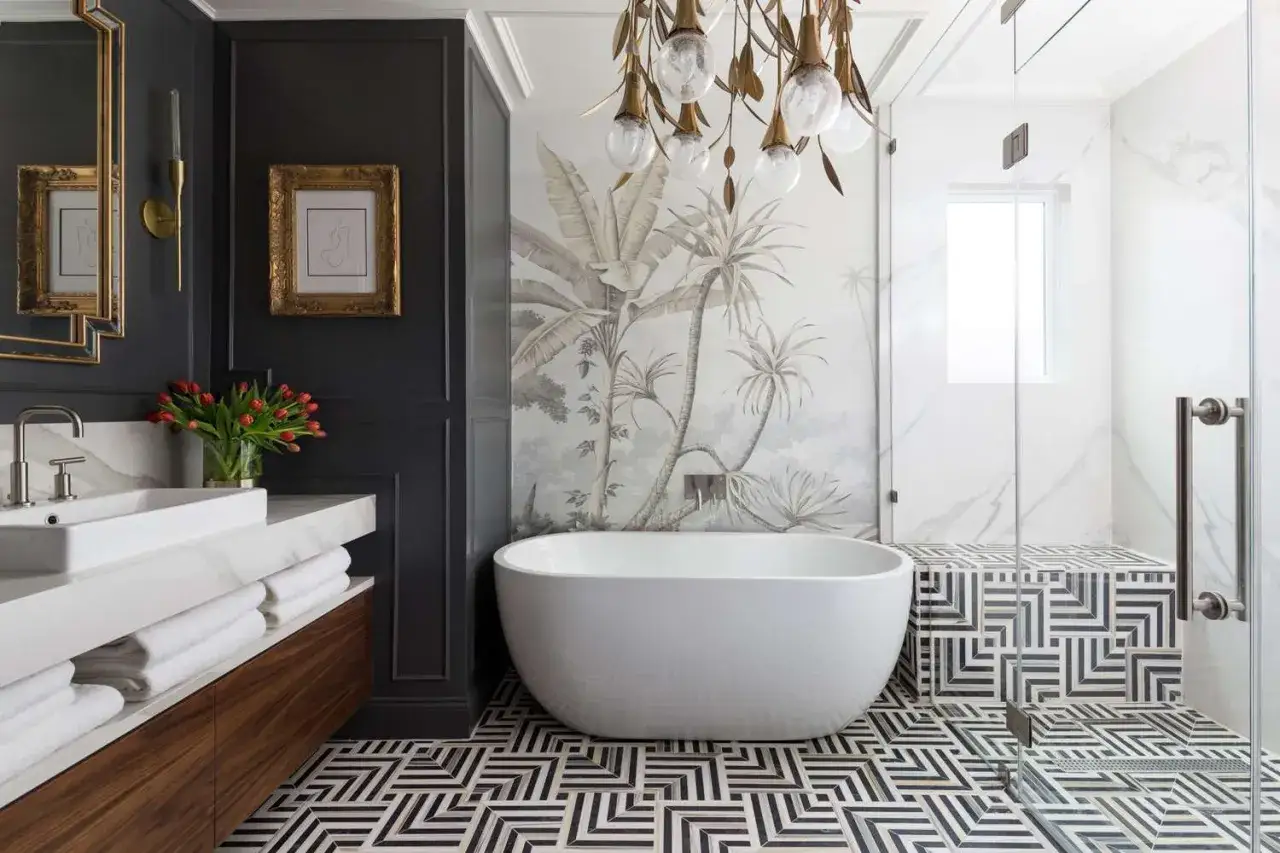
| Black-and-white floor, simple white shower walls, dark trim detail | Classic contrast adds personality while keeping the shower visually quiet. | Historic homes, city apartments, sharper modern spaces | Do not make both surfaces highly patterned, or the room turns busy fast. |
| Wood-look floor, stone-look shower walls, textured shower floor | It brings warmth without using actual wood in the wet zone, which is a practical win. | Warm modern, Scandinavian, relaxed family bathrooms | Choose a wood tone that feels natural, not orange or overly rustic. |
| Patterned floor, plain shower walls, quiet shower floor | The patterned floor carries the personality, while the shower gives the eye a place to rest. | Guest baths, powder-room-adjacent layouts, style-forward remodels | Keep the shower simple enough that the floor remains the hero. |
My favorite rule here is practical: if the floor is patterned, the shower should calm things down; if the shower is the statement, the floor should step back. That one decision solves more design problems than most people expect.
From there, the next question is scale, because the same palette can feel polished or awkward depending on tile size and finish.
Scale, finish, and grout do most of the work
People often focus on color first, but I get better results when I start with scale. Large-format tile creates a calmer field because it reduces grout lines, while smaller tile adds energy and grip. In a bathroom, those effects are not abstract; they change how spacious the room feels and how easy it is to live with.Use one large gesture and one smaller one
Large-format tile is usually strongest on shower walls or the main floor when you want a seamless look. Small-format tile, especially on the shower floor, gives the surface more visual texture and usually handles the slope more naturally. That contrast in scale is what keeps the room from looking like one endless sheet of the same material.
Let grout either disappear or organize the pattern
Grout matters more than most homeowners realize. If you want the tile to feel quiet, use a grout color that sits close to the tile tone. If you want the pattern to read clearly, choose a slightly stronger contrast. I usually avoid bright white grout on the floor unless the maintenance plan is realistic, because it tends to show wear sooner than people expect.
Read Also: Most Durable Bathroom Tile - The Real Answer
Choose finish with wet feet in mind
Glossy tile can look beautiful on shower walls, where it reflects light and helps a small bath feel brighter. On floors, I prefer matte or softly textured surfaces because they look more grounded and usually feel better in a wet room. That does not mean shiny tile is off limits, but I would be selective about where it lands.
Once scale and finish are working together, safety becomes the last non-negotiable piece, especially inside the shower where water changes the rules.
Safety matters most where the water lands
I never spec a shower floor based on looks alone. A useful U.S. benchmark for interior wet areas is a wet DCOF of 0.42 or higher, but I treat that as a baseline, not a promise. No floor tile is truly slip-proof, and real-world traction also depends on slope, drainage, cleaning products, and even what people wear on their feet.
For shower floors, I usually steer toward mosaics or other small-format tile because the extra grout joints add traction and the pieces follow the slope more easily. Larger tiles can work in some shower designs, but they ask more from the installation and leave less room for error. If the shower is curbless or used by kids, older adults, or anyone with balance concerns, I get even stricter about texture and size.
- Use smaller tile or mosaics on the shower floor when traction matters.
- Favor matte, honed, or lightly textured finishes in the wettest areas.
- Check sample boards under water, not just under showroom lighting.
- Avoid assuming that a beautiful polished surface will behave well on a slope.
Safety is easiest to solve before installation, not after. That is also where the budget starts to matter, because some attractive choices cost more to install and maintain than they first appear.
The mistakes that make a pairing feel off
The biggest design problems are usually not bad taste; they are mismatched decisions. I see the same few mistakes again and again, and they are easy to avoid once you know what to look for.
- Two busy surfaces competing for attention. If the floor has a strong pattern, keep the shower calmer.
- Warm and cool tones that do not belong together. A beige floor next to a blue-gray shower can feel disconnected if the undertones clash.
- The same tile size everywhere. Repeating the same format on both surfaces can make the bathroom look flat unless the layout is very intentional.
- Grout that works against the design. Strong contrast can help a pattern, but it can also make a space feel chopped up.
- Ignoring transitions. A good bathroom needs a clean handoff between the main floor and the shower threshold or pan.
- Choosing a beautiful stone without planning for sealing. Natural stone can be excellent, but it asks for more maintenance.
When a bathroom feels disjointed, I usually find that one of those points is the reason. Fixing the balance is often easier than replacing the materials.
With those pitfalls in mind, it helps to look at the real trade-offs before you commit to a final direction.
Budget and maintenance trade-offs worth planning for
In the U.S., a straightforward bathroom tile project often lands somewhere in the broad range of about $10 to $50 per square foot installed, with intricate layouts, stone, and detailed shower work pushing it higher. That spread matters because the most attractive-looking option on a sample board is not always the one that stays reasonable once labor, cuts, waterproofing, and sealing enter the picture.
| Choice | Budget impact | Maintenance load | Best use |
|---|---|---|---|
| Large-format porcelain | Usually easier to keep in the middle of the budget range | Low to moderate | Floors and shower walls when you want a clean, modern look |
| Mosaic shower floor | Higher labor because of more cuts and more setting time | Low to moderate, depending on grout color | Shower floors where grip and slope handling matter |
| Natural stone | Often higher on both material and labor | Higher because of sealing and care requirements | Bathrooms where texture and depth matter more than easy upkeep |
| Patterned tile | Can be moderate on material but higher on installation if layout is detailed | Varies with grout and finish | Statement floors or a single feature surface |
If I want a bathroom to stay practical, I keep the shower detail simple and spend the design energy where it will be seen most. That usually means the floor gets the stronger personality, while the shower gets the smarter texture.
The pairings I would start with for a bathroom that has to age well
If I had to narrow the field quickly, I would begin with a few reliable combinations and then refine from there.
- Warm white floor, off-white shower walls, and a small hex shower floor. This is the easiest route when you want light, calm, and long-term flexibility.
- Light greige floor, stone-look shower walls, and a matte mosaic shower floor. This feels current without being trendy, which is why I reach for it often.
- Soft charcoal floor, white shower walls, and a dark accent trim or niche. The contrast feels crisp, but only if the rest of the room stays restrained.
- Checkerboard floor, plain shower walls, and a simple shower floor in the same tonal family. This works when you want a classic look with just enough personality.
My simplest advice is this: choose one surface to carry the mood and let the other one support it. When the floor and shower are balanced that way, the bathroom feels intentional from the first step in, and it tends to stay that way long after trends move on.