The subway tile installation cost can look modest on a sample board and still climb once labor, cuts, and prep work enter the picture. In the U.S., the tile itself is only part of the bill; surface condition, pattern choice, and whether the job is a backsplash or a shower wall matter just as much. In this guide I break down the realistic price range, the factors that move it, and the choices that usually save money without hurting the finish.
What to know before you price the job
- Standard installed subway tile usually lands around $7 to $35 per square foot, but small backsplash jobs often quote higher because of labor minimums.
- Ceramic is usually the budget-friendly choice; glass, stone, beveled edges, and specialty finishes raise the total quickly.
- Labor commonly runs $5 to $20 per square foot or $30 to $100 per hour, and small projects often hit a $200 to $500 minimum.
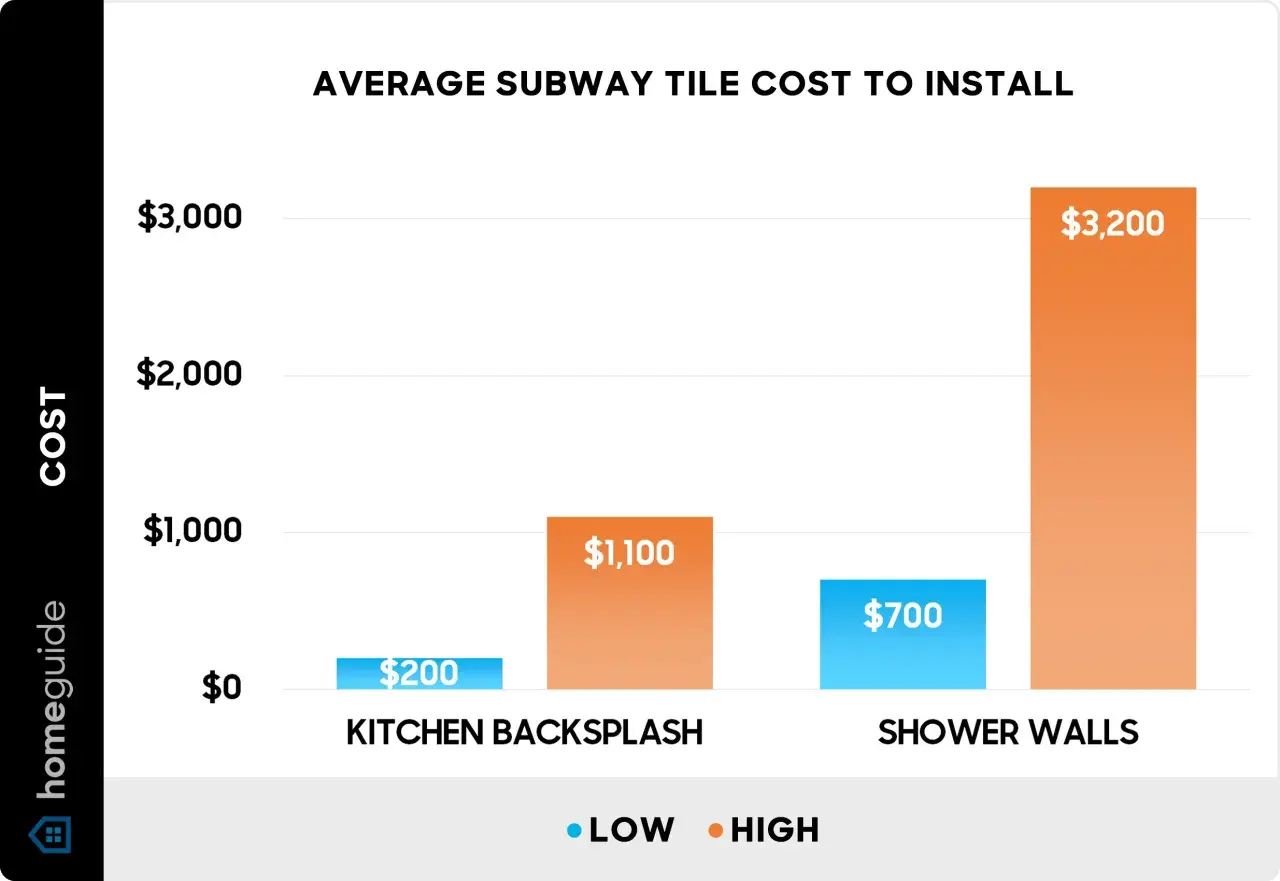
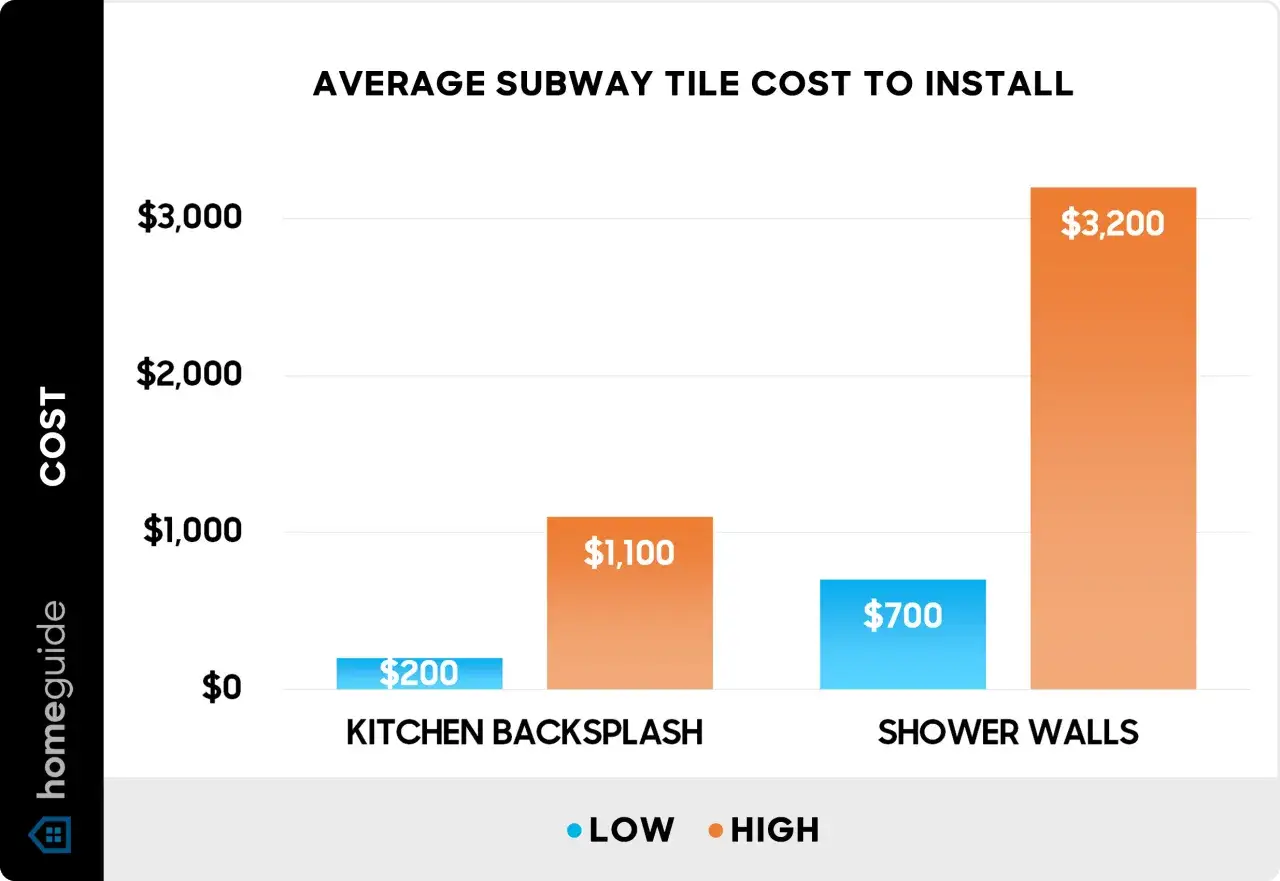
- A typical 30-square-foot backsplash often costs about $200 to $1,100, while a 90-square-foot shower wall project often runs $700 to $3,200.
- Old tile removal, drywall repair, waterproofing, and complex patterns are the most common budget surprises.
What a typical installed budget looks like
When I price a job, I separate the material from the setting work. Recent HomeGuide and Angi cost guides place standard installed subway tile in a broad range, but a small backsplash often quotes higher per square foot because contractors still have to cover minimum labor, outlet cuts, and cleanup. That is why a 25-square-foot backsplash can feel expensive even when the tile itself is not.| Project type | Typical area | Planning budget | Why it lands there |
|---|---|---|---|
| Kitchen backsplash | 20 to 30 sq ft | $200 to $1,100 | Small footprint, but lots of cuts, outlets, and minimum labor charges |
| Shower walls | 80 to 100 sq ft | $700 to $3,200 | More square footage, plus waterproofing and more prep work |
| Wall accent or vanity backsplash | 30 to 50 sq ft | $210 to $1,750 | Usually simpler than a shower, but layout complexity still matters |
The spread is wide because square footage tells only half the story. A simple dry backsplash is a different job from a wet shower wall, and the next section is where most of the surprises live.
What pushes the price up or down
Most quotes come down to five variables: the tile you buy, the pattern you choose, the amount of prep work, the wet-area requirements, and the contractor’s minimum charge. The cheapest tile can still produce the higher total if the layout is busy or the wall is not ready.
| Cost driver | Typical impact | Why it matters |
|---|---|---|
| Tile material | Ceramic: $1 to $8 per sq ft; natural stone or travertine: $3 to $15; glass: $5 to $25; metal can reach $65 | Harder, heavier, or more delicate materials take more time and care |
| Pattern | Straight stack or classic offset is fastest; herringbone, chevron, basketweave, and Versailles can add 10% to 30% to labor | More cuts and alignment work increase installation time |
| Prep work | Old tile removal: $2 to $5 per sq ft; damaged drywall or backer board adds more | The tile can only look as good as the surface underneath |
| Wet-area details | Waterproof barrier in a shower: $1 to $3 per sq ft | Showers need a different substrate and more caution than a backsplash |
| Small-job minimums | $200 to $500 for many tile setters | A tiny job still takes time to set up, cut, grout, and clean |
| Setting materials | About $1 to $2 per sq ft | Thin-set mortar, mastic, and grout are part of the bill, even on a small wall |
If I had to choose one lever that changes the bill fastest, it would be pattern complexity. A straight 3x6 layout is efficient; a herringbone or chevron design looks sharper, but it asks for more cuts, more layout time, and a steadier hand. That is also why a “simple” tile choice can still produce a premium quote when the design is not simple at all.
The room itself changes the math, so the same tile can price differently in a kitchen, bath, or shower. That leads naturally to the next question: where does the money actually go in each type of project?
Backsplash, shower, and wall projects do not price the same way
In a kitchen, the main cost pressure is usually labor density: a small surface with a lot of outlets, trim, and corners. In a shower, the pressure shifts to waterproofing and substrate quality. Bathroom feature walls sit somewhere in between, which is why I never budget them all the same way.
| Area | Typical cost pattern | Main extra cost | Best fit |
|---|---|---|---|
| Kitchen backsplash | Higher per square foot on small jobs | Outlet cuts and minimum labor | Straight layouts and standard ceramic tile |
| Shower walls | Higher total job cost | Waterproofing, backer board, and sealing | Wet areas that need a durable finish |
| Accent wall or vanity backsplash | Middle ground | Pattern choice and trim pieces | Decorative walls, powder rooms, and laundry rooms |
As a rule of thumb, I expect a 30-square-foot backsplash to land around $200 to $1,100 and a 90-square-foot shower to land around $700 to $3,200, assuming standard tile and no major repairs. The shower may look like the bigger number, but the backsplash often surprises people because the per-foot rate is distorted by small-job minimums.
Once you know which kind of room you are tiling, the next decision is whether the savings from DIY are real or just theoretical.
DIY can save money, but only when the surface is forgiving
A straight backsplash on a solid wall is the most realistic DIY version of subway tile. If you are only dealing with a few cuts and no water exposure, you can keep the project under control. The moment you add a shower pan, niches, uneven walls, or a complicated pattern, the risk of mistakes rises faster than the savings.
- Good DIY candidate: dry backsplash, ceramic tile, full tiles, a few outlets, and a straight offset or stacked layout.
- Usually better to hire out: shower walls, waterproofing, tile over damaged drywall, herringbone or chevron patterns, and tight grout joints.
- Hidden DIY costs: tools, blade wear, spacers, trim, grout, caulk, and a little extra tile for breakage.
Professionally, labor usually runs about $5 to $20 per square foot or $30 to $100 per hour, and many tile setters have a $200 to $500 minimum. On a tiny backsplash, that minimum matters more than the hourly rate. If your only goal is to avoid labor cost, DIY can work; if your goal is a clean finish around fixtures or a watertight shower, the repair bill from a bad installation can erase the savings fast.
If you decide to hire, the smartest savings often come from how you scope the work, not from chasing the cheapest tile on the shelf.
How I would keep the project on budget
I keep the budget under control by making a few decisions early and refusing to let the quote turn vague. The cheapest bid is not the cheapest project if it excludes the work hidden behind the tile.
- Choose ceramic or porcelain first if you want the best value; classic glossy 3x6 tile is still one of the most economical looks.
- Keep the layout simple. Brick, stacked, and other straight patterns are much cheaper to install than herringbone or chevron.
- Ask for an itemized quote that spells out tile, thin-set, grout, caulk, trim, demolition, disposal, and waterproofing.
- Confirm the condition of the wall before work starts. If the drywall, backer board, or substrate is compromised, budget for repair instead of hoping it disappears.
- Order enough tile for waste and a small cushion. A little extra material is cheaper than stopping the job because one box came up short.
- Compare multiple bids, but compare the same scope. A lower number is meaningless if the other quote includes prep, sealing, or membrane work.
I also watch for quote gaps. If one contractor includes backer board, membrane, grout, and disposal while another does not, the lower bid is not truly lower. The difference between a clean project and a frustrating one is often hidden in those line items.
That is why the final budget should include a cushion for the work behind the finish, not just the tile on the wall. In 2026, that is the difference between a number you can live with and a number that keeps growing after the crew arrives.
The budget I would use before signing a tile contract
If I were setting a budget today, I would use a practical range instead of a single number. For a small, clean backsplash, I would plan on roughly $200 to $800. For a typical backsplash with outlets, trim, or a contractor minimum, I would expect something closer to $800 to $1,200 or more. Shower walls belong in a different bucket entirely, with $700 to $3,200 as a realistic planning range before repairs or premium materials enter the picture.
- Simple backsplash: budget low if the wall is sound and the pattern is straightforward.
- Busy backsplash: budget higher if there are many cuts, corners, or outlet boxes.
- Shower wall project: budget for waterproofing and substrate work from the start.
- Premium finish: expect the labor number to climb when the pattern or material is harder to install.
Before you sign, ask whether the price includes demolition, surface repair, waterproofing, grout, caulk, trim, and disposal. That one question usually tells you whether a quote is genuinely competitive or only looks that way on paper.