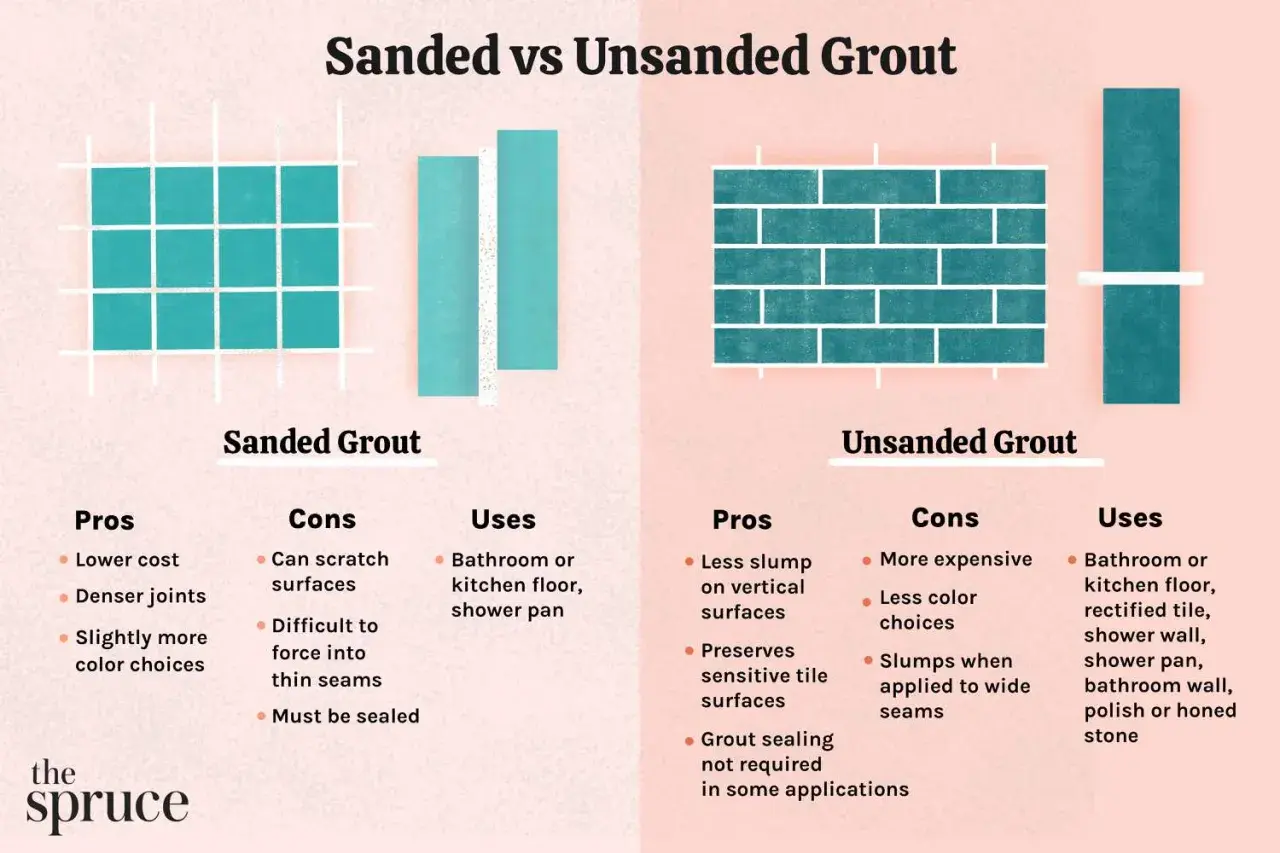
Unsanded grout can work on floor tile, but only when the joint is tight, the tile face is delicate, and the product data sheet allows floor use. My focus here is the practical version of the answer: when it is safe, when it is a bad idea, and how I decide between unsanded, sanded, and newer high-performance options. If the goal is a bathroom or kitchen floor that stays clean and holds up, the grout choice matters more than most DIYers expect.
The right grout depends on joint width, tile surface, and floor use
- Unsanded grout is typically the right fit for joints up to 1/8 inch.
- It is useful on polished marble, glass, and other scratch-prone tile.
- For most everyday floor tile, sanded grout is the safer default because it handles wider joints and wear better.
- Movement joints and changes in plane should be caulked, not grouted.
- Always follow the specific grout data sheet, since product formulas vary.
Can you use unsanded grout on floor tile
Yes, but only in the right setup. The basic rule I trust is simple: use unsanded grout for joints up to 1/8 inch, and switch to sanded grout when the joint gets wider. That matches the guidance published across the tile industry and the way most grout products are labeled in the US.
What that means in practice is this: unsanded grout is not “for walls only.” It can be used on floors, but it is a niche choice on floors, not the default. I reach for it when the joint is narrow and the tile surface could be scratched by sanded filler. That is why polished marble, glass, and other smooth stone surfaces often point toward unsanded or another fine-joint grout.
There is one more filter I use before I make the call: the floor itself. If the substrate is uneven or the tile varies a lot in size, very tight grout lines can look messy fast because grout does not hide those differences. It follows the floor, which is exactly why the next step is figuring out when unsanded actually makes sense.
Where unsanded grout makes sense on a floor
Unsanded grout shines on floors when the tile is visually delicate and the joints are small. In my experience, that usually means bathroom floors, mosaic shower floors, accent bands that wrap down onto the floor, and polished stone installations where a gritty sanded mix would be a bad tradeoff.- Polished marble or limestone floors - sanded grout can scratch soft stone or leave a dull finish during cleanup.
- Glass or glossy mosaic floors - the smoother texture of unsanded grout reduces the chance of surface damage.
- Tight joints at 1/16 to 1/8 inch - the fine texture fits narrow lines without forcing sand into a space that does not need it.
- Decorative bathroom floors - when appearance matters more than raw abrasion resistance, the cleaner finish can be worth it.
- Product-specific floor installations - some unsanded grouts are explicitly rated for floors, walls, and wet areas, which matters more than the name on the bag.
The key point is that unsanded grout is not about being “weaker” in every situation. It is about matching the surface. If the tile is fragile or the joint is very small, a smoother grout can be the smarter choice. That said, the moment the floor becomes more demanding, the comparison changes.
How unsanded compares with the alternatives
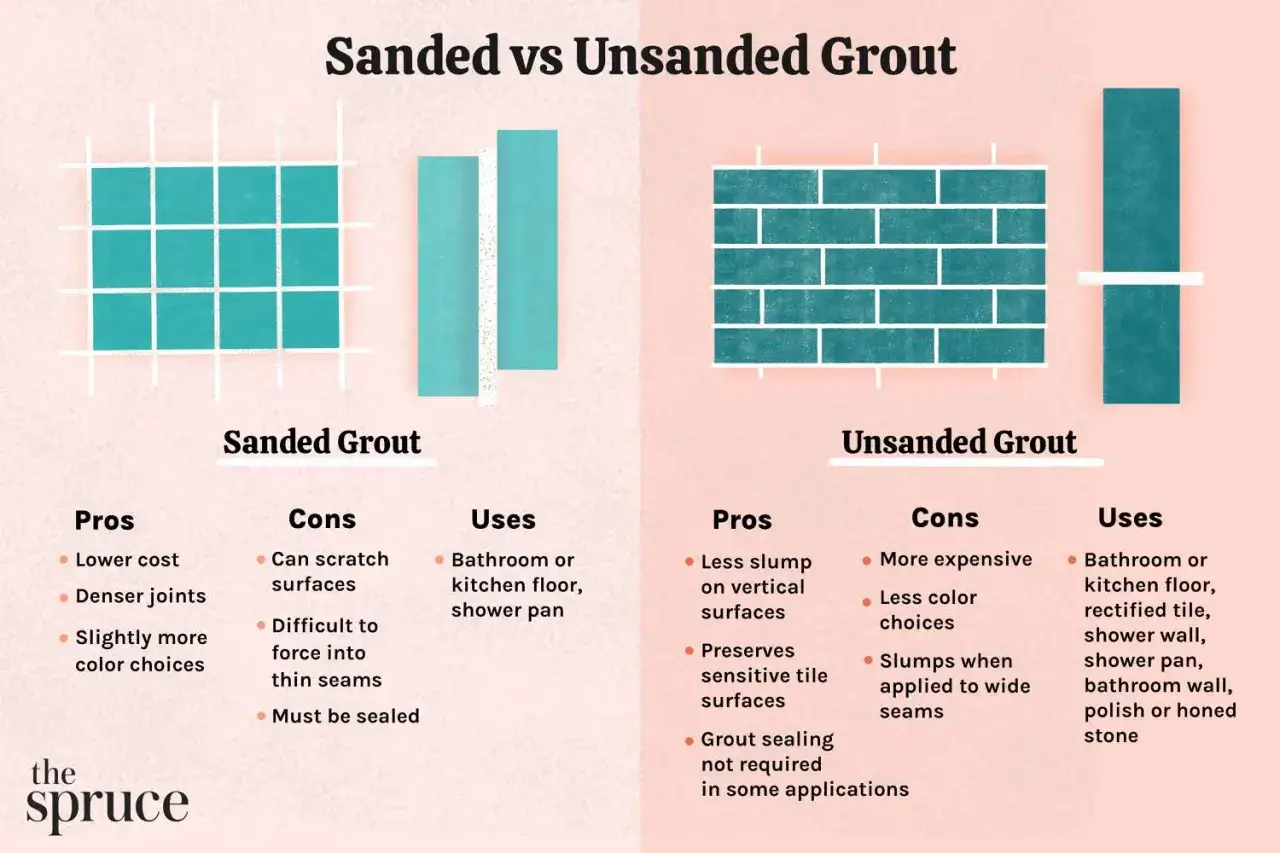
Once you put unsanded grout beside sanded and epoxy or hybrid grout, the tradeoffs are easy to see. I usually compare them on joint width, wear, and the amount of forgiveness they give during installation.
| Grout type | Best joint width | Best use on floor tile | Main drawback |
|---|---|---|---|
| Unsanded grout | Up to 1/8 inch | Polished stone, glass, mosaics, narrow joints | Less forgiving in wider joints and generally not the strongest choice for heavy wear |
| Sanded grout | 1/8 inch and wider | Most ceramic and porcelain floors, high-traffic rooms | Can scratch delicate tile and polished stone |
| Epoxy or hybrid grout | Varies by product | Floors where stain resistance and durability matter most | Usually costs more and can be less forgiving to install |
The Tile Council of North America’s guidance lines up with what most manufacturers publish: cementitious grout under 1/8 inch generally belongs in the unsanded category, while 1/8 inch and above is usually sanded territory. That does not make unsanded wrong on floors; it just means the floor has to fit the product, not the other way around. Once you see that line, the common failure points become much easier to avoid.
What goes wrong when the match is off
Most bad grout jobs do not fail because the homeowner chose the “wrong brand.” They fail because the grout type did not match the tile, the joint width, or the way the floor would actually be used.
- Using unsanded grout in joints wider than 1/8 inch - the mix can shrink or crack more easily because the joint is too large for the fine filler.
- Grouting movement joints - floor-to-wall corners and other change-of-plane joints should be caulked, not filled with rigid grout.
- Skipping a test area - some porous stone, textured porcelain, or highly absorbent tile can stain or haze during cleanup.
- Using too much water - extra water weakens the mix, shifts color, and can leave the surface chalky.
- Letting haze sit too long - cement grout haze is much harder to remove after it cures on the tile face.
- Ignoring floor flatness - grout does not fix a wavy substrate; narrow joints on an uneven floor only make the problem more visible.
I also tell people to read the label as if it were part of the design spec, not fine print. Some cement-based unsanded grouts are fine for wet floors, some want a sealer, and some delicate tiles need a release agent or pre-seal before grouting. That is the boring part of the job, but it is the part that protects the finish.
How I choose grout for a bathroom or kitchen floor
When I am deciding between products, I start with the tile, then the joint, then the room. That order keeps me from forcing a grout choice just because it sounds convenient.
| Floor scenario | My pick | Why |
|---|---|---|
| Polished marble mosaic with 1/16 inch joints | Unsanded grout or a fine-joint premium grout | Protects the tile surface and fits the narrow joint |
| Standard porcelain in a family bathroom with 1/8 inch joints | Sanded grout or a performance grout | Better wear resistance for daily traffic |
| Kitchen floor with wider joints and frequent spills | Sanded or epoxy/hybrid grout | Better durability and easier long-term maintenance |
| Floor-to-wall corner or around a tub base | Color-matched silicone caulk | Handles movement where grout would crack |
My rule of thumb is straightforward: choose unsanded only when the joint is narrow and the tile surface needs a gentler finish. If the tile is ordinary ceramic or porcelain and the joint is at 1/8 inch or more, I usually move on to sanded grout or a newer high-performance formula. That gives the floor more resilience with less fuss over time.
What I would remember before buying the bag
If I were standing in the aisle with two or three grout options, I would check four things before anything else: joint width, tile sensitivity, wet exposure, and whether the manufacturer explicitly allows floor use. That single check saves a lot of frustration later.- Measure the joint where the grout will actually sit, not just the nominal tile size.
- Look for scratch risk on polished stone, glass, or glossy ceramic.
- Confirm whether the floor is a dry bathroom, a shower floor, or a heavily used kitchen area.
- Verify cure time, sealing requirements, and cleanup instructions on the product data sheet.
The cleanest answer is not “always use unsanded” or “never use it.” The real answer is that unsanded grout can be the right floor product when the joint is tight and the tile is delicate, but sanded or hybrid grout is usually the safer default for everyday floor tile. If the installation is small, precise, and surface-sensitive, unsanded earns its place; if not, I would choose the tougher option and make the floor easier to live with.