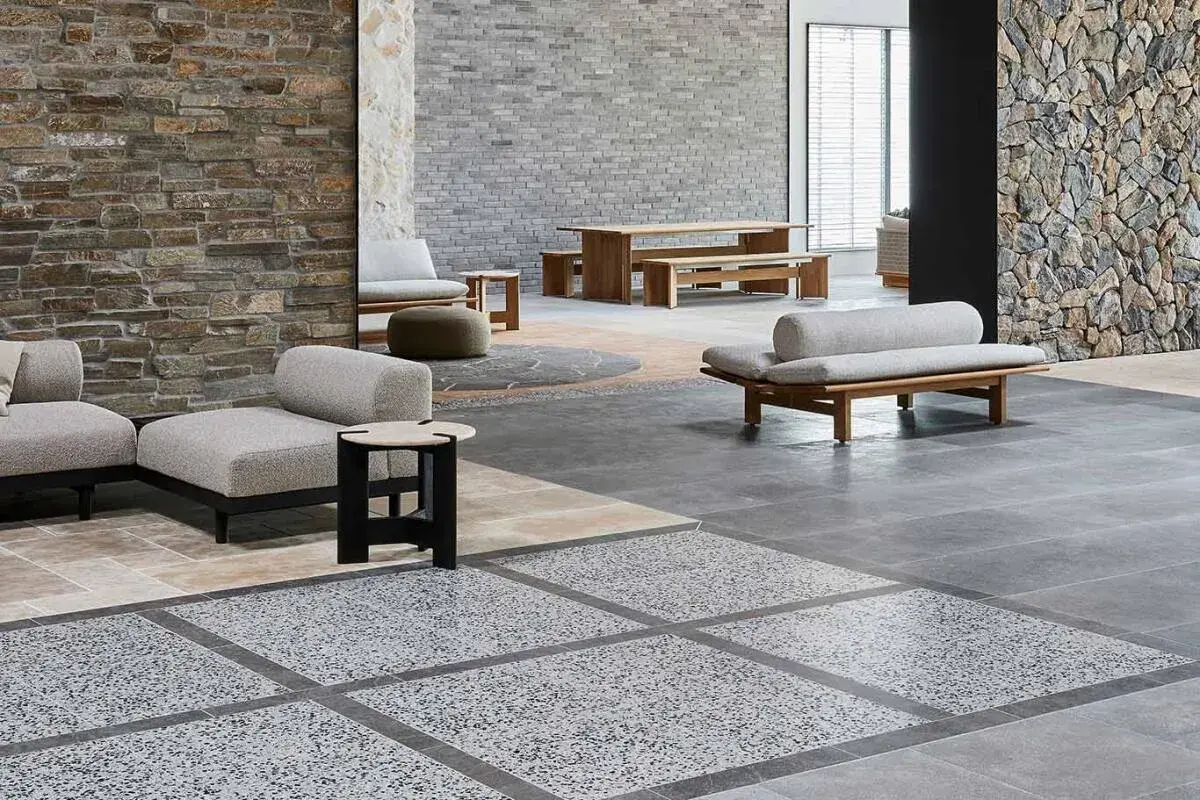
Terrazzo design works best when the surface is doing two jobs at once: adding texture and keeping the room calm. I am looking at it here as both a flooring choice and a surface language for bathrooms, entries, and other hard-working spaces, with the practical details that change how it looks, costs, and wears over time. The point is to help you choose a version that feels current in 2026 without making the room feel busy or dated.
What matters most before you commit to terrazzo
- Look first at scale: chip size and contrast do more to the mood than most people expect.
- Match the finish to the room: matte or honed surfaces are usually safer in wet zones than a glossy polish.
- Choose the right system: real poured terrazzo is more custom, while terrazzo-look porcelain is faster and easier to remodel with.
- Plan for real costs: a practical U.S. budget starts around $9 to $22 per sq ft for terrazzo tile and rises into the $30 to $80+ range for more involved poured work.
- Keep the room edited: terrazzo looks best when the surrounding materials are quieter than the surface itself.
Why terrazzo feels current in 2026
I think the reason terrazzo keeps coming back is simple: it adds movement without making a room feel loud. In 2026, the strongest versions lean warmer and more tonal, with soft greys, sand, clay, and off-white binders, plus chips that feel more mineral than confetti. Modern mixes can use marble, quartz, granite, recycled glass, porcelain, or mirror chips, which gives the surface enough variation to stay interesting even in a pared-back room.
- Quiet but not flat: it gives a floor enough texture to feel finished.
- Flexible style range: it can lean modern, retro, spa-like, or architectural.
- Good with bathroom materials: it sits well beside wood, stone, brass, and matte fixtures.
- Useful in small spaces: the right mix can add character without crowding the room.
That flexibility is what makes the chip size and finish decisions so important, because they control whether the room feels serene or overworked.
How chip size, color, and finish change the look
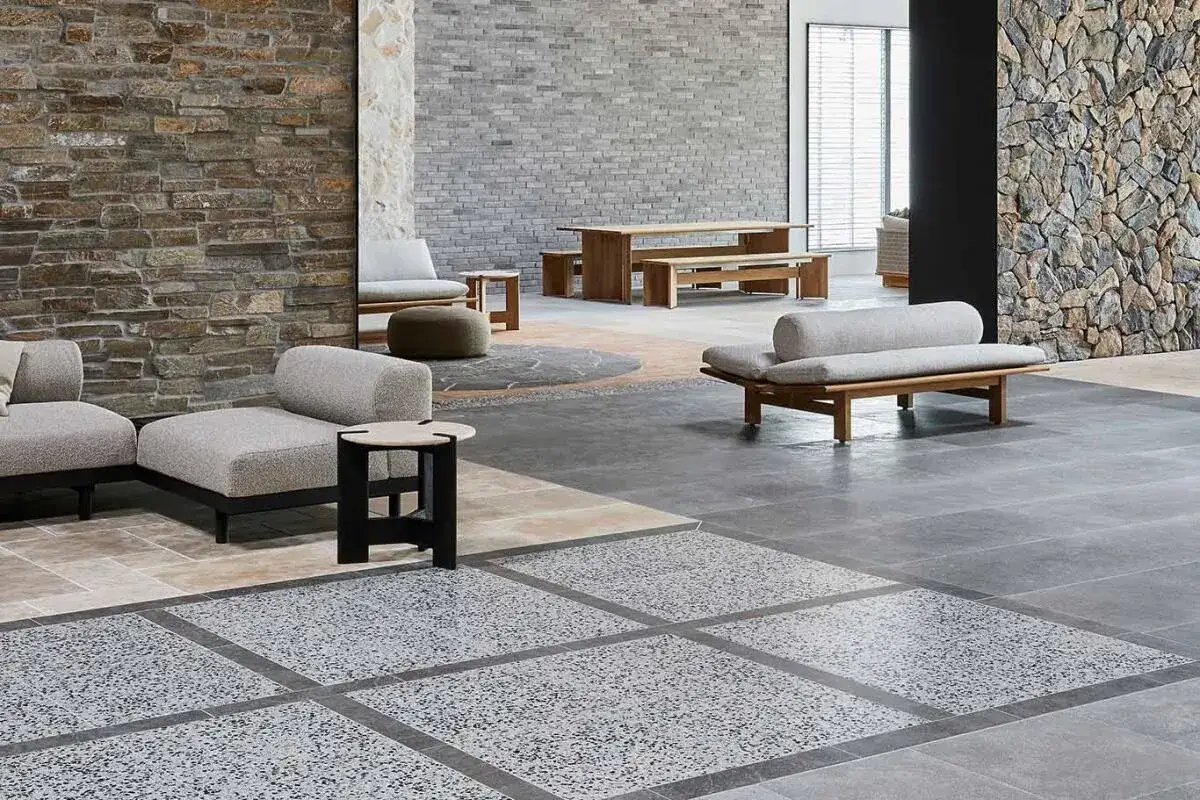
I usually read terrazzo as a composition, not a single material. Smaller chips soften the pattern, larger chips turn it into a statement, and the finish decides whether the room feels crisp or relaxed. If you change only those three variables, you can move the same surface from quiet spa to bold entry floor without changing the core material.
| Choice | Visual effect | Best use | Watch out for |
|---|---|---|---|
| Micro-terrazzo | Fine, mist-like variation that feels calm and refined | Small bathrooms, vanity tops, understated floors | Can look flat if every other finish in the room is also pale |
| Standard chip mix | Balanced texture with a classic terrazzo feel | Most residential floors and full-bath layouts | Needs a restrained palette in compact rooms |
| Venetian or large-chip mix | Bolder fragments, more graphic movement, more personality | Powder rooms, entries, statement zones | Can overwhelm a tight bathroom if the contrast is too strong |
| Warm earthy palette | Feels grounded, current, and a little softer than cool grey mixes | Primary baths, family spaces, 2026-forward interiors | Needs good light, or it can drift muddy |
| Polished finish | Reflective, sharp, and more formal | Dry areas and bright rooms | Less forgiving underfoot when the floor gets wet |
| Honed or matte finish | Softer, calmer, and more forgiving | Bathrooms, showers, and family homes | Less mirror-like, so it will not read as glossy or dramatic |
My rule of thumb is straightforward. The smaller the room, the quieter the chip scale should be. In a compact bath, I usually prefer a low-contrast mix so the floor supports the architecture instead of competing with it, and that same restraint carries through to the next decision, where the surface actually belongs.
Where terrazzo works best in a bathroom and beyond
I like terrazzo most when it is given a job that matches its character. It can anchor a bathroom floor, continue up a wall, or show up as a single top or threshold that connects spaces without turning the whole room into a pattern demo. In bathrooms, the payoff is usually strongest when the rest of the finishes stay simple.
| Area | Why it works | Design note |
|---|---|---|
| Bathroom floor | Durable, decorative, and easy to coordinate with fixtures | Keep the chip scale modest and the palette calm if the room is small |
| Shower floor | Can work when the finish and slip rating are appropriate | Use a matte or textured surface, not a glossy one, if water is a daily reality |
| Shower walls | Turns the enclosure into a spa-like envelope | Let the pattern stay subtle so the room does not feel busy |
| Vanity top or backsplash | Adds a strong focal point without covering every surface | Pairs well with flat-front cabinetry and quieter hardware |
| Powder room floor or entry landing | Good place for a stronger chip mix or more contrast | This is where a bolder pattern can feel intentional, not excessive |
I am especially fond of terrazzo on floors that need to do a lot of visual work, because it can look custom without becoming precious. That same quality is why many homeowners end up deciding between a poured system and a terrazzo-look tile, which is a more practical question than most people expect.
Real terrazzo or terrazzo-look porcelain
If I am balancing budget, speed, and finish quality, this is the fork in the road. Real terrazzo feels more like an architectural surface, while porcelain gives you the visual effect with less risk and a faster install. Both can look excellent, but they solve different problems.
| Option | Strengths | Tradeoffs | Best for |
|---|---|---|---|
| Real poured terrazzo | Seamless feel, strong depth, highly customized, very durable | More expensive, slower to install, and slab prep matters a lot | Primary baths, major remodels, high-end flooring projects |
| Terrazzo-look porcelain | Lower cost, faster install, easier renovation, more slip options | Visible grout lines and less of the depth you get from a poured surface | Secondary baths, quick remodels, indoor-outdoor continuity |
The practical detail I would not ignore is thickness and substrate prep. Thin-set epoxy systems are usually around 1/4 to 3/8 inch thick, which makes them useful for interior work, but they still depend on a flat, well-prepared slab. Porcelain is easier to retrofit because it does not ask for the same level of structural commitment, and that is usually why a remodel lands there.
Budget, installation, and care details that actually matter
The numbers move quickly once detail work starts. A simple tile install can stay in the low tens per square foot, but custom color breaks, trims, and complex layouts add labor fast. In the U.S., I would treat these as realistic planning ranges rather than exact quotes.| Option | Typical installed cost per sq ft | What drives the price |
|---|---|---|
| Terrazzo tile | $9 to $22 | Tile size, cuts, layout, and labor |
| Monolithic poured terrazzo | $30 to $70 | Slab condition, finish level, and job complexity |
| Thin-set epoxy terrazzo | $40 to $60 | Custom detailing, polishing, and careful substrate prep |
| Sand-cushion or more complex poured work | $40 to $80 | Additional build-up, labor, and structural requirements |
Once the budget is realistic, the next challenge is avoiding the design mistakes that make the material feel off instead of tailored.
Mistakes that make the surface look tired instead of tailored
I see most terrazzo disappointments as scale mistakes, not material mistakes. The surface itself is rarely the problem. It is usually the room around it, or the way the finish was chosen without enough attention to light, moisture, or competing patterns.
| Common mistake | Why it hurts | Better move |
|---|---|---|
| Too much chip contrast in a small bath | Makes the room feel busier and visually smaller | Use a smaller chip scale and a calmer binder color |
| A polished surface in a wet zone | Can feel slick and more difficult to live with | Choose honed, matte, or slip-rated material for wet areas |
| Ignoring lighting | Cool light can flatten warm chips, while dark rooms can make the pattern heavy | Test samples in the actual morning and evening light |
| Mixing too many strong materials | The room loses focus and the surface stops being the hero | Keep cabinetry, walls, and hardware quieter |
| Skipping slab prep or movement planning | Cracks, lippage, and joint problems show up later | Insist on proper substrate prep and joint strategy before installation |
The easiest way to keep the surface elegant is to let it lead and let everything else support it. Once you make that decision, the room gets easier to finish, and the material starts doing the work it is best at, which is adding depth without clutter.
The details I keep constant when I want the room to age well
When I specify terrazzo, I start with the room's light and the number of other surfaces competing for attention. A small bathroom usually benefits from a quieter chip mix, a lighter binder, and one strong companion material, such as oak, brushed brass, or matte black, rather than five finishes fighting for space. Bigger rooms can take more contrast, but even there I keep the palette edited so the floor or surface reads intentional instead of loud.
If I had to reduce the decision to one checklist, it would be this: match chip scale to room size, choose finish for how wet the space gets, and treat the floor or surface as the hero, not a backdrop for every trend at once. That is why terrazzo design succeeds when the room is edited, not decorated to death.