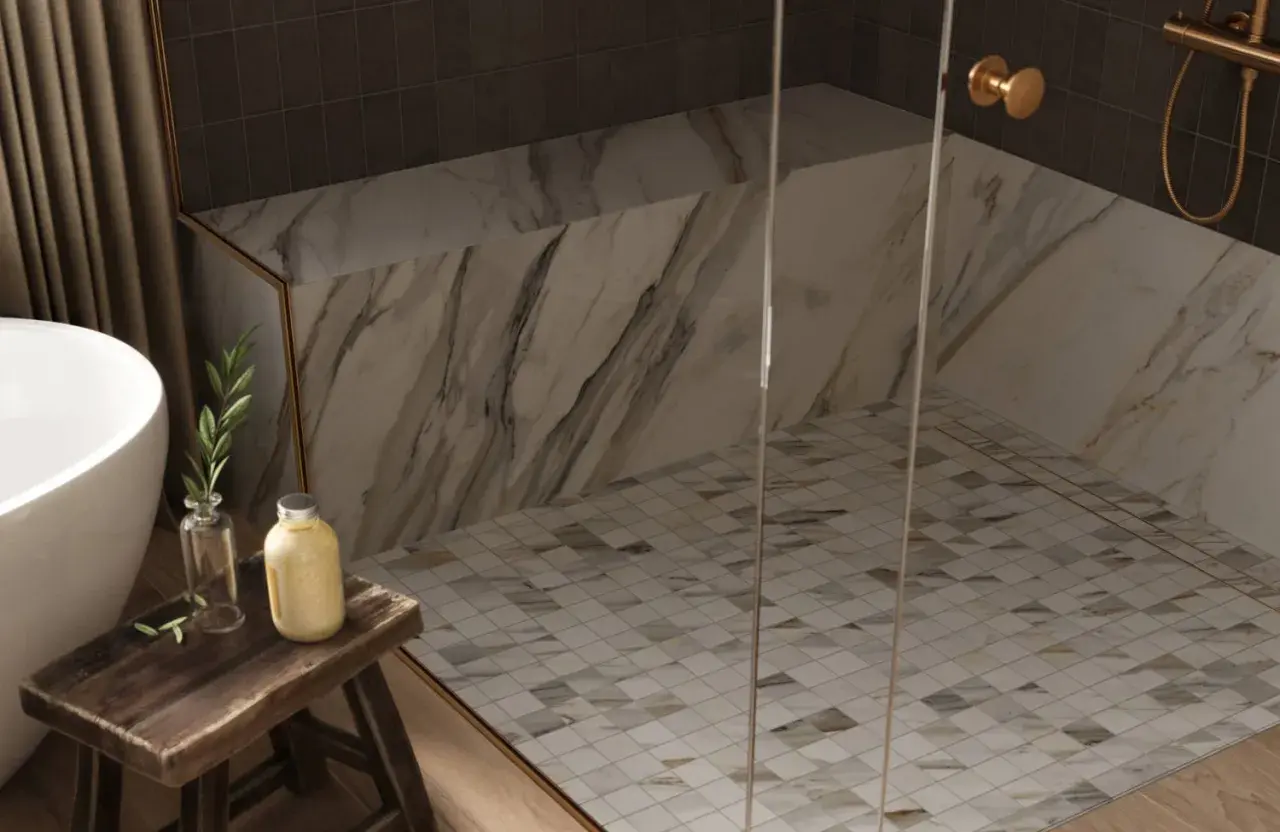
A shower floor should do three jobs at once: keep footing secure, move water fast, and fit the room visually without turning cleaning into a chore. The best shower floor designs balance grip, drainage, and a look that feels intentional rather than busy. In this guide, I focus on materials, drain layout, accessibility, style options, and the mistakes that most often cause regret later.
The essentials before you choose a shower floor
- Traction matters more than shine. Matte, textured, and small-format surfaces usually perform better when wet.
- The drain changes the whole floor plan. Point drains usually require a four-way slope, while linear drains make single-slope layouts and larger tile easier.
- Curbless showers are mainstream now. They look cleaner and support aging-in-place, but they need precise waterproofing and slope control.
- Maintenance is part of the design. More texture often means more grout, more sealing, or more scrubbing.
- Budget for the assembly, not just the tile. Waterproofing, drain hardware, and labor often matter more than the surface material itself.
Materials that balance traction, cleaning, and cost
When I spec a shower floor, I start with texture and only then look at color and pattern. TCNA’s guidance is useful here: there is no single wet DCOF number that automatically settles whether a shower floor is right or wrong, so I treat slip data as one input, not the whole decision. The full assembly matters, especially in a room where soap, conditioner, hard water, and bare feet all change the surface behavior.
| Material | Look and feel | Grip | Maintenance | Typical installed cost in the U.S. |
|---|---|---|---|---|
| Porcelain mosaic | Clean, versatile, easy to tailor to slope | Very good | Moderate grout cleaning | $20 to $35 per sq. ft. |
| Penny or hex tile | Classic, detailed, visually lively | Very good | Moderate to high grout cleaning | $22 to $38 per sq. ft. |
| Pebble | Spa-like, organic, tactile | Excellent | Higher cleaning effort, more joints | $25 to $45 per sq. ft. |
| Large-format matte porcelain | Minimal, calm, architectural | Good when properly rated | Low to moderate | $18 to $35 per sq. ft. |
| Natural stone or terrazzo-look surface | Rich, refined, more custom | Depends on finish | Usually higher, especially if sealed | $30 to $60+ per sq. ft. |
The drain determines how the floor can be shaped
The shower floor becomes much easier to design when the drain and the tile grid agree with each other. A point drain pulls water to a single center, which usually means a four-way pitch and more cutting near the drain. A linear drain lets the floor slope in one direction, which is why it works so well with larger tile and with a cleaner, more continuous look.
| Drain type | How the floor slopes | Best for | Main tradeoff |
|---|---|---|---|
| Point drain | Four-way slope to the center | Smaller showers, mosaic tile, lower-cost builds | More complex tile cuts and a busier surface near the drain |
| Linear drain | Single-plane slope | Curbless showers, large-format tile, long or open layouts | Usually higher material and labor cost, plus more precise installation |
For most residential projects, a standard shower base is still the economical choice. A linear drain pays off when the design needs continuity, when you want the bathroom tile to flow into the shower, or when the shower entry has to stay low and easy to step over. The floor is not really “simple” until the drain, waterproofing, and slope all work together.
Curbless showers need planning, not just a flush entry
Curbless showers are no longer a niche idea. NKBA’s 2026 bath trends reporting treats barrier-free entries, curbless showers, benches, and wider doors as subtle safety features that also read as more luxurious, and that matches what I see in residential remodels. The appeal is obvious: the bathroom looks larger, the entry is easier, and the whole room feels more open.
That said, a curbless shower is not a cosmetic choice. It affects framing, subfloor recess depth, waterproofing details, and the location of the drain. The Access Board notes that flush-transition designs and trench drains can improve access, and that a 1:48 maximum slope helps control water without hurting accessibility. In practice, that means the shower floor has to be planned as a system, not as a tile pattern at the end of the job.
- Choose curbless when you want aging-in-place comfort, wheelchair-friendly access, or a wider visual field in a small bathroom.
- Skip it when the floor structure cannot be recessed enough, the plumbing cannot move, or the waterproofing budget is too tight.
- Expect more coordination when the shower shares tile with the main bathroom floor, because the transition becomes part of the design, not a hidden edge.
Once the shower base is solving access well, the next question becomes visual: should the floor disappear quietly, or should it become a deliberate design feature?
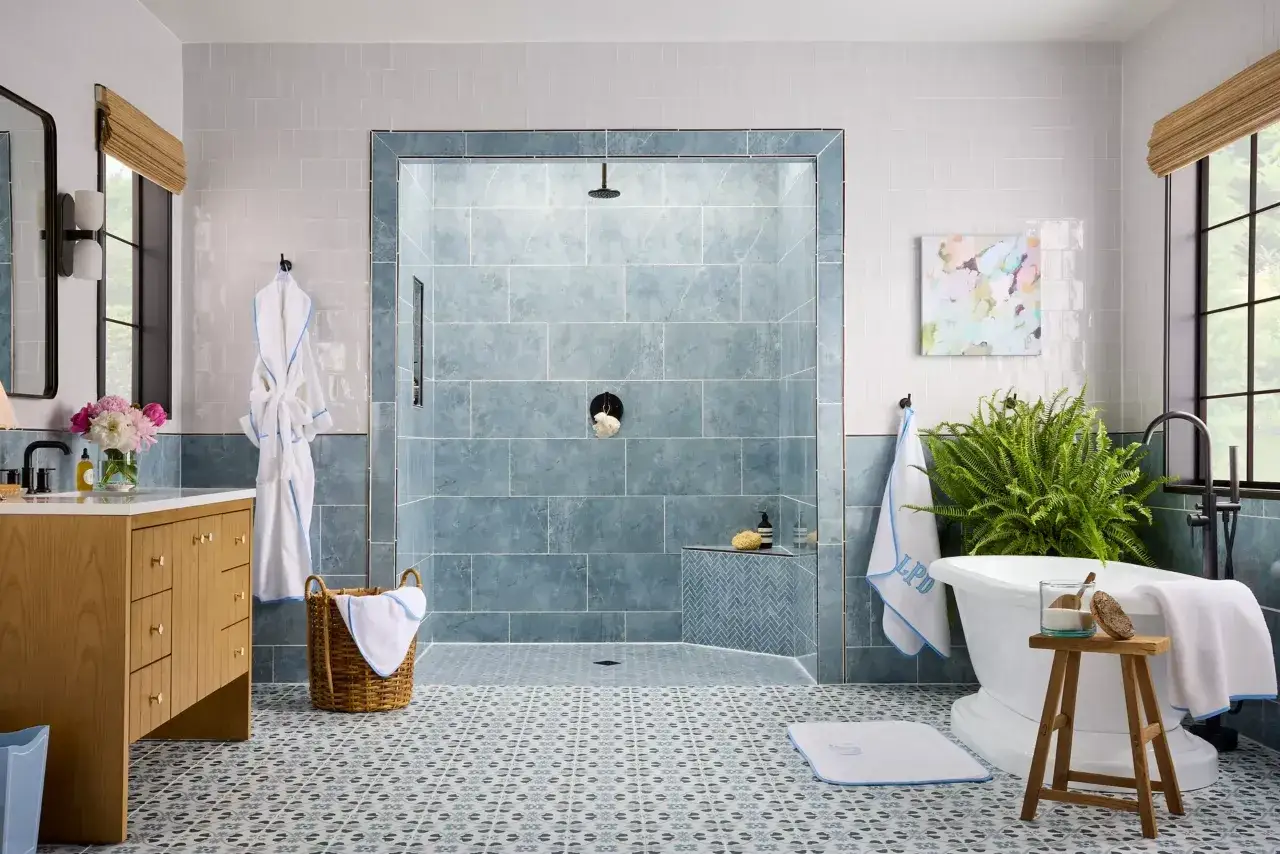
Five floor looks that still work in real bathrooms
The strongest shower floors are not the ones with the flashiest material; they are the ones that look good from year one through year five, even after cleaning, mineral buildup, and daily use. Here are the floor styles I come back to most often.
Small hex or penny tile
This is the most reliable visual default when I want texture without visual noise. The small units track the slope well, give the foot something to grip, and keep the shower from feeling overly formal. If the grout color is chosen carefully, this style looks timeless rather than trendy.
Pebble
Pebble floors create a spa-like feel immediately, which is why they show up so often in wellness-inspired bathrooms. They also give excellent traction. The compromise is simple: the surface is uneven, so it is not my first choice for anyone who dislikes feeling the floor texture underfoot or who wants the fastest cleaning routine.
Large-format matte porcelain
This option is about restraint. It gives the shower a calm, almost architectural look, and it can make a compact bath feel larger. I use it when the tile has a legitimate slip rating and the drain layout supports a clean single-slope floor. Without that combination, it can look great and still be annoying to install correctly.
Terrazzo or stone-look surfaces
These work best when the bathroom wants a more tailored, design-forward mood. The visual effect is richer than plain tile, but the finish matters more than people expect. A polished surface can be beautiful and still be the wrong call for wet footing, so I prefer a honed or matte interpretation for shower use.
Read Also: Terrazzo Cost Per Square Foot - What to Really Expect
Contrasting border or inset pattern
A simple border around the drain zone or a darker inset in the footfall area can make a shower feel custom without making the floor busy. This is especially effective in larger showers where the floor needs definition, not just texture. It is a small move, but it changes how intentional the room feels.
These looks solve different problems, and the right one depends on whether you want the floor to disappear or to become the visual anchor of the shower. That same choice also affects upkeep, which is where the real-world tradeoffs start to show up.
Common mistakes that make a pretty floor frustrating
Most shower-floor regrets are not dramatic design failures. They are small decisions that compound once the shower is used every day. I see the same issues repeat often enough that they are worth naming plainly.
- Choosing a glossy finish because it looks expensive. In a wet area, glossy often means more caution and less confidence underfoot.
- Picking large tile without a drain plan. Large tile can work, but it needs the right slope and usually performs better with a linear drain.
- Ignoring grout behavior. More grout can improve traction, but it also increases cleaning work and can change the visual tone faster than the tile itself.
- Underestimating soap residue. A floor that feels fine when dry may become slick once it has body wash, shampoo, and conditioner on it.
- Using heavy texture where cleaning discipline is low. Deep texture and pebble surfaces are attractive, but they ask more from the owner.
- Saving money in the wrong place. Waterproofing and slope work are not the place to trim aggressively if the room has to last.
Budget also shifts faster than most people expect. A straightforward shower-pan replacement often lands around $900 to $2,300 in the U.S., while a custom tiled floor can move higher once waterproofing, drain changes, substrate work, and tile layout are included. The visible surface is only one line item; the hidden assembly is usually where the real cost sits.
The floor choices I would make for three common bathroom goals
When clients want a practical shortcut, I narrow the decision to the actual goal of the bathroom. That keeps the room from becoming a compromise soup of half-accessible, half-luxury, and half-maintenance headaches.
| Bathroom goal | Floor system I would lean toward | Why it works |
|---|---|---|
| Lowest maintenance | Matte porcelain mosaic with a simple point drain | Good traction, predictable installation, and easier everyday cleaning than pebble or heavy stone |
| Best accessibility | Curbless entry with a linear drain and textured porcelain | Flatter transition, smoother entry, and a cleaner visual line for aging-in-place use |
| Most spa-like effect | Pebble or honed stone-look floor with careful sealing and a wider shower layout | Feels more tactile and luxurious, as long as the owner accepts more cleaning and more upkeep |
| Tightest budget | Porcelain mosaic on a standard shower base | Usually the best mix of cost, traction, and durability without pushing the drain system into a premium tier |
If I had to reduce the whole subject to one rule, it would be this: choose the floor that gives you enough traction without making the room harder to clean than you are willing to maintain. That balance is what keeps a beautiful shower from becoming a daily annoyance, and it is the difference between a surface that looks good in a photo and one that still feels right after years of use.