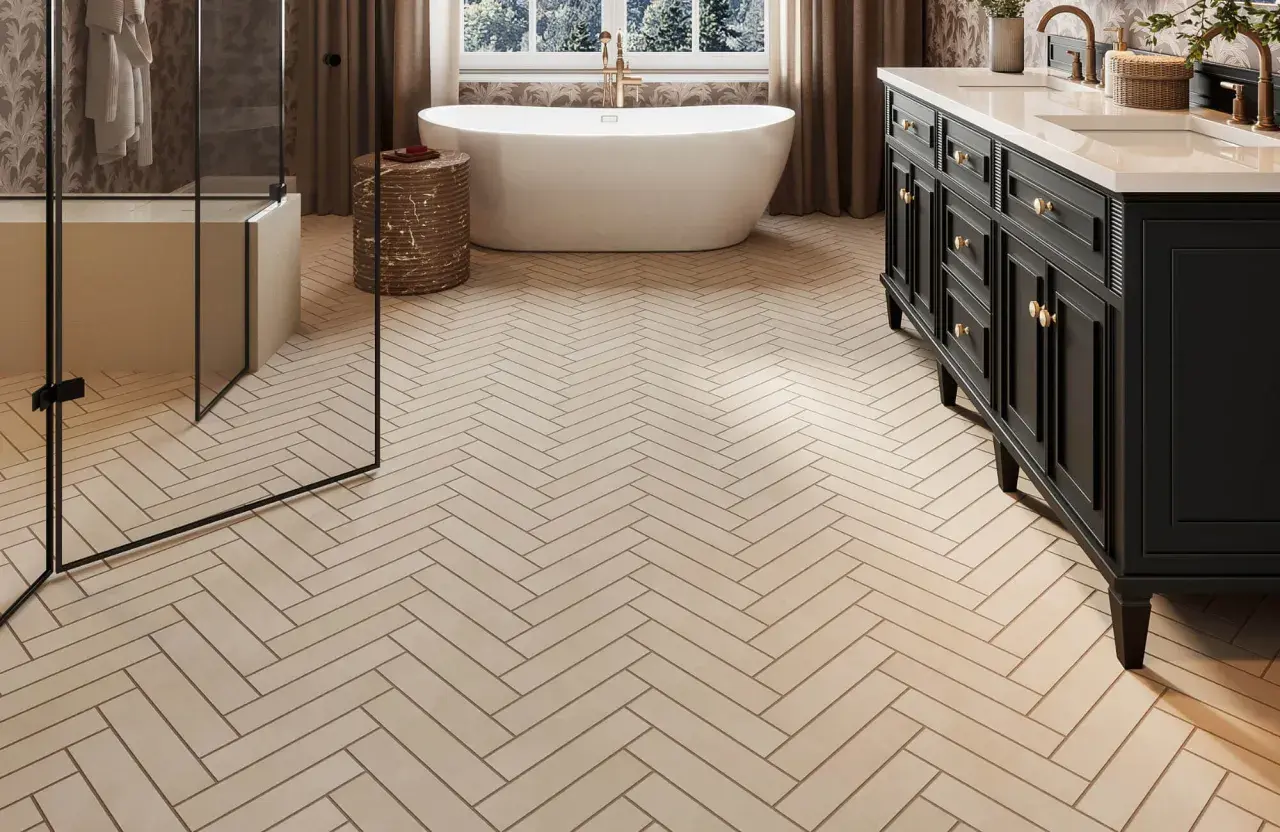
Natural stone flooring can feel timeless, but the better question is whether it suits the room you actually live in. Marble, granite, slate, limestone, and travertine all behave differently underfoot, and that difference matters most in bathrooms, kitchens, mudrooms, and entries. In this guide I break down the stone types that make the most sense, what they cost in the U.S., how they handle moisture, and the maintenance habits that keep them looking right.
The key decisions that make a stone floor work
- Marble and limestone deliver the softest, most luxurious look, but they are the least forgiving in active homes.
- Granite and slate are usually better choices when traffic, moisture, or mess are part of daily life.
- For bathrooms, a honed or textured finish usually beats a polished one.
- Installed costs in the U.S. commonly land around $15 to $50 per square foot, with prep work and layout pushing the number higher.
- Sealing helps, but it only improves stain resistance; it does not make stone stain proof.
What stone flooring really brings to a room
I like stone because it gives a floor depth that printed products rarely match. Every slab or tile carries small shifts in color, veining, fossils, or mineral movement, so the surface feels made for the room rather than copied into it.
There is a tradeoff. Stone is harder and more permanent in one sense, but it is also more responsive to spills, acids, and cleaning habits. I would never sell it as a low-effort finish; it is a finish that rewards the owner who accepts a little routine care. It also works well with radiant heat, which takes the edge off the cool surface in colder U.S. climates.
That is why I think stone earns its place most often in rooms where longevity matters more than convenience. Once you decide the feel is right, the next question is which stone actually fits the room.
Which stone types make the most sense for your space
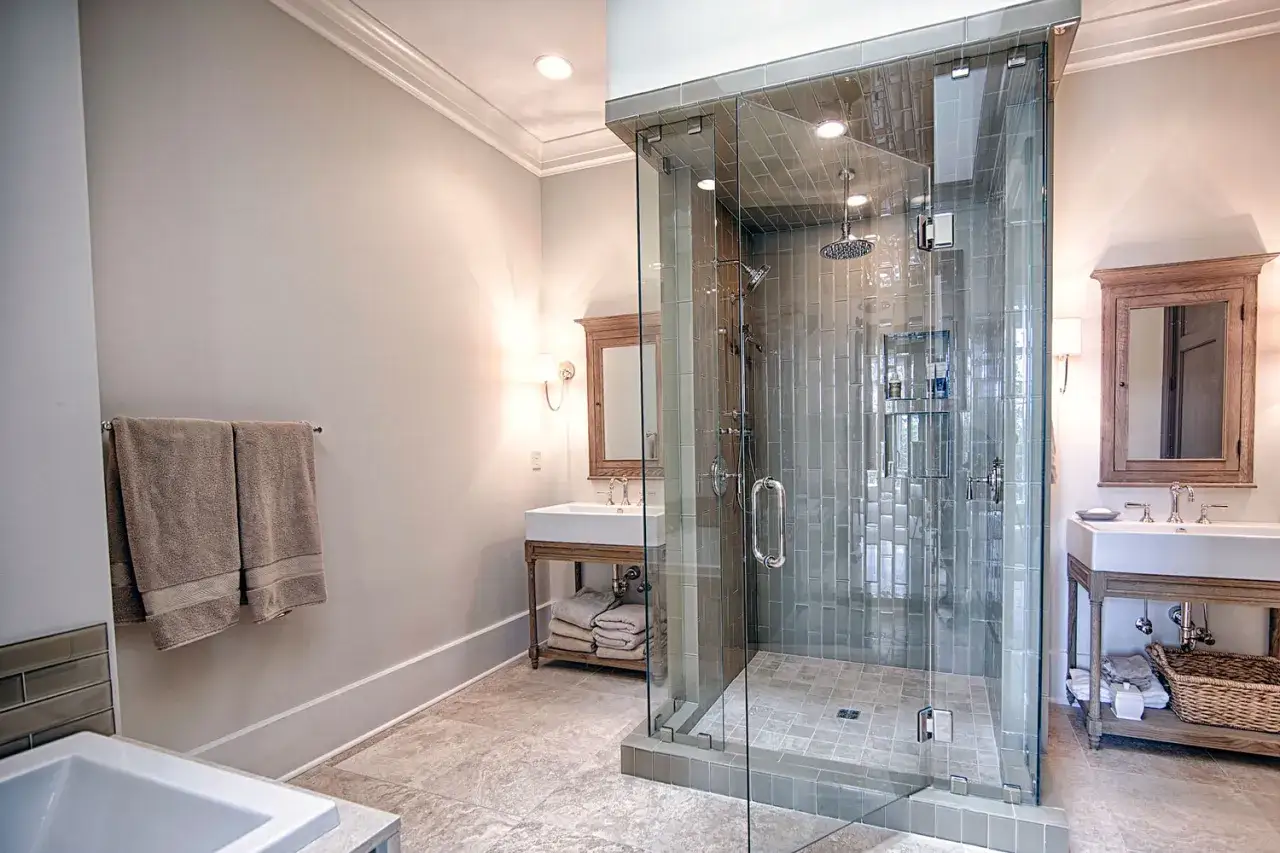
I usually narrow the choice by balancing four things: hardness, porosity, texture, and how much personality you want on the floor. The table below is the quickest way to see where each stone tends to shine.
| Stone type | Best for | Strengths | Watch-outs |
|---|---|---|---|
| Marble | Primary baths, powder rooms, formal entries | Elegant veining, classic appeal, strong visual impact | Porous, can etch, and polished marble can be slick when wet |
| Granite | Busy kitchens, entries, family bathrooms | Dense, hard, durable, good for heavier traffic | Still benefits from sealing; some patterns read visually busier |
| Slate | Bathrooms, mudrooms, rustic or modern spaces | Textured grip, strong character, forgiving visual texture | Lower-quality slate can flake; cleft surfaces can trap dirt |
| Limestone and travertine | Spa-style baths, quiet living areas, softer interiors | Warm tone, calm look, timeless presence | More porous and acid-sensitive than granite or slate |
If I had to keep the guidance simple, I would say this: choose the stone for the room’s abuse level first, then choose the color. People reverse that order all the time and end up with a floor that looks beautiful on day one but asks too much by month six. That mistake shows up fastest in bathrooms, where water and bare feet expose bad choices immediately.
Why bathrooms need a different strategy
Bathrooms are where finish matters most. TCNA’s wet-DCOF guidance uses 0.42 as a common benchmark for level interior floors expected to be walked on when wet, but shower floors are a separate case because slope, drainage, and tile format change the risk. In plain English, I avoid polished stone on a bathroom floor unless the space stays very dry.
- Choose honed, leathered, brushed, or otherwise textured finishes for better traction.
- Use smaller modules or mosaics on shower floors; extra grout lines can improve grip and help the floor follow the slope to the drain, though they also add cleaning.
- Confirm that the sealer, grout, and waterproofing system are designed to work together.
- Plan on a squeegee. In wet rooms, it is one of the cheapest ways to cut soap scum.
- Skip steam rooms and standing-water areas unless the exact product and installation are approved for that environment.
That mix of safety and maintenance is what keeps a bathroom floor pleasant rather than delicate. Once those pieces are set, price becomes the next reality check.
What the project will actually cost in the U.S.
In practice, I budget stone floors as a premium tile project, not just a material purchase. A realistic installed range is usually somewhere between $15 and $50 per square foot, with slate and simpler limestone projects sitting lower and marble or intricate layouts pushing higher.
| Project tier | Typical installed range | What pushes it there |
|---|---|---|
| Budget-friendly stone | $15 to $25 per sq. ft. | Basic slate, simpler cuts, straightforward layout |
| Midrange stone | $25 to $35 per sq. ft. | Better-grade limestone, travertine, or standard granite |
| Premium stone | $35 to $50+ per sq. ft. | Marble, custom selection, large-format tile, detailed patterns, or slab-like work |
A 100-square-foot room can therefore run roughly $1,500 to $5,000 before major repairs or custom fabrication. The bill rises fastest when the subfloor needs leveling, the old floor has to be removed, the layout uses diagonal cuts, or the room gets a waterproofing membrane and radiant heat. I also tell people to allow extra material for stone variation and cuts, especially if the veining needs to look consistent across the room.
Price is only half the story, though. The floor has to be easy enough to live with after installation, which is where care matters.
How to keep a stone floor looking good without overcomplicating it
The good news is that stone care is usually simple. The bad news is that the wrong cleaner or bad daily habits can do more damage than most people expect. The Natural Stone Institute recommends frequent dust mopping with a clean, dry mop because grit acts like sandpaper.
- Dust mop or vacuum regularly with soft attachments so grit does not scratch the surface.
- Clean with a neutral cleaner, stone soap, or mild dishwashing detergent and warm water.
- Rinse thoroughly and dry the floor, especially in bathrooms where soap film builds up.
- Blot spills immediately instead of wiping them around the surface.
- Use a non-acidic soap scum remover in wet areas, and keep a squeegee near the shower.
- Avoid vinegar, lemon, abrasive powders, toilet-bowl cleaners, and rust removers that can attack stone.
Sealing is not a magic shield. It makes the stone more stain resistant, not stain proof, and some stones need it more than others. I treat sealing as protection that buys time, not permission to ignore spills. If a floor starts darkening around sink zones or makeup stations, that is a sign to look at maintenance before the damage becomes permanent.
Once the care routine is clear, the last step is making sure the floor you order is the floor you will still like five years from now.
The details that separate a good purchase from a costly one
If I am choosing stone for a home, I check a few things before I ever sign off on the order. They are not glamorous decisions, but they make the difference between a floor that feels finished and one that keeps creating small problems.
| Decision | Why it matters | What I prefer |
|---|---|---|
| Stone versus stone-look porcelain | Appearance, maintenance, and moisture tolerance all change the experience | Porcelain for low-maintenance family baths; real stone when texture and variation matter more |
| Tile size | Larger tiles mean fewer grout lines, but they demand a flatter subfloor | Large format in calmer rooms; smaller modules where grip matters more |
| Lot consistency | Stone varies from piece to piece | Inspect multiple tiles or slabs from the same lot before buying |
| Installer experience | Stone is less forgiving of movement, poor prep, and weak waterproofing | A contractor who installs stone often, not just ceramic tile |
- Check the sample in your actual room light, not only under showroom lighting.
- Ask how the installer will handle crack isolation, transitions, and movement joints.
- Confirm the subfloor is flat and stiff enough for the tile size you want.
- Decide on grout color early, because it changes the way the stone reads.
- Order extra material now if you may need future repairs from the same lot.
If I had to keep the advice short, I would say this: granite and slate are the least fussy, marble gives the strongest luxury signal but asks the most from the owner, and limestone or travertine sit in the middle when the room is treated gently. Match the stone to moisture, traffic, and cleaning habits, and the floor will feel intentional instead of fragile.