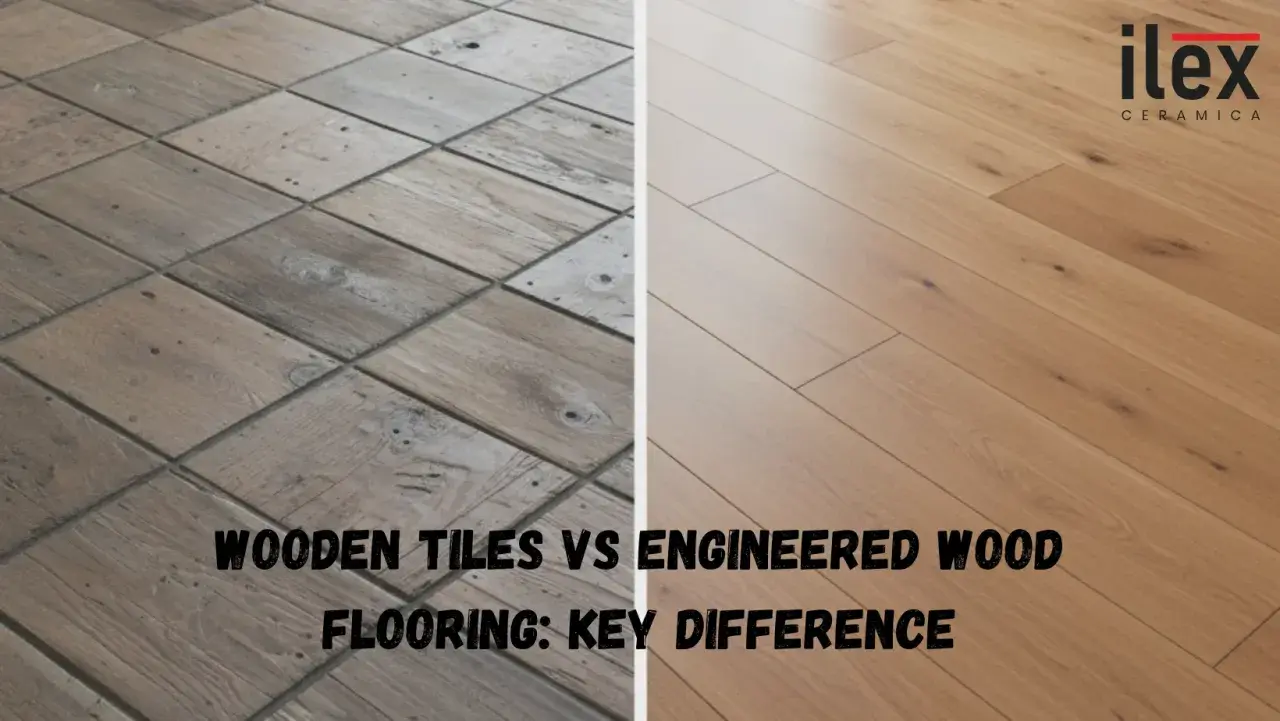
The choice between wood-look tile and hardwood is really a decision about moisture resistance, maintenance, comfort, and long-term cost. In bathrooms and other spill-prone rooms, that difference matters more than the grain pattern or the tone of the planks. I’m going to break down how the two floors behave in real homes, what they cost in the U.S. right now, and where each one makes the most sense.
The decision comes down to room conditions more than style
- Wood-look tile is usually the safer pick for bathrooms, laundry rooms, mudrooms, and kitchens because it handles water and steam well.
- Hardwood feels warmer, quieter, and more natural underfoot, which is why it still shines in dry living spaces.
- Material pricing can favor tile, but labor often narrows the gap or flips it.
- Hardwood can be refinished over time; tile cannot be refinished, but it usually asks for less ongoing care.
- If you want one flooring style to flow from a bath into adjacent spaces, tile is the more forgiving long-term choice.
What you are really comparing
When I compare wood-look tile vs hardwood, I start by separating a mineral surface from an organic one. Wood-look tile is usually porcelain, sometimes ceramic, shaped and printed to resemble planks; hardwood is actual wood, either solid planks or an engineered wood product with a real wood wear layer. They can look close from across a room, but they behave very differently once water, pets, furniture, and cleaning routines enter the picture.
That difference matters because tile is fundamentally about resilience, while hardwood is about warmth and character. Wood-look tile gives you the visual language of oak, hickory, or ash without the same sensitivity to moisture. Hardwood gives you the real thing: natural variation, a softer feel underfoot, and the possibility of sanding and refinishing later. Once you see that material difference, the performance tradeoffs become much easier to read.
Where the performance gap shows up fastest
The first year of living with a floor usually tells you more than the showroom ever will. A busy household will reveal whether the surface hates water, dents easily, feels cold, or needs a lot of maintenance. Here is the comparison I find most useful in practice:
| Factor | Wood-look tile | Hardwood |
|---|---|---|
| Moisture resistance | Excellent. A strong choice for bathrooms, laundry rooms, and wet entries. | Poor to moderate. It can be damaged by standing water, steam, and repeated spills. |
| Scratch and dent resistance | Very good. It handles chairs, shoes, and pet traffic well, though heavy impact can chip it. | More vulnerable. Dents and scratches show up sooner, especially with pets and high traffic. |
| Comfort underfoot | Harder and cooler, unless you add radiant heat or rugs. | Warmer and slightly softer, which many people notice immediately. |
| Noise | Can sound harder and more echo-prone in open rooms. | Usually quieter and less reflective. |
| Repair path | Individual tile replacement is possible, but refinishing is not. | Can often be repaired, screened, or refinished, depending on the wood and wear layer. |
| Long-term refresh | Low upkeep, but the surface look is what you live with. | Can be renewed multiple times, which helps with longevity. |
For bathrooms, the moisture story is usually the deciding factor. Porcelain wood-look tile is made for the kind of humidity that can make real wood swell, cup, or stain. The Department of Energy also notes that ceramic tile is the most common and effective floor covering for radiant heating because it conducts heat well, which makes tile especially attractive in a bathroom where a warm floor changes the whole experience.
Hardwood still has a clear advantage in comfort. It feels warmer, looks softer, and tends to be easier on bare feet and on the eye. But that comfort comes with a condition: the room has to stay relatively dry and the owner has to be disciplined about spills, ventilation, and maintenance. That performance gap matters, but the budget usually decides the conversation faster.
What U.S. pricing looks like in 2026
Homeowners often assume tile will always be cheaper because the material can look less expensive on a shelf. In reality, the total installed price depends heavily on labor, prep, and the shape of the room. HomeAdvisor’s 2026 pricing data puts many wood-look tile materials around $2 to $8 per square foot, while hardwood often lands around $6 to $25 per square foot installed depending on species, grade, and labor complexity.
| Cost category | Wood-look tile | Hardwood |
|---|---|---|
| Material price | Often about $2 to $8 per sq. ft. for many porcelain options, with premium lines costing more. | Often about $3 to $12 per sq. ft. for the wood itself, with higher-end species going beyond that. |
| Labor | Commonly $5 to $25 per sq. ft. because tile work is labor-intensive. | Commonly about $3 to $6 per sq. ft., though complex layouts and repairs raise the total. |
| Typical installed range | Often lands in the middle-to-upper teens once prep, grout, and demolition are added. | Often lands in the low-to-mid twenties for nicer species or complicated jobs. |
The trap is assuming tile always saves money. It can, but not automatically. A simple hardwood job in a dry room may be straightforward to install, while a tile project in a bathroom can demand more prep, more cuts, more waterproofing attention, and more grout work. I budget by room, not by material, because the room often tells you more than the product label does. That is why the next step is mapping each floor to the spaces it handles best.
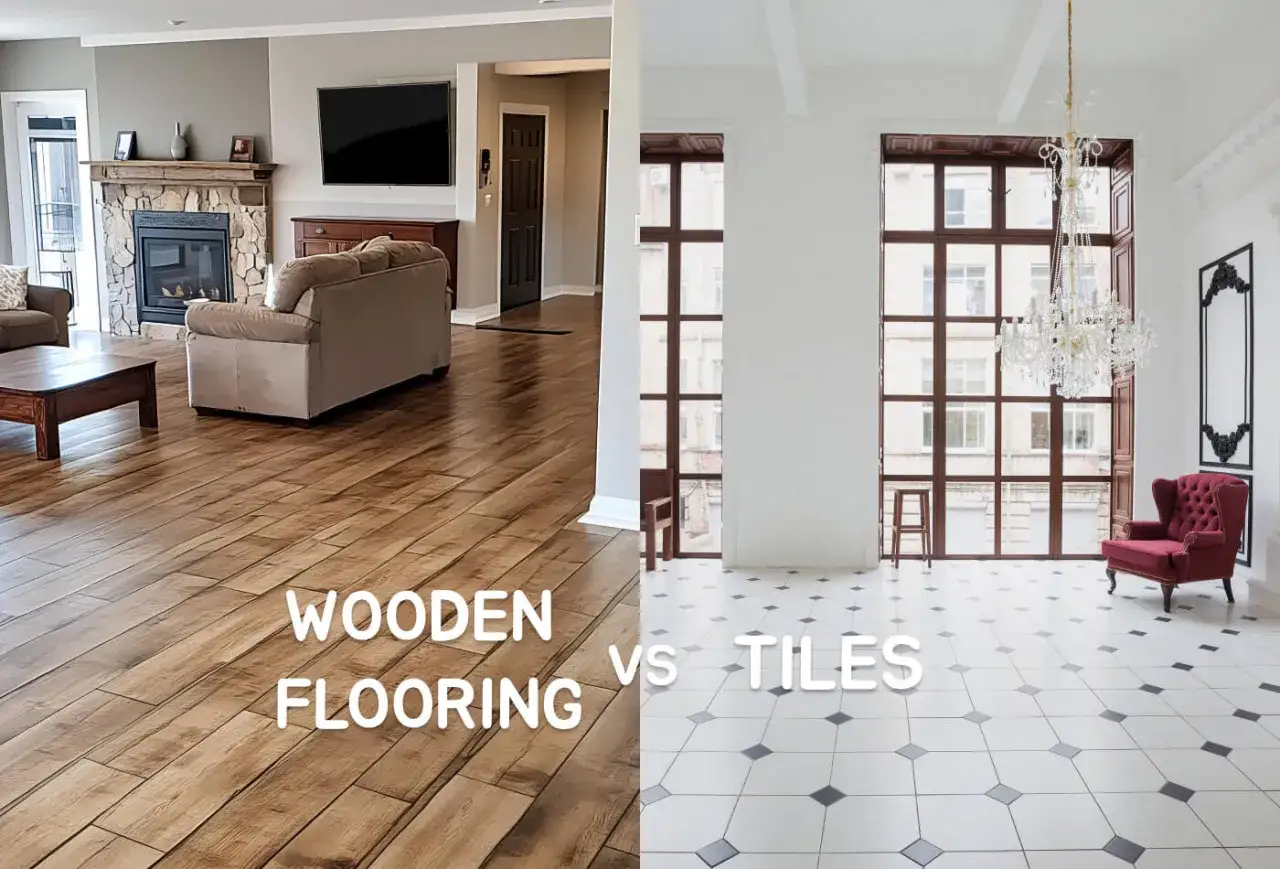
Where each floor belongs in a real home
If I were planning a bathroom from scratch, I would treat wood-look tile as the default and hardwood as the exception. In wet and humid zones, the safer floor is usually the one that does not panic when water shows up.
| Room | Better fit | Why it makes sense |
|---|---|---|
| Full bathroom | Wood-look tile | Handles splashes, steam, and repeated damp cleaning far better than hardwood. |
| Powder room | Either, depending on the design | If the room stays dry, hardwood can work; if you want low stress, tile wins. |
| Kitchen | Wood-look tile if spills are frequent; hardwood if you want warmth | Tile is tougher around sinks, dishwashers, and prep zones. |
| Laundry room or mudroom | Wood-look tile | These rooms see water, dirt, and heavy traffic. Tile is simply less fussy. |
| Living room or bedroom | Hardwood | Comfort, acoustics, and a more natural feel usually matter more than water resistance. |
| Basement | Usually wood-look tile | Moisture risk makes real wood harder to trust unless the space is carefully controlled. |
The cleanest design strategy is often a mixed one: tile in bathrooms, laundry rooms, and entries, then hardwood in the drier parts of the house. That gives you continuity where you need it and protection where you need it most. The floor can still disappoint if the details are wrong, and that is where most regrets start.
The details that make one option feel expensive and the other feel cheap
With wood-look tile, the visual outcome depends on more than the tile itself. Long plank formats usually read more convincingly than short ones, and a grout color that closely matches the tile keeps the floor from looking too busy. I also prefer a matte finish in bathrooms because it looks more believable and is less slippery than a glossy surface. A random stagger pattern helps, but it should not be exaggerated; too much repetition makes the floor feel artificial.
With hardwood, the design problem is different. The floor already feels real, so the challenge is protecting that beauty from wear. Dark finishes can show dust and scratches faster. Softer species show dents more quickly. Area rugs, felt pads, and steady humidity control matter more than most homeowners expect. A stable indoor environment in the 35% to 55% relative humidity range is a common target for wood floors because large swings are what usually create gaps, cupping, or movement over time.
The common mistakes are pretty consistent. People choose polished tile for a bathroom and then dislike the slippery feel. They choose hardwood in a wet room and then spend the next few years managing every drip and bathmat. They also underestimate grout maintenance on tile and overestimate how much abuse hardwood can take before it starts looking tired. Once those details are clear, the final decision becomes much simpler.My practical rule for choosing without second-guessing yourself
I keep the decision very simple. If the room sees water, steam, wet shoes, or heavy cleaning, I lean wood-look tile. If the room stays dry and the priority is warmth, acoustics, and a more natural feel, I lean hardwood. That rule is plain, but it saves a lot of regret because it forces the floor to match the actual use of the room, not just the mood board.
For bathrooms, my bias is even stronger. Wood-look tile gives you the wood visual without asking you to baby the floor every time someone steps out of the shower. Hardwood still has a place in American homes, and a strong one, but it belongs where moisture is not the main event. If you build the choice around the room first, the right flooring usually becomes obvious.