Soap scum on marble is one of those bathroom problems that looks simple until you realize the stone can be damaged faster than the residue disappears. The safest answer to how to remove soap scum from marble is usually less about scrubbing and more about choosing a marble-safe cleaner, using gentle tools, and drying the surface before film builds up again. In this guide, I cover the cleaning method I trust for light buildup, what to do when residue is stubborn, which products can etch marble, and how to keep shower walls and vanity tops looking clean longer.
The marble-safe approach is gentle, fast, and mostly preventive
- Start with a pH-neutral cleaner or a mild dish soap solution, not an acidic bathroom spray.
- Use a microfiber cloth or soft sponge and rinse the marble thoroughly after cleaning.
- Dry the surface every time, because leftover moisture and soap residue make the film come back faster.
- Avoid vinegar, lemon juice, bleach, abrasive powders, and harsh scrubbing pads.
- If the mark will not lift, it may be etching or mineral scale rather than soap scum.
- Prevention matters more than heavy cleaning on marble, especially in showers and around tubs.
Why soap scum behaves differently on marble
Marble is beautiful, but it is not forgiving. It is a calcium-based stone, so acidic cleaners can etch the finish instead of removing the film you are trying to clean. That is why a cloudy white patch can be tricky: sometimes it is true soap scum, sometimes it is hard-water scale, and sometimes it is damage left behind by the wrong cleaner.
In practice, I treat marble soap scum as a surface-film issue first. If the area feels smooth and just looks hazy, there is a good chance cleaning will solve it. If the spot still looks dull after a gentle clean, the surface may already be etched, which means no amount of extra scrubbing will fix it.
The finish matters too. Polished marble tends to show film and dull spots more clearly than honed marble, so the same buildup can look worse even when it is not more severe. That is why the cleaning method matters as much as the cleaner itself. Once you understand that, the next step is choosing a method that clears residue without opening the door to etching.
The safest way I clean light buildup
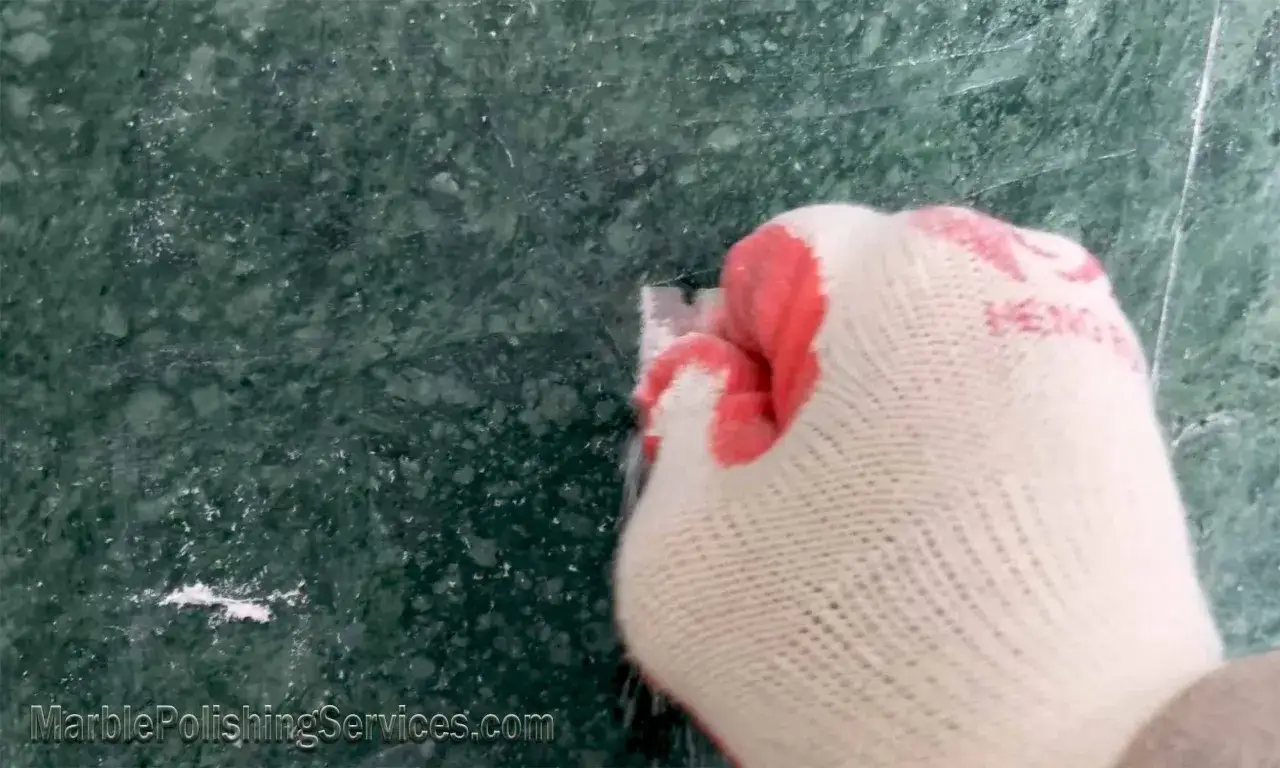
For everyday soap film, I start with the simplest marble-safe routine and only escalate if I need to. The Natural Stone Institute recommends a neutral cleaner, stone soap, or mild liquid dishwashing detergent with warm water for routine care, and that is still the baseline I trust. The key is to clean gently, rinse well, and dry the stone so you are not leaving a fresh film behind.
- Mix a small amount of pH-neutral stone cleaner, or a drop of mild dish soap, into warm water.
- Wet a microfiber cloth or soft sponge, then wring it out so it is damp rather than dripping.
- Wipe the marble in overlapping passes instead of scrubbing one spot hard.
- Let the cleaner sit for a minute only if the label allows dwell time.
- Rinse with clean water to remove every trace of soap.
- Dry the surface with a soft towel so moisture does not dry back into a haze.
I also avoid using too much soap. Excess cleaner can leave its own residue, which is the opposite of what you want on marble. If the shower has multiple walls or a large vanity top, work in small sections so you can rinse and dry before the solution starts to streak. That small habit makes a bigger difference than people expect, and it sets you up for the tougher cases that need a little more than a basic wipe-down.
How I handle stubborn residue without harming the finish
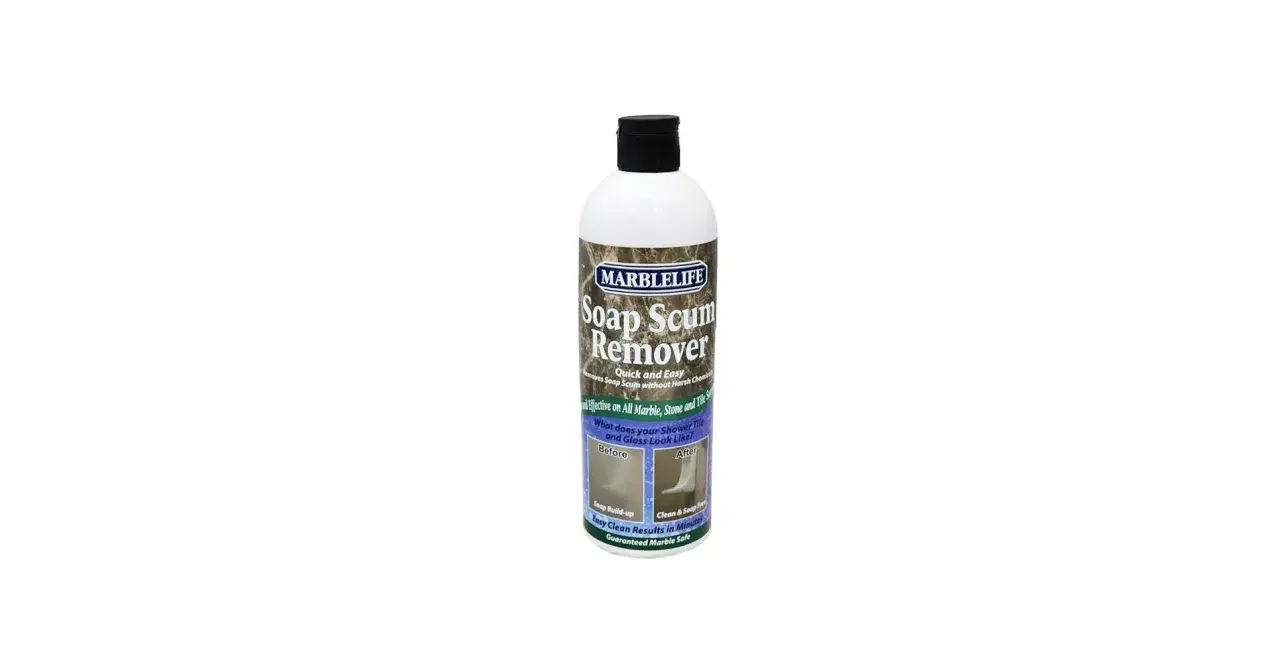
When light cleaning does not move the haze, I do not jump straight to an aggressive bathroom spray. Instead, I switch to a non-acidic soap scum remover that is specifically labeled safe for natural stone. That distinction matters. A product can be great on ceramic tile and still be the wrong choice for marble.If the label is stone-safe, I apply it sparingly, let it sit for only the recommended time, and work it with a soft nylon pad or microfiber cloth. The goal is to loosen the film, not grind it off. If the residue is thick, I would rather repeat a gentle pass than press harder once and risk scratching the surface.
For very stubborn film, some stone-care guidance allows a diluted ammonia-and-water solution, roughly 1/2 cup ammonia per gallon of water, but I treat that as a last-resort option rather than a routine cleaner. If I use it at all, I spot-test first, keep contact brief, rinse thoroughly, and dry the marble immediately. Repeated use can dull some finishes, so this is not something I would build into daily care.
If the buildup is still there after a marble-safe cleaner, I stop assuming it is soap scum. At that point, the real issue may be hard-water scale or etching, and both call for a different approach. That leads straight into the products and methods I avoid completely on marble.
What never belongs on marble
Marble is one of those surfaces where the wrong shortcut creates more work later. Acidic cleaners can etch the stone, abrasive powders can scratch it, and harsh bathroom chemicals can damage both the finish and the sealer. I see the same mistakes over and over: people reach for the strongest spray in the cabinet, then wonder why the stone looks dull afterward.
| Cleaner or tool | Best use | Marble-safe | Why it matters |
|---|---|---|---|
| pH-neutral stone cleaner | Routine cleaning | Yes | Cleans film without attacking the stone |
| Mild dish soap and warm water | Light buildup | Yes, if rinsed well | Good for everyday grime, but excess soap can leave residue |
| Non-acidic soap scum remover | Stubborn film | Usually, if labeled for natural stone | Useful when gentle cleaning is not enough |
| Vinegar or lemon-based sprays | None | No | Acid can etch marble quickly |
| Bleach or ammonia-heavy bathroom cleaners | None for routine use | Not recommended | Can dull the finish or damage the sealer |
| Abrasive powders or scrubbing pads | None | No | Can scratch polished surfaces |
MSI Surfaces gives the same basic warning I rely on in real-world care: stay away from vinegar, bleach, ammonia, and gritty scrub pads on marble. That advice is less about being overly cautious and more about protecting an expensive surface from permanent dulling. Once a stone finish is etched, you are no longer cleaning soap scum; you are dealing with restoration.
When the mark is etching instead of buildup
This is the part that saves people time. If a spot looks like soap scum but does not come off with a marble-safe cleaner, it may not be residue at all. Etching can look like a pale patch, a dull ring, or a cloudy area that seems to sit inside the stone rather than on top of it. The surface may still feel smooth, but the sheen is gone.
I tell homeowners to stop scrubbing at that point. More pressure does not fix etching, and it can widen the damaged area. Mild polishing products may help in some cases, but the right solution depends on the finish, the depth of the mark, and whether the stone is polished or honed. If the damage is noticeable on a vanity top or shower wall, honing or professional polishing may be the cleaner fix.
There is also a practical distinction between stone types. A marble shower that gets daily shampoo, conditioner, and body wash residue will often need more frequent upkeep than a guest bath that is used lightly. If the same spot keeps returning, I look at the root cause before I think about stronger products. That usually means the next section matters more than the last wipe-down.
How I keep soap scum from coming back
Prevention is the part most people skip, and it is the part that makes the biggest difference. Marble in a bath or shower stays cleaner when water, soap, and humidity do not sit on the surface long enough to leave a film. A few small habits turn a constant cleanup job into light maintenance.
- Use a squeegee or microfiber towel after showers, especially on walls and around fixtures.
- Keep a soft towel in the bathroom and dry splash zones after use.
- Run the fan long enough to pull moisture out of the room.
- Rinse shampoo and body wash off the marble before they dry.
- Wipe the stone weekly with a pH-neutral cleaner instead of waiting for buildup.
- Reseal the marble on the schedule recommended for your specific stone and sealer.
Sealing is worth mentioning because it changes the cleanup story, even though it does not make marble stain-proof. A good sealer can make residue less likely to stick and easier to remove, but it will not protect the stone from acidic cleaners. I still treat the cleaning products as the real line of defense.
If you want the shortest version of the whole routine, it is this: clean lightly, rinse thoroughly, dry completely, and never assume a stronger chemical is a smarter one. That mindset is what keeps marble looking like marble instead of turning it into a surface you are constantly trying to repair.
A marble-safe routine that keeps the finish worth protecting
The best way to deal with soap scum on marble is to stop treating it like a normal bathroom surface. Marble rewards restraint. A pH-neutral cleaner, a soft cloth, clean rinse water, and a dry towel will solve most of the mess without creating a second one. When buildup is stubborn, use a non-acidic stone-safe remover, not a harsher product that can leave the stone dull.
If a mark survives gentle cleaning, assume it may be etching or mineral scale before you keep scrubbing. That one decision can save you from turning a simple maintenance job into a polishing repair. For marble showers, vanity tops, and tub surrounds, the cleanest finish usually comes from the simplest routine, repeated consistently.
That is the standard I would use in any well-designed bathroom: protect the stone first, clean it second, and let prevention do most of the work.