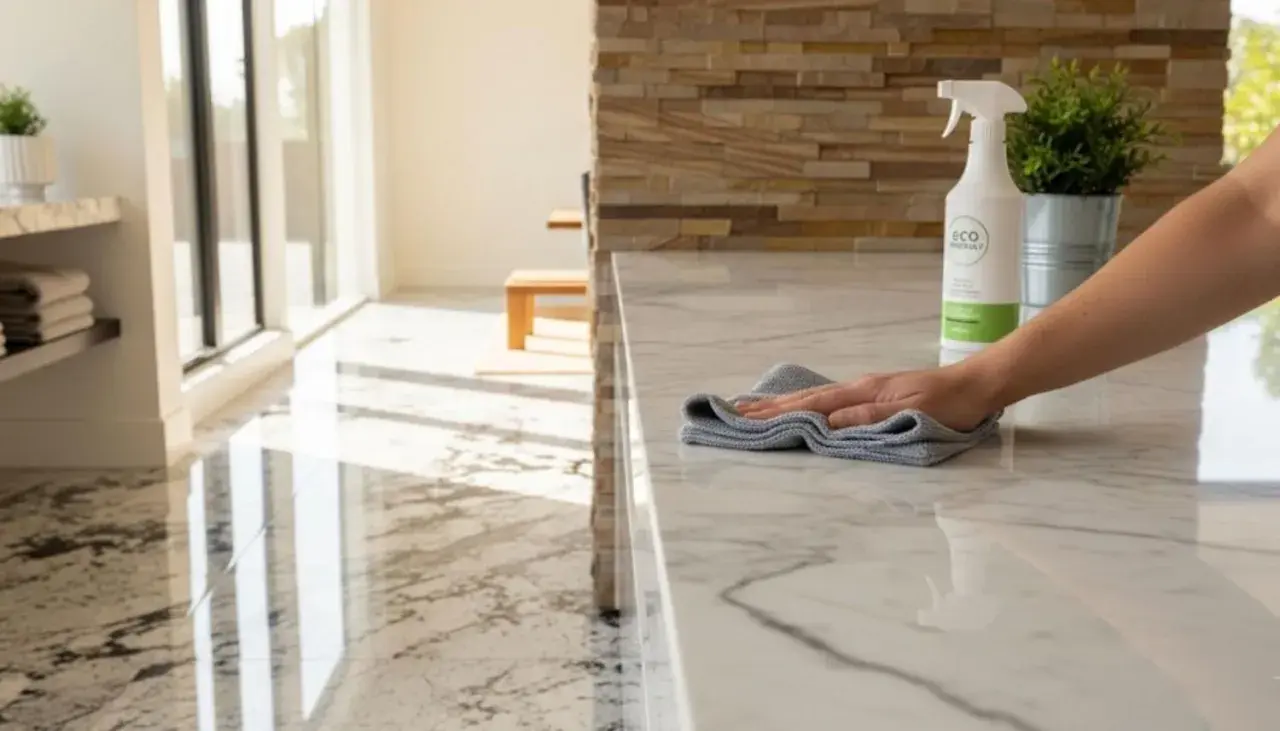
Natural stone can look calm and high-end in a bathroom or kitchen, but it stays that way only when the routine is simple and consistent. Good natural stone maintenance is mostly about using the right cleaner, drying surfaces well, and stopping spills before they settle into the pores or etch the finish. This guide focuses on what actually matters: daily care, safe products, sealing, stain removal, and the mistakes that shorten the life of marble, granite, travertine, limestone, quartzite, slate, and soapstone.
The basics that keep stone clean without wearing it out
- Use a pH-neutral cleaner, warm water, and soft cloths or a clean mop.
- Blot spills immediately and rinse residue instead of scrubbing harder.
- Avoid vinegar, lemon, bleach, abrasive powders, and harsh bathroom sprays.
- Seal stone only when the material and use case call for it, and treat sealing as stain resistance, not armor.
- In showers and vanities, dry the surface regularly to reduce soap scum, hard-water marks, and dull spots.
- If a stain or scratch is more than surface-deep, stop early and call a stone professional.
What natural stone maintenance really requires
Natural stone is not one material. Marble and limestone behave differently from granite or quartzite, and slate or soapstone bring their own quirks. The quickest way to get the surface right is to understand whether it is calcareous or siliceous: calcareous stones are acid-sensitive, while siliceous stones are generally tougher but still dislike harsh cleaners. I keep that distinction in mind before I decide whether a stain is a cleaning job, a sealing question, or a restoration problem.
| Stone type | What it usually needs | What causes trouble | Best fit for |
|---|---|---|---|
| Marble, limestone, travertine, onyx | Gentle cleaning with a neutral cleaner, careful drying, and selective sealing | Acids, vinegar, lemon, abrasive powders, and harsh bathroom sprays | Powder rooms, vanities, shower walls with disciplined care |
| Granite and quartzite | Regular dust removal, mild cleaning, and periodic sealer checks | Harsh degreasers, acidic products, and rust removers with hydrofluoric acid | Busy counters, floors, and bathrooms that need a tougher surface |
| Slate and soapstone | Routine wipe-downs and product choices matched to the finish | Abrasives, residue-heavy cleaners, and neglect around grout and joints | Floors and low-key surfaces where a natural, matte look is part of the design |
That difference matters because the wrong cleaner often causes more damage than everyday use. Once you know the stone, the routine gets much easier to choose, and the rest of the job becomes about consistency rather than heavy labor.
How to build a routine that protects the finish
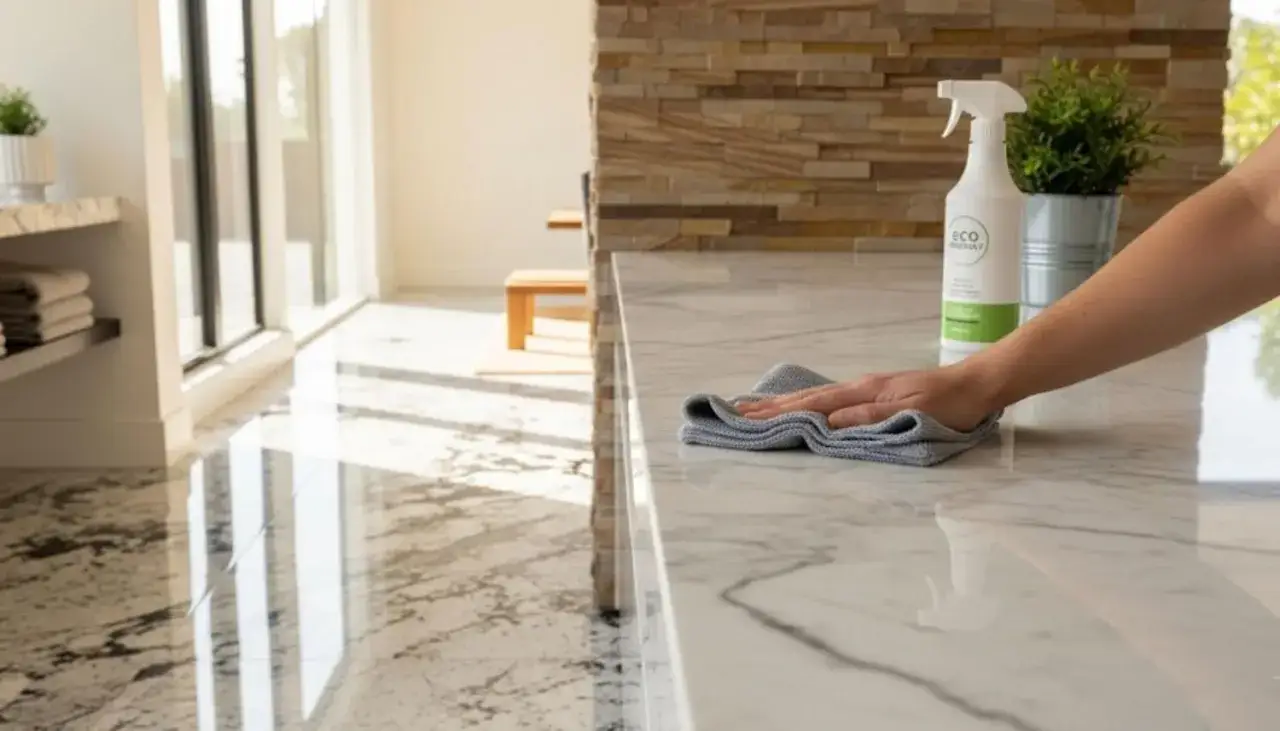
The safest routine is usually the least dramatic one. The Natural Stone Institute recommends neutral cleaners, soft cloths, and thorough rinsing, and that lines up with what works in real homes: remove grit first, clean gently, then dry the surface so nothing is left behind.
Daily care
- Wipe counters after use so toothpaste, makeup, and skincare products do not sit on the surface.
- Blot spills immediately instead of wiping them across the stone.
- Squeegee shower walls, tub surrounds, and niche shelves after each use if the stone is in a wet area.
- Keep soap dishes, bottles, and trays dry underneath so rings do not build up unnoticed.
Weekly care
- Dust mop floors with a clean, untreated mop so grit does not act like sandpaper.
- Wash with warm water and a pH-neutral cleaner or a mild liquid dishwashing detergent.
- Rinse thoroughly, then dry with a soft cloth or microfiber towel.
- Check the underside of bath accessories, rugs, and vanity items for trapped moisture or residue.
Monthly care
- Inspect caulk joints, grout lines, and drain edges for wear.
- Look for dull patches, rings, or cloudy areas that may signal buildup or etching.
- Replace worn felt pads on trays, dispensers, and decor items that sit directly on stone.
- Check vacuum attachments and wheels before using them on stone floors; worn parts can scratch.
On floors, mats inside and outside the room do more than people expect. They trap sand and dirt before it reaches the surface, which is one of the cheapest ways to protect the finish. If the routine starts to feel like scrubbing, the method is probably off, and the stone is telling you that it needs less force, not more of it.
Which cleaners are safe and which ones cause damage
The cleaner matters as much as the stone. I see the most damage from well-meaning people who use whatever they already have under the sink, then wonder why the surface looks dull or streaked a month later. The label matters more than the brand promise, and “natural” does not automatically mean stone-safe.
| Cleaner or product | Usually safe? | Why |
|---|---|---|
| pH-neutral stone cleaner | Yes | Designed to clean without etching sensitive stone or stripping the finish |
| Mild liquid dishwashing detergent in warm water | Yes, if diluted | Works for general soil, but too much can leave film or streaks |
| Stone soap | Yes | Commonly used for routine upkeep when rinsing is thorough |
| Vinegar, lemon juice, acidic bathroom sprays | No | Can etch calcareous stones and dull polished finishes |
| Abrasive powders or scouring creams | No | They can scratch the surface or leave a haze |
| Bleach and ammonia together | Never | This combination creates a toxic gas |
| Rust removers with hydrofluoric acid | No | They can attack silicate-based stones, including granite and quartzite |
There is one exception that needs care rather than blanket permission: some non-acidic soap scum removers and diluted ammonia solutions can help in wet areas, but they should be used sparingly and never mixed with bleach. If a product is marketed for tubs, tile, or “deep bathroom brightening,” I read the label twice before letting it near stone.
How to deal with showers, hard water, and everyday spills
Bathrooms are where stone gets tested. The main problems are not dramatic stains; they are the slow combination of moisture, soap residue, and hard-water deposits. If you can tell the difference between buildup and etching, you save a lot of unnecessary scrubbing.
Soap scum and hard-water marks
Soap scum often sits on top of the stone, while hard-water deposits can cling to the surface and make it look cloudy. A squeegee after each shower is one of the simplest ways to slow both problems down. When buildup appears, start with water, then a stone-safe cleaner, and only move to a non-acidic remover if the label says it is safe for your stone type.
What etching looks like
Etching is different from dirt. It is usually a dull spot, ring, or patch that shows up after an acid has reacted with the surface, especially on marble, limestone, travertine, or onyx. If the mark is smooth but visually dull, cleaning alone will not fix it. At that point, polishing powder or professional restoration may be the right path.
Read Also: Clean Marble Floors Right - Avoid Common Mistakes
Everyday spills that need fast action
- Cosmetics, mouthwash, and skincare products should be wiped quickly because dyes and acids can leave marks.
- Toothpaste and soap residue should be rinsed before they dry into a film.
- Hair dye, nail products, and perfumes are worth treating as stains, not routine messes.
- In kitchens, oils and cooking splashes should be blotted immediately so they do not soak in.
One practical rule helps almost every time: if the surface feels sticky or gritty, it needs cleaning; if it looks dull but feels smooth, it may be etched. That distinction keeps people from using the wrong fix on the wrong problem.
Sealing, resealing, and why it is not a magic shield
Sealing helps, but it is easy to overrate it. The products commonly used on stone are impregnators or repellents, which slow absorption; they do not turn the surface into a stain-proof barrier. I treat sealing as extra protection, especially on counters, showers, and honed finishes, not as a substitute for careful daily care.
Some dense stones may not need sealing at all, while more porous materials can benefit from it. There is no single schedule that fits every slab, finish, or room. My practical rule is to test once a year in busy spaces: place a few drops of water on a clean, dry area and watch what happens. If the water stops beading or the stone darkens quickly, the surface may need attention.
- High-use kitchens usually need the sealer checked more often than guest baths.
- Showers and tub surrounds usually age faster than dry wall cladding.
- Honed finishes often show absorption and wear sooner than polished ones.
- Food-prep areas should use non-toxic products that are approved for that setting.
The Natural Stone Institute’s guidance is useful here: sealing is about making stone more resistant to staining, not making it immune. That framing is more realistic, and it keeps homeowners from assuming the sealer will fix poor habits or weak ventilation.
Stains, scratches, and when to stop diy
Once a mark is already there, the right treatment depends on what caused it. A stain, an etch, and a scratch all look like surface damage, but they are not the same problem. That is why the first step is identification, not rubbing harder.
| Problem | First move | What to avoid |
|---|---|---|
| Oil-based stain | Use a baking soda paste or a poultice with an absorbent powder and mineral spirits | Acidic cleaners and harsh scrubbing pads |
| Organic stain | Try a hydrogen peroxide-based poultice on light-colored stone | Bleach on dark or delicate finishes unless a professional recommends it |
| Rust or metal stain | Use a stone-safe rust treatment or call a pro early | Generic rust removers with hydrofluoric acid |
| Biological growth | Use a diluted, stone-safe cleaner and improve ventilation | Mixing bleach and ammonia |
| Etch mark | Use polishing powder or restoration work, depending on severity | More acid, more scrubbing, or a “cleaner” that makes the patch larger |
| Scratch or nick | Light wear may be buffed; deeper damage needs professional repair | Trying to grind or sand visible stone without experience |
For stains that do not lift with regular cleaning, a poultice can help. The basic idea is simple: mix a cleaner with an absorbent material, spread it over the mark, cover it, and leave it in place for 24 to 48 hours so the stain can migrate into the poultice. Some stains need more than one round, and some never disappear completely. That is especially true with deep rust or long-set discoloration.
For very light scratches, a restoration specialist may use 0000 steel wool on the appropriate finish, but I would not make that a first resort on a visible vanity top or shower threshold. If the mark is deep, uneven, or on a polished showpiece, stopping early usually costs less than trying to fix it yourself.The habits that do the most for stone over time
The biggest improvements usually come from small habits, not expensive products. I would rather see a homeowner use one stone-safe cleaner, a squeegee, and a few good mats than cycle through five aggressive sprays and wonder why the finish changed.
- Keep grit off the surface with clean mats, rugs, and regular dust removal.
- Store toiletries on trays so water and product residue do not sit directly on the stone.
- Use coasters, especially under drinks with citrus or alcohol.
- Maintain ventilation in baths and showers so moisture does not linger.
- Watch grout and caulk lines, because failed joints let water become a bigger problem than the stone itself.
If you want stone to look expensive for years instead of merely impressive on day one, the formula is straightforward: choose the right cleaner, dry the surface, control moisture, and react quickly when something spills. That approach protects the finish without making the space feel fussy, and it is the version of stone care I trust most in real homes.