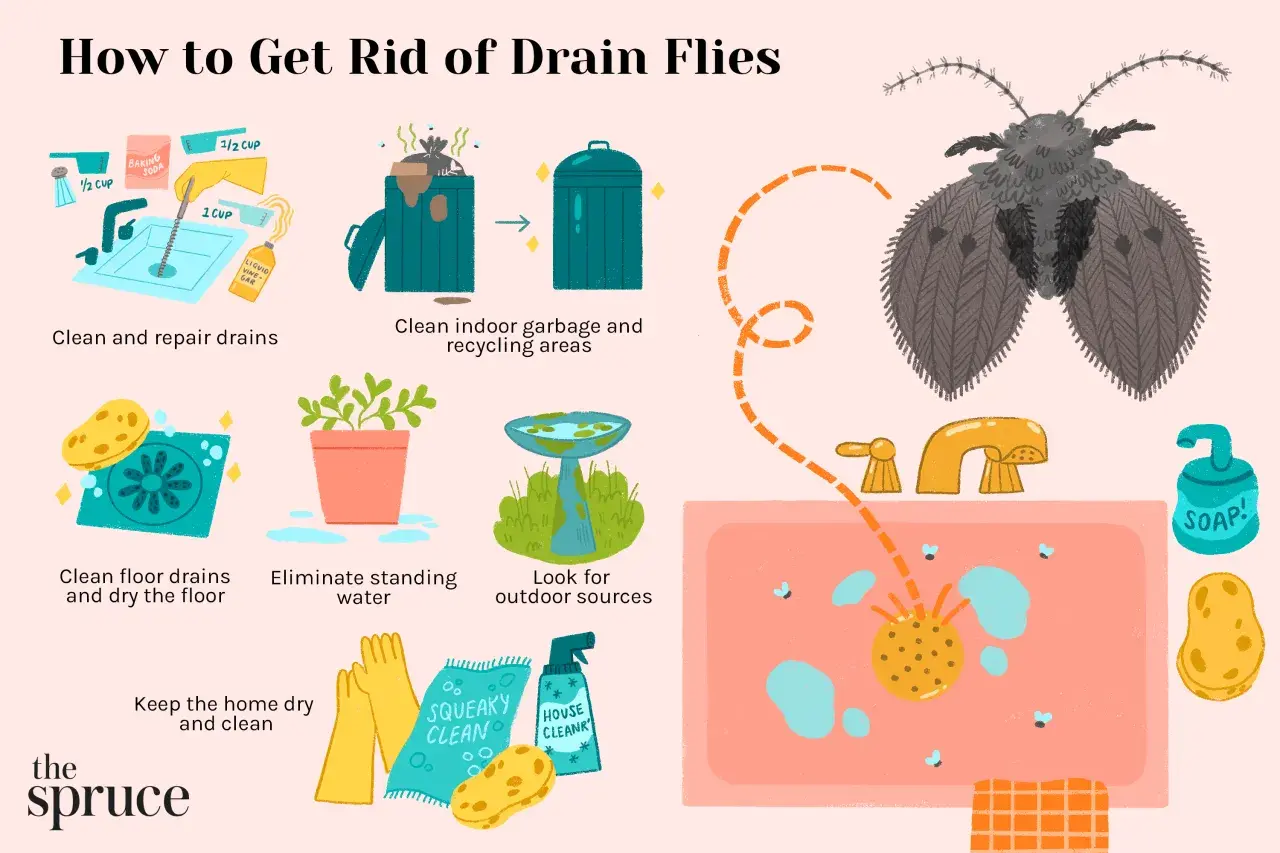
Drain flies are usually a sign that a drain, trap, or nearby wet surface is holding onto organic buildup, not just a random insect problem. This is a practical guide to how to get rid of drain flies without wasting time on fixes that only knock down the adults. I focus on finding the source, cleaning the right fixtures, choosing treatments that actually help, and keeping the problem from coming back.
What matters most if you want them gone for good
- Drain flies breed in the slimy film inside drains, traps, and other damp fixtures.
- The fastest way to find the source is to cover a suspect drain for 24 hours and check where adults collect.
- Scrubbing the drain walls matters more than spraying the flies you can see.
- Expect to repeat the cleaning for at least 3 weeks, because one pass rarely breaks the full life cycle.
- If flies keep coming back from several drains, I treat it as a moisture or plumbing issue, not a one-off nuisance.
What drain flies are feeding on in your bathroom
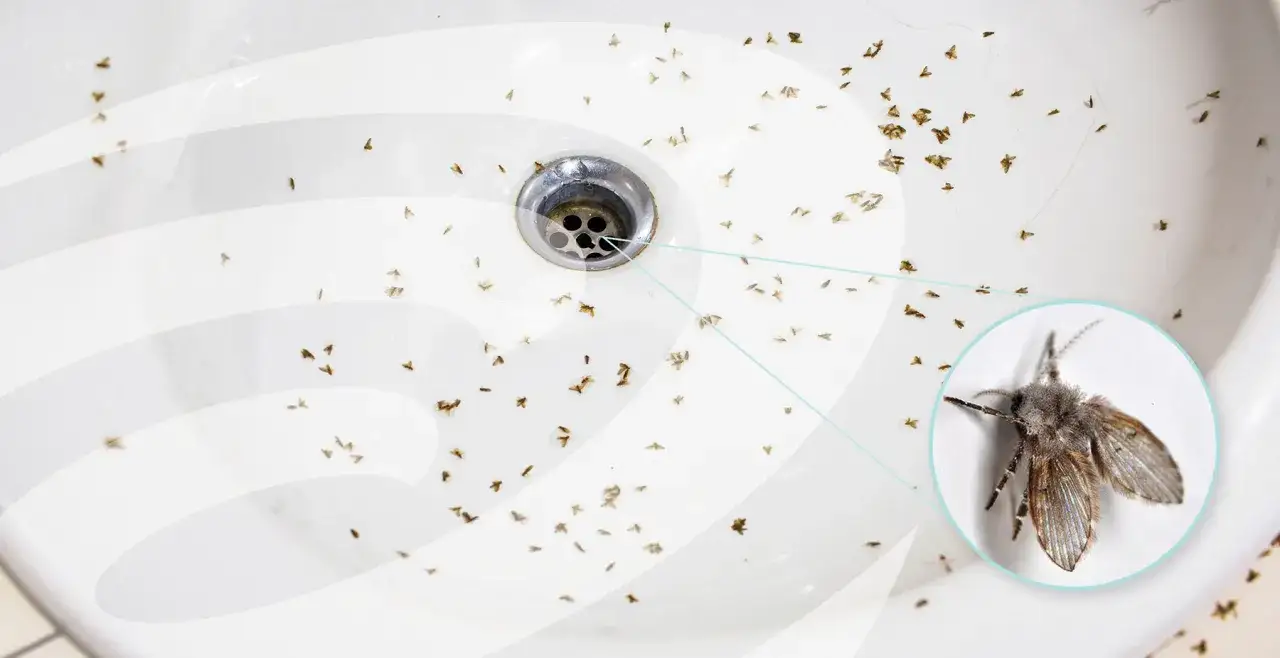
Drain flies, sometimes called moth flies or sewer flies, are tiny insects with fuzzy bodies and a weak flight pattern. In a typical home, they are usually around 2 to 4 mm long, and they are drawn to the wet organic film that forms inside drains, traps, and other dark, damp spaces. That film is the real problem: hair, soap scum, skin cells, and other residue create a breeding layer where eggs and larvae can survive.
In bathrooms, I most often see the issue start in shower drains, sink drains, tub drains, floor drains, and rarely used guest-bath fixtures. A slow leak under a sink or around a shower pan can also keep the area damp enough to support them. Adults may sit on walls, counters, and tile near the source, but the flies you see are usually just the symptom. The breeding site is where the work has to happen, which is why the next step is locating the active drain before I clean anything.
How I find the breeding drain before I clean anything
When there are several drains in play, I do not guess. I test. The simplest method is to cover one suspect drain with clear tape for 24 hours, then check the tape for trapped adults. A clear cup or jar coated inside with petroleum jelly or vegetable oil can also sit over a drain and catch emerging flies. Those are diagnostic tools, not cures, but they save time because they show which fixture is producing the insects.
- Pick the drain you suspect most, usually the one that is least used or slowest to drain.
- Seal the opening with clear tape or place a coated cup over it.
- Leave it in place for 24 hours.
- Check for flies stuck to the tape or trapped inside the container.
- If nothing shows up, move to the next drain and repeat the test.
I also look beyond the obvious sink opening. Overflow holes, floor drains, a shower pan that holds moisture, and any visible leak under a vanity can all support the same problem. If I find adults on walls but nothing obvious in one drain, I assume there may be more than one breeding point. Once the source is identified, the real cleanup can begin.
The cleaning routine that actually breaks the cycle
This is where most quick fixes fall apart. Killing a few adults in the room does not solve the issue if the biofilm stays in the pipe. I treat the drain itself, the stopper or strainer, and any nearby buildup as one system. The goal is to physically remove the organic layer where the eggs and larvae live, then keep doing it long enough to interrupt the full life cycle.
- Remove the stopper, strainer, or grate so the inside of the drain is exposed.
- Scrub the drain walls with a metal pipe brush or stiff drain brush to loosen the slime.
- Use a foaming or enzyme-based drain cleaner if the residue is heavy, and let it dwell according to the label.
- Flush the drain with hot water after scrubbing to carry out loosened debris.
- Repeat the process regularly for at least 3 weeks, which is long enough to cover the normal cycle from larvae to adults.
I like this approach because it targets the part that matters most: the wet organic film. A drain-fly problem can fade for a day or two and then return if the buildup remains, so consistency matters more than force. Once the drain is physically clean, the next question is which methods are actually worth using alongside it, and which ones mostly buy a little time.
What helps, what only trims the population, and what I would skip
Some methods are useful as support. Others sound effective but do not reach the breeding site. I prefer to separate them clearly so the treatment plan stays practical.
| Method | Best use | What it does | Limitation |
|---|---|---|---|
| Pipe brush scrubbing | Most home drains | Removes the slime where eggs and larvae live | Needs access and repetition |
| Foaming or enzyme cleaner | Heavy residue and slow drains | Helps loosen gelatinous buildup | Not a one-pass cure |
| Hot water flush | After scrubbing | Rinses loosened debris farther down the line | Weak if used alone |
| Tape or jar test | Finding the source | Shows which drain is producing adults | Diagnostic only |
| Flying-insect spray | Visible adults on walls | Knocks down some adults in the room | Does not remove the breeding site |
| Pesticides poured down a drain | None | Not a recommended drain treatment | Can be ineffective and risky |
For ordinary bathrooms, I would not start with a pesticide treatment down the drain. In many cases, the stronger move is still the cleaner one: brush, flush, and repeat. For larger building systems or more complicated wastewater setups, professionals may use specialized biological controls; one extension source reports a 79% reduction in emergence in that kind of setting. That is useful to know, but it is not the first-line answer for a standard household sink or shower. Once the active drain is cleaned, the real win is keeping it from becoming a breeding site again.
How I keep them from coming back in kitchens and bathrooms
Prevention is mostly routine, and that is good news because routine is easier than chasing a recurring infestation. I focus on moisture control, regular drain cleaning, and fixing the places where organic buildup keeps reappearing. In a bathroom, that usually means shower drains, sink drains, floor drains, and any area where water sits longer than it should.
- Run water through rarely used guest-bath drains at least once a week.
- Clean sink and shower strainers before residue has time to harden.
- Wipe down standing water around tubs, shower pans, and floor drains.
- Fix slow leaks under vanities and around plumbing connections promptly.
- Keep the room ventilated so humidity does not linger after showers.
- Check overflow holes and other hidden openings during deeper cleanings.
I also pay attention to anything that can hold stagnant water near the bathroom, including mop buckets, storage trays, and plant saucers in adjacent rooms. Drain flies are drawn to damp organic material, so small pockets of neglected moisture can keep the problem alive even when the main drain looks clean. If the same insects keep showing up after the routine above, I assume there is a deeper plumbing or moisture issue hiding behind the walls or under the floor.
The last check I make when the flies keep returning
If the flies come back after 3 weeks of cleaning, I stop treating it like a simple surface problem. At that point, I look for a hidden leak, a partially blocked trap, a floor drain that is rarely flushed, or a drain line that is holding sludge farther down than I can reach from the opening. That is also the point where a plumber can save time, especially if there is an odor, a slow backup, or evidence that multiple fixtures are involved.
The most reliable fix is still the same: remove the biofilm, dry out the area, and keep up the cleaning long enough to outlast the life cycle. If I had to reduce the whole process to one habit, it would be this: clean the drain itself, not just the insects around it, and repeat the work long enough for the breeding cycle to collapse.