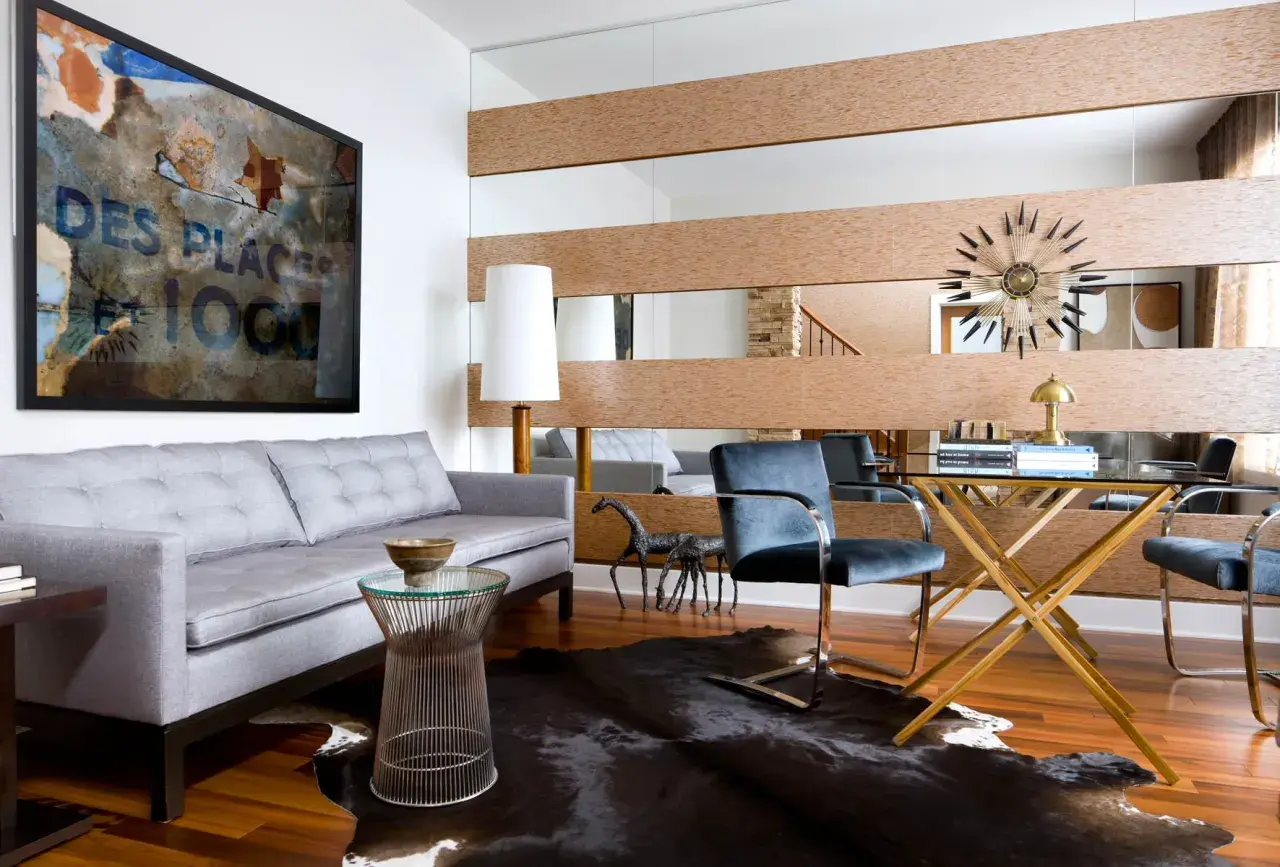
The real answer to how to decorate around a large wall mirror is to treat the mirror as the anchor and let lighting, finishes, and a few well-chosen accents do the work. I usually start by looking at what the mirror reflects, because that image matters as much as the objects beside it. In a bathroom, the strongest wall treatments are the ones that improve scale, brightness, and daily function at the same time.
The quickest way to make a large mirror wall feel intentional
- Let the mirror lead. If it already dominates the wall, keep extra decor edited and purposeful.
- Use fixtures as framing devices. Sconces, a light bar, or integrated LED usually do more for the wall than extra accessories.
- Keep one metal family in charge. Repeating the same finish across the faucet, lighting, and hardware creates calm.
- Leave breathing room. Crowded edges make a large mirror look smaller, not more styled.
- Choose bathroom-safe materials. Ceramic, glass, sealed stone, metal, and treated wood hold up better near moisture.
Start by deciding what the mirror should do
A big mirror can disappear into the architecture or act like the room’s main feature. I decide that first, because everything else depends on it. Designers quoted by Homes & Gardens often keep a bathroom mirror at roughly 70 to 90 percent of the vanity width, which is a useful proportion when you want the wall to feel calm rather than overworked.If the mirror is frameless and nearly wall to wall, I keep the surrounding decor quiet and let the room’s materials do the talking. If it has a frame, I let that frame carry more of the visual weight and echo it with the vanity finish, the faucet, or the light fixture. That simple decision makes the difference between a wall that feels designed and a wall that feels decorated after the fact.
Once the mirror’s job is clear, the next move is lighting, because bathroom fixtures shape both the mood and the usability of the whole wall.
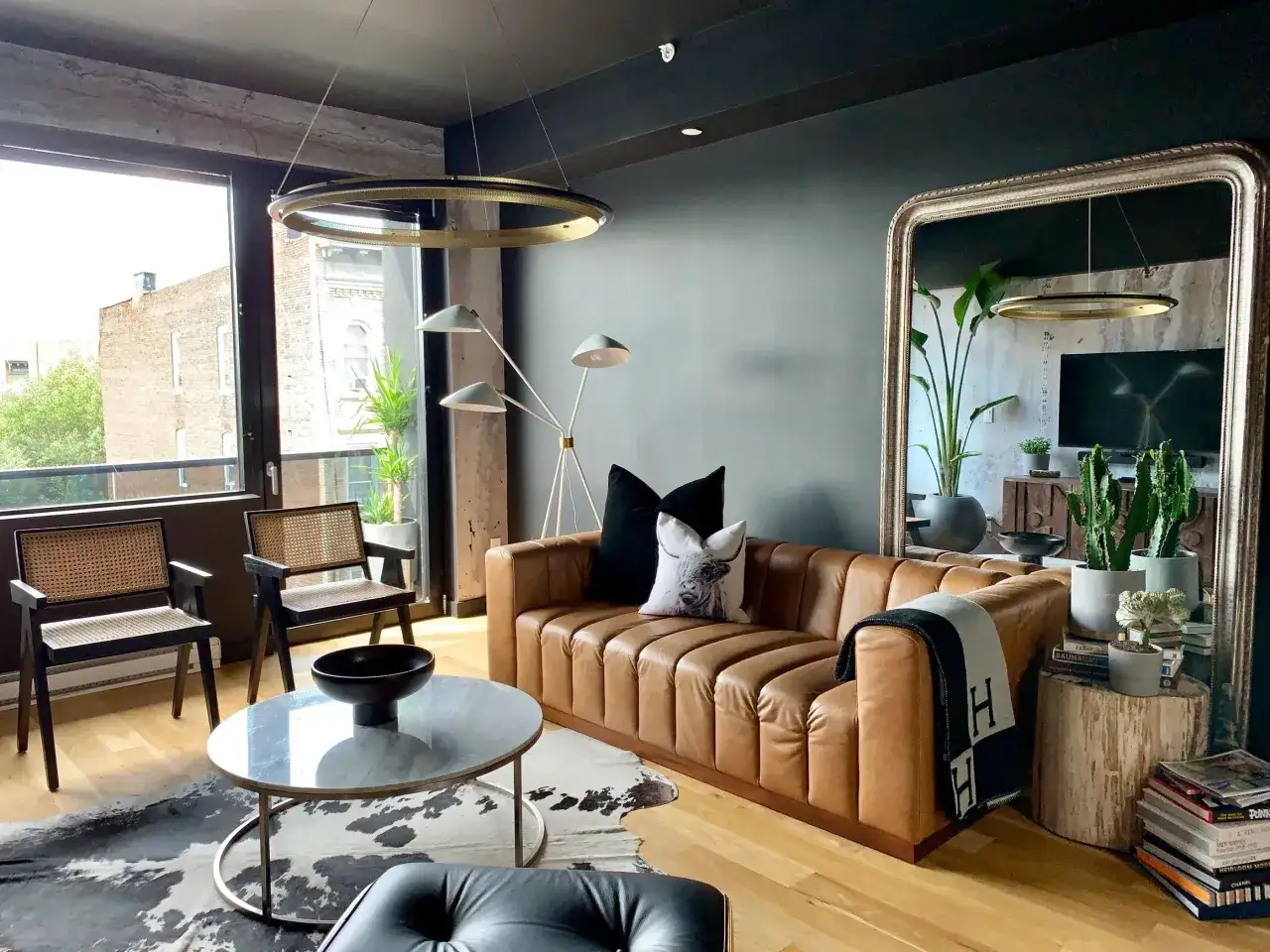
Let the lighting frame the mirror
In a bathroom, lighting usually does more decorating than the accessories do. A pair of sconces creates a frame, a light bar keeps the line clean, and integrated LED lighting makes the mirror feel built in rather than added on. If I had to choose only one element to upgrade around a large mirror, I would almost always start here.
| Lighting option | Best for | Why it works | Watch out for |
|---|---|---|---|
| Side sconces | Vanities with enough wall space on both sides | They visually frame the mirror and reduce facial shadows | Keep them at eye level and close enough to relate to the mirror |
| Light bar above the mirror | Wide mirrors or tight walls | It keeps the wall line clean and feels efficient | Choose a bar that is long enough to match the vanity scale |
| Integrated LED | Minimal, modern baths or remodels with limited wall space | It creates an uncluttered, built-in look | Pair it with warmer materials so the room does not feel clinical |
Visual Comfort recommends placing side sconces around 60 to 65 inches from the floor to the center of the fixture, which is a practical eye-level target for most adults. On a typical vanity, I also like to keep paired sconces visually balanced rather than far apart just for the sake of filling space. A mirror that is wider than 48 inches usually looks better with a stronger light bar or a carefully scaled pair of fixtures than with tiny sconces floating on the wall.
The rule I follow is simple: if the fixture looks too small against the mirror, the whole wall loses authority. When the light is right, the rest of the decor can stay quiet and still feel finished.
Decorate the vanity, then the walls
The cleanest bathrooms usually keep most of the styling on the counter, not around the edge of the mirror itself. I like to start with one tray to corral the everyday items and then add one or two pieces that are useful enough to earn their place. In practice, that usually means three visible objects or fewer on the vanity surface.
- A ceramic soap dispenser that repeats the room’s main finish or color story.
- A small tumbler or toothbrush cup in glass, stone, or matte ceramic.
- A narrow vase with greenery or branches if the room gets natural light.
- A folded hand towel in a textured cotton or linen weave.
- A lidded container for cotton rounds, swabs, or other daily essentials.
If there is wall space beside the mirror, a slim shelf or a small framed print can work, but only when it does not fight the reflection. I avoid paper art in splash-prone areas unless it is properly protected, and I skip anything that cannot handle humidity. Bathrooms are not forgiving about weak materials, so the safest decor is usually ceramic, sealed wood, powder-coated metal, or glass.
Think of this as layering from the counter outward. Once the vanity feels intentional, the mirror does not need to be decorated aggressively to look complete.
Use symmetry when you want calm and asymmetry when you want warmth
Symmetry is the easiest way to make a large mirror feel expensive, especially in a double vanity or in a bathroom with strong tile patterns. It creates order fast. Asymmetry works better when the room feels stiff or too formal, because one deliberate offset element can soften the wall without making it messy.
- Choose symmetry for double vanities, classic baths, and walls with busy tile or veining.
- Choose asymmetry for powder rooms, narrow baths, or schemes that need a little softness.
- Balance visual weight, not identical objects. A vase on one side can be balanced by a wall hook, a folded towel, or a small plant on the other.
- Repeat the shape language. If the mirror is a strong rectangle, soften the room with round accessories or curved lighting elsewhere.
The mistake I see most often is forcing symmetry when the wall does not have room for it. That usually leads to a crowded mirror, too many tiny pieces, and no clear focal point. If the room already feels busy, mirror decor should calm it down, not add another layer of noise.
Once the composition is settled, the next step is making sure the finishes speak the same language.
Choose finishes that belong in the same room
This is where bathroom fixtures either pull the wall together or make it feel random. I usually choose one dominant metal for the faucet, lights, and mirror frame, then one secondary texture for warmth. Two finish families are usually enough in a smaller bathroom; three often starts to look accidental.
- Chrome or polished nickel reads crisp and clean, especially with white tile and glass.
- Brushed brass or warm bronze adds softness and works well with marble, oak, or creamy paint.
- Matte black gives the wall stronger outlines and feels sharp with pale surfaces.
- Wood, linen, ceramic, or stone helps keep the room from feeling cold or overly polished.
I also like to repeat the main metal at least twice so the eye reads a pattern instead of a single isolated accent. A brushed brass faucet with a brushed brass light fixture and a brass-framed mirror makes more sense than one brass piece surrounded by three unrelated finishes. If the vanity hardware is already strong, keep the mirror frame quieter and let one material lead.
That kind of restraint is usually what makes the wall feel finished rather than staged.
Avoid the mistakes that make a big mirror look accidental
Large mirrors are generous, but they also expose weak choices. If the decor is too small, too close, or too fussy, the mirror becomes a problem instead of a feature. I remove anything that competes with the reflection or interrupts the mirror’s clean edge.
- Crowding the edges with lots of tiny objects makes the mirror feel smaller.
- Hanging art too close to the mirror can create a cramped, improvised look.
- Using undersized sconces leaves the wall looking underlit and under-scaled.
- Mixing too many finishes without a clear hierarchy weakens the whole composition.
- Ignoring the reflection means you may be styling clutter instead of the wall.
- Choosing fragile materials in a humid room leads to warping, spotting, or rust.
If a detail only looks good from a distance but gets in the way of morning routines, I take it out. Bathrooms reward editing. A large mirror should make the room feel brighter and more composed, not more fragile to use.
That is why I usually end with one clear setup that does the job without asking the room to do too much.
The setup I reach for in most bathrooms
When the wall still feels unfinished, I use a formula that is simple enough to live with every day. For a standard vanity, I like a centered mirror, two sconces at eye level, a tray, one soap dispenser, and one towel with texture. For a wider mirror with little side wall, I switch to a strong light bar above the glass and keep the counter decor minimal.
- Clean and classic means a framed mirror, balanced sconces, and one or two quiet countertop pieces.
- Warm and layered means a soft metal finish, a small plant, and one wood or stone accent.
- Minimal and modern means integrated lighting, fewer objects, and sharper lines throughout the vanity wall.
My rule is the same in every version: let the mirror lead, let the fixtures frame it, and let decor fill only the space the eye still needs. When those three jobs are clear, the wall feels finished without feeling crowded.