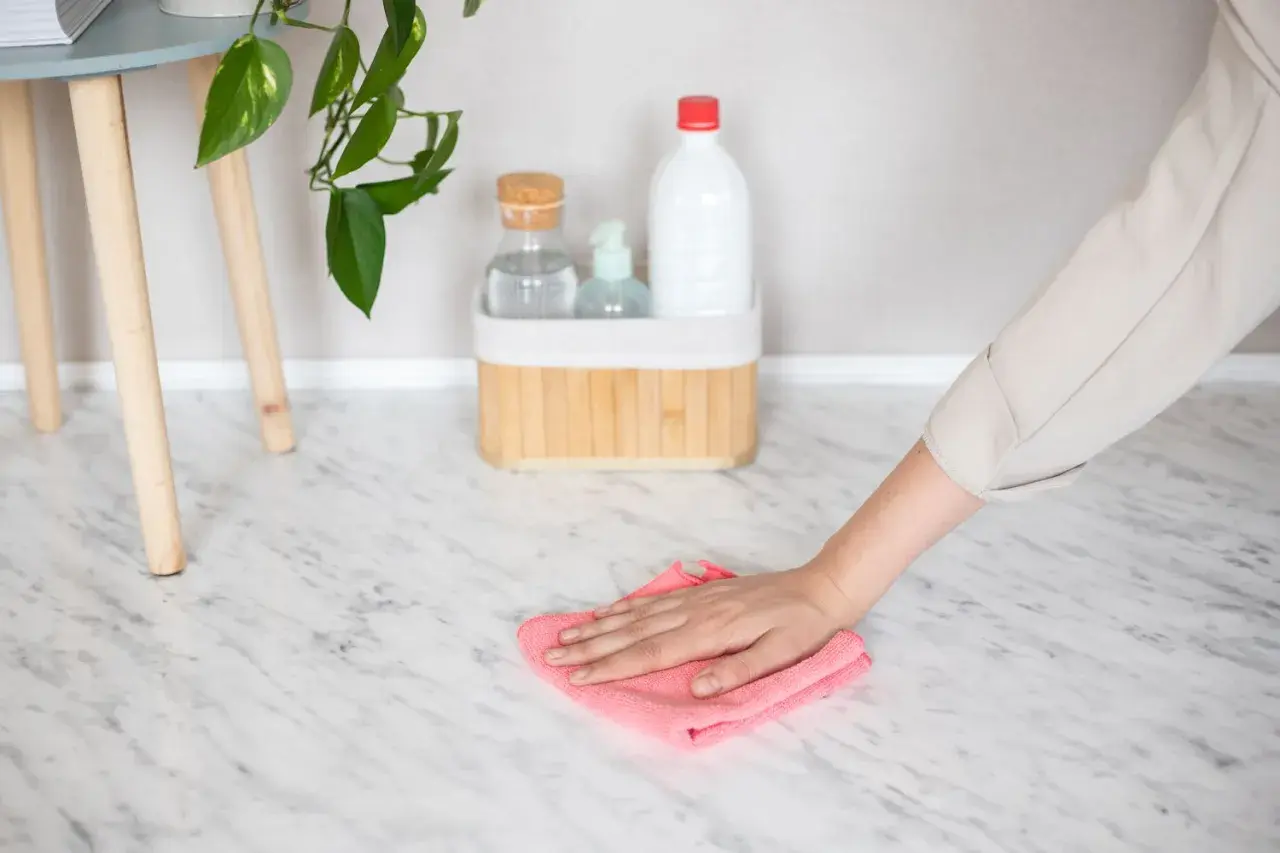
The safest marble routine is gentle, fast, and consistent
- Dry dust mop or vacuum first so grit does not act like sandpaper.
- Use a pH-neutral stone cleaner, stone soap, or a very mild dish soap solution with warm water.
- Rinse thoroughly and dry the floor right away to prevent haze and streaks.
- Blot spills immediately, especially wine, citrus, vinegar, bleach, and bathroom cleaners.
- Check whether the stone still beads water, because sealing helps protect against absorption but does not stop etching.
Choose cleaners and tools that will not attack the stone
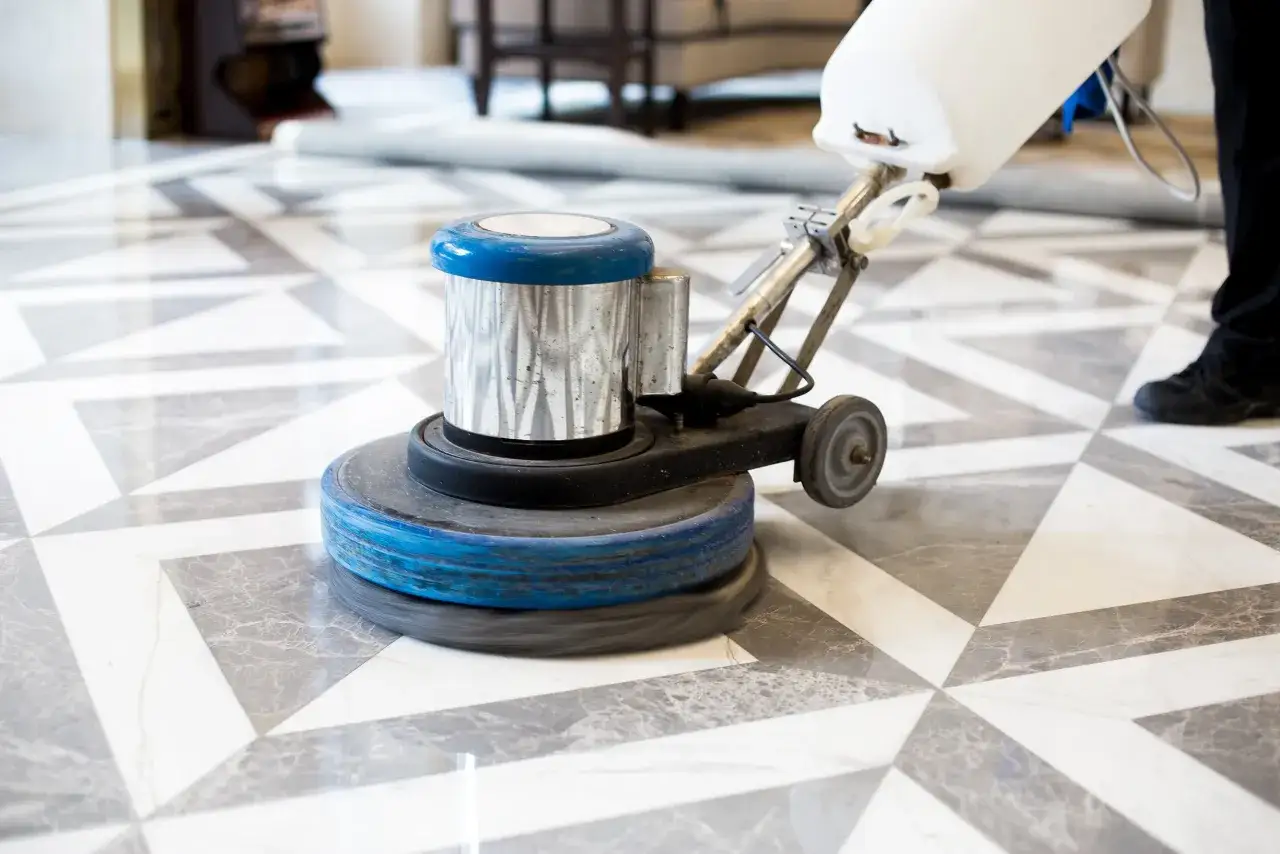
Marble is calcium carbonate, which means it reacts badly to acids. That is why I start with the least aggressive option that will still do the job: a neutral cleaner, a soft mop, and clean rinse water. The Natural Stone Institute recommends neutral cleaner, stone soap, or a mild liquid dishwashing detergent with warm water, and that is the right baseline for floors that need regular care rather than rescue work.
pH-neutral means the cleaner is close to the middle of the pH scale, so it is not trying to dissolve the stone while it removes dirt. That matters more on polished marble, where even a small amount of residue or abrasion shows up quickly.
| Safe for routine care | Why it works | Skip it or use with caution |
|---|---|---|
| pH-neutral stone cleaner | Removes everyday soil without stripping the finish | Do not overuse it; follow the label dilution |
| Mild dish soap and warm water | Works on light grime and kitchen film | Too much soap leaves a cloudy residue |
| Microfiber mop or clean rag mop | Lifts grit instead of grinding it in | A dirty mop just redistributes soil |
| Clean rinse water | Helps remove cleaner film and streaks | Dirty rinse water puts the soil back on the floor |
| Vinegar, lemon, bleach, ammonia, abrasive powders, steel wool | Not recommended for marble | These can etch, dull, or discolor the surface |
For most homes, that table is the whole game: use the mildest workable cleaner, keep the tools soft, and rinse more than you think you need to. Once the product choice is right, the daily routine becomes much easier to get right.
Use a routine that keeps grit from grinding into the finish
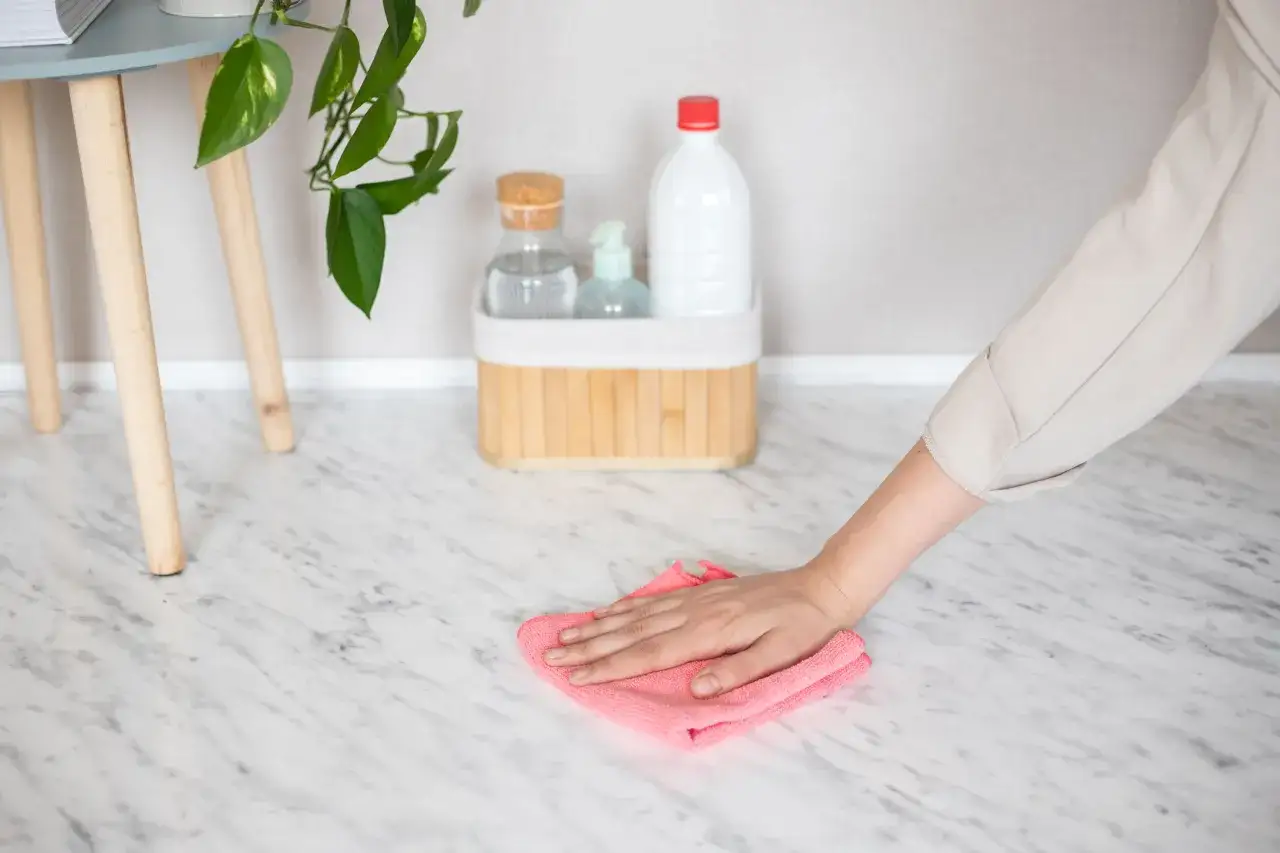
Marble does not usually fail because someone used one bad cleaner once. It gets tired because dust, grit, and foot traffic stay on the surface long enough to scratch it. I would rather see a marble floor dust-mopped every day than aggressively scrubbed once a week.
- Remove loose debris first with a dry microfiber dust mop or a vacuum set for hard floors.
- Work in small sections so grit does not get dragged from one area to another.
- Wet clean only after the loose dirt is gone, and keep the mop barely damp rather than soaking wet.
- Change rinse water often. On larger floors, I would change it after roughly every 100 square feet so dirty water does not travel back across the stone.
- Dry the floor with a clean microfiber cloth or dry mop as soon as you finish.
That last step matters more than many people expect. A marble floor can look clean and still end up streaked if you leave a film of cleaner or a thin layer of hard-water minerals behind. In bathrooms and kitchens, I would treat drying as part of the cleaning, not as an optional finish.
If the floor already feels sticky or looks hazy, the answer is usually a better rinse, not a harsher chemical. That leads directly to the difference between a true deep clean and a surface that has simply been overwashed.
Deep-clean the floor without leaving streaks or haze
Deep cleaning marble is really just careful cleaning done with more patience. I would not flood the floor or let a product sit longer than the label allows. Instead, I would work in manageable sections, keep the mop lightly damp, and rinse until the surface feels clean underfoot.
- Dust mop or vacuum the floor first.
- Mix the cleaner exactly as directed. Stronger is not better on marble.
- Wipe the floor with a damp microfiber mop or rag mop, lifting the soil instead of scrubbing hard.
- Rinse with clean water to remove residue.
- Dry and buff the surface so it does not dry down with spots or film.
If the floor looks dull after washing, I would suspect soap buildup before I suspect damage. Too much detergent is one of the most common reasons polished marble turns cloudy, especially in bathrooms where people want a quick shine and accidentally use far more product than the stone can tolerate.
For stubborn grime around baseboards or in grout lines, a soft nylon brush is usually enough. I would still avoid abrasive pads, because those fix one problem by creating a much harder one: micro-scratches that catch dirt and make the floor lose its crisp reflection.
Treat stains, etching, and dull spots as different problems
This is where many marble floors get damaged by good intentions. A stain, an etch mark, and simple grime can all look like a gray or white spot from a few feet away, but they need different fixes. If you treat them all the same, you often make the surface worse.
| Problem | What it usually looks like | Best first move |
|---|---|---|
| Loose dirt or film | General dullness, streaks, or a slightly sticky feel | Dust mop, then clean with a neutral solution and rinse well |
| Stain | Colored mark from oil, wine, coffee, makeup, or mud | Blot immediately; if it has set, use a stone-safe stain treatment or call a pro |
| Etching | Matte, lighter, or cloudy spot where acid touched the stone | Do not scrub harder; use polishing methods or professional honing |
| Water spot or mineral haze | Milky film after mopping or shower use | Rinse and dry thoroughly before assuming the stone is damaged |
Etching is the one that surprises people most. It is not dirt sitting on top of the marble; it is a chemical reaction that changes the surface. Vinegar, lemon juice, strong bathroom sprays, and some disinfectants can all leave that dull patch behind, and no amount of elbow grease will erase chemical damage.
For oil-based stains, a poultice may help draw the contaminant out of the stone, but I would keep expectations realistic. If the stain is old, deep, or spread across a high-traffic path, professional stone care is often faster and safer than trying three different home remedies on the same tile.
Once you can tell these problems apart, the maintenance decisions get much simpler. The next question is how to stop the same damage from coming back in the first place.
Seal the marble and protect the traffic lanes
Sealing does not make marble bulletproof, and I think that distinction matters. A sealer slows absorption, which gives you more time to wipe up spills before they sink in, but it does not stop acids from etching the stone and it does not erase scratches from grit.
In practice, I would check the floor’s absorption periodically with a simple water-drop test. If water no longer beads or seems to darken the stone quickly, the sealer may be wearing thin. Busy kitchens, bathroom entries, and hallways usually need more attention than a low-traffic guest bath.
- Place mats at exterior doors so sand and grit do not reach the marble.
- Use runners in the busiest walk paths, especially where shoes turn and stop.
- Add felt pads under furniture legs so chairs do not drag across the finish.
- Wipe up spills quickly, even if the floor is sealed.
- Keep a marble-safe cleaner on hand so no one reaches for a random all-purpose spray.
That last habit sounds minor, but it prevents a lot of accidental damage. In homes with multiple bathrooms or a shared cleaning crew, the floor often gets hurt by convenience cleaning, not by neglect.
Keep the finish intact with a few habits that actually matter
If I were maintaining marble flooring in a real home, I would focus on four habits: remove grit early, clean lightly, dry thoroughly, and keep acidic products away from the stone. Those four steps do more to preserve the finish than any “miracle” product on a store shelf.
If the floor still looks tired after proper cleaning, the issue may be wear rather than dirt. Light haze can sometimes be handled with better rinsing and drying, but widespread dullness, deep scratches, or repeated etching usually means the surface needs honing or polishing from a stone professional. That is the point where more cleaning stops helping and restoration becomes the smarter move.
For most homeowners, marble care is less about effort and more about restraint. Keep the routine gentle, stay ahead of grit, and treat spills as urgent instead of casual, and the floor will keep the clean, reflective look that made you want marble in the first place.