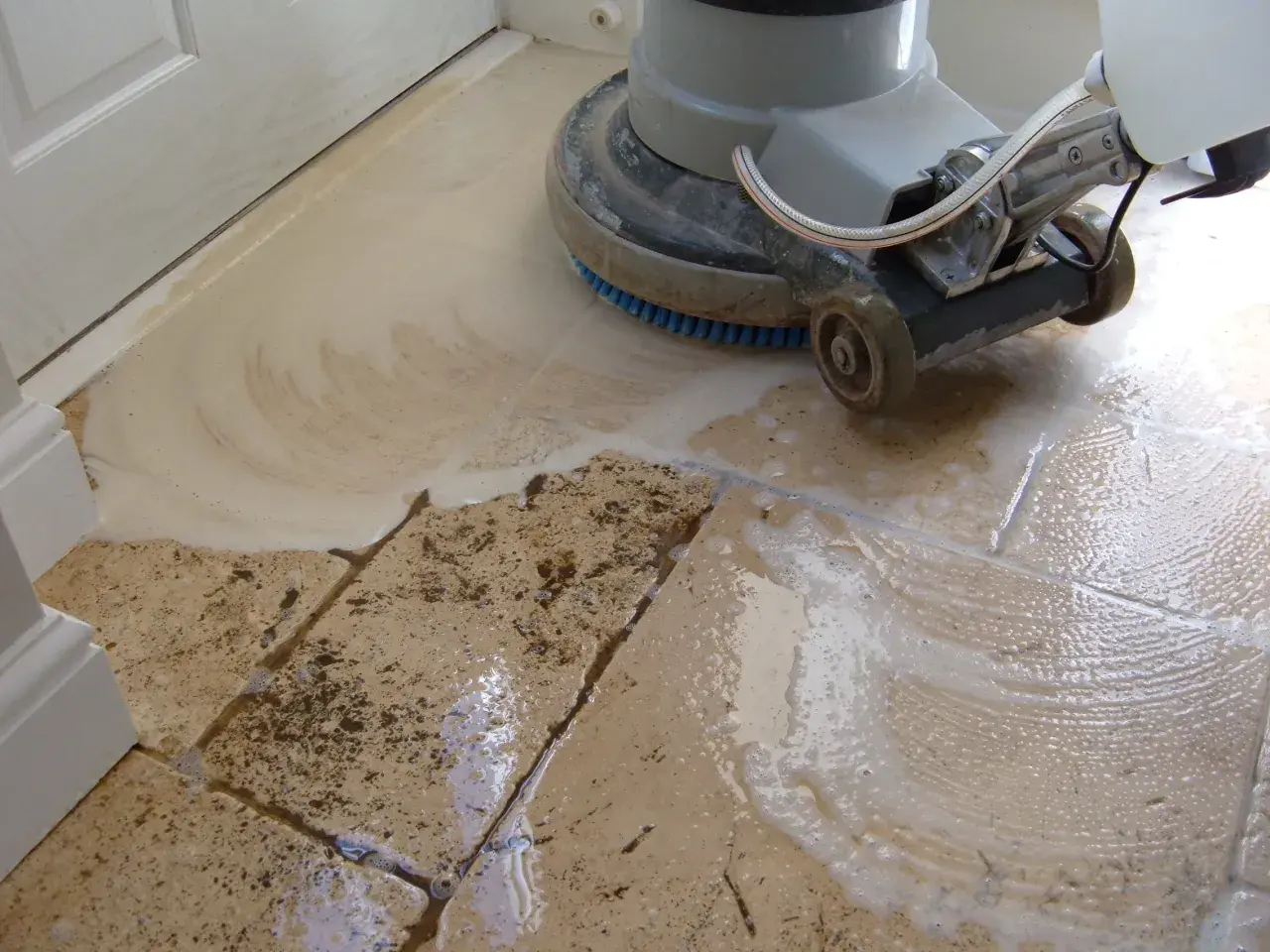
Travertine looks refined in a bathroom, but it also reacts quickly to the wrong cleaner. I walk through the safest way to clean it, remove common buildup, and decide when sealing or restoration matters more than scrubbing. The answer to how to clean travertine tile is usually gentler than most people expect, because the goal is to protect the stone while keeping it bright.
The safest travertine routine is gentle, dry, and consistent
- Use a pH-neutral stone cleaner or a few drops of mild dish soap in warm water.
- Clean with microfiber, not abrasive pads, and never flood the surface.
- Dry the tile after mopping so water spots and haze do not linger.
- Avoid vinegar, lemon, bleach-heavy sprays, and gritty powders because travertine is acid-sensitive.
- Inspect the sealer at least once a year in bathrooms, especially showers and other wet zones.
Why travertine needs a gentler cleaning approach
Travertine is a calcareous stone, which means it is calcium-carbonate based and reacts badly to acids. That matters because a lot of common bathroom cleaners are built for ceramic, glass, or fiberglass, not for natural stone. The Natural Stone Institute recommends a neutral cleaner, stone soap, or mild dishwashing detergent with warm water, and that guidance is the right starting point for most homes.
I treat travertine as a stone that rewards light, regular care. If you wait until the floor looks dull and then attack it with a strong cleaner, you usually do more harm than good. The cleaner the routine, the less likely you are to create etching, residue, or a cloudy finish that is harder to fix later.
Once that basic chemistry is clear, the real question becomes how to build a routine that is safe enough for everyday use and strong enough to handle real bathroom messes.
The routine that keeps travertine clean
I start with the least aggressive method every time. A dry pass removes grit, a damp pass lifts soil, and a final dry wipe prevents water marks from setting into the stone. That sequence sounds almost too simple, but on travertine it works better than overcleaning.
- Vacuum or dust first so sand, hair, and grit do not scratch the surface.
- Mix warm water with a pH-neutral stone cleaner, or use only a few drops of mild dish soap if the manufacturer allows it.
- Wring out a microfiber mop or cloth until it is damp, not wet.
- Work in small sections so the cleaner does not sit on the stone for long.
- Rinse the area with clean water if you used soap, then dry it with a soft towel or dry microfiber pad.
I also avoid soaking the floor. Travertine pits, grout joints, and cut edges can hold moisture longer than you think, which is one reason a bathroom floor can look clean at noon and hazy by evening if it was overwashed. If the cleaning water starts looking cloudy, I change it instead of spreading the dirt around.
That routine covers most day-to-day care, but the finish on the stone changes how much attention each surface actually needs.
How finish and fill level change the method
Not all travertine behaves the same. A polished floor reflects more light and tends to show streaks, water spots, and etching sooner. A honed finish has a softer matte look and is usually the easiest finish to live with in a bathroom. Tumbled or textured travertine, on the other hand, can trap residue in pits and low spots, so it needs more attention around grout lines and edges.
| Surface type | What it changes | How I clean it |
|---|---|---|
| Polished | Shows haze, streaks, and etching more clearly | Use microfiber only and dry it right away |
| Honed | Most common in bathrooms and easier to maintain | Damp mop with a neutral cleaner and rinse well |
| Tumbled or textured | Pits and grooves trap residue and soap film | Use a soft nylon brush on grout and textured spots |
| Filled travertine | Easier to wipe clean because many voids are closed | Keep the cleaner diluted and avoid grinding dirt into the fill |
| Unfilled travertine | Natural holes collect debris and moisture | Clean gently, rinse fully, and dry the cavities |
If you know whether your stone is polished, honed, filled, or unfilled, it becomes much easier to choose the right pressure and the right tool. The finish does not change the chemistry of the stone, but it absolutely changes how visible dirt and damage will be.
That leads directly to the stains and bathroom buildup that usually frustrate homeowners the most.
How to handle spills, soap scum, and hard water buildup
Bathroom travertine usually gets dirty in predictable ways: soap residue, hard-water haze, makeup or skincare spills, and grime that settles near the shower or vanity. I do not treat all of those the same, because a stain, a film, and an etched mark are three different problems.
| Problem | First move | What I avoid |
|---|---|---|
| Soap scum | Stone-safe cleaner, short dwell time, microfiber wipe | Acidic bathroom sprays |
| Hard-water film | Dry the stone after each shower; test a stone-safe remover if needed | Vinegar or lemon |
| Organic spills | Blot immediately and rinse with clean water | Scrubbing with powders |
| Mildew on grout | Improve ventilation, then clean with a stone-safe product and a soft brush | Harsh bleach routines on the stone face |
If a spill is fresh, speed matters more than force. Blot it, do not grind it in, and dry the area before it has time to soak into the pores or grout. If the mark stays after cleaning, I pause before I escalate, because the next step depends on whether the problem is staining or etching.
What not to use on travertine tile
As the Natural Stone Institute notes, travertine is a type of limestone, so acids such as vinegar or lemon can etch it. That makes a lot of everyday bathroom products a poor fit, even when they smell clean or promise fast results. If a product is built for ceramic tile, glass, or general bathroom grime, I do not assume it is safe for natural stone.
| Product or habit | Why it is a problem |
|---|---|
| Vinegar, lemon, and other acidic cleaners | They can dull or etch the surface of calcareous stone |
| Abrasive powders, cream cleansers, and scouring pads | They can scratch or burnish the finish |
| Strong all-purpose sprays not labeled for natural stone | They may leave residue or interfere with the sealer |
| Overly soapy wash water | It can leave a film and make the tile look cloudy |
I also keep the rule simple: if a cleaner needs to be scrubbed hard to work, it is probably too aggressive for travertine. The more you lean on friction and chemistry, the more likely you are to change the stone instead of cleaning it.
That is why sealing and grout maintenance matter so much, especially in a wet room where water is constantly trying to get into the surface.
Sealing and grout care that slow down future messes
Travertine is porous, so a penetrating sealer helps slow down absorption, but it does not make the tile waterproof. I check bathroom stone by placing a few drops of water on a clean, dry area. If the water darkens the stone quickly instead of beading for a bit, the sealer is probably wearing out.
I prefer penetrating or impregnating sealers for routine travertine care because they protect the pores without changing the look as much as surface coatings can. The Natural Stone Institute also warns that topical sealers can alter texture and finish, which is the opposite of what most homeowners want on a natural stone floor or shower.
| Sealer type | How it behaves | My take |
|---|---|---|
| Penetrating or impregnating | Sits below the surface and helps repel spills | Usually the best fit for travertine |
| Topical | Sits on the surface and can change the appearance | I avoid it unless the manufacturer specifically recommends it |
Grout deserves just as much attention as the stone. Dirty grout lines make a clean floor look tired, and in a bathroom they often pick up moisture before the tile does. I would seal grout only after it has fully cured, then recheck it during yearly maintenance or sooner if the shower gets heavy use.
When the stone still looks dull after cleaning and sealing, the next question is whether the problem is dirt at all.
When cleaning is not enough anymore
Some marks on travertine are not stains. If a spot looks lighter, chalky, or oddly matte compared with the rest of the tile, that is often etching. Etching is surface damage caused by acid, not a layer of dirt that can be wiped away. More cleaning usually makes it worse, not better.
- If the mark is dull but clean, think etching rather than staining.
- If the surface feels rough in one spot, the finish may need honing.
- If the pits are packed with debris, the stone may need a deeper restoration clean.
- If grout keeps cracking, shrinking, or darkening, the issue may be moisture movement rather than surface dirt.
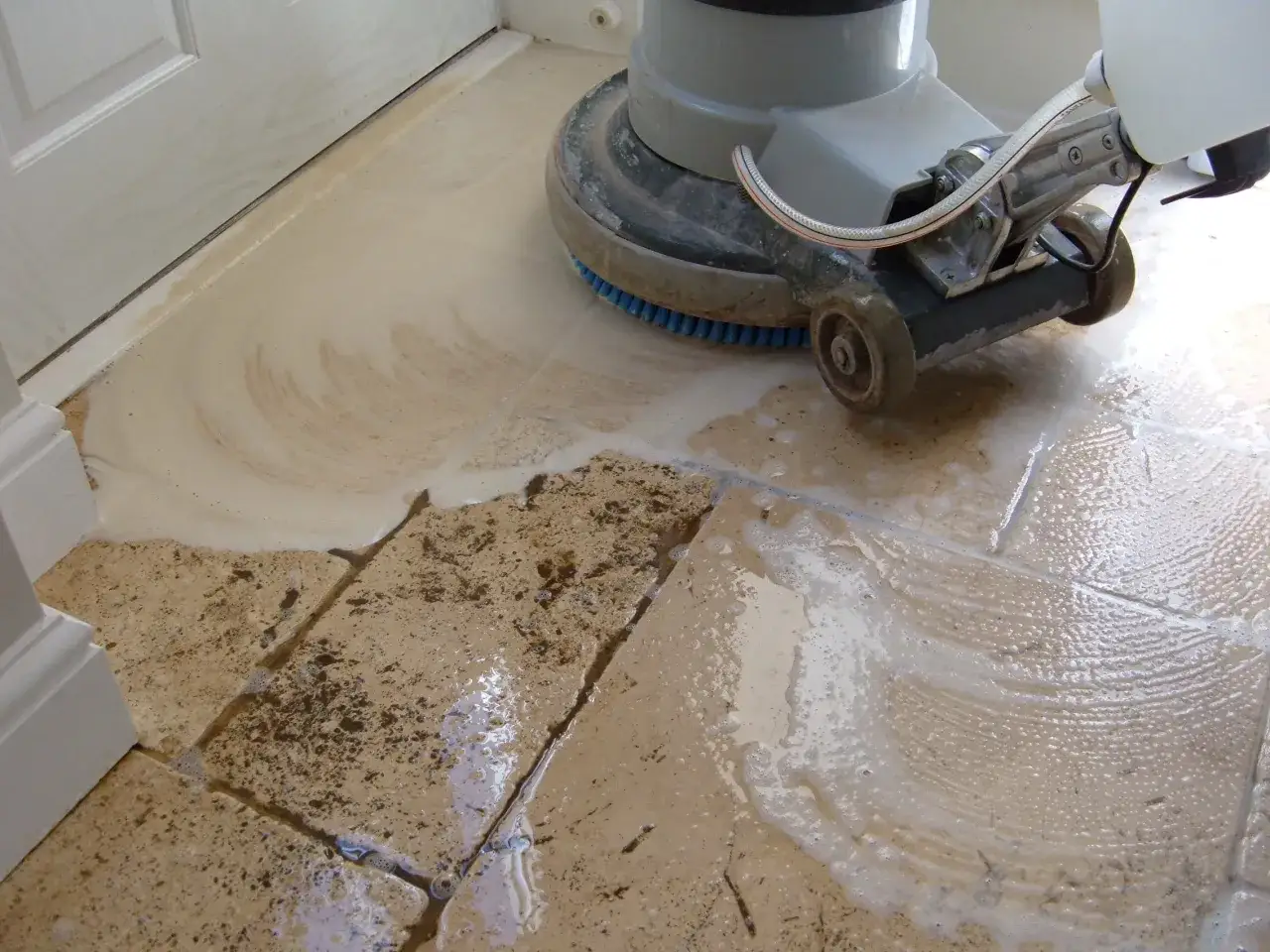
At that point, I stop trying to force a result with stronger cleaners and start thinking about restoration. Honing and polishing can bring back a more even look, but those are mechanical fixes, not cleaning shortcuts. That distinction saves a lot of wasted effort and prevents the common mistake of scrubbing etching until the surrounding area starts to look uneven too.
The maintenance routine I would use in a busy bathroom
If I were maintaining travertine in a real bathroom, I would keep the routine short and repeatable. The stone does not need drama; it needs consistency. A few small habits done often will do more for appearance than one aggressive cleaning day every few months.
- After showers, wipe splash zones and squeegee standing water.
- Once a week, remove grit, then mop with a damp microfiber pad and a neutral cleaner.
- Once a month, check grout, corners, and the area around the tub or shower curb.
- Once a year, test the sealer on a small dry section and reseal if water no longer beads.
- Any time a spill happens, blot first and clean second.
That rhythm keeps travertine looking calm instead of cloudy, and it works especially well in bathrooms where moisture is constant. In my experience, the stone rewards patience more than force, which is exactly why the gentler approach holds up so well over time.