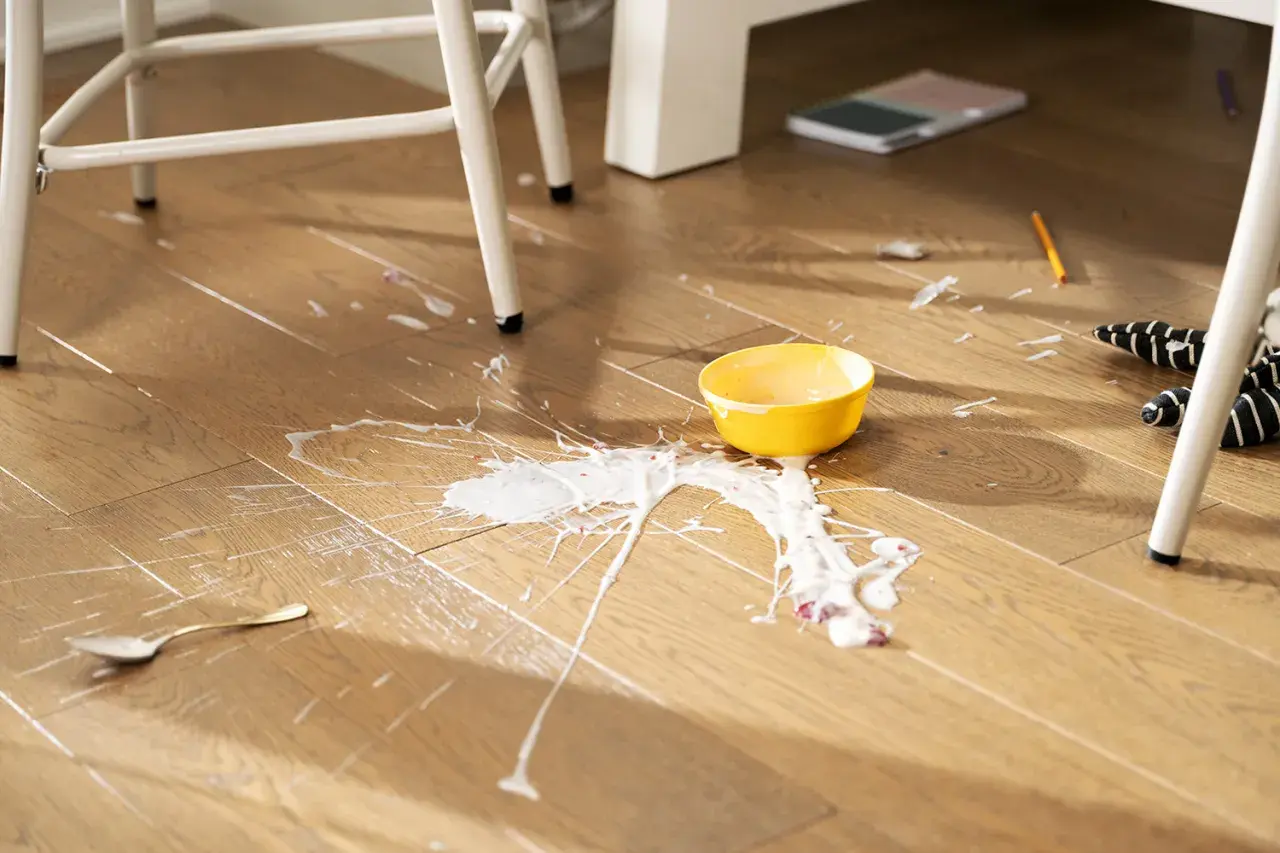
Laminate looks easy to live with until water, grit, and the wrong cleaner start leaving dull patches, streaks, or swollen edges. Knowing how to clean laminate floors without damaging the wear layer comes down to a short routine: remove dry debris first, use only a lightly damp mop, and choose products that rinse clean. That approach keeps the floor looking newer for longer, whether it sits in a busy kitchen, a hallway, or a bathroom-adjacent space.
The basics that keep laminate clean without risking damage
- Start dry every time; grit is what scratches the finish.
- Use a microfiber mop or a well-wrung damp mop, never a soaking one.
- Choose a cleaner made for laminate or a residue-free hard-surface formula.
- Wipe spills immediately, especially near sinks, tubs, and exterior doors.
- Avoid steam, wax, polish, abrasive pads, and puddles of standing water.
- If boards are swollen or lifted, the issue is damage, not dirt.
A safe cleaning routine for laminate floors
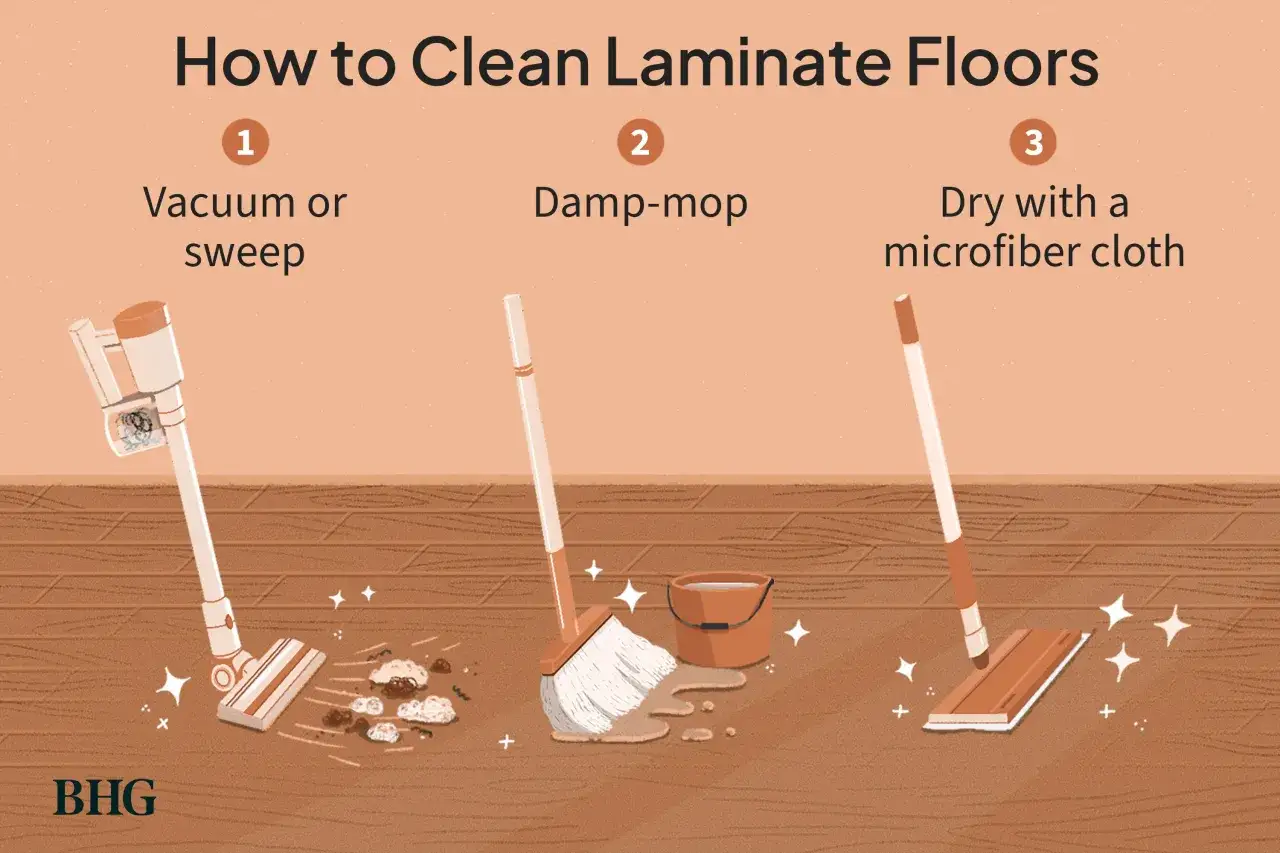
I always start with the part people want to skip: dry debris. Dust, sand, and crumbs are what scuff the wear layer, so vacuuming or dust-mopping first makes every other step safer.
- Use a vacuum with the beater bar off or a soft-bristle broom to pick up grit.
- Lightly mist a microfiber mop or cloth with plain water or a laminate-safe cleaner, following the label.
- Mop in the direction of the planks and work in small sections so moisture never has time to sit.
- Dry any visible dampness with a clean microfiber cloth before moving on.
For most homes, a weekly damp clean is enough, with dry dust control in between. In a kitchen, mudroom, or bathroom-adjacent hallway, I tighten that up to every few days because splashes and tracked-in grit build faster there; in a low-traffic bedroom or office, every 2 to 4 weeks is usually enough. Once that rhythm is in place, the next decision is simple: use tools and cleaners that leave no residue behind.
What belongs on laminate and what does not
The safest products are the boring ones. Laminate does best with tools that lift dirt without flooding the floor or leaving a film that catches new dust.
| Item | Use it? | Why it matters |
|---|---|---|
| Microfiber mop or cloth | Yes | It grabs dust and uses very little water. |
| Vacuum with a hard-floor setting | Yes | Good for daily grit, pet hair, and crumbs. |
| Laminate-safe or residue-free cleaner | Yes | It cleans without building up a cloudy film. |
| Steam mop | No | Heat and moisture can force water into seams unless the manufacturer specifically allows it. |
| Soaking wet mop or flood cleaning | No | Too much water can swell boards and damage edges. |
| Wax, polish, or oil soap | No | They leave buildup and can make the surface look dull over time. |
| Abrasive pads, steel wool, or scouring powders | No | They can scratch the wear layer. |
| Bleach-heavy or ammonia-based bathroom cleaner left on the floor | No | Strong chemicals can discolor or haze the finish. |
| Vinegar | Only with caution | Some floors tolerate it, but I treat it as a maybe, not a default. |
If a cleaner promises shine, polish, or deep gloss, I usually pass. Laminate should look clean and even, not slick or coated. From there, the trickiest jobs are the spots that appear between cleanings, and those deserve their own approach.
Handling spills, scuffs, and sticky spots before they set
Speed matters more than strength. A fresh spill is easy; a spill that sits for hours can work into seams, especially around sinks, toilets, or exterior doors.
Fresh spills
Blot the liquid with a dry microfiber cloth first. If a trace remains, follow with a barely damp cloth and dry the area immediately. I never rub a wet spill in circles because that spreads the mess and pushes moisture wider than it needs to go.
Scuffs and shoe marks
Most black heel marks lift with a microfiber cloth and a little laminate cleaner. If the mark is stubborn, I use light pressure and stop as soon as the scuff lifts. The floor is not a countertop; extra scrubbing usually creates more wear than the mark itself.
Read Also: Clean Marble: What to Use (and Avoid) for a Perfect Shine
Sticky residue, gum, or paint specks
For sticky residue, put a small amount of cleaner on the cloth rather than directly on the board. For gum, cool it with ice in a sealed bag and lift it gently with a plastic card. For paint or adhesive, test the gentlest approved product in a hidden spot first; when in doubt, slow down instead of reaching for something stronger.
This is especially important in bathrooms, where toothpaste, cosmetics, and cleaning-product overspray can leave a film that looks like dirt even when the floor is actually clean. Once the visible mess is under control, the next question is whether the floor needs a deeper refresh or if the problem is something else entirely.
When the floor needs a deeper clean, not a harder scrub
A laminate floor that looks hazy after cleaning is often telling you that old residue, dirty mop water, or too much product is the real issue. That is a process problem, not a reason to scrub harder.
- Swap in fresh water and a clean mop head before doing another pass.
- Use less cleaner if the surface starts to streak or haze.
- Work in smaller sections so the floor can dry as you go.
- Rinse and wring the mop often, especially in bigger rooms.
- Dry the floor with a clean microfiber towel if the room has poor airflow.
If you still see a cloudy look after that, I suspect buildup rather than dirt. In that case, a few careful cleanings with less product usually work better than a single aggressive wash. The one exception is actual moisture damage, and that changes the conversation completely.
What water-resistant laminate changes and what it does not
Water-resistant laminate is more forgiving than older product lines, but it is not a license to mop like tile. It buys you time after spills and makes everyday cleanup less nerve-racking, yet the seams, subfloor, and edge details still depend on sensible moisture control.
| Floor type | Best cleaning approach | What to expect |
|---|---|---|
| Standard laminate | Dry clean often, then use only a lightly damp mop | Spills need fast attention and puddles are a real risk |
| Water-resistant laminate | Same routine, with a little more spill tolerance | More time to wipe up messes, but still not suitable for standing water |
Most laminate cannot be sanded or refinished the way wood can, so once the wear layer or core is damaged, replacement is the real fix. If a plank is swollen, lifted, or soft at the edge, no cleaner will reverse that; the right move is to dry the area, find the moisture source, and replace the damaged section if needed. That is why I treat prevention as part of cleaning, not as an optional extra.
The small habits that keep laminate looking newer for longer
The best maintenance is repetitive and almost unremarkable. Put mats at entrances, use felt pads under chairs, trim pet nails, and keep wet towels or bath mats from sitting damp on the floor. In homes where a bathroom opens directly into a laminate hallway or bedroom, I am especially strict about ventilation and quick wipe-ups because that is where the damage usually starts.
- Dust or vacuum every 2 to 3 days in busy areas.
- Clean spills as soon as you notice them.
- Wash mop pads regularly so they do not spread grime back onto the floor.
- Keep humidity in a moderate range if your home swings from very dry to very humid.
That is the routine I trust: remove grit, use minimal moisture, avoid residue, and react fast when water shows up. It is not complicated, but on laminate, that combination does more than any aggressive cleaner ever will.