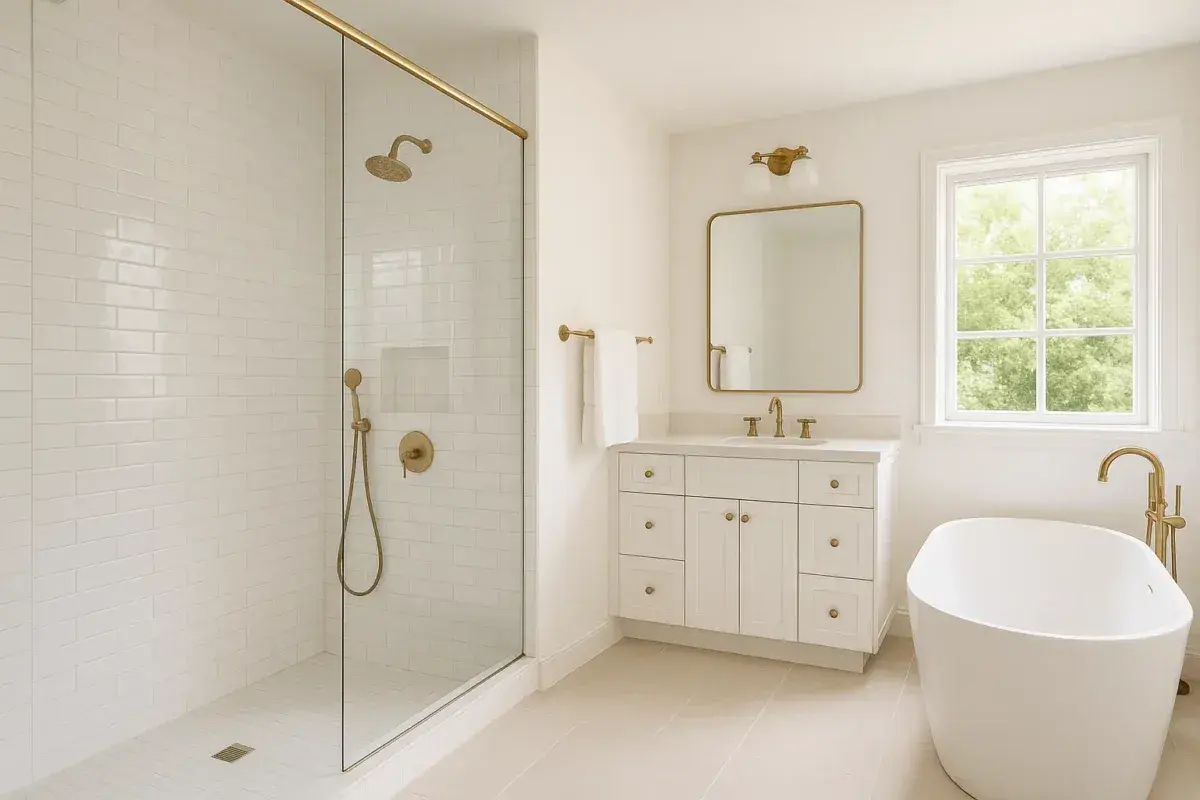
Old bathroom tile can drag down a space long before the room is actually due for a remodel. Tile reglazing is a smart middle-ground when the surface is still sound but the color, shine, or staining makes everything feel dated. Used well, it can reset the room without demolition, but the result depends heavily on prep, product quality, and cure time.
What matters most before you refinish old tile
- The coating changes the look, not the structure, so loose tile or water damage still needs repair.
- A professional job is usually completed in a day, but the surface often needs 24 to 72 hours before normal use.
- Typical U.S. pricing is often about $4 to $12 per square foot, with many projects landing around $730 to $1,700.
- The best candidates are stable ceramic or porcelain walls, tub surrounds, and backsplashes with cosmetic wear.
- Harsh cleaners, constant moisture, and weak prep are the fastest ways to shorten the finish’s life.
What the coating changes and what it does not
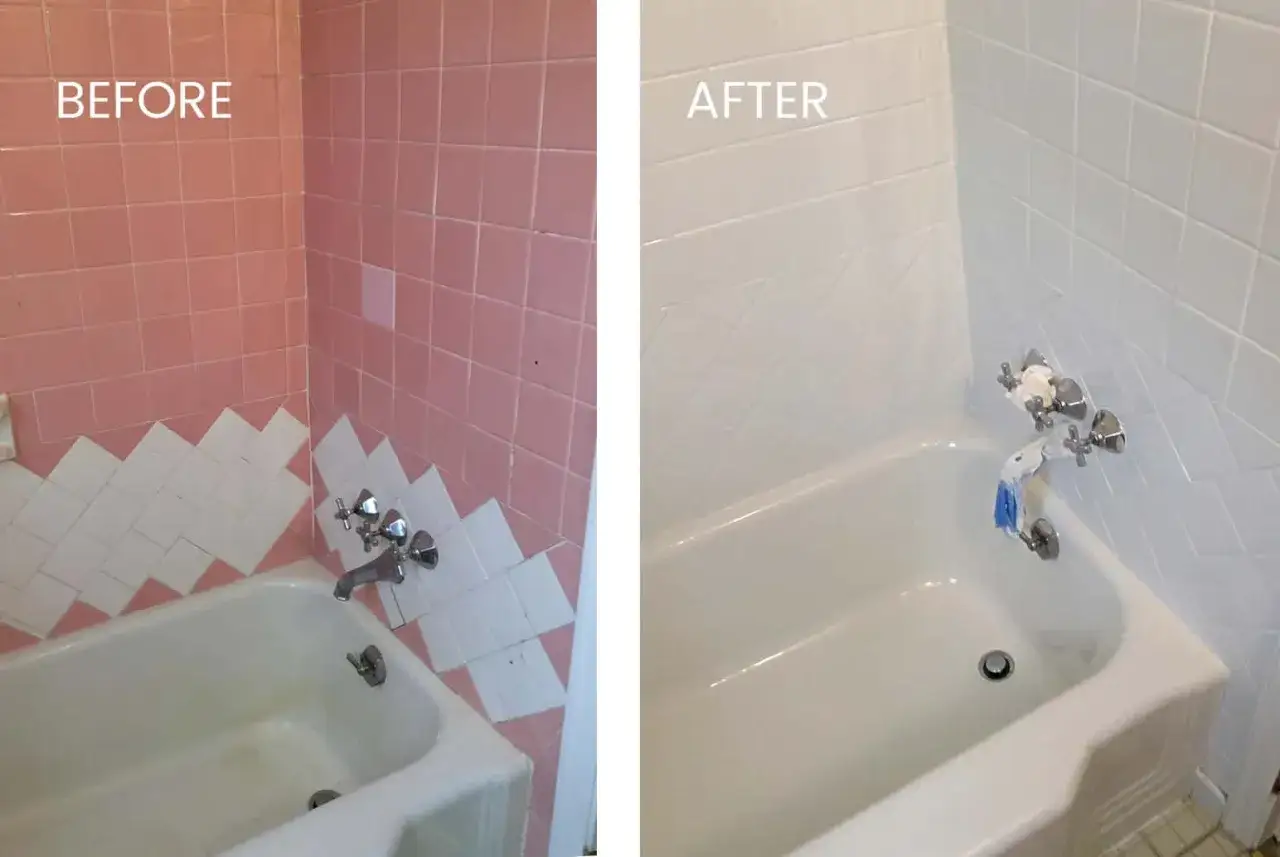
I think of this as a surface reset, not a repair for the tile system itself. The existing glaze is cleaned, dulled, etched, and then covered with a new bonded finish that changes the color and sheen of the tile.
That matters because the coating can hide stains, outdated colors, and minor surface wear, but it will not solve loose tiles, crumbling grout, or a wall assembly that is already failing behind the scenes. If the substrate is compromised, a fresh finish only delays the bigger problem.
For that reason, I treat it as a good option when the bones are solid and the issue is mostly visual. Once you know that distinction, the real question becomes whether your bathroom is a candidate worth saving or a better case for replacement.
When it makes sense and when replacement is smarter
The strongest case for refinishing is simple: the tile is structurally fine, but the room looks tired. That is especially true in bathrooms where the layout works, the tile is still attached firmly, and the homeowner wants a cleaner palette without tearing out walls.
| Situation | Better choice | Why |
|---|---|---|
| Dated but solid shower walls | Refinish | You get a major visual change without demolition or retiling. |
| Stained tub surround with stable grout | Refinish | The coating can cover discoloration and create a more uniform finish. |
| Cracked, loose, or hollow-sounding tile | Replace | Coating cannot restore adhesion or fix hidden movement. |
| Active leaks, mold behind the tile, or damaged waterproofing | Replace | You need to correct the assembly, not just the appearance. |
| You want a different layout, niche, bench, or tile size | Replace | Refinishing keeps the existing geometry in place. |
| Bathroom floor with heavy traffic or slip concerns | Usually replace | I am cautious here because wear and traction matter more than on walls. |
If you are trying to decide quickly, I use one blunt filter: if the problem is color and shine, refinishing is fair game; if the problem is movement, moisture, or layout, replacement is the more honest answer. That leads directly into the part most people underestimate, which is how the job is actually done.
How the process works in a real bathroom
A good refinishing job is mostly preparation disguised as a finish. The coating itself gets the attention, but the outcome is usually won or lost in the first few steps.
- Deep clean the tile to remove soap film, oils, and residue that would block adhesion.
- Repair chips, fill small defects, and address failing caulk or loose grout where needed.
- Sand or etch the surface so the new coating has real mechanical grip.
- Mask the room carefully and set up strong ventilation before any spraying starts.
- Apply the bonding primer and topcoat in even layers so the sheen cures consistently.
- Let the finish cure fully before water, steam, or heavy cleaning gets introduced.
In practice, a professional crew often finishes the active work in a single day, but the bathroom should not be treated as ready the moment the sprayer leaves. Depending on the product and humidity, I would expect at least 24 to 72 hours before normal use, and in some situations a contractor may recommend closer to 3 or 4 days for full cure. If someone skips prep or rushes ventilation, that is usually where peeling starts later.
Once you understand the sequence, the next question is usually money, because the price difference between refinishing and replacement is often what makes this option attractive in the first place.
What homeowners usually pay in the United States
For most U.S. homeowners, refinishing is appealing because it sits well below the cost of a tear-out and replacement project. A professional job commonly runs about $4 to $12 per square foot, and many average bathroom projects land around $730 to $1,700 depending on size and condition.
| Project type | Typical cost range | What affects the price |
|---|---|---|
| Professional tile refinishing | $4 to $12 per sq ft | Surface size, material, prep, and accessibility |
| Average bathroom project | $730 to $1,700 | Tub surround size, grout condition, and finish complexity |
| Large or more complex project | Roughly $400 to $3,000 | Whole-room coverage, repairs, and difficult access |
| DIY kit | $50 to $200 | Materials only, with much more variability in results |
The cheapest quote is not always the best value. Extra repair work, thorough masking, better coatings, and a real warranty all affect the final number, and they also affect whether the finish still looks good a few years later. I would rather pay for proper prep than save a little money and inherit peeling edges.
How long the finish lasts and how to care for it
A professionally done finish should be thought of as durable, but not permanent. With solid prep and sensible care, many surfaces hold up for years, and some wall applications can last well beyond that; the difference is usually maintenance, moisture, and how aggressively the bathroom is used.
The biggest factor is what happens after the job. I tell people to protect the coating the same way they would protect a high-end painted cabinet or a new countertop finish: carefully, consistently, and without shortcuts.
- Wait for the full cure window before using the shower or scrubbing the tile.
- Use a soft cloth or non-scratch sponge instead of abrasive pads.
- Avoid bleach-heavy, acidic, or gritty cleaners that can dull the coating.
- Skip suction-cup mats and sticky accessories that can pull at the finish.
- Keep caulk joints sealed so water does not creep behind the surface.
- Repair chips early so they do not spread into larger failure points.
If the surface is treated gently, the finish can stay bright and clean for a long time. If it is constantly soaked, scrubbed hard, or exposed to poor ventilation, the lifespan drops fast, and that is true no matter how good the original job looked.
What I would check before hiring a refinisher
When I am judging a refinishing quote, I care less about the sales pitch and more about the process details. A contractor should be able to explain exactly how they prepare the surface, what coating system they use, and how they handle curing and warranty coverage.
- Ask whether they clean, sand or etch, repair, and prime before spraying.
- Confirm which surfaces they will and will not coat, especially floors and shower pans.
- Find out how long the bathroom will be out of service and when water can resume.
- Ask what cleaners are safe after the job is done.
- Request the warranty terms in plain language, not just a sales promise.
My practical rule is straightforward: if the tile is stable and the goal is to update the look, refinishing is one of the cleanest ways to get a faster bathroom upgrade. If the tile is failing, the grout is compromised, or the room needs a layout change, I would spend the money on replacement instead and avoid paying twice for a temporary fix.