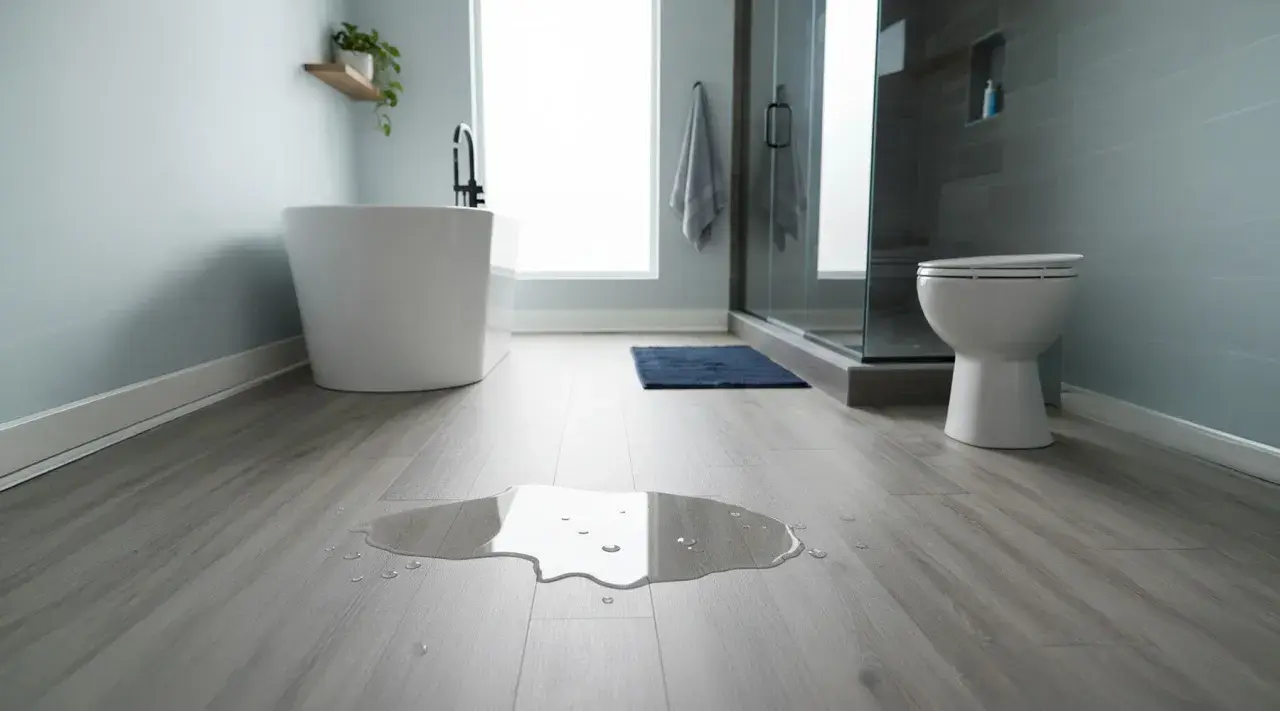
The short answer to what is ltv flooring is simple: it is almost always a typo for LVT, or luxury vinyl tile. It is a resilient floor made to mimic stone, ceramic, or wood while handling moisture, daily wear, and the kind of cleaning routine bathrooms actually demand. In a bathroom or laundry room, that combination matters more than a lot of buyers expect.
The essentials in one glance
- LVT stands for luxury vinyl tile, not a separate category called LTV.
- It is a layered floor with a protective wear layer, a printed visual layer, and a stable core.
- LVT is especially useful in bathrooms, powder rooms, and laundry rooms because many products are waterproof and easy to clean.
- Choose the right wear layer, surface texture, and installation method, because those details affect how the floor performs.
- LVT can be a smart middle ground between basic sheet vinyl and traditional ceramic tile.
- It is not the best choice for shower pans or spaces that stay wet all the time.
What people usually mean by LVT flooring
LVT is luxury vinyl tile, a floor made to give you the look of stone or ceramic without the same cost, weight, or cold feel underfoot. The word luxury is a little overused in flooring, but in this case it usually means a better visual layer, a tougher surface, and more convincing texture than basic vinyl tile.
At its core, LVT is a layered product. The wear layer protects the surface from scuffs and scratches, the printed design layer creates the look, and the core gives the tile its structure. That layered build is what makes it a practical resilient floor rather than just a decorative covering. I usually think of it as design-first flooring with real-world durability built in.
- Wear layer is the clear top shield that takes the abuse.
- Printed design layer is what gives you marble, slate, limestone, or tile visuals.
- Core and backing affect stability, comfort, and how forgiving the floor is over a less-than-perfect subfloor.
That construction explains why LVT behaves differently from ceramic tile: it is warmer, quieter, and more forgiving when the substrate is not perfect. The next question is where those traits matter most.
Why bathrooms are one of its best use cases
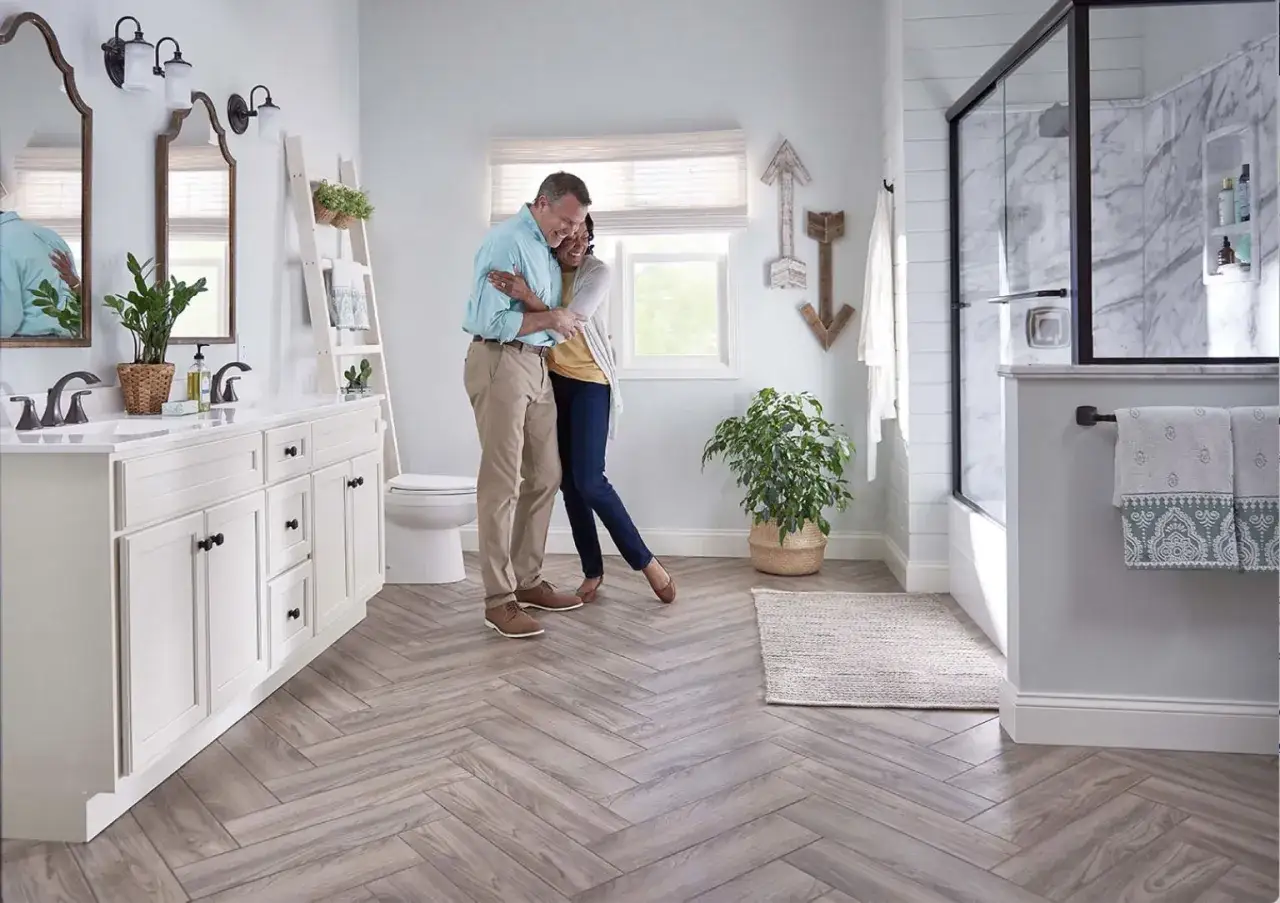
Bathrooms reward floors that can take splashes, steam, and frequent cleaning without feeling cold underfoot. Armstrong Flooring positions LVT as a bathroom-friendly option, and that matches what I see in real remodel decisions: it gives you a hard-surface look without the chill and clatter of ceramic.
In a powder room, primary bath, or laundry room, the sweet spot is usually a product that is truly waterproof on the surface, has a decent wear layer, and is installed over a dry, flat substrate. I would still avoid standard LVT inside a shower pan or any area that stays wet for long periods, because that is a different moisture problem altogether.
Where LVT shines is in the normal daily mess of a bathroom. Drips from the sink, wet footprints, humidity after a shower, and routine mopping are all part of the job, and good LVT handles that without demanding special care. That balance between practicality and limits is exactly why it gets compared so often with tile and sheet vinyl.
How LVT compares with tile and vinyl sheet
Shaw Floors notes that some LVT styles can be grouted, which is useful if you want a more ceramic-like finish without committing to full tile installation. That detail matters more than most people expect, because the real decision is usually about look, feel, and upkeep rather than the label on the box.
| Flooring type | Best for | Strengths | Trade-offs |
|---|---|---|---|
| LVT | Bathrooms, laundry rooms, kitchens | Stone or tile visuals, warm and quiet underfoot, many waterproof options | Needs a flat subfloor and careful seams; not my pick for shower pans |
| LVP | Spaces where wood visuals matter more than tile visuals | Same practical benefits as LVT, but in a plank format | Less relevant if you specifically want a tile look |
| Ceramic or porcelain tile | Showers, wet rooms, traditional bathrooms | Most authentic hard-tile feel, strong moisture performance, long service life | Colder, louder, more labor-intensive, grout needs upkeep |
| Sheet vinyl | Budget remodels and seamless moisture control | Few seams, usually the lowest cost, easy to clean | Less visual depth and fewer premium design options |
If budget is the deciding factor, sheet vinyl usually wins on price, while ceramic or porcelain tile usually sits at the high end once labor is included. LVT lands in the middle for many U.S. projects, which is one reason it has become such a common choice in bathrooms that need to look finished without becoming a full tile job. Once the comparison is clear, the real decision becomes spec quality.
What to look for before you buy
When I help people narrow down LVT, I look past the photo sample first and go straight to the specs. A beautiful floor can still be the wrong choice if the wear layer is too light, the core is too soft for the room, or the finish gets slippery when it is wet.
- Wear layer thickness matters. A 12 mil wear layer is common for normal residential use, while 20 mil is a better bet for busy homes, rentals, or family bathrooms.
- Mil means thousandths of an inch, so the number is a durability clue, not a marketing flourish.
- Surface texture helps with grip and hides water spotting better than a glossy finish.
- Rigid core products are usually better when you want more stability and easier floating installation.
- Glue-down LVT makes sense when you want a lower profile, a more permanent feel, or fewer transitions.
- Warranty language should explicitly cover the room you are installing it in.
For most bathroom projects, I would rather see a solid 20 mil product with a sensible finish than a flashy pattern backed by weak construction. That is where installation and maintenance start to matter more than marketing.
Installation and maintenance that protect the investment
The floor itself is only half the story. Bathroom prep decides whether LVT feels premium or annoying, and this is where many DIY projects lose quality. The subfloor must be dry, clean, and flat, and the toilet flange, tub edges, and transitions need careful cutting so water does not find an easy path below the surface. For a small bathroom, the installation may look simple on paper, but it still involves exact layout, tight cuts, and attention to seams. That is why I usually treat prep as the real project. If the subfloor needs patching or leveling, that work often matters more than the tile style you finally choose.Homeowners sometimes underestimate maintenance too. LVT is easy to live with, but it still wants the right routine: sweep or vacuum with a hard-floor setting, then use a lightly damp mop and a vinyl-safe cleaner. Avoid wax, abrasive scrubbers, and overly wet mops. Many manufacturers also discourage steam unless the product is specifically approved for it.
That routine is not glamorous, but it is exactly why LVT performs so well in real homes. It asks for consistency, not special treatment.
The bathroom-ready choices I would make first
If I were narrowing the field for a bathroom remodel, I would start with three combinations instead of chasing endless style options:
- Guest bath: 12 mil LVT, matte finish, click-lock installation, stone look.
- Busy family bath: 20 mil rigid-core LVT with a textured surface and a waterproof warranty.
- Laundry room or basement bath: rigid-core product with strong moisture protection and a careful subfloor check before installation.
If you want a more tile-like visual, some collections offer groutable edges, which can be a smart compromise: you get the look of ceramic without all of the cold feel and grout maintenance. That is a detail I would ask about before I paid for samples.
For most U.S. homes, the smartest move is not to ask whether LVT is fashionable. It is to ask whether the product you are considering is built for your room, your traffic, and your tolerance for maintenance. If those boxes are checked, LVT is not just a typo fix, it is a very practical flooring choice.