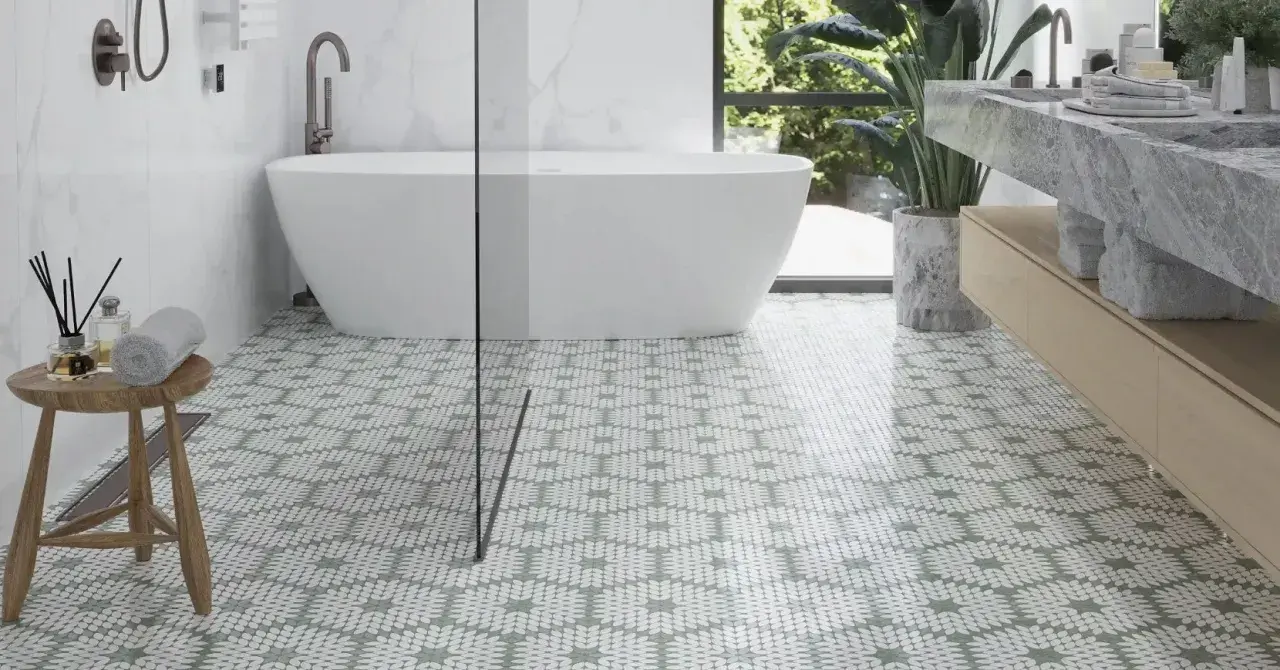
This guide turns pictures of shower floors into a practical way to choose tile, texture, drain layout, and maintenance level before you spend money. I focus on the designs that photograph well, feel good underfoot, and still make sense in a real shower. If you are comparing tile styles for a remodel, this is the filter I would use.
The most useful shower-floor inspiration balances style, grip, and drainage
- Small mosaics, pebble tile, and matte finishes usually give the safest footing in wet areas.
- Large-format porcelain looks calmer and is easier to wipe down, but it needs careful slope and a well-planned drain.
- Grout color changes the whole read of the floor: contrast makes a pattern louder, while matching grout makes it quieter.
- In the U.S., a tiled shower floor is typically built with a slight slope toward the drain, so a flat-looking photo is not a good model.
- The best choice depends on whether you want spa-like texture, a modern minimal look, or a more decorative pattern.
How I read a shower floor photo before I save it
When I look at a shower floor image, I do not start with the color. I look at tile size, grout spacing, drain placement, and whether the surface reads matte or glossy, because those details tell me far more about daily use than the wall color ever will. A floor can look beautiful online and still be annoying to clean, slippery when wet, or awkward around the drain.
I also pay attention to how the floor sits inside the rest of the bathroom. If the shower walls are already busy, I usually prefer a quieter floor. If the room is plain, the floor can carry more visual interest without making the space feel crowded. That simple check usually separates a good reference image from a design that actually belongs in your home.
What usually works in the best images
- Small pieces near the drain make the slope look intentional instead of forced.
- Low-gloss or textured surfaces read better in wet areas and feel safer underfoot.
- Grout lines that support the design help the floor look finished, not patched together.
- Simple composition keeps the shower from feeling overdesigned.
What often looks good online but disappoints in real life
- Glossy tile on the floor can be visually striking but less forgiving when wet.
- Oversized tiles in a small shower often create awkward cuts and busy edges.
- Very dark grout in a hard-water home can show mineral buildup faster than people expect.
- A floor that appears flat is usually a warning sign rather than a style choice.
Once I know how to judge the photo itself, the next step is deciding which style family fits the room, not just the mood board.
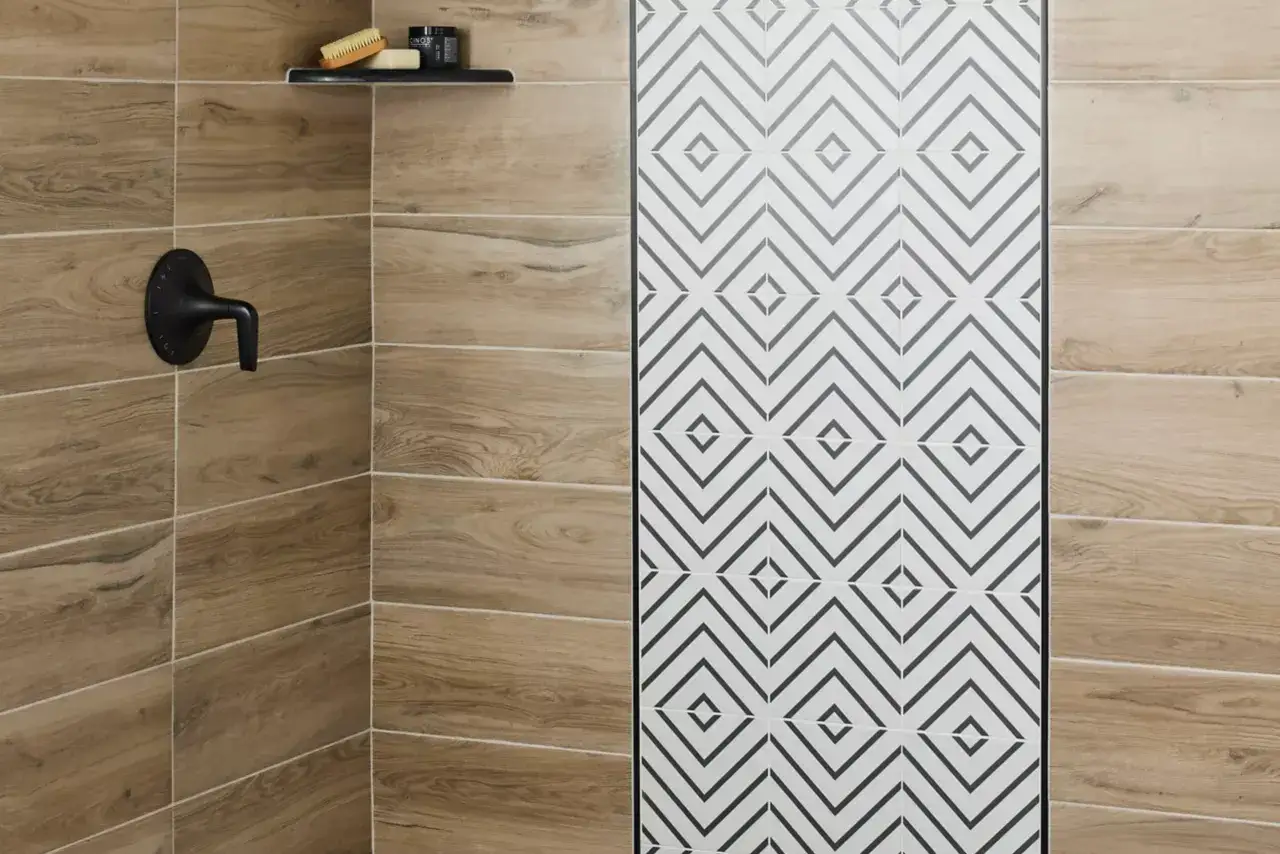
Mosaic shower floors that feel safe and timeless
Mosaic floors are the most forgiving place to start when you want the shower to look finished without becoming fussy. The smaller the piece, the easier it is for the floor to follow the slope toward the drain, which is why hex, penny-round, and small square mosaics keep showing up in strong remodel photos. They also tend to offer better traction because the extra grout lines break up the surface.
I like mosaics because they can be subtle or expressive depending on the color you choose. In white, ivory, or soft gray, they disappear into the architecture. In black, navy, or a mixed-tone blend, they can become the part of the shower that gives the whole room character.
Hexagon mosaic
Hex feels crisp and architectural. It works especially well when the rest of the bathroom is mostly straight-lined and you want the floor to add a little movement without turning decorative.
Penny round
Penny round brings a classic, almost vintage note. It is a strong choice when you want the shower to feel familiar and easy to live with, especially in a bathroom that already leans traditional or cottage-inspired.
Read Also: Tile vs Wood Flooring: The Smart Choice for Every Room
Small square mosaic
Small square tile is the quietest of the three. It is the version I reach for when the walls already have a lot going on and the floor needs to support the room rather than compete with it.
If you want more texture and a softer, spa-like feel, pebble is the next style I would compare.
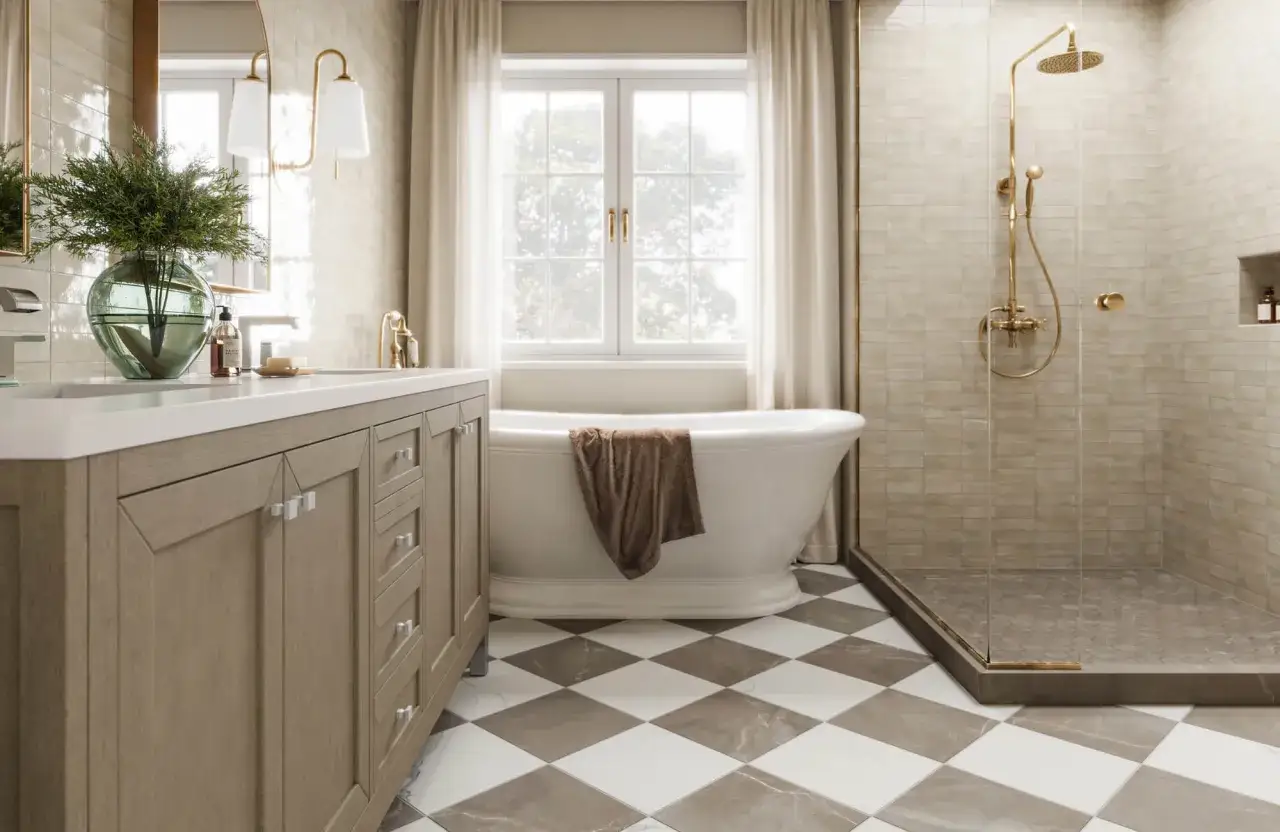
Pebble floors that bring in texture and a spa feel
Pebble tile is one of the most recognizable shower-floor looks because it adds movement, shadow, and an organic edge. In a good image, it reads like a small landscape underfoot; in a weak one, it can look busy. That means pebble works best when the stone size, tone, and grout color are chosen deliberately rather than left to chance.
I think of pebble as the most tactile option in this group. It makes the shower feel softer and more natural, which is exactly why it shows up so often in spa-style bathrooms. The tradeoff is that texture comes with more visual irregularity, so the installation has to be clean and the grout has to be handled well.
| Pebble style | Visual effect | Main tradeoff |
|---|---|---|
| Fine pebble | More refined, less rustic | Still textured, but easier to keep from looking too busy |
| Mixed-size pebble | Most natural and organic | Can look busy if the shower is small or dark |
| Honed pebble | Softer and more subdued | Usually the easiest pebble finish to live with visually |
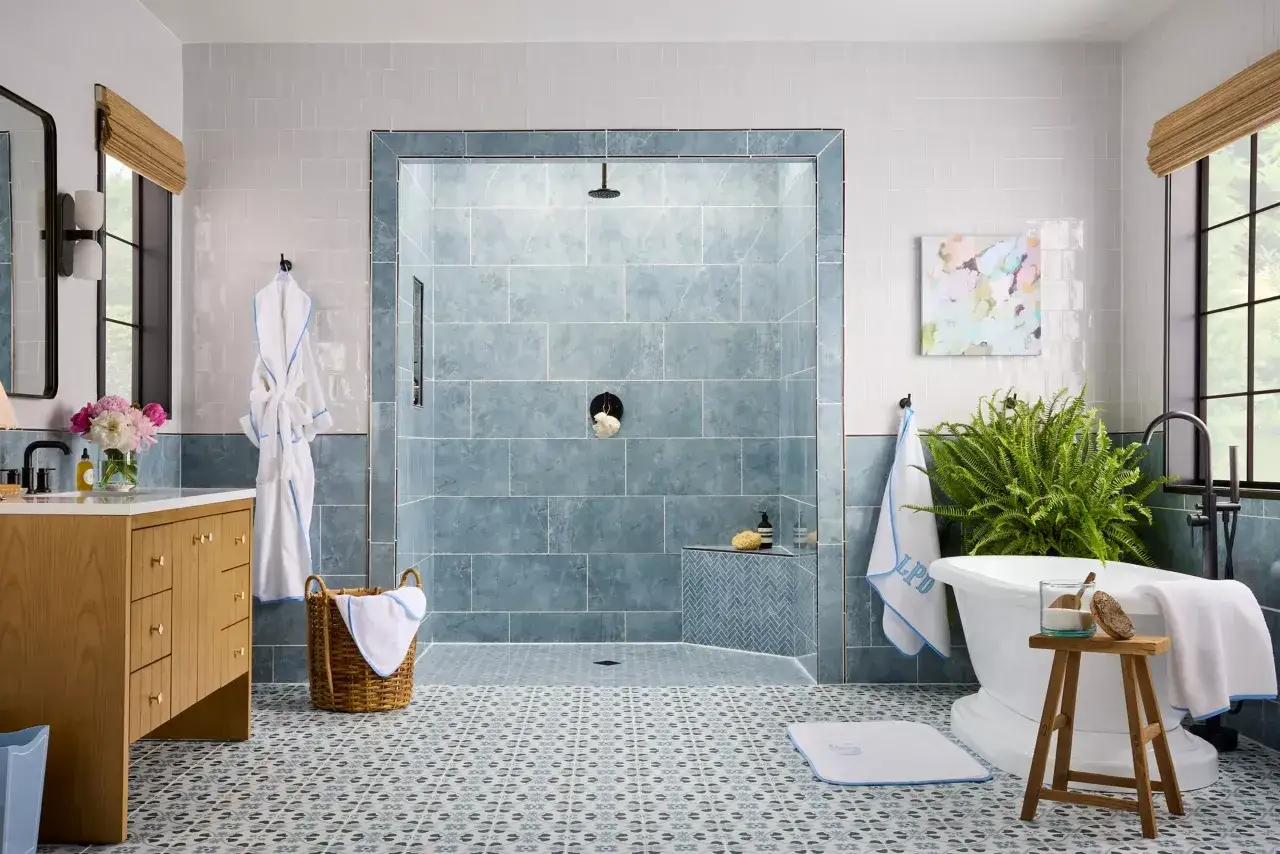
Large-format porcelain for a quieter modern floor
Large-format porcelain gives the shower a calmer, more architectural look. It is the easiest route if the bathroom already has a lot of texture elsewhere and you want the floor to recede instead of announce itself. Fewer grout lines also make the shower easier to wipe down, which is one reason this look has become so common in contemporary remodels.
That said, large tile is not automatically the better choice for a shower floor. A floor can only look simple if the layout and the drain system support it. With a center drain, oversized tile often turns into awkward cuts near the drain. With a linear drain, the layout usually reads cleaner because the floor can pitch in one direction instead of meeting a point in the middle.
- Best for a clean, low-clutter shower design.
- Choose a matte or slip-rated finish so the floor does not become slick when wet.
- Expect careful planning around drain location, slope, and tile cuts.
- Use it when the walls carry the pattern and the floor should stay visually quiet.
According to the Ceramic Tile Foundation, a tiled shower floor should slope about 1/4 inch per foot toward the drain, and that detail matters more when the tile is larger and the layout has fewer joints to hide the pitch. Once the floor is that controlled, pattern becomes the next design choice rather than a structural fix.
Patterned layouts that add character without shouting
Patterned shower floors are useful when you want the floor to feel designed, not merely installed. I usually reach for them when the bathroom needs personality but not a loud color story. The trick is to let the pattern do the talking while keeping the palette restrained.
Herringbone is the most movement-heavy option. It pulls the eye along the floor and can make a narrow shower feel more dynamic. Basketweave is softer and more classic; it has a tailored look that feels comfortable in traditional homes. Tone-on-tone hex or a two-color checkerboard reads stronger, so I reserve it for bathrooms that can handle a little visual energy without competing elements elsewhere.
Pattern works best when the wall tile is simpler. If the walls are already textured, glossy, or strongly colored, the floor should usually step back. If the walls are quiet, the floor can take a more active role and still feel balanced. That balance is what I look at next when I match the floor to the rest of the room.
How I would match the floor to the rest of the bathroom
When I match a shower floor to a bathroom, I think in terms of job description rather than trend. Do you want the floor to disappear, to soften the room, or to become the main detail? That answer usually tells me more than a style label does. It also keeps the project from drifting toward a look that photographs well but feels wrong in the finished space.
There is one technical point I would not skip: shower floors in the U.S. are typically built with a slight slope to the drain, and that slope affects which tile sizes and patterns are practical. I would not choose a layout until I know how the floor will be pitched, where the drain sits, and whether the room uses a center drain or a linear drain.
| If you want... | I would start with... | Why |
|---|---|---|
| the safest footing | Small mosaic | More joints usually mean more grip and easier shaping around the drain |
| a spa-like floor | Pebble or honed stone-look tile | Texture and muted color create a softer visual field |
| a calm modern shower | Large-format porcelain | Few grout lines keep the floor visually quiet |
| a classic bathroom | Penny round, hex, or basketweave | These patterns feel familiar without looking dated when the colors stay restrained |
| a design-forward focal point | Tone-on-tone pattern or mixed hex | The floor becomes part of the room's architecture instead of an afterthought |
That geometry is why I always look at the hidden details next, because the best-looking floor in the world still fails if the finish, grout, or waterproofing is wrong.
The details that make the picture work in real life
A shower floor only earns the right to look good if it performs when wet. I have seen too many beautiful tile choices weakened by a finish that was too slick, grout that was too high-contrast for the water quality, or a layout that ignored how the shower actually drains. The photo may be the reason you fall in love with the design, but these details decide whether you keep loving it after the remodel.
- Choose matte, honed, or lightly textured finishes for the floor unless the manufacturer clearly rates a glossier tile for wet use.
- Match grout to the tile if you want the floor to feel calm; use contrast only when you want the pattern to be obvious.
- Check whether the tile is floor-rated before you let a wall product sneak onto the shower floor.
- Ask how the slope and waterproofing connect if the shower is curbless or unusually large.
- View samples in wet light and again under the bathroom's actual lighting before you decide.
- Plan for cleaning based on grout count, texture, and how much mineral buildup your water tends to leave behind.
I also like to remind clients that the floor is only half the decision. The other half is the install: membrane, slope, drain, and finish work. A simple tile done well will beat a complicated tile done badly almost every time.
The shortlist I would build before ordering tile
When I am narrowing a shower floor, I usually save three versions: one safe and understated, one with texture, and one that pushes the look a little further. That makes the choice easier when I compare them in the same light, on the same wall color, and next to the same grout sample. It is the most honest way I know to turn inspiration into a decision.
- One small mosaic if traction matters most.
- One pebble or stone-look option if the room needs warmth.
- One large-format porcelain sample if you want the floor to disappear visually.
- One grout color darker and one closer to the tile if you are unsure how much contrast you want.
If I had to make the call quickly, I would choose the floor that still looks right when the shower is wet, the room is dim, and you are barefoot. That is the version that usually ages best.