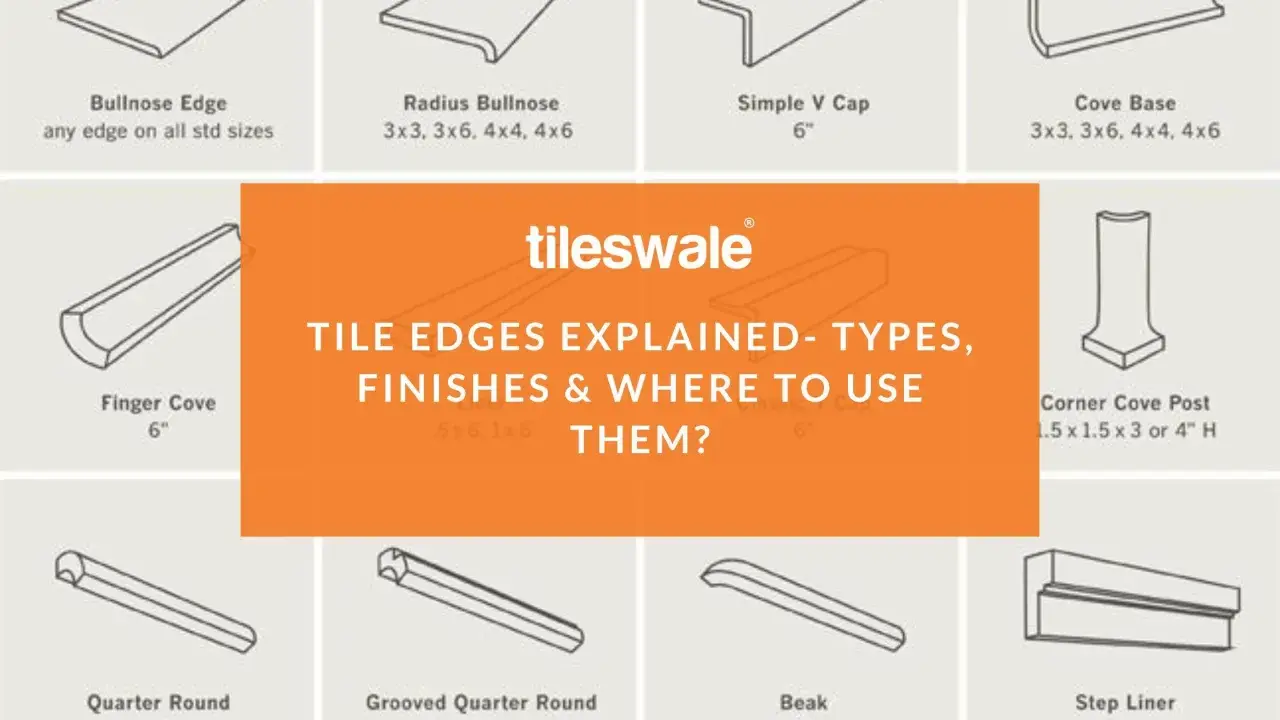
The most important thing to understand about types of bullnose tile is that the term covers both edge profiles and matching trim pieces. In a bathroom, kitchen, or shower, that small detail decides whether a tiled surface feels finished, soft, and intentional, or abruptly cut off. I usually treat the edge choice as part of the design, not an afterthought, because the wrong profile stands out every time the room is used.
The right edge profile depends on where the tile stops
- Bullnose is a finishing edge, not a field tile, and its job is to hide raw cuts and soften exposed corners.
- Full bullnose gives the roundest, softest look; half bullnose and demi bullnose feel lighter; double bullnose is more substantial.
- Single bullnose is the most common wall trim format in U.S. tile lines, especially for showers, backsplashes, and tub surrounds.
- Quarter round and pencil trim are not bullnose in the strict sense, but they often solve the same finishing problem when a collection lacks matching bullnose.
- Material, sheen, and thickness matter as much as the profile, especially in wet rooms and around corners.
Bullnose trim changes the edge, not just the look
I think of bullnose as the frame around the tile story. It softens exposed ends, protects corners that would otherwise chip, and gives the installation a deliberate stopping point along a shower niche, backsplash, tub deck, or wall termination.
That functional role matters more than people expect. A rounded edge can make a small bathroom feel calmer, and in a family space it takes the sting out of sharp corners that are constantly brushed by hands, towels, and cleaning tools.
There is also a visual effect that gets overlooked: the edge profile changes how thick and how tailored the whole surface looks. A trim piece that matches the body color and sheen tends to disappear; a contrasting one becomes a design line, which can be useful if the room needs a little structure.
That is why I separate the practical question from the decorative one before I choose a trim. Once you know what the edge is supposed to do, the names on the box start to make more sense.
The bullnose styles and close relatives you will actually compare
In showrooms, I usually group the options into true bullnose profiles and trim pieces that play a similar finishing role. The names vary a bit by supplier, but the shape tells you most of what you need to know.
| Profile | What it looks like | Best use | Main tradeoff |
|---|---|---|---|
| Full bullnose | Completely rounded edge | Exposed outer corners, family bathrooms, classic wall finishes | Feels softer and more traditional |
| Half bullnose / demi bullnose | Rounded top or front with a flatter underside | Counter edges, ledges, shelves, places where you want less visual bulk | Less sculpted than full bullnose |
| Single bullnose | One finished rounded edge on a rectangular trim piece | Shower walls, tub surrounds, backsplash ends, chair rails | Depends on the collection; not always stocked in every color |
| Double bullnose | Two rounded edges | Caps, corner details, visible transitions on both sides | Looks heavier and more traditional |
| Cove bullnose | Rounded profile with a cove-like recess or blended contour | Specialty work, custom stone, decorative edge details | Less common in ready-made ceramic lines |
| Quarter round | Small curved trim piece | Inside corners, borders, small transitions | More decorative than protective |
| Pencil liner | Narrow cylindrical trim | Framing tile fields, adding a clean line in modern bathrooms | Almost entirely decorative, not a substitute for exposed-edge protection |
If you are shopping in the U.S., you will often see these profiles in 2x6, 3x6, or 4x16 trim pieces, plus 2x2 corner pieces for some collections. That format matters because the same glaze can look very different on a short trim piece than on a long field tile.
I would not force a decorative liner to do a bullnose job. If the edge is exposed and people will touch it, pick a profile that actually protects the corner.
Once you know the names, the next question is where each profile earns its keep.
Which profile fits each bathroom edge
The same edge treatment does not work equally well everywhere. A shower niche needs clean lines and moisture-friendly upkeep; a tub deck wants a softer hand-feel; a vanity splash may need the trim to disappear completely.
| Location | Best fit | Why I choose it |
|---|---|---|
| Shower niche perimeter | Single bullnose or a matching liner | Finishes exposed ends without cluttering a small focal point |
| Outside wall corner | Full bullnose or quarter round | Rounds the corner and reduces chip risk where contact is common |
| Tub surround | Single bullnose or half bullnose | Feels comfortable to touch and gives the surround a clean cap |
| Backsplash termination | Single bullnose or pencil liner | Resolves abrupt ends at a cabinet return or open wall edge |
| Countertop or ledge edge | Half bullnose or custom bullnose profile | Softens the line without making the edge look bulky |
| Feature wall cap | Double bullnose or coordinating cap piece | Reads finished from multiple angles and gives the wall a clear top line |
| Shower curb or low step | Full bullnose or a metal edge profile | Handles daily contact and creates a more deliberate transition |
When I am balancing style against durability, I start with the edge that gets the most contact. If it is a spot people lean on, bump, or wipe daily, I choose the profile with the smoothest transition rather than the one with the most decoration. That rule is simple, but it saves a lot of second-guessing.
After that, the material and finish decide whether the edge blends in or becomes a feature.
How material and finish change the result
Material is where the same profile can feel completely different. Glazed ceramic is still the easiest match for many wall trim lines, porcelain is the tougher workhorse for wet rooms, and natural stone can be fabricated into a bullnose when you want the edge to read as part of the slab rather than a separate accessory.
Ceramic and porcelain
Ceramic trim often gives you the most straightforward color match in wall installations. Porcelain is usually the safer pick when moisture, cleaning, and durability matter more than pure decoration, especially in showers and tub surrounds.
Stone and slab edges
With marble, quartzite, granite, or similar slab materials, the bullnose is often fabricated into the edge itself. That creates a seamless look, but it also means the edge is tied to the thickness and hardness of the stone, so fabrication cost and lead time can change quickly.
Read Also: Tile PEI Rating for Bathrooms - Don't Choose Wrong!
Glossy, matte, and honed finishes
Glossy trim reads clean and classic, but it can show light reflections and slight alignment issues more easily. Matte or honed finishes look calmer and more contemporary, and I reach for them when I want the edge to recede instead of announce itself.
Color matching matters too. A trim piece that is even slightly warmer, cooler, or glossier than the field tile can look mismatched in daylight, especially on a long shower wall. That is one of those details that only gets noticed after installation, which is the worst time to discover it.
The real trouble starts when the trim and layout are left too late.
Common mistakes that make the finish look improvised
Most bad bullnose jobs are not about the tile itself. They come from planning errors, missing trim counts, or a profile choice that never matched the room in the first place.
- Buying field tile first and checking trim availability later
- Mixing manufacturers and expecting glaze matches to be invisible
- Using a profile that is too ornate for a small room
- Ignoring the exposed ends at niches, windows, and returns
- Skipping corner planning and discovering too late that you need a second finish piece
- Choosing a decorative liner where an actual edge-protecting profile was needed
- Forgetting that grout color can change the way the edge reads
If a collection does not offer matching bullnose, I do not treat that as a dead end. A coordinating metal edge profile or a simple liner often solves the problem more cleanly than a near-match that looks off by one shade.
I also think it is worth checking how many cuts the edge will need. The more corners and returns you have, the more important it becomes to choose a trim that installs cleanly instead of one that only looks good in a catalog photo.
With those mistakes out of the way, the last step is simply checking the edge before you order.
What I check before I approve a finished edge
Before I sign off on a trim choice, I check three things: exposure, match, and maintenance. If all three line up, the edge usually looks intentional on day one and still looks right after the room has been used for a while.
- How many sides of the tile are exposed
- Whether the collection includes matching trim or needs an alternate profile
- Whether the sheen matches under natural and artificial light
- Whether the edge will be touched often
- Whether the room is leaning classic, modern, or somewhere in between
That is the simplest way to choose among the main bullnose styles: start with the edge condition, narrow the profile by the room’s look, and refuse to accept a trim piece that feels like a compromise. In practical work, a clean finish usually comes from one good match rather than a more elaborate detail forced into the wrong place.