Porcelain floors stay attractive when the cleaner matches the finish, the grout, and the kind of soil the room collects. The wrong formula can leave a hazy film, dull polished tile, or slowly wear at grout lines, especially in bathrooms where hard water and soap scum show up fast. In this guide I break down the cleaner types that actually make sense, how I choose between them, and the routine I would use in a real home.
The safest setup is a neutral-pH cleaner, a microfiber mop, and a separate spot treatment
- Neutral-pH formulas are my default for regular porcelain care.
- Ready-to-use sprays are handy for small bathrooms; concentrates stretch farther in larger homes.
- Acids, ammonia, abrasive powders, and waxy shine products are poor routine choices.
- Grout compatibility matters as much as the tile itself.
- Dry the floor after mopping if you want fewer streaks and less residue.
What porcelain floor tile cleaners should actually do
In my experience, porcelain does best when the cleaner does three quiet jobs well: it loosens soil, rinses away cleanly, and leaves the grout alone. Neutral pH means the formula sits close to water on the acidity scale, which makes it a safer starting point for routine maintenance. Several tile makers, including Daltile and Marazzi, still steer regular care toward neutral-pH products and warn against acids and ammonia for normal cleaning.
That matters most on polished or glazed porcelain, where residue shows up quickly, but it also matters in bathrooms because toothpaste, soap scum, and hard-water minerals tempt people into overcorrecting with harsher chemistry. Matte or textured tile is a little more forgiving visually, yet it can still trap buildup if the cleaner is too strong or too concentrated. I would rather clean twice with a gentle formula than once with a product that leaves me with another problem. Once the chemistry is right, the next question is format.
Which cleaner type fits the job
In the U.S. market, the labels change more often than the job they solve. I group them by use, not by marketing language.
| Cleaner type | Best for | Why I would choose it | Limits | Example |
|---|---|---|---|---|
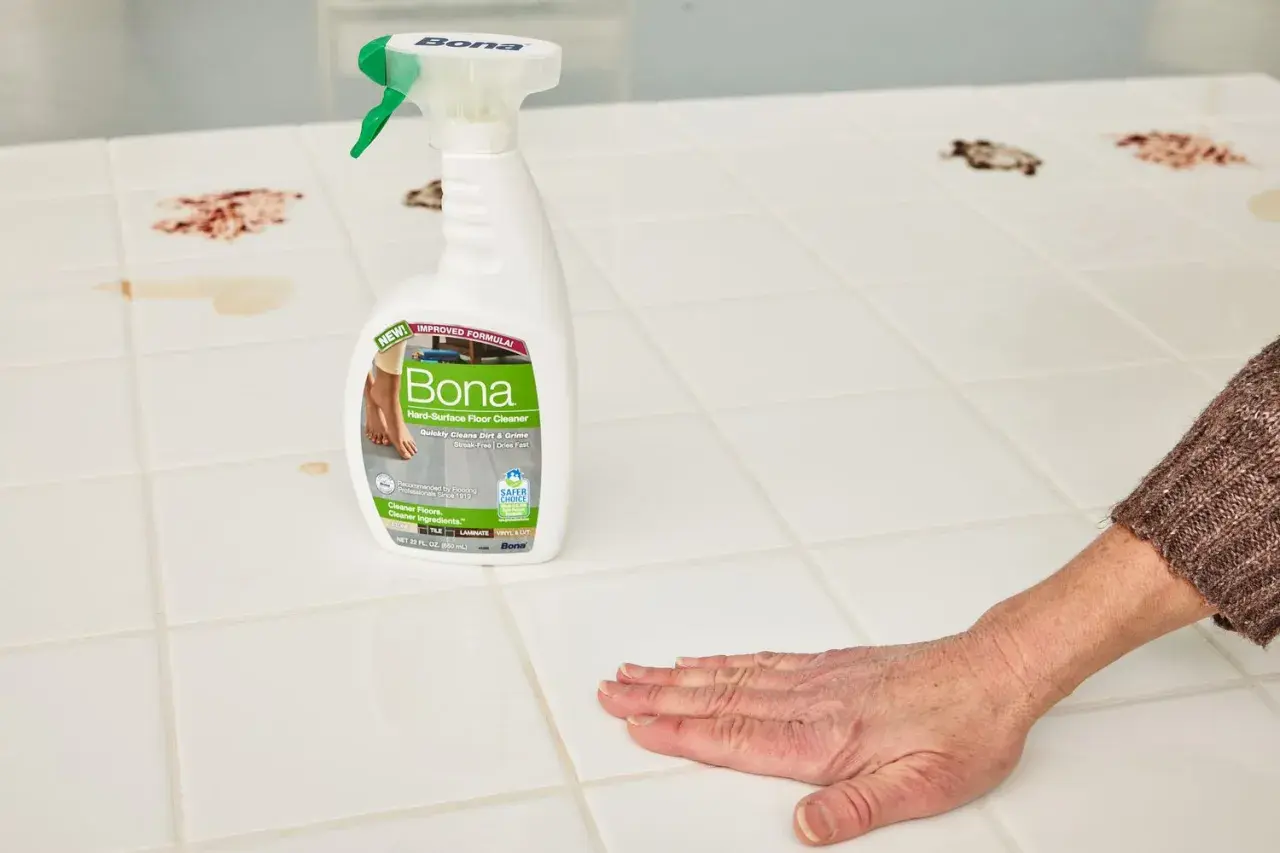
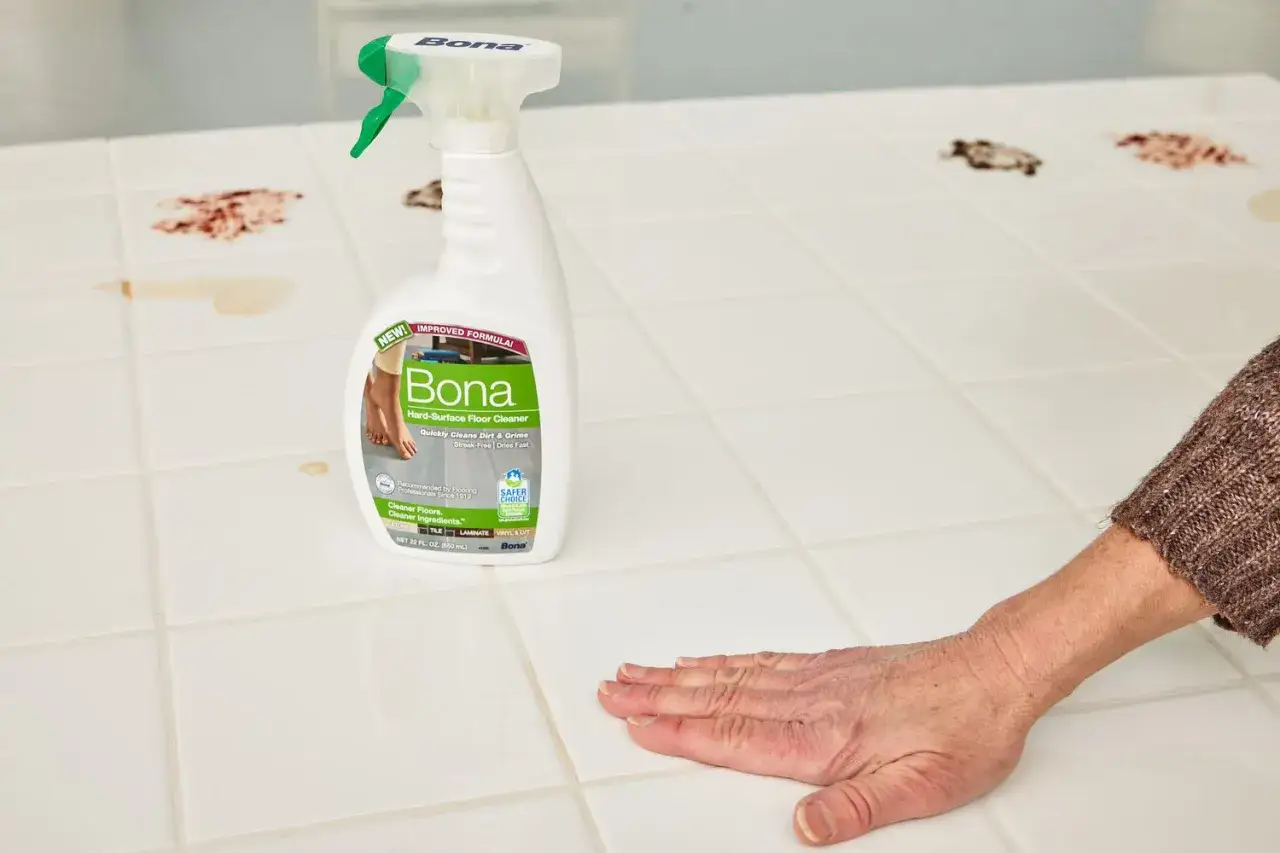
| Ready-to-use spray | Small bathrooms, touch-ups, and weekly maintenance | Fast, low mess, and easy when I do not want a bucket | Higher cost per use and not always enough for stubborn buildup | Bona Hard-Surface Floor Cleaner; Zep Luxury Vinyl, Ceramic & Porcelain Tile Floor Cleaner |
| Concentrated neutral-pH cleaner | Larger homes, textured porcelain, and regular whole-floor cleaning | Best value, flexible dilution, and strong enough for everyday soil | Must be mixed accurately and may need a rinse | MAPEI UltraCare Concentrated Tile & Grout Cleaner |
| Heavy-duty tile and grout cleaner | Neglected floors, greasy kitchen film, and old residue | Strips wax, oil, and heavy grime better than a routine spray | Use sparingly; it is not my weekly choice | MAPEI UltraCare Heavy-Duty Stone, Tile & Grout Cleaner |
| Spot cleaner for mineral buildup | Soap scum, hard-water marks, and rust around sinks or showers | Solves a specific bathroom problem without changing the whole routine | Not a daily floor wash | Zep Shower, Tub & Tile Cleaner |
If I could buy only two things, I would pick a neutral-pH routine cleaner and a separate spot treatment for mineral buildup. That combination handles most bathrooms and kitchens without forcing the entire floor into a heavy-duty cycle. After that, technique decides whether the cleaner works as intended.
How I would clean the floor without leaving a film
- Remove grit first. Sweep or vacuum before any liquid touches the floor. Sand and dust are what make porcelain look tired fastest.
- Mix the product exactly as directed. Overconcentrating is one of the quickest ways to leave a cloudy finish behind.
- Test a hidden spot when the formula is new. I do this especially on polished tile, colored grout, or a floor I have never cleaned myself.
- Mop in small sections. I prefer a microfiber flat mop because it lifts soil instead of pushing it around.
- Rinse only when the label calls for it. Some ready-to-use sprays are designed to dry clean; many concentrates perform better with a clear water pass.
- Dry the surface. A clean microfiber towel or dry pad helps in bathrooms, around sinks, and near thresholds where streaks show first.
On grout lines, I use a soft brush only where soil is sitting in the joints. The goal is to lift dirt, not scour the grout, and that restraint keeps the floor looking better for longer. The bigger mistakes are usually not dramatic; they are the habits that leave residue behind.
What to avoid on porcelain and grout
Porcelain tile itself is tough; grout and surface finish are usually the weak points. If a bottle is built to strip wax, dissolve mineral scale, or blast through shower buildup, I treat it as a problem-solver, not a weekly maintenance product.
- Acid-based cleaners for routine floor care, because they are stronger than most porcelain floors need.
- Ammonia-heavy or bleach-heavy products as an everyday habit, especially where grout is light or older.
- Abrasive powders, scouring pads, and steel wool, which can scratch or dull the finish.
- Wax, oil soap, and shine-restoring products that leave a film and attract more soil.
- Over-wetting the floor or mixing cleaners in the same bucket, which can create residue and, in some cases, unsafe fumes.
That is the part many people miss: stronger does not mean better when the goal is a clean floor that still looks clean after it dries. I only reach for harsher chemistry when I have a specific issue to solve, not because the bottle promises a deeper shine. The label can tell you which bottle fits the job before you ever open it.
How I read the label before I buy
I do not trust packaging language until I know what it means in practice. A few terms are genuinely useful; the rest are mostly decoration.
| Label clue | What I think it means | Why it matters |
|---|---|---|
| Neutral pH | A safe routine baseline | Less likely to haze grout or dull the finish |
| Concentrated | Mix before use | Cheaper per cleaning, but only if I measure correctly |
| Ready to use | Pre-mixed convenience | Great for small spaces, not the lowest cost |
| Non-abrasive or streak-free | Gentler on polished tile | Helps when the floor shows residue easily |
| Grout-safe or grout-compatible | Tested for the joints, not just the tile | Important with light, porous, or older grout |
Those label cues are more useful than a long promise on the front of the bottle. Bona, MAPEI, and Zep all sell products that fit these label families, but I still trust the back label more than the brand story. If the directions are vague about dilution or rinsing, I assume the product needs more care, not less. With the right bottle and tool set, the routine becomes simple.
The under-sink routine I would keep for porcelain floors
- One neutral-pH cleaner for regular mopping.
- One spot cleaner for hard-water marks and soap scum.
- One microfiber flat mop for routine cleaning.
- One soft detail brush for grout corners and tight spots.
- One dry microfiber pad or towel for the final pass.
For a bathroom, I would dry dust every few days, mop weekly, and spot-treat mineral buildup only when it appears. For a kitchen or entryway, I would keep the same routine but pay more attention to grit because sand is what makes the floor look worn out fastest. If I had to choose a single bottle, I would buy the neutral-pH cleaner first; if I wanted the least hassle in a small bathroom, I would choose a ready-to-use spray next.
The best product is the one that disappears into a routine you can actually keep. On porcelain, that usually means gentle chemistry, clean water, and a finish that stays bright because nothing heavy was forced onto it.