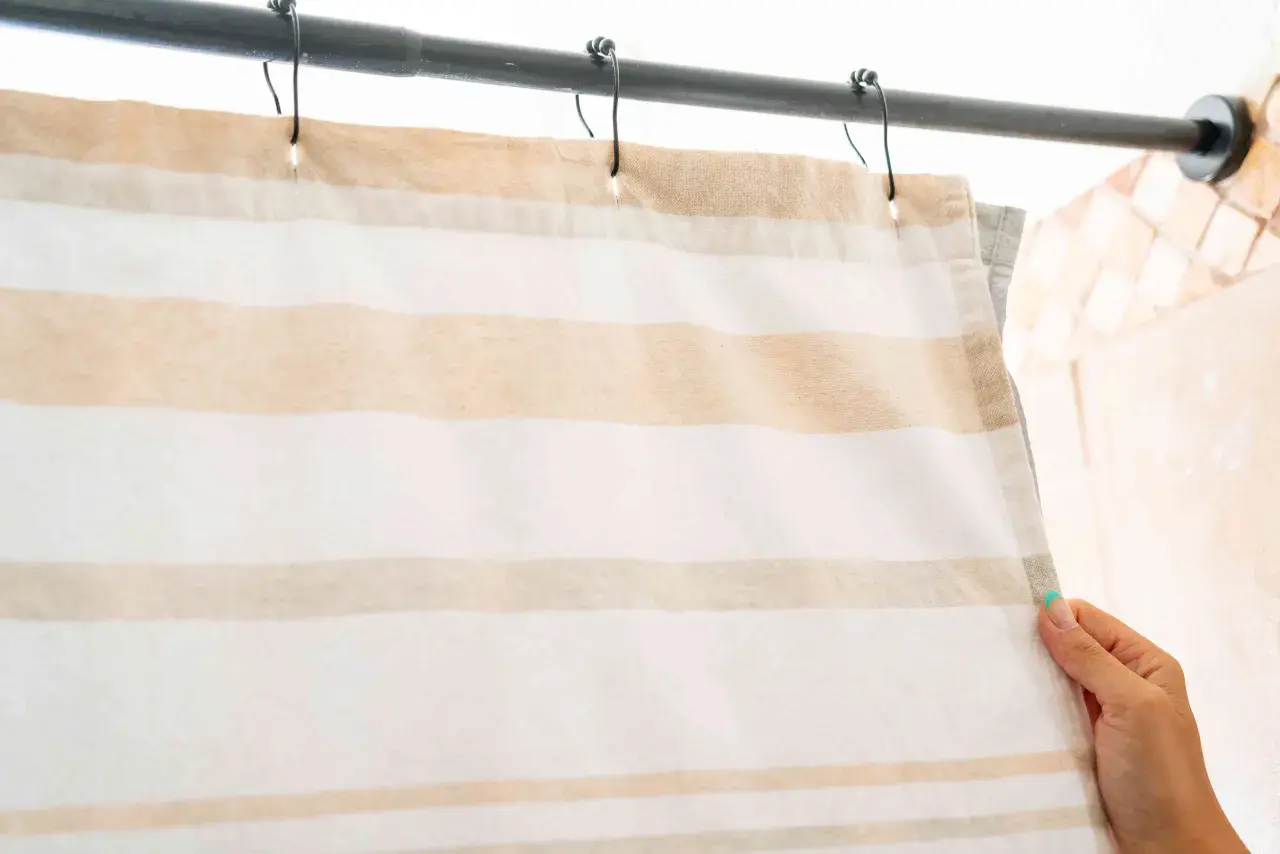
A shower curtain collects soap scum, moisture, and bathroom dust faster than most people expect. Knowing how to clean a shower curtain the right way means you can remove mildew without warping plastic, dulling fabric, or leaving behind a musty smell that comes back a week later. I usually start with the material, because that one decision changes almost everything else.
What matters most before you wash anything
- Check the care label first; fabric, vinyl, and PEVA do not all handle the same water temperature or dryer heat.
- For most washable curtains, a gentle cycle, a small amount of detergent, and 1 to 2 bath towels is the safest default.
- Plastic and vinyl should air-dry only; some fabric curtains can handle low heat, but only if the label allows it.
- Monthly washing is a strong baseline for a primary bathroom that gets daily use.
- Spread the curtain out after showering and run the fan so folds do not trap water.
Start with the material and the care label
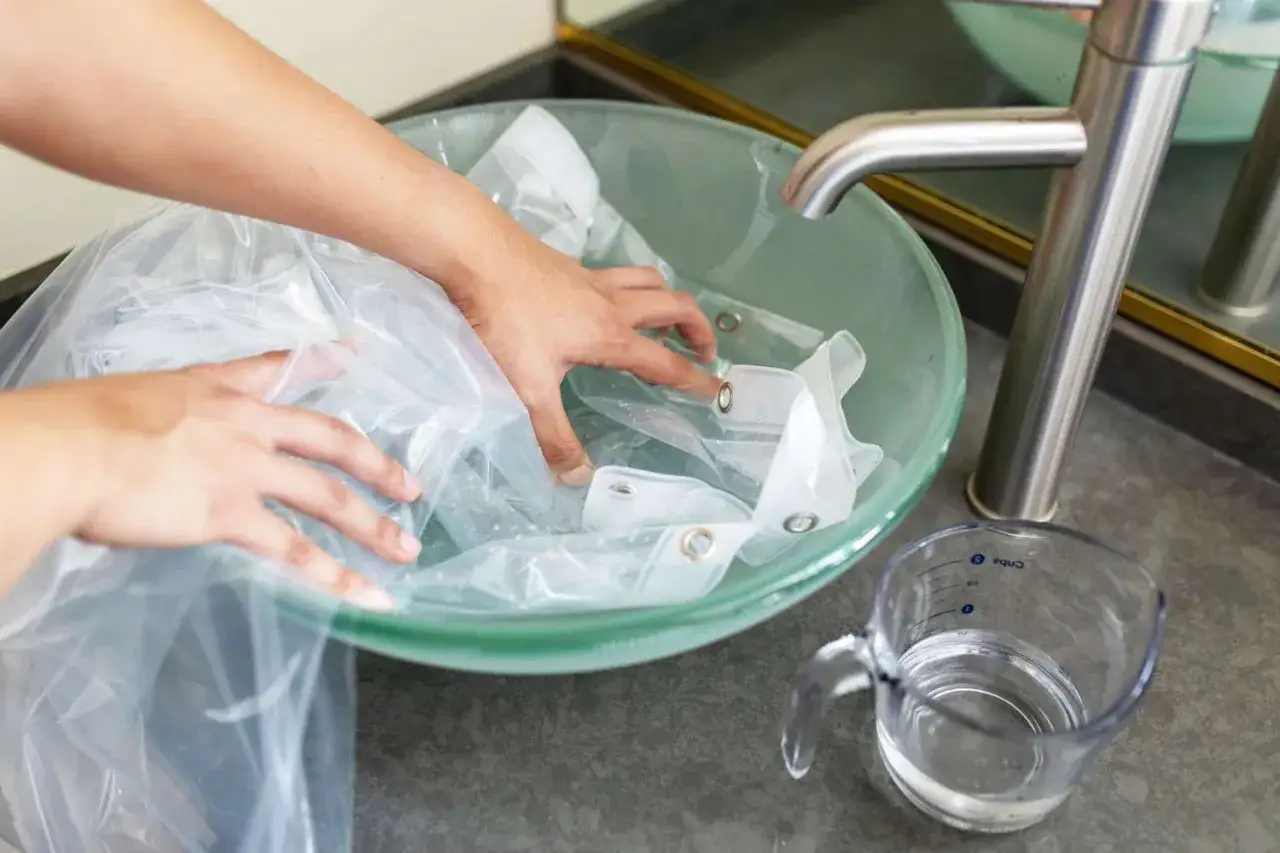
I read the care label before I touch the washer settings. Fabric curtains and liners usually tolerate a gentle cycle, but plastic, vinyl, and PEVA are less forgiving around heat, and decorative trims can make an otherwise simple curtain surprisingly fussy. If the label is missing, I treat anything coated or shiny as plastic and keep the heat low.
| Material | Best cleaning method | Water temperature | Drying | What I watch for |
|---|---|---|---|---|
| Fabric such as cotton, polyester, nylon, or hemp | Machine wash or hand wash | Warm or cool, unless the tag says otherwise | Air dry or low heat only if allowed | Shrinkage, fading, decorative trims |
| Vinyl or PVC | Gentle machine wash or hand wash | Warm or cool, never hot | Air dry only | Warping, sticking, cracking |
| PEVA or EVA liner | Gentle machine wash or hand wash | Cool or warm, no hot water | Air dry only | Brittleness, odor, cloudy film |
| Magnetic or weighted liner | Usually machine washable if the label says yes | Gentle cycle, warm or cool | Air dry only | Snapped magnets or damaged seams |
That distinction matters because the liner usually takes the direct spray, while the decorative curtain outside the tub often only needs lighter care. Once the material is sorted, the wash cycle itself becomes pretty simple.
The washer method I trust for most everyday cleaning
For routine cleaning, I remove the curtain, take off the rings, and shake out loose hair or lint first. Then I run it alone or with 1 to 2 bath towels, which helps scrub off residue and keeps the load balanced. I also use less detergent than I would for a normal laundry load, because too much soap can leave a film behind.
- Detach the curtain or liner from the rod and remove the rings.
- Soak the rings separately in hot water and detergent if they look dingy.
- Put the curtain in the washer with 1 to 2 bath towels.
- Add a small amount of detergent. If the curtain is bleach-safe and especially grimy, use 1/2 cup bleach or color-safe bleach.
- Choose a gentle cycle with warm or cool water and the highest water level your machine offers; for plastic, a delicate or handwash cycle with a slow spin is safer.
- When the cycle ends, shake it out and hang it immediately to air dry.
Heat is the enemy of plastic. I never dry vinyl or PEVA in a hot dryer, and I only use low heat on fabric when the care label clearly allows it. If the curtain feels coated rather than merely dirty, a short soak in warm water and mild detergent before the wash often helps more than a stronger detergent dose. That is the point where a quick freshening turns into a real maintenance habit.
Use an in-place spray when the curtain only needs freshening
When the curtain has a thin film of soap scum but does not need a full laundry cycle, I clean it while it hangs. This is my preferred maintenance step between deeper washes because it is fast and it keeps buildup from getting ahead of me.
- Mix 1 part vinegar to 4 parts water in a spray bottle.
- Extend the curtain fully across the rod.
- Spray the tub-facing side and any folds that collect residue.
- Rinse from top to bottom with warm water and let it air dry completely.
I use this method for light buildup, not for a curtain that already smells deeply musty. Once mildew is visible or the odor lingers after a rinse, I move to a more direct treatment instead of pretending a spray will solve it.
Treat mildew and stains before they settle in
Bathrooms are damp by design, so mildew is usually a moisture problem first and a cleaning problem second. When I see surface spotting, I treat it the same day if possible, because waiting only gives the stain more time to bite into the material.
| What I am seeing | What I do | What I avoid |
|---|---|---|
| Light soap scum or a dull film | Gentle machine wash with towels or the vinegar spray method | Harsh scrubbing on coated plastic |
| Surface mildew on a bleach-safe liner | Add bleach or color-safe bleach only if the label allows it | Using bleach on delicate or color-sensitive fabric |
| Color or decorative fabric with buildup | Follow the label and use mild detergent, then air dry | Hot water and heavy spin cycles |
| Black spots that return after a proper wash | Replace the liner | Repeated aggressive scrubbing that can damage the material |
For stubborn residue, I stay conservative unless the curtain is clearly bleach-safe. A strong cleaner can rescue a white liner, but it can also shorten the life of a fabric curtain or damage a printed finish. That is why I prefer to match the treatment to the material rather than chase one universal fix.
Keep the curtain cleaner between washes
The easiest way to reduce deep cleaning is to slow down moisture buildup every day. I treat the curtain like any other bathroom surface: a few small habits do more than one aggressive cleanup.
- Run the exhaust fan during and after every shower.
- Open a window or the bathroom door if the room has poor airflow.
- Spread the curtain out so folds do not trap water.
- Wipe off soap residue at the tub edge before it hardens.
- Wash the curtain about once a month in a primary bathroom that gets daily use.
I also keep an eye on the liner after the shower. If it dries in folds, mildew gets a head start; if it dries flat, the next wash is usually easier and less frequent. Once that routine is in place, the only remaining question is whether the curtain still deserves another cleaning at all.
When replacement beats another scrub
I replace a curtain or liner when the material has stopped responding to care. Cracking, peeling, torn grommets, stiff fabric, persistent odor, and cloudy plastic are all signs that another wash will not buy much more time. For a heavily used, lower-cost liner, six to eight months is often the point where replacement makes more sense than another rescue cleaning.
What I look for is simple: if the curtain still feels fresh after a gentle wash and proper drying, it stays. If it looks tired the moment it goes back up, I stop trying to force it back to life. That keeps the bathroom cleaner, saves time, and avoids the cycle of washing the same failing liner over and over.